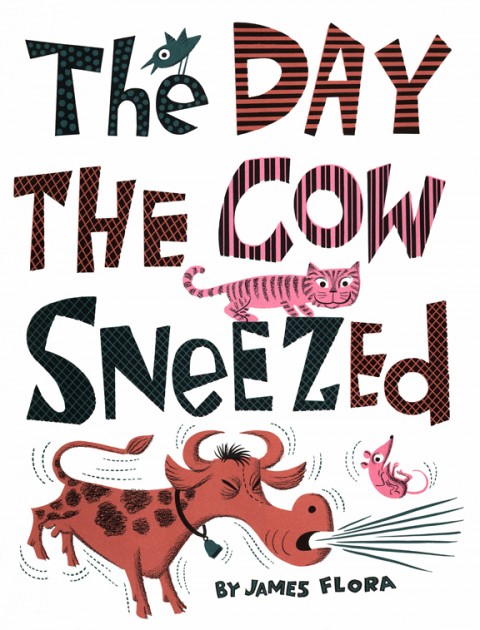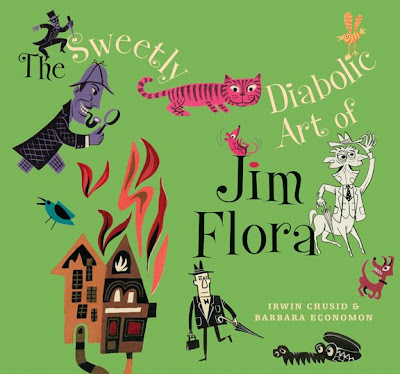
Sweetly Diabolic — A new Jim Flora compendium from Fantagraphics.
I really, truly, wasn’t going to link to any BEA autopsies — and there are plenty out there — but on the eve of BookCamp Toronto I thought Brian O’Leary’s post seem pertinent:
It would be more than nice, more than fun, more than illuminating, if we as an industry could use events like BEA as less an opportunity to predict the future and more a forum in which to examine the options. Okay, piracy is bad, but.. what if it helped sell books? Okay, we love long-form fiction and we think it should survive, but what if the people who read it now just stopped? Okay, a trade publisher provides value in choosing and curating content, but what if the world turned upside down and everyone were a writer, a publisher, a reader… Wouldn’t that be really cool?
Fingers crossed for tomorrow… Follow along on Twitter. The event account is @BookCampTO. The hash-tag is #bcto09.
Access of Evil — More on Google’s big e-book adventure at Business Week. The ‘news’ is that Google will be offering online access to e-books rather than downloads. Which, if I understand it correctly, is what Shortcovers does already. Not that anyone is giving them credit for it.

The ALPHABET chest of drawers by Kent and London, inspired by vintage printing blocks: “The perfect place to file everything from A-Z!” (via source of all good things swissmiss).
The George Orwell Archive at the BBC (via The Book Depository blog):
For two years, between 1941 and 1943, George Orwell – real name Eric Blair – was BBC staff member 9889, hired as a Talks Producer for the Eastern Service to write what was essentially propaganda for broadcast to India.
From recruitment to resignation, this collection of documents reveals the high regard in which Orwell was held by his colleagues and superiors and his own uncompromising integrity and honesty.
The Wickedest Man in the World — Jake Arnott, author of The Long Firm, on how the very real Aleister Crowley became the archetypal fictional 20th century villain. Sadly Arnott doesn’t mention that Oliver Haddo, W. Somerset Maugham’s literary Crowley, appears in the latest League of Extraordinary Gentlemen adventure.
The Future of Mainstream Media — a fascinating article about the success of National Public Radio (NPR) by Josh Catone for Mashable:
NPR’s amazing growth over the past 10 years prompted FastCompany magazine in March to call NPR the “most successful hybrid of old and new media,” and wonder if NPR could be the savior of the news industry. [T]hey owe that success to the culture of open access and audience participation that they’ve cultivated over the past decade.

And… OK I just can’t not link to Design Assembly‘s post about design-hero Wim Crouwel’s ISTD lecture.
Note: if you want me to link to your site, you just need to include a brilliant photograph of Wim Crouwel looking cool as f*ck and then use a genius soccer analogy:
“(For me) a grid is like a football pitch. You see a beautiful game of football, and then you see a not so beautiful one, but it all takes place on the same pitch”.
Yes. I am a cheap date.
Like this:
Like Loading...
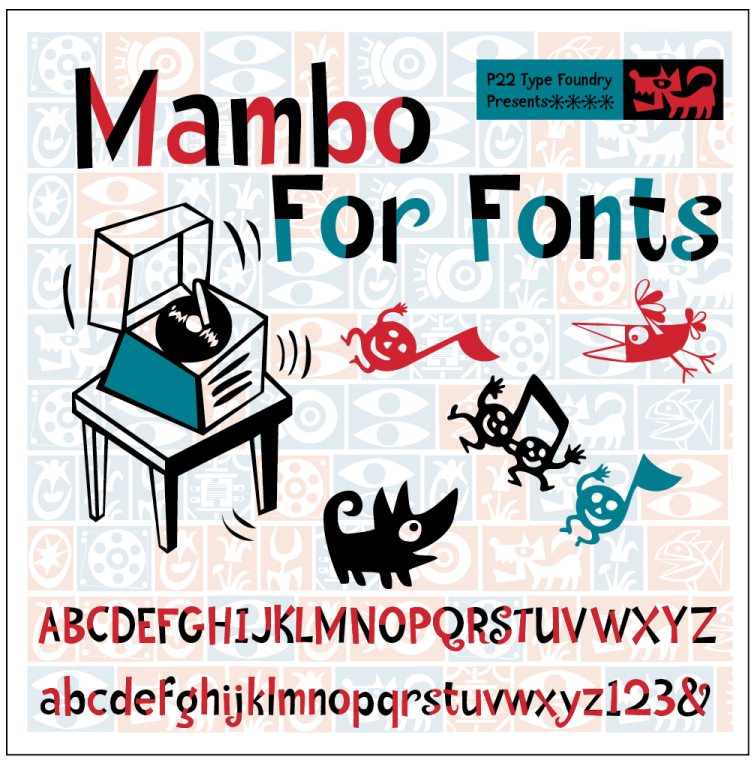 Mambo for Fonts — Flora Mambo is a new font from the P22 Type Foundry based on Jim Flora’s hand-lettering for the 1955 Mambo For Cats RCA Victor album cover.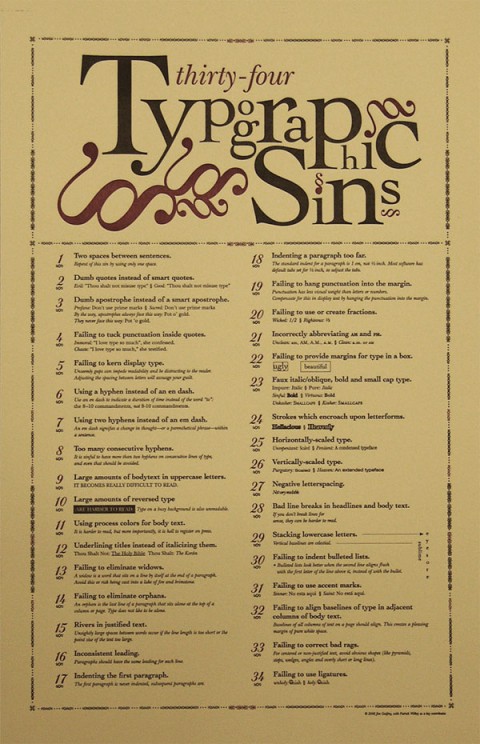
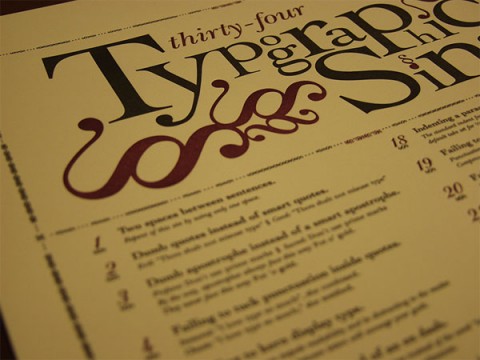 Typographic Sins Poster
 Boom
Boom