Skip to content

Tag: James Joyce

Ersnt Reichl: Wide Awake Typographer


Elizabeth Hawes, Fashion is Spinach (Random House, 1938; AIGA 50 Books 1939)

At Design Observer, design historian Martha Scotford discusses the work of German-American book designer Ernst Reichl:

Midway in his career, Reichl began to reflect on many of the books he designed in written comments; he spent more time on this during the period 1977-1978, shortly before his death in 1980. In the end, there were approximately 550 3 x 5 inch index cards on which he hand-wrote his thoughts about selected books he designed. In lively prose Reichl comments on myriad elements of book design and details of book production, several for each book. He covers typography, binding design and jackets, illustration, publishers, the publishing industry in New York, design colleagues (revered and annoying), production triumphs and problems, how well the book sold, his opinion of the book and his philosophy of book design as applied to that title. He also critiques his own work, sometimes in the moment, sometimes from the perspective of more time and experience. These comments, often sharp and humorous, are highly entertaining and informative. I know of no other book designer who has done this so extensively.

Reichl’s comments about book design have now been transcribed from the cards and accompany a selection of over 100 examples of his work in an exhibition curated by Scotford, ‘Ernst Reichl: Wide Awake Typographer,’ currently on display at Columbia University’s Rare Book and Manuscript Library in New York until September 13, 2013.

On a related note, Scotford has previously written about the US publication of James Joyce’s Ulysses and the role of Ernst Reichl, who designed the typographic cover for Random House.

Comments closed
Monday Miscellany

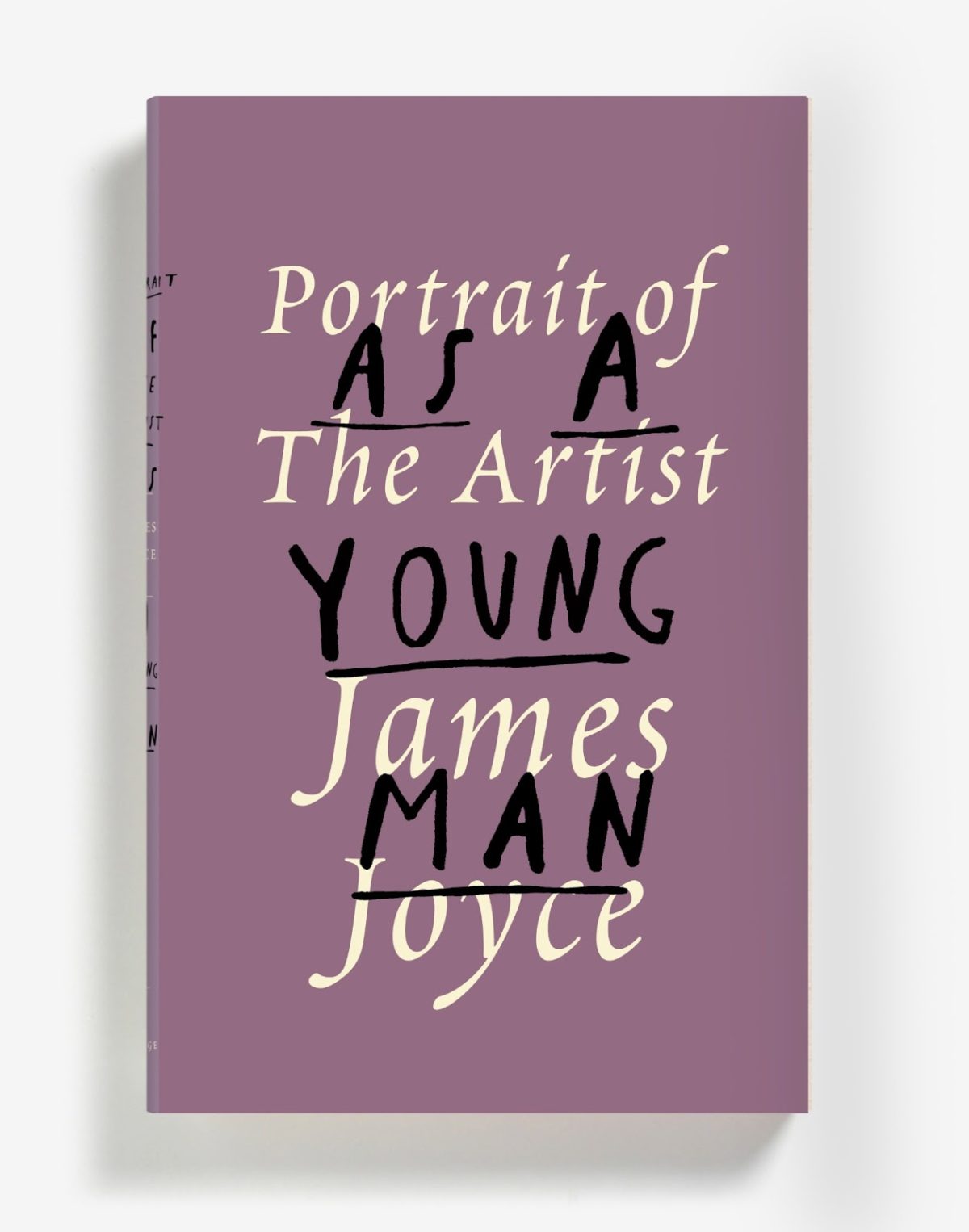
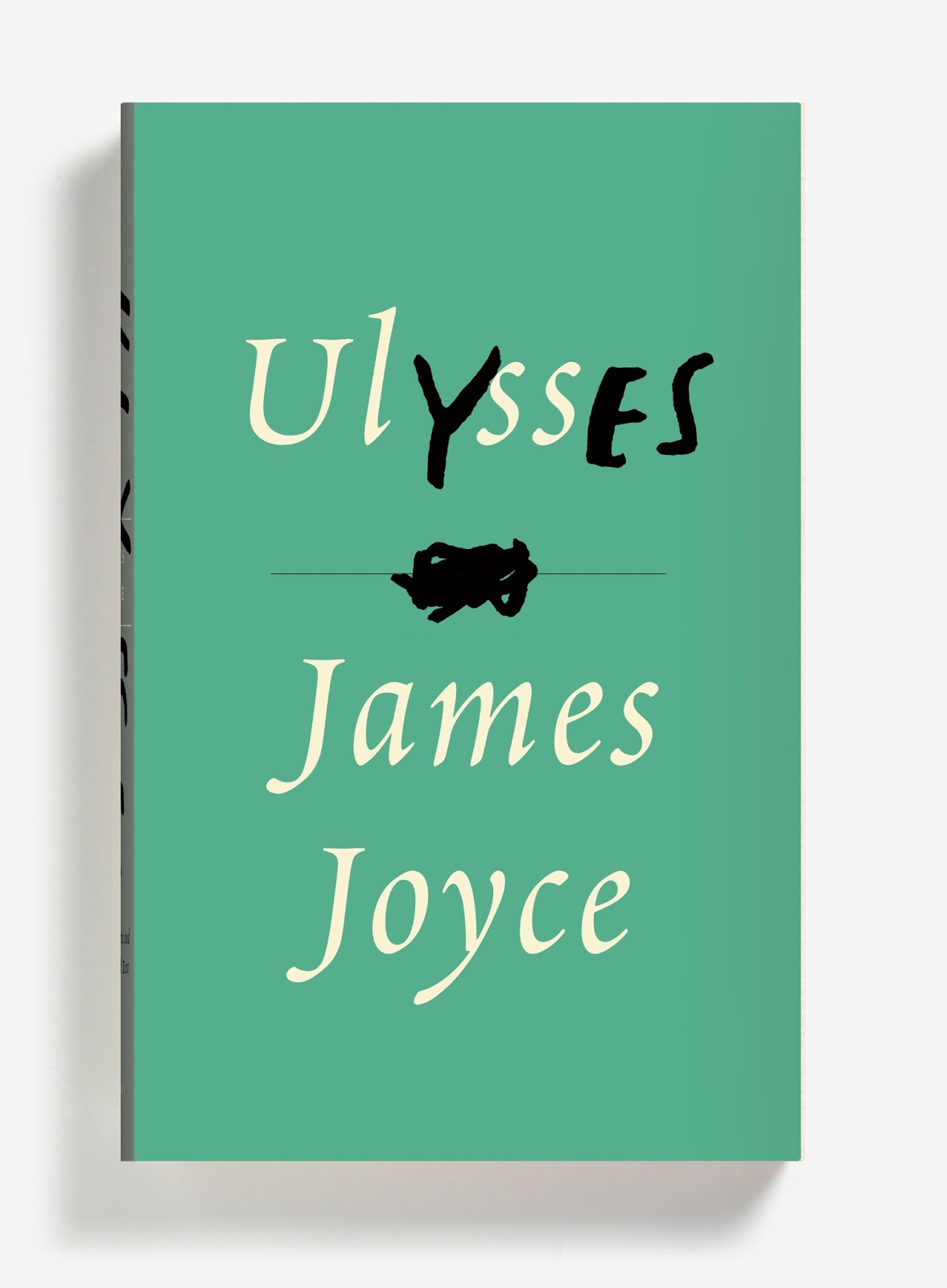
Three new James Joyce cover designs, and one extraordinary post by Peter Mendelsund.  Brilliant stuff…

The Box — Author Michael Chabon on the films of Wes Anderson at the NYRB Blog:

Anderson’s films have frequently been compared to the boxed assemblages of Joseph Cornell, and it’s a useful comparison, as long as one bears in mind that the crucial element, in a Cornell box, is neither the imagery and objects it deploys, nor the Romantic narratives it incorporates and undermines, nor the playfulness and precision with which its objects and narratives have been arranged. The important thing, in a Cornell box, is the box… All movies, of course, are equally artificial; it’s just that some are more honest about it than others. In this important sense, the hand-built, model-kit artifice on display behind the pane of an Anderson box is a guarantor of authenticity; indeed I would argue that artifice, openly expressed, is the only true “authenticity” an artist can lay claim to.

The Same Curious Brain — A profile of author and artist Oliver Jeffers, at the National Post:

Jeffers doesn’t just tell stories. He’s an artist — paintings, printmaking, collage — and a commercial and editorial illustrator, with clients ranging from Anthropologie and Weight Watchers to the Guardian and Newsweek. His monograph Neither Here Nor There, which was published last summer, is a collection of his non-children’s work — a bust of Darth Vader; a satellite crash-landed in a cornfield; a hammer nailed to a wall — though it still feels like part of the same universe. Jeffers prefers it this way.

“My books are all about telling stories, and a lot of my art is about asking questions,” he says. “But they’re equally extensions of the same curious brain.”

And finally…

The Spy Novelist Who Knows Too Much — a New York Times story about the decidedly nasty-sounding 83-year-old French pulp novelist Gérard de Villiers so implausibly bonkers it probably has to be at least partially true:

Last June, a pulp-fiction thriller was published in Paris under the title “Le Chemin de Damas.” Its lurid green-and-black cover featured a busty woman clutching a pistol, and its plot included the requisite car chases, explosions and sexual conquests. Unlike most paperbacks, though, this one attracted the attention of intelligence officers and diplomats on three continents… “It was prophetic,” I was told by one veteran Middle East analyst who knows Syria well and preferred to remain nameless. “It really gave you a sense of the atmosphere inside the regime, of the way these people operate, in a way I hadn’t seen before.”

And it gets better from there…

Comments closed

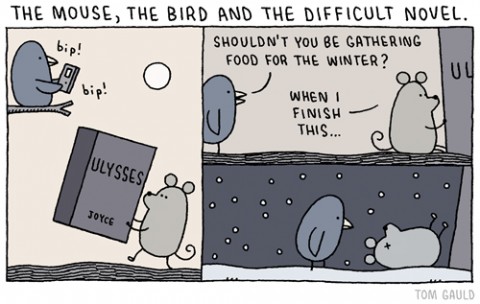
The Mouse, The Bird and the Difficult Novel

I do love Tom Gauld.

Comments closed

Midweek Miscellany, June 17th, 2009

Claustrophobic and Irrational — I love these elegantly understated designs by Rodrigo Corral and Christopher Brand Jason Ramirez for Patricia Highsmith’s Ripley books published by W.W. Norton.

A Strategy For Authenticity — Don Linn, prolific Twitterer and publisher at The Taunton Press, on O’Reilly’s Twitter Boot Camp and Twitter as a marketing channel:

I’m relatively new to twitter, but what I’ve loved about it since discovering it is its immediacy and its spontaneity. That’s where the joy is and, in my opinion, that’s where the power is (witness #iranelection and related topics). My fear is that the suits will “Clear Channel” (yes, that’s a new verb) this simple little application into nothing but a giant vanilla message board filled with thinly-disguised spam, planned spontaneity.

Cars and Books Sean Rogers discusses Dutch cartoonist (and cover artist) Joost Swarte at The Walrus:

Swarte has some mild fun, on the Walrus cover, with the nutty rush out of the city that clogs our highways every summer. But the assignment also offers Swarte the opportunity to clear-line the hell out of some cars and books, a couple preoccupations that crop up all over his work.

Why Ulysses? — To coincide with Bloomsday , Gary Dexter explains how Joyce’s masterpiece got its title:

The paradox of Ulysses is that one needs to read it to understand twentieth-century literature, but one needs to read twentieth-century literature to build up the stamina to read Ulysses.

The problem starts with the title. Early readers of Ulysses, exhilarated and appalled after 800 pages, were often still left thinking ‘Why Ulysses?’ Ulysses is barely mentioned.

And lastly… I can’t thank the chaps at the BCA enough for the link love . You are gentlemen and scholars.

And thanks to the scarily talented Nate for creating the Paradox of Awesome album cover yesterday afternoon and sharing on Twitter. Hilarious. Or maybe you just had to be there… It made my day anyway…

5 Comments