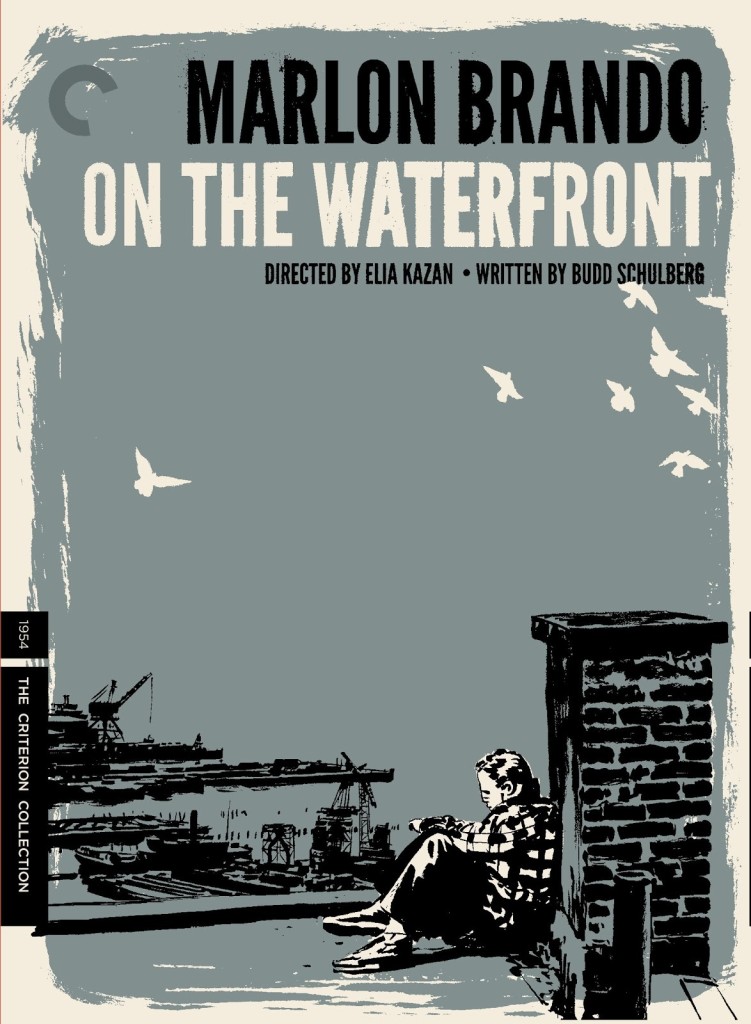
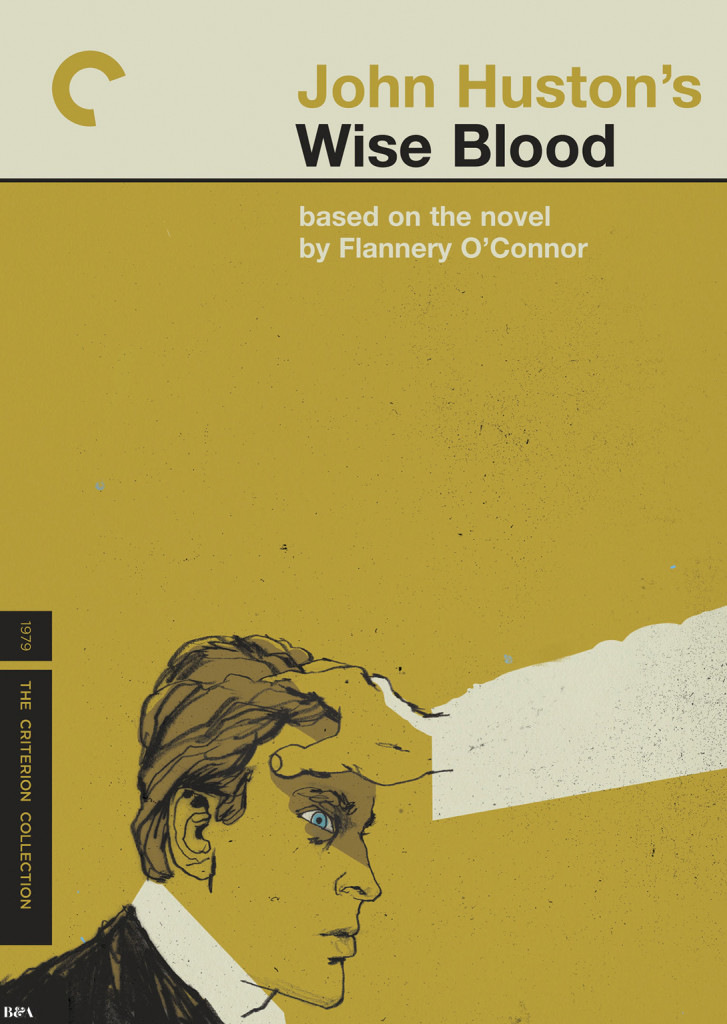
Because film is a visual medium, each project comes with an established aesthetic, which for a designer can be inspiring but also sometimes limiting. The challenge is in figuring out how best to channel that aesthetic—either by distilling it down to a single still composition, or somehow bouncing off of it in an interesting way.
I try not to make such a strong distinction between “illustration” and “design.” Almost everything I make involves some custom-created components, whether it’s type or image or decorative elements or whatever, so for me it’s not such a hard line between the two disciplines. Whatever technique will best solve a problem—assuming it’s within the limits of my abilities—I’ll give it a try.
Because we have access to such great films, we’re lucky enough to be able to call on the best illustrators in the world to work on them, so really it’s total hubris that I ever design anything myself. When I draw something myself, it’s usually because I have such a strong, specific idea of what it has to be that I would be literally dictating exactly what to draw and how, which is no fun for anyone. You’ve got to leave room for the artist to surprise you, otherwise why bother?
And on Newman’s own blog, Skillman selects his 10 favourite Criterion DVD covers.
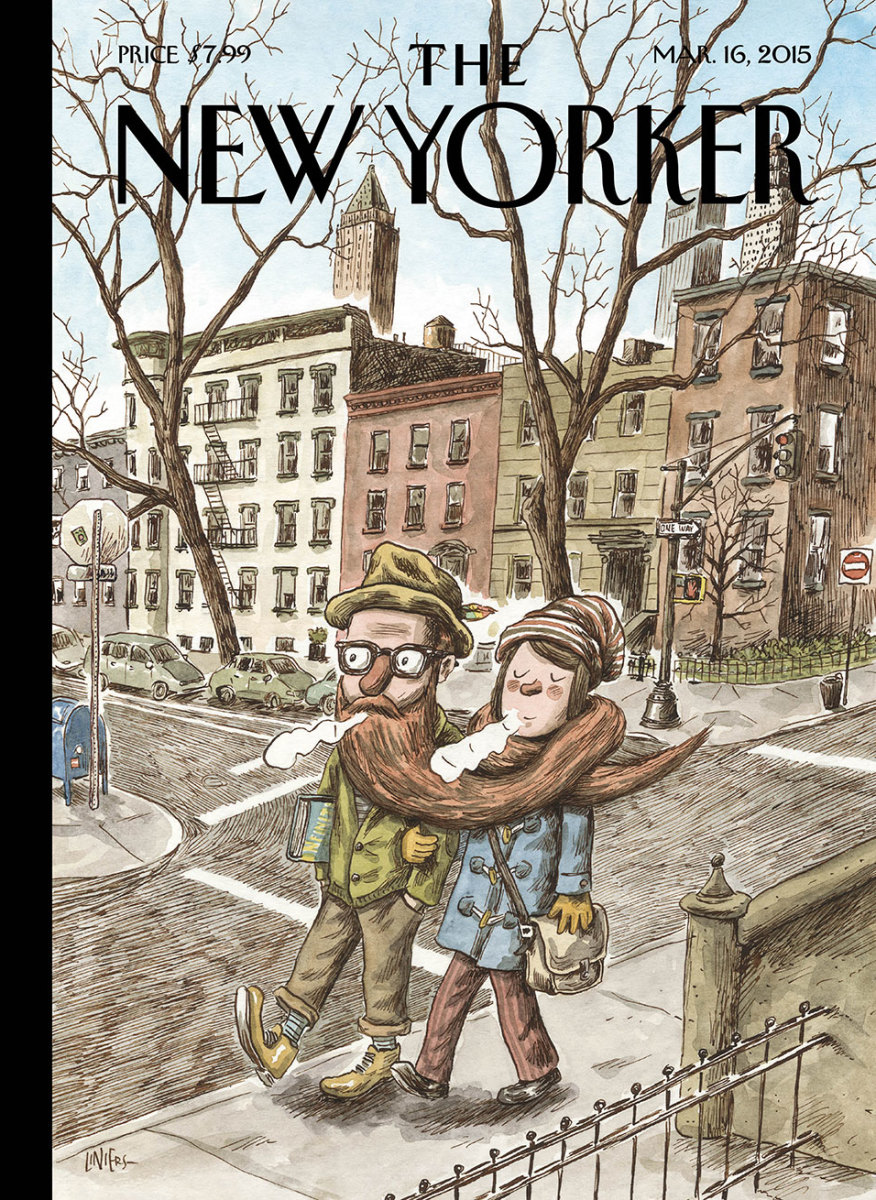
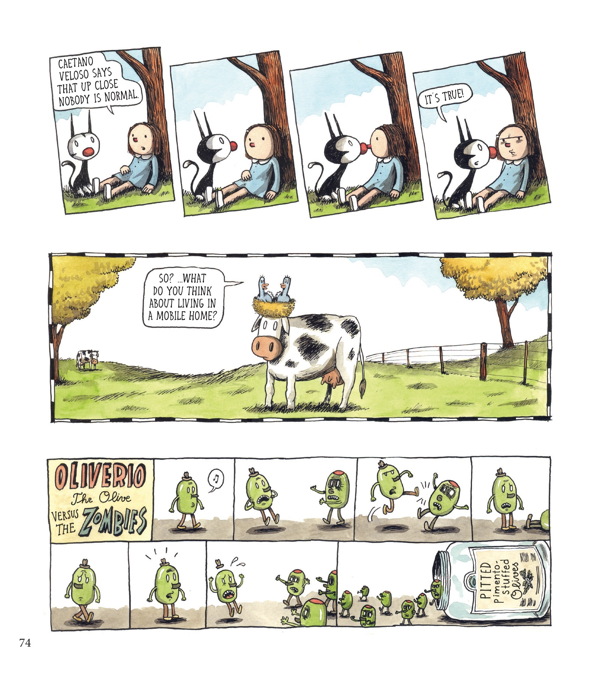
The New York Times profiles Argentinian cartoonist Ricardo Siri, better known as Liniers:
“When I started the comic everything was horrible,” Liniers, 41, said in a recent interview at his publisher’s office in SoHo at the start of an East Coast book tour. “The towers fell here,” he said, “and in Argentina there was a huge economic tailspin and we had five presidents in a week. So I wanted to create something optimistic as an act of resistance, like a positive revolution.”
In “Macanudo,” plotlines usually do not extend past the punch line, if one exists at all, and the characters and type of humor can change daily. Penguins, gnomes and an olive named Oliverio are only a handful of the creatures that float in and out of “Macanudo.”
“I like to surprise,” Liniers said. “When readers open up the paper, I don’t want them to know what to expect.”
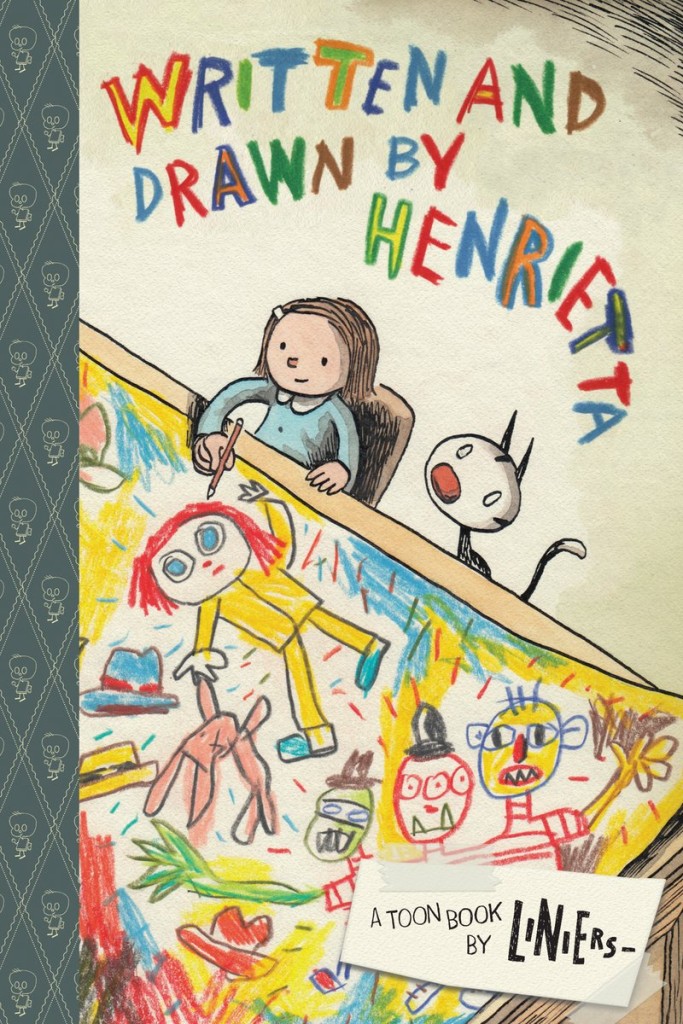
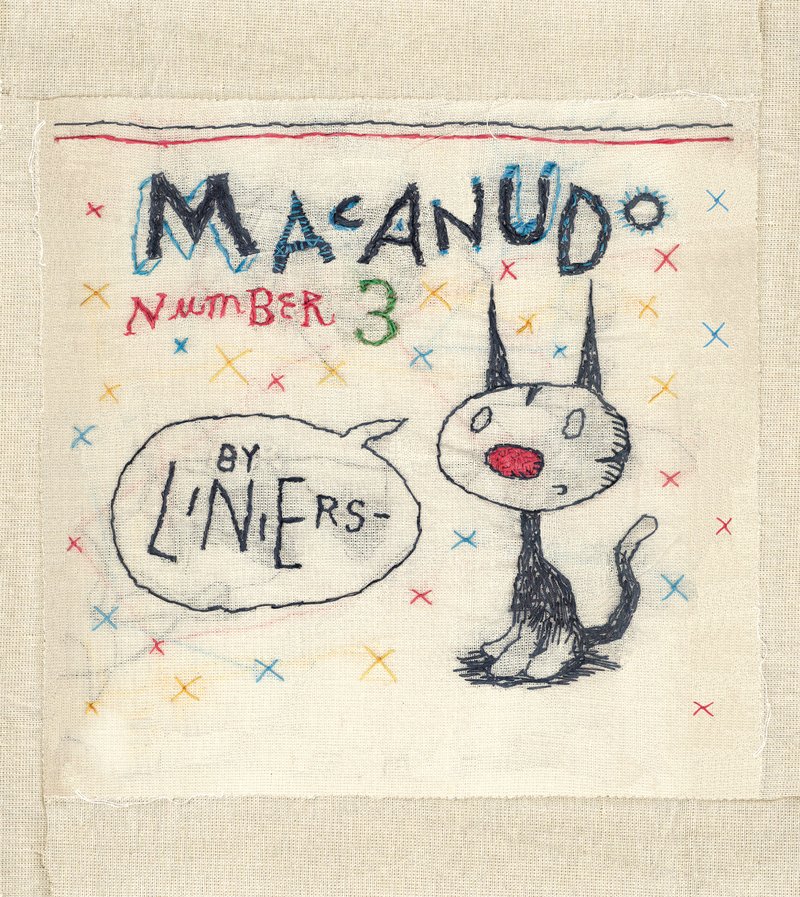
Liniers has two new books out this fall — Macanudo #3, a collection of his newspaper strips published by Enchanted Lion, and Written and Drawn by Henrietta, an original kid’s book published by TOON.
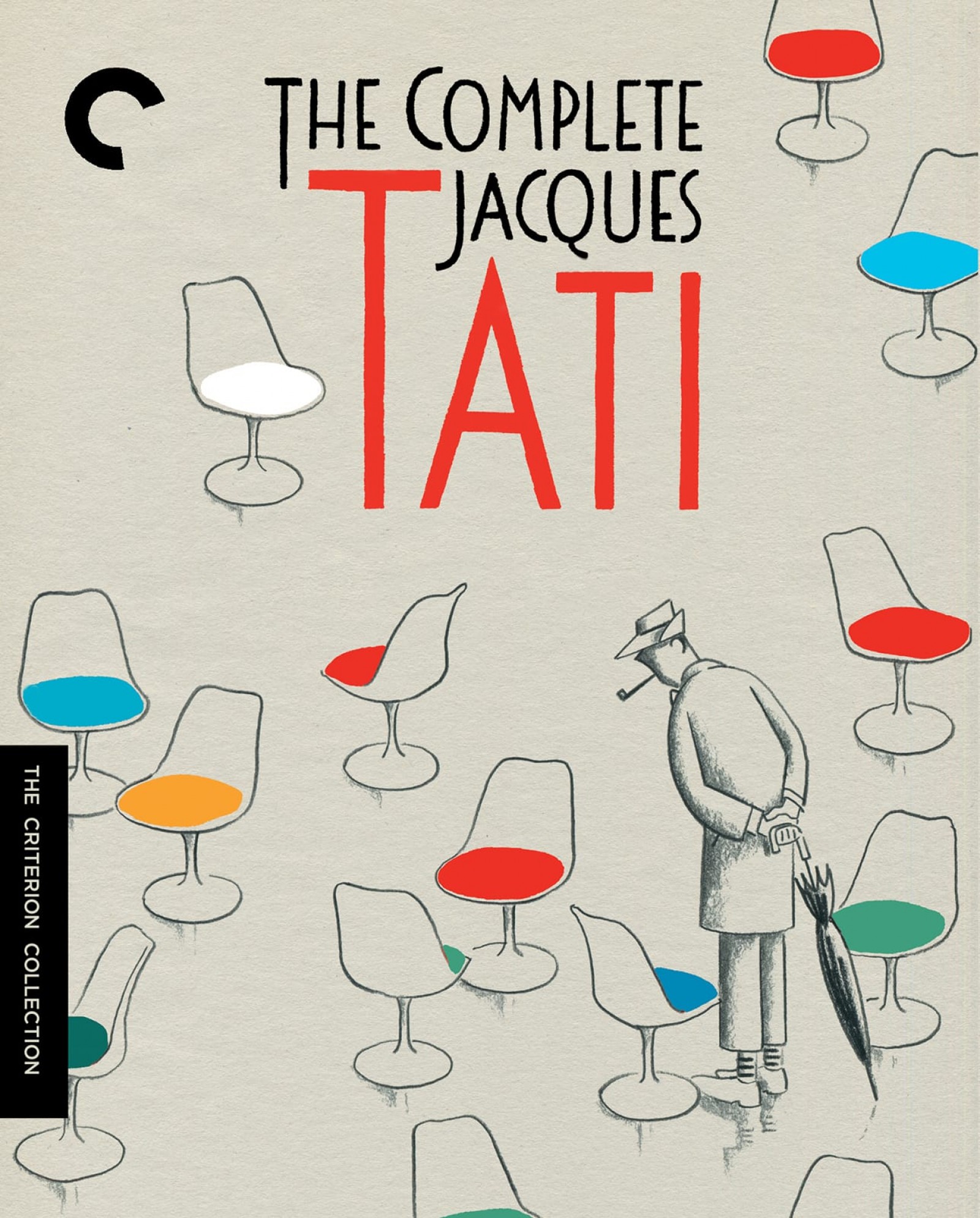
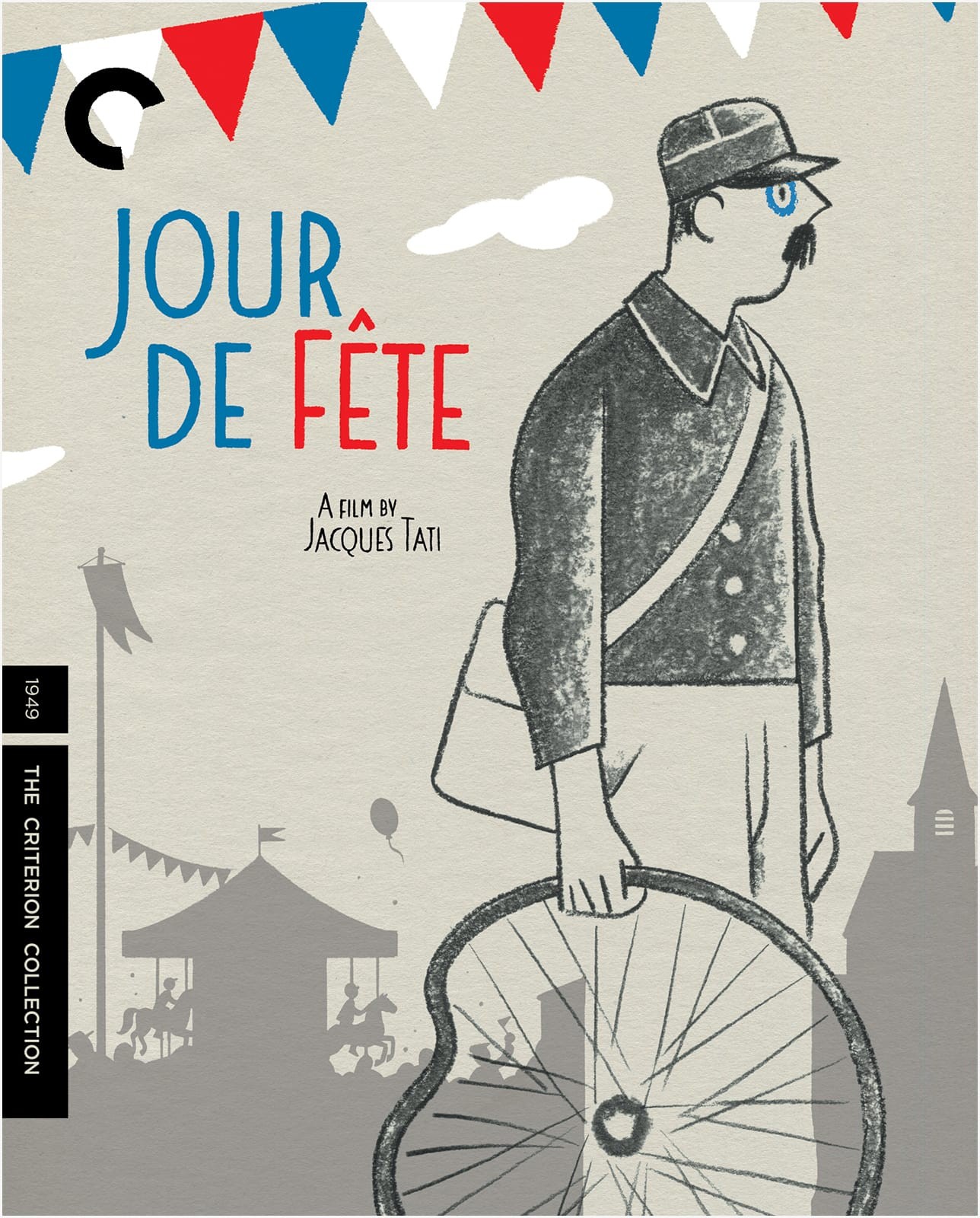
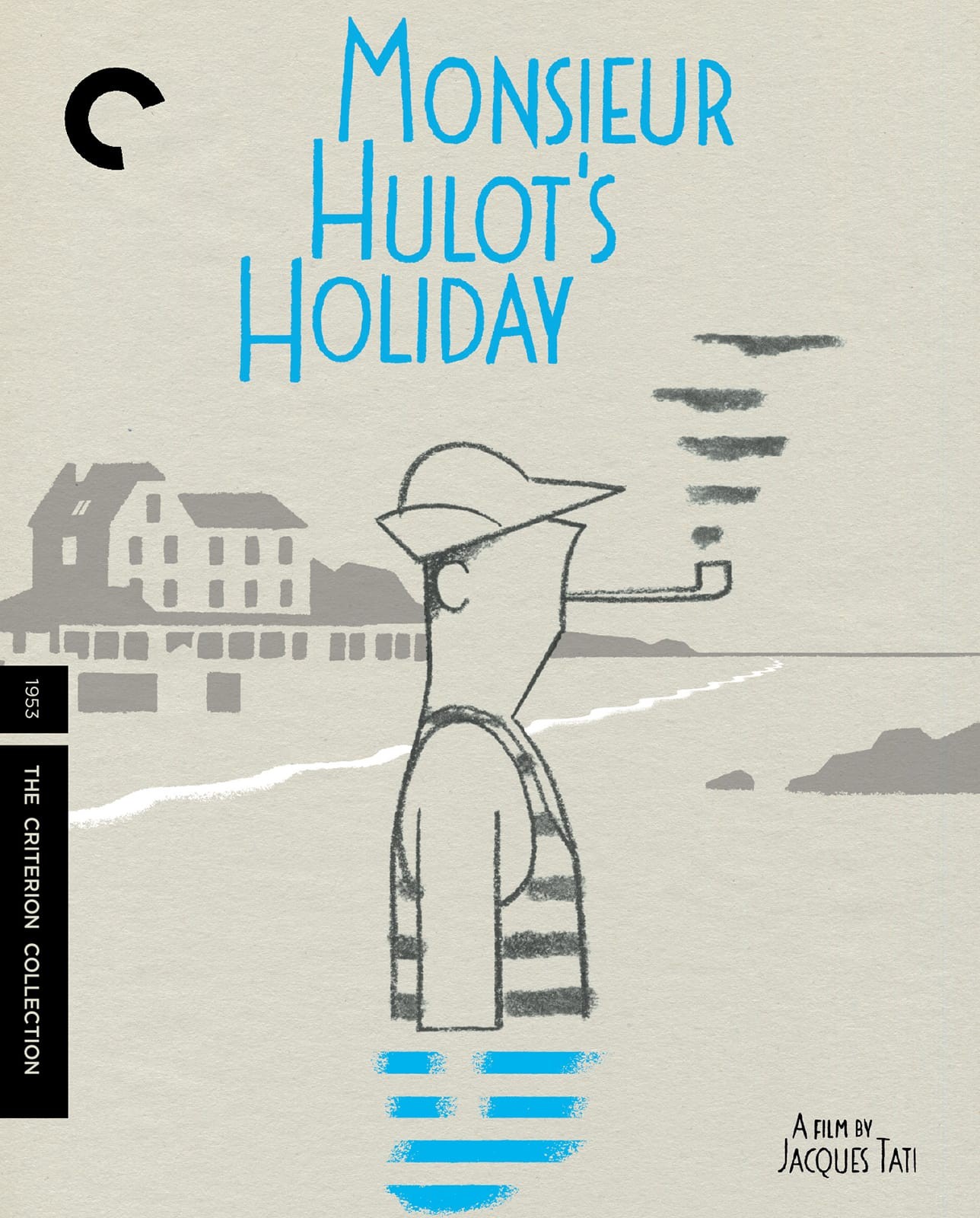
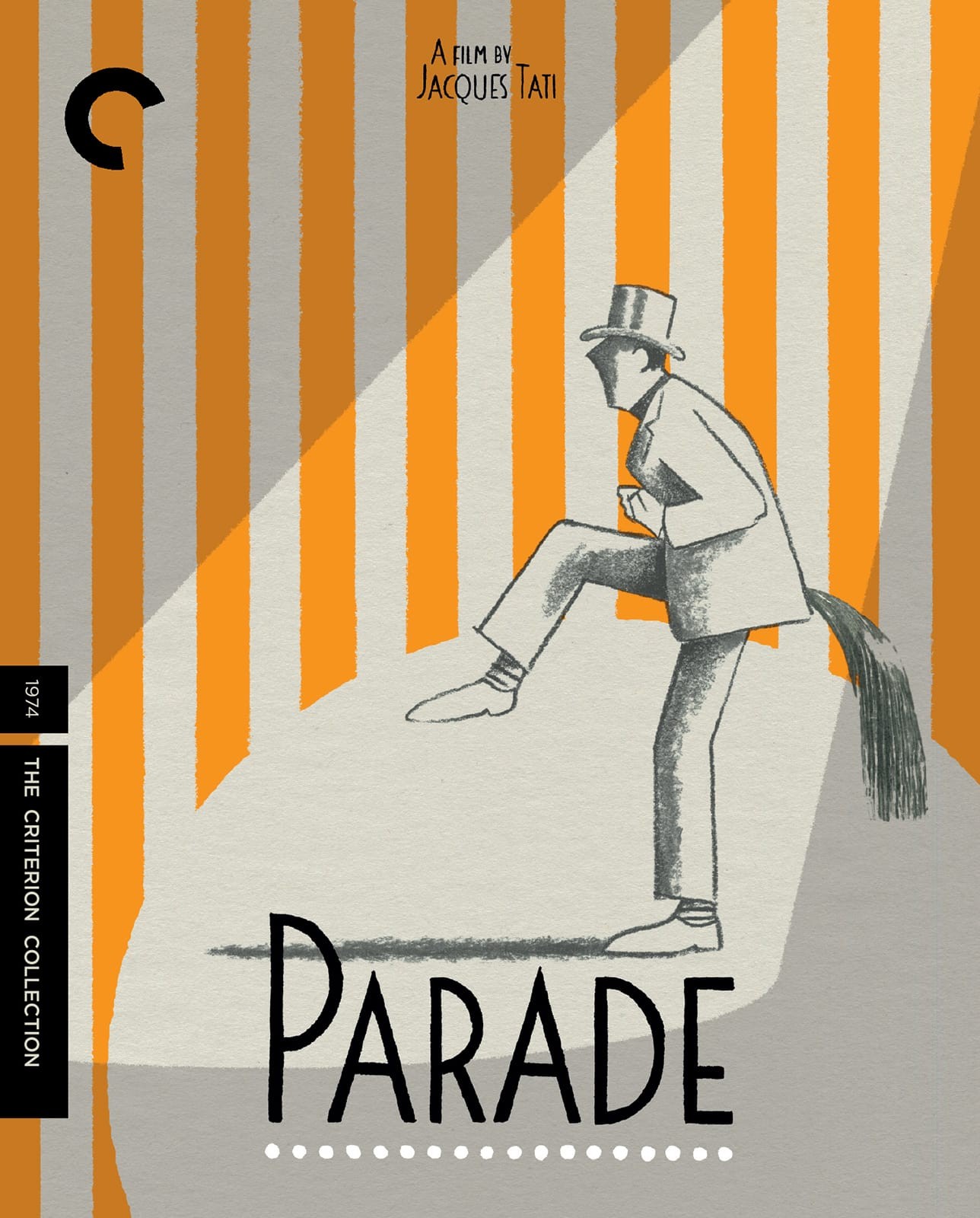
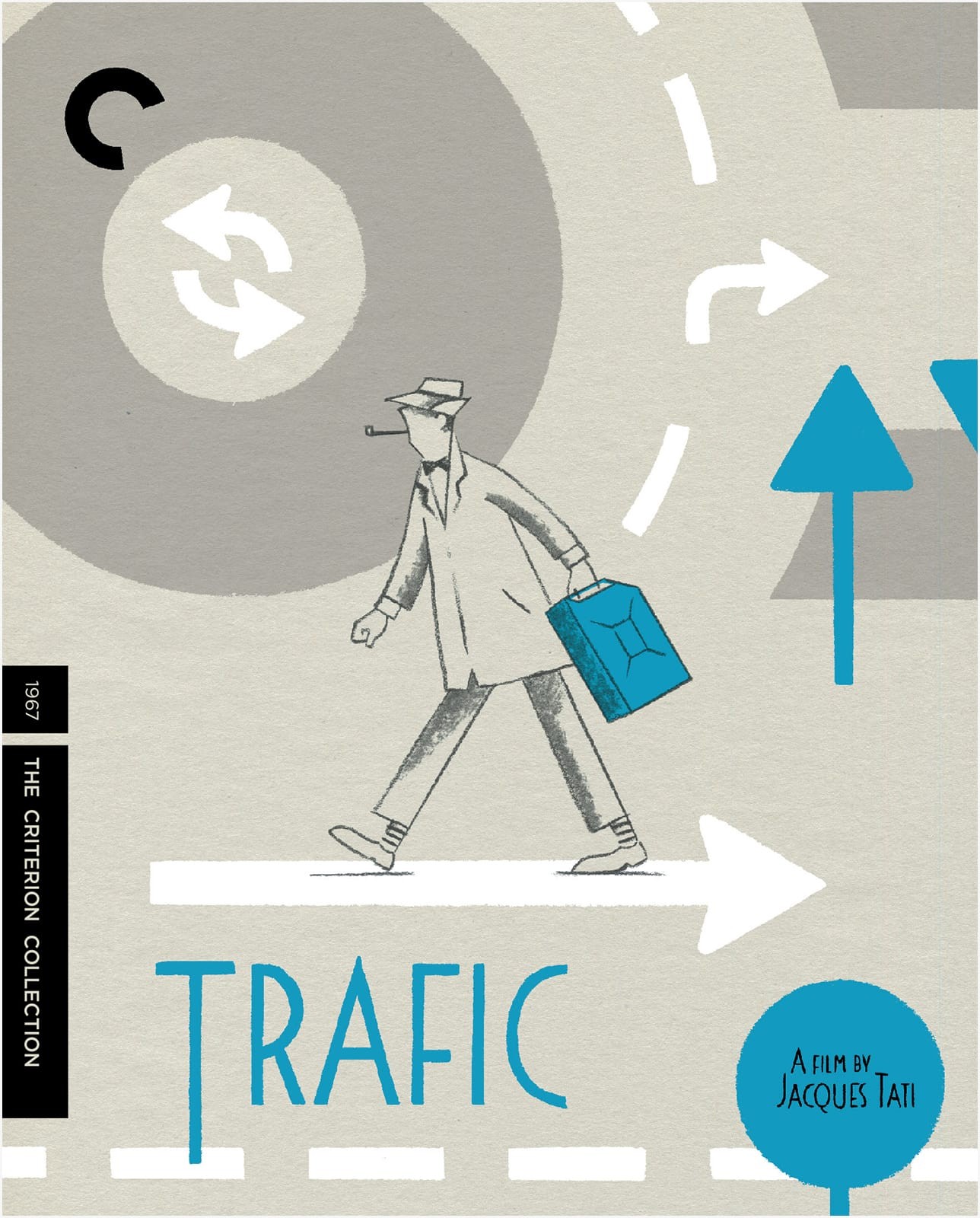
I am at least a year late on this, but I do love these covers for the Criterion Collection box set of Jacques Tati films. The illustrations are by Belgian illustrator David Merveille who has also created a series of books inspired by the work of Jacques Tati. Currently, only Hello, Mr. Hulot is available in English, but I believe a second book, Mr. Hulot on the Beach, will be published in English in 2016 by NorthSouth Books.
You can see more of David’s designs and illustrations for the box set on his blog.
Thanks to designer Andy Allen for bringing these covers to my attention. Images and other interesting stuff via Adrian Curry’s marvellous Movie Poster of the Week column.
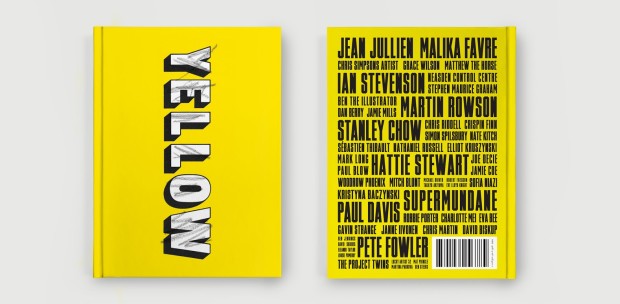
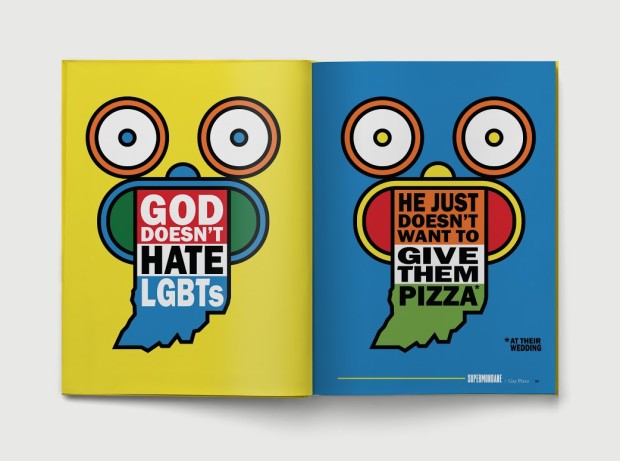
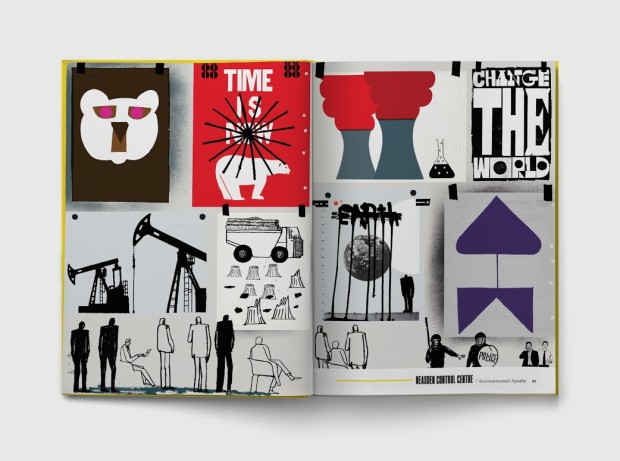
Back in November 2014, the team behind free bi-monthly comic anthology OFF LIFE asked 52 artists to illustrate 52 weeks of news. Now, with the 52 weeks nearly up, editor Daniel Humphry, art director Steve Leard, and production manager Sarah Hamilton are KickstartingYellow, a hardback collection of every piece from the year with additional interviews and commentary. Contributors include Jean Jullien, Hattie Stewart, Supermundane, Stanley Chow, and a whole host of other talented illustrators. OFF LIFE’s goal is £10,000. You can support the project here.
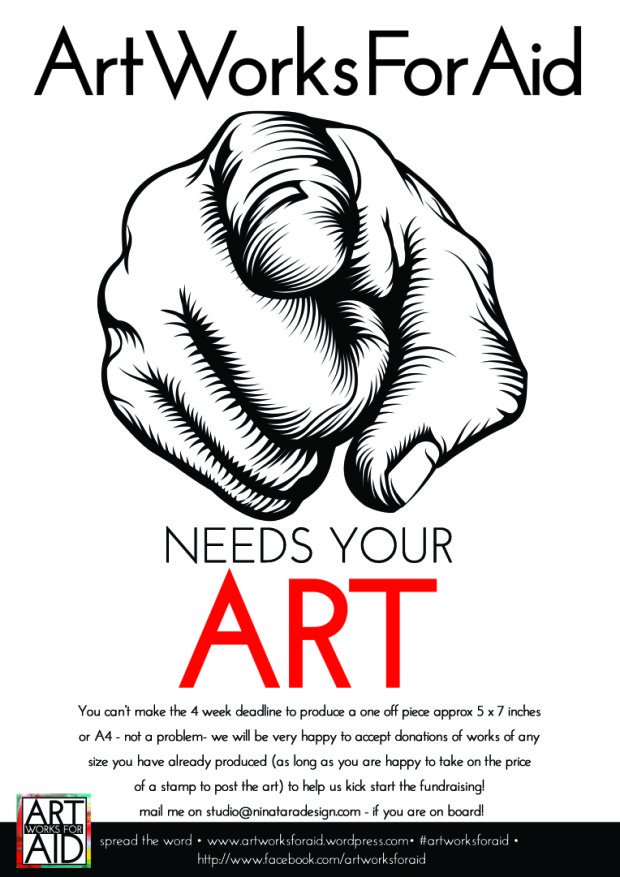
In response to the refugee crisis currently unfolding in Europe, designer and illustrator Nina Tara has set up Art Works For Aid.
Nina is asking artists, illustrators, designers and photographers to donate small works of art to be sold at auction to raise funds for organizations such as Human Relief Foundation helping refugees.
If you would like to help by buying an artwork, the first AforA auction is today. If you’re a ‘creative’ and you would like to donate a work of art just send an email to Nina.
You can find more information about the initiative on the AforA blog, and see images of some of the work that has already been donated on the AforA Facebook page.
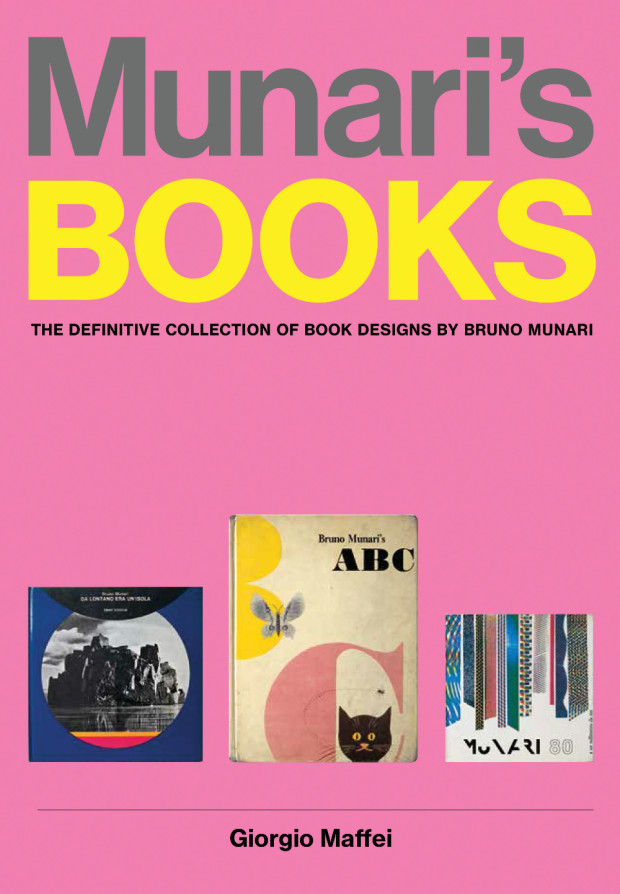
Before turning his attention to graphics and advertising, Italian artist and designer Bruno Munari (1907-1998) made his mark as a member of the Futurists, an avant-garde art movement fascinated by modernity, mass production, and pushing at technological limits.
The influence of Futurism — not to mention modernism’s jokers Dada and Surrealism — is apparent throughout Munari’s Books, a collection of Munari’s book design recently published in English by Princeton Architectural Press. Munari relentlessly experimented with typography, photography, collage, and printing materials. There is a book made of metal, another that comes with a hammer. There is page after page of special papers, unique bindings, loose pages, punches, tears, and flaps. The breadth (and the volume!) of his work is staggering, and it all crackles with this restless sense of innovation, urgency, and provocation.
Bruno Munari’s ABC (image credit: Cleveland: World Publishing Company, 1960)
“A great children’s book, with beautiful expressive figures, the right story, printed simply, would not be accepted (by some parents), but children would love it.”1
But Munari’sdesigns and illustrations are also surprisingly full of warmth and wonder. This is most apparent in his expressive illustrations, and the large number of books Munari produced for very young children. Even readers familiar with Bruno Munari’s ABCand Bruno Munari’s Zoo, may find themselves astonished at just how many other extraordinary children’s books he created that aren’t currently available in English.
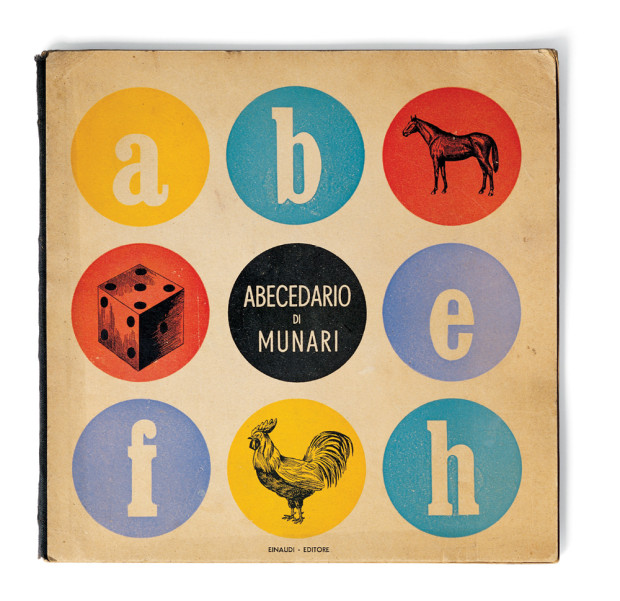
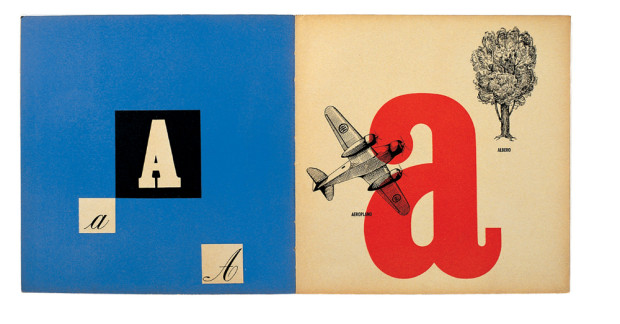
Abecedario de Munari (image credit: Rome: Emanuele Prandi, 1942)
Abecedario de Munari (image credit: Rome: Emanuele Prandi, 1942)
“we need to deconstruct the myth of the artist-hero who produces only masterpieces for the intelligent. We have to show that as long as artists are outside the problems of everyday life, only a few people will be interested. And now, in these days of mass culture, artists must climb down from their pedestals and be so kind as to design a butcher’s sign.”2
If Munari’s Books has a shortcoming, it is the rather academic introductory texts (they will be useful for better design writers than me, but I got little sense of the Munari’s life or the personality behind the designs from them). Fortunately, the book is peppered with lively quotations from Munari himself. The most pithy come from Arte come mestiere, a collection of Munari’s writing on design first published in English in 1971 as Design as Art (and reissued as a Penguin Modern Classic in 2008). The short essays in Arte come mestierewere originally written for Milan daily newspaper Il Giorno, and they address everyday life as well as design. They’re witty, discursive (and sometimes even surprisingly practical), and a perfect accompaniment to the illustrations in Munari’s Books.
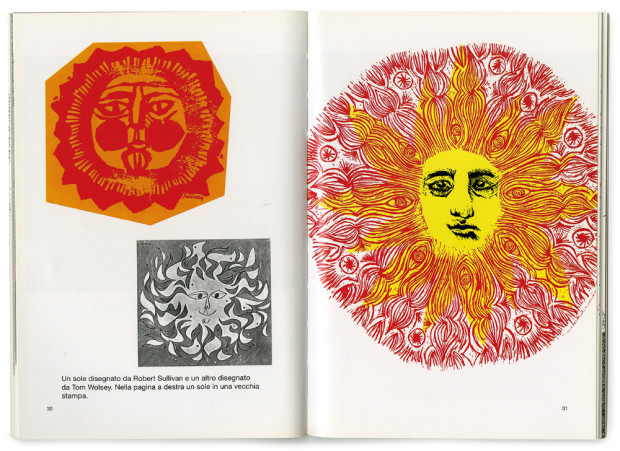
Disegnare il sole (image credit: Mantua: Graziano Peruffo, 1980)
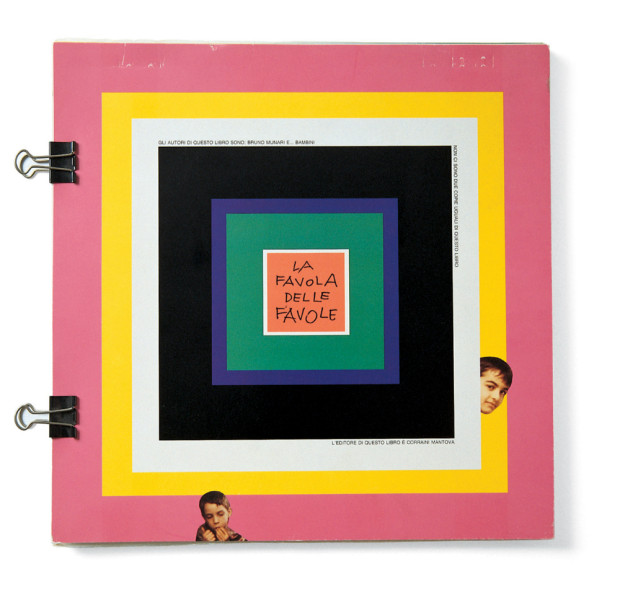
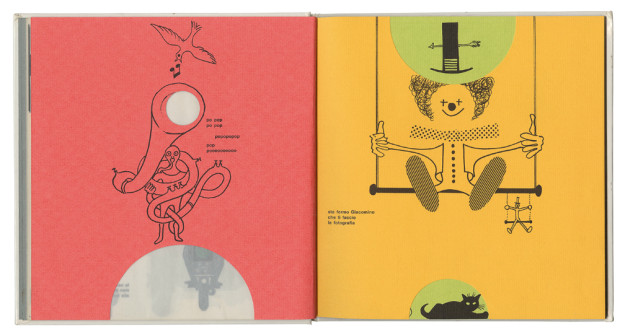
La favola delle favole (image credit: Mantua: Maurizio Corraini Editore, 1994)
Nella nebbia di Milano (Mantua: Graziano Peruffo, 1968)
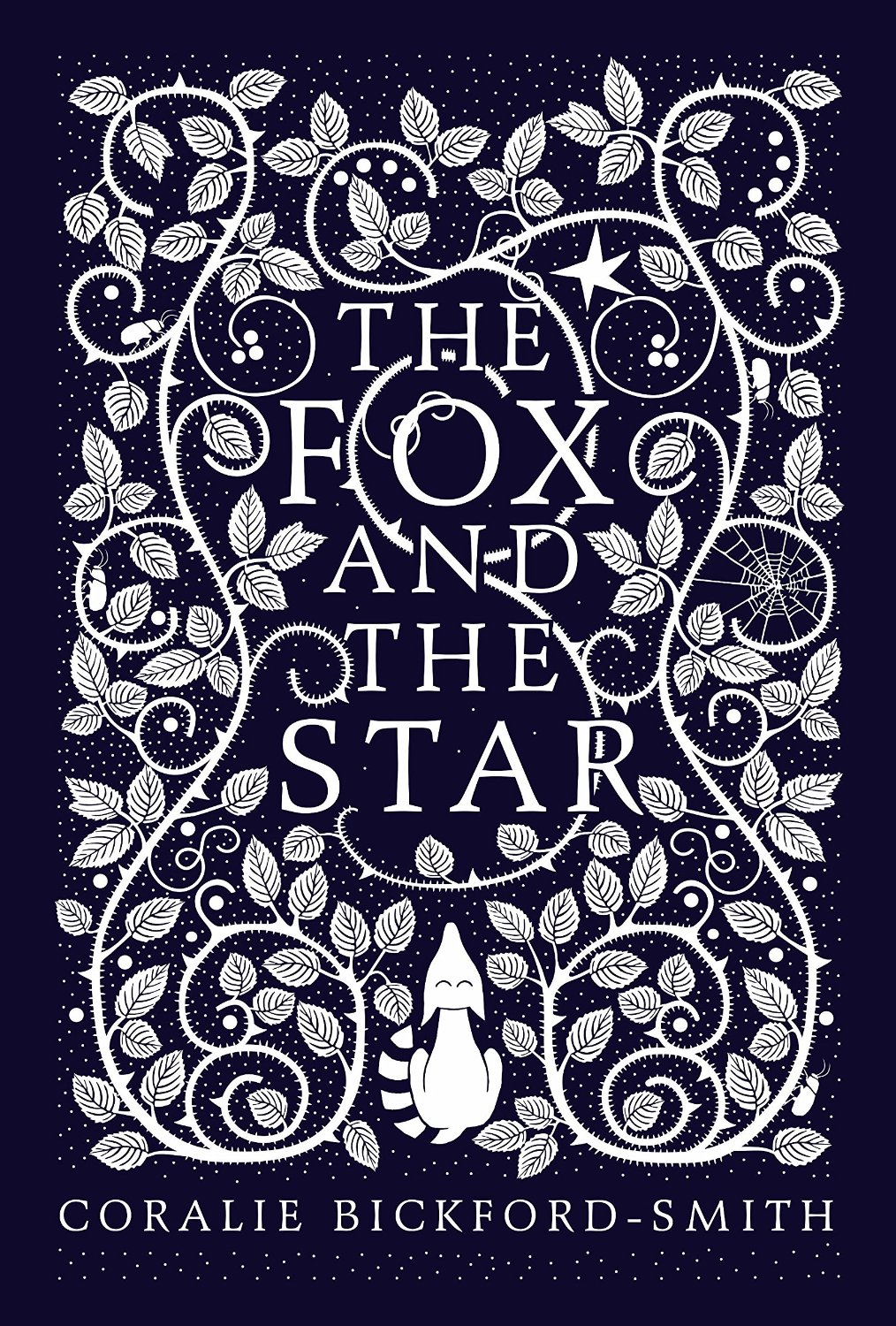
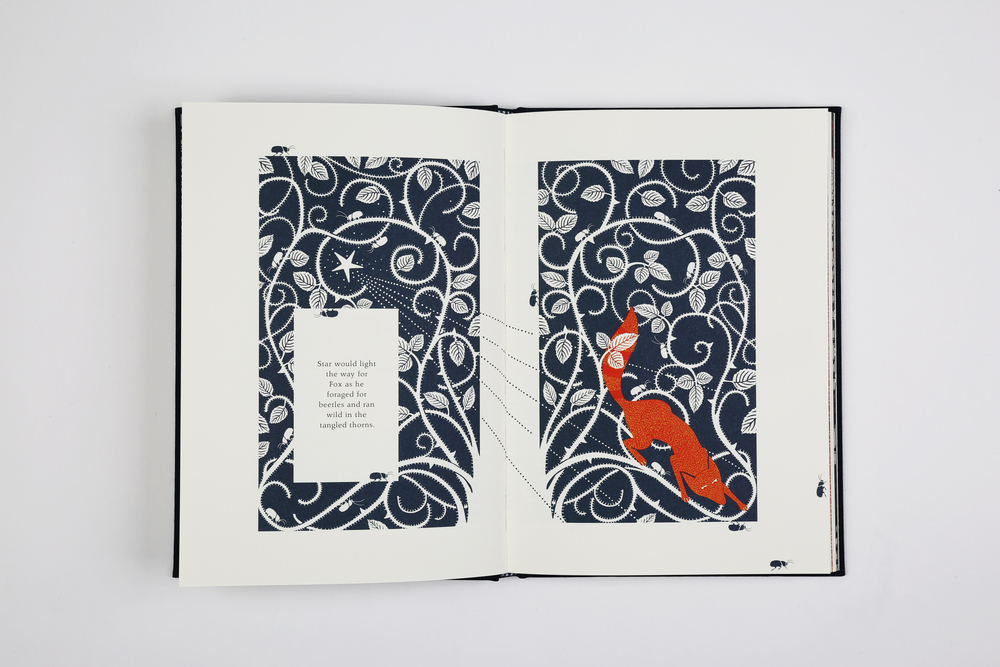
The inspiration comes from a place of personal experience that I wanted to document. It’s a life lesson that I found hard to learn; one of love, loss and the ability to adapt to the constant changes that are a part of life. On a visual level my inspiration came from my design heroes, William Blake and William Morris. My love of pattern and book design is evident in the illustrations.
In another great profile for It’s Nice That, Rob Alderson talks designer, illustrator, and writer Bob Gill:
“I don’t know what people talk about when they talk about a golden age because of a million designers in 1950 or 1960 or 1970, 13 did anything that was worth ten cents. They can call that a golden age but the gold has been tarnished I think.”
What has changed of course is technology and the way it’s altered the design process…. In fact now that the craft side of design has become demystified and democratised, he thinks designers should be able to come into their own.
“Now for a designer to make a living, they have to do more than just know how to set some type because the client can do that. So what’s left? Well the most wonderful part is left, which is to discover how you say new things. I often talk about design as idea; I am not interested in design as layout – obviously I have to lay things out in order for them to be read – but it’s very low down on my priorities. I spend the majority of my time having an opinion and trying to invent an image that says that opinion like nobody’s ever said it before. That’s the fun of it.”
Next month sees the publication ofUndermajordomo Minor, the new novel by award-winning Canadian author Patrick deWitt.
An “ink-black comedy of manners”, itapparently involves an Alpine castle, a mysterious Baron Von Aux, and a lot of bad behaviour — including, if the Quill and Quire‘s Steven W. Beattie is to be believed, “an extravagant act of Hieronymus Bosch-like grotesqueness… perpetrated upon a large rat.”
It sounds a little like a horror movie directed by Wes Anderson. Or Terence Fisher doing something nasty to Gilbert and Sullivan.
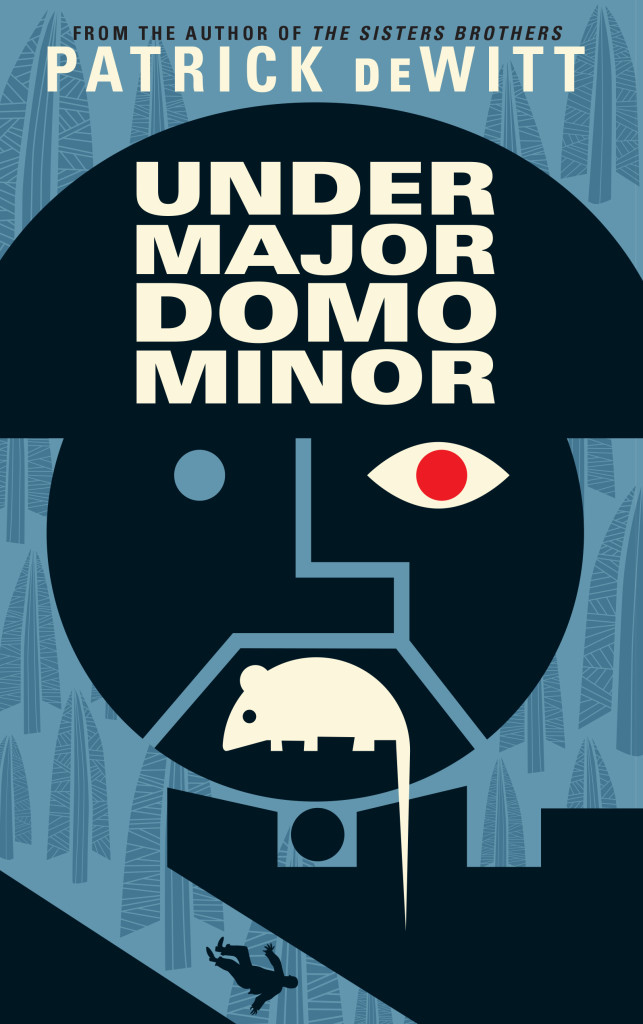
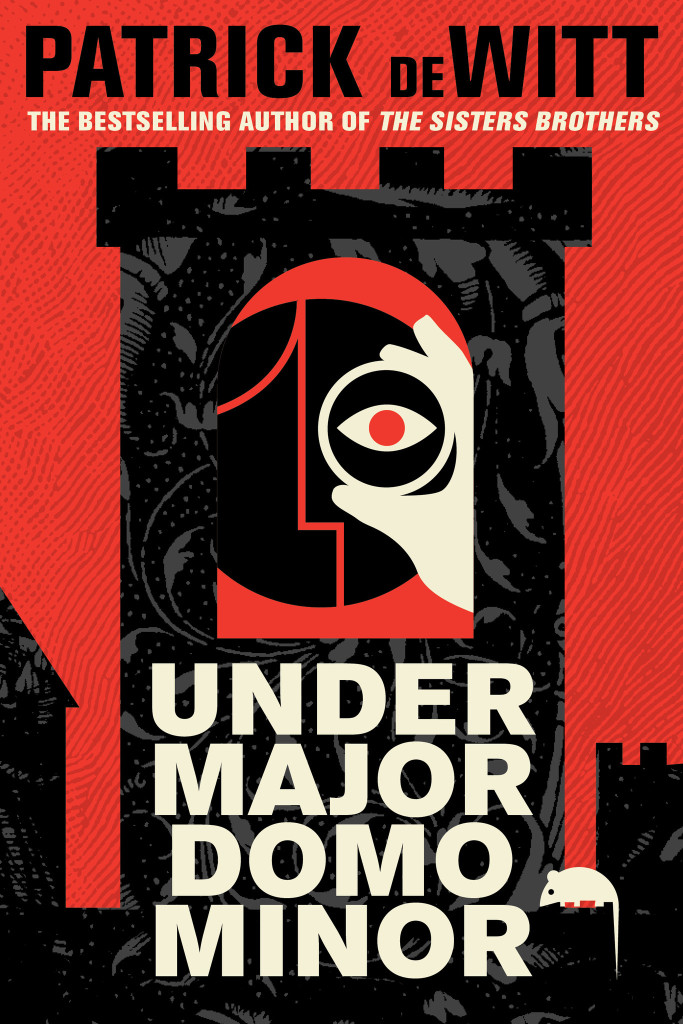
While the cover for the US edition (published by Ecco) was designed by the talented Sara Wood, the UK and Canadian editions of Undermajordomo Minor feature the distinctive artwork of Dan Stiles, the American illustrator and designer who designed the covers of deWitt’s previous novels The Sisters Brothers and (the reissued) Ablutions.
Granta (UK)
House of Anansi (Canada)
Although Stiles has created different designs for Granta, and House of Anansi, the UK and Canadian covers (both featuring that unfortunate rat) have strong echoes of those previous books. According to the Canadian art director Alysia Shewchuk, this was a deliberate decision. “Dan Stiles created a very a distinctive look for The Sisters Brothers — highly stylized, dark yet playful — and we wanted to pick up these threads in our cover for Undermajordomo Minor.”
This is most apparent in the Anansi cover. Its bold geometric design is similar to Stiles’s theatrical cover for Granta, but its colour palette and texture bring it back to the The Sisters Brothers.
Interestingly, the focus of the Canadian cover is different too. “We’d seen early versions of the covers for both the US and the UK editions, and while we liked the different directions they’d each gone in, for our edition we thought it was important to feature the main character (Lucy Minor) and the castle where he lives and works,” says Shewchuk. “Dan understood exactly what we were looking for and he nailed it on the first go-around.”
Undermajordomo Minor will be published on September 3rd in the UK, September 5th in Canada, and September 15th in the US.
In the meantime, watch the slightly Monty Python-esque trailer made by artist Joanna Neborsky, with music by deWitt’s brother Nick deWitt, released today:
Correction: When first posted, I stated incorrectly that the US cover was also designed by Dan Stiles. The final design and illustration for the Ecco edition of Undermajordomo Minor is by Sara Wood. The post has been amended and updated to credit Sara for her work.
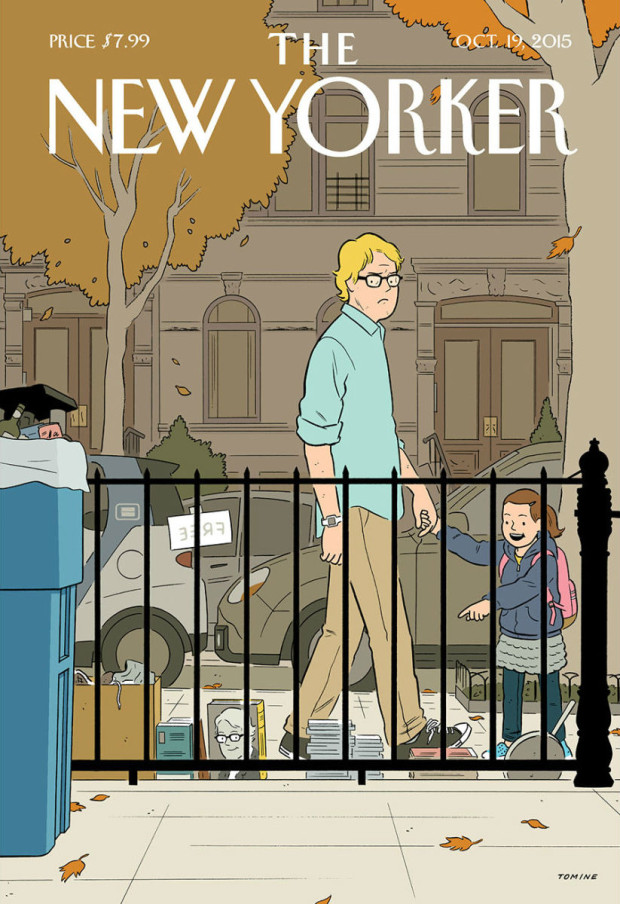
It’s Nice That has a great interview with the remarkable Françoise Mouly, co-founder of comics anthology Raw, editorial director of TOON Books, and, of course, art editor at TheNew Yorker:
“One of the things we had at Raw which I have tried to keep is not having a house style, it doesn’t all look alike. Raw really was the sum of its parts but you can’t say that Raw magazine was Joost Swarte or Charles Burns or Sue Coe.
“At The New Yorker when I came in there was a house style, a nice cat-on-the-windowsill type watercolour and you could look at the covers and see the common denominator. I have tried to never let it settle into, ‘Oh that’s a New Yorker cover’ except in the approach.”