Skip to content

Tag: high-rise

Brutalist Dreams

At the New York Review of Books, American architecture critic Martin Filler casts a critical eye over a slew of new books on Brutalist architecture: 

In addition to its echoes of art brut—Jean Dubuffet’s name for outsider art—New Brutalism was also an oblique riposte to New Humanism, a set of beliefs inspired by Geoffrey Scott’s hugely influential book ‘The Architecture of Humanism’ (1914). But Scott’s call for a return to Arts and Crafts design principles was scorned as escapist nostalgia by many young midcentury modernists. Among them was the period’s foremost British architecture critic, Reyner Banham, who with his scant empathy for the Arts and Crafts Movement’s focus on social reform issues belittlingly described New Humanism as “brickwork, segmental arches, pitched roofs, small windows (or small panes at any rate)—picturesque detailing without picturesque planning. It was, in fact, the so-called ‘William Morris Revival,’ now happily defunct….”

Yet it was not a utopian nineteenth-century dreamland that Brutalism countered as much as the thin, commercialized version of the International Style that after World War II gained ascendance through economic expediency. Brutalism’s striking departure from the steel-skeleton-and-glass-skin conformity of this routine, profit-oriented modernism was defined by its contrary emphasis on raw concrete (‘béton brut’ in French) in massive forms of imposing scale, idiosyncratic shape, rough finish, and uncompromising forcefulness, with a building’s inner workings and services—structure, plumbing, electricity, heating, and ventilation—unabashedly exposed. Brutalism soon became a worldwide craze, as this comparatively economical means of fabrication offered a cost-effective alternative to hand-riveted metal construction and allowed a broader array of sculptural effects than those obtainable with rectilinear frameworks.

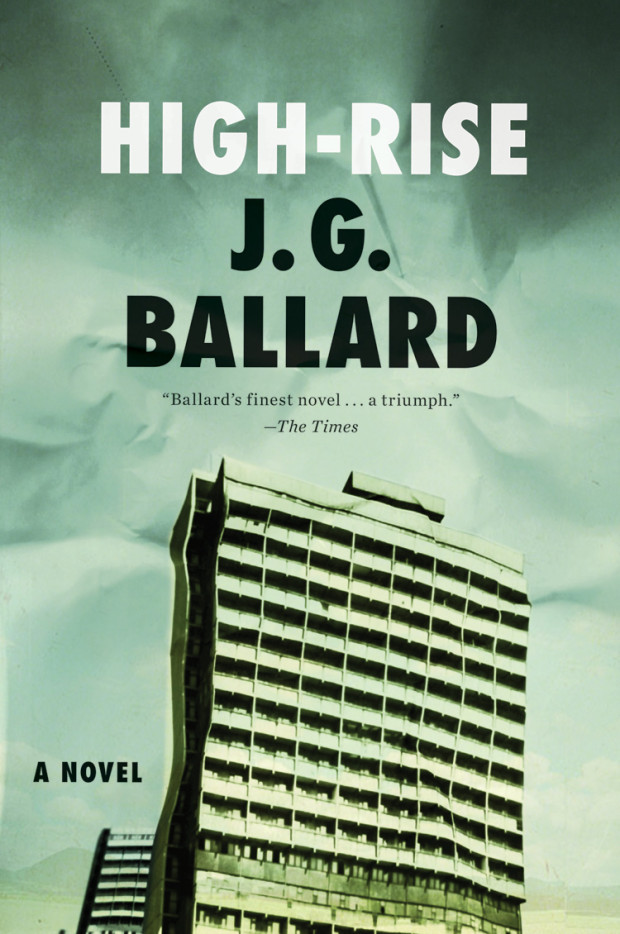
One gets the sense Filler is no fan of Brutalism — at least its bleak British incarnation — so there is, inevitably, a reference to J.G. Ballard’s dystopian novel High-Rise:

This was never a style that attempted to convey warmth, comfort, intimacy, or other qualities we tend to associate with an enjoyable way of life, and thus it never won much love except from architectural specialists. Brutalism posited an unsentimental, not to say harsh, view of the modern world, and however heroic its unflinching embodiment of hard realities may have been, most people do not enjoy a daily diet of architectural anxiety and alienation, especially in northern climates under cloudy skies.

One of the first signs of rejection came in J.G. Ballard’s dystopian novel ‘High-Rise (1975), which is set in a thinly fictionalized version of Ernő Goldfinger’s Trellick Tower in London’s North Kensington (1966–1972). (It is one of fifty-four sites highlighted in the ‘Brutalist London Map’, a useful guide to landmarks of the style in the British capital.) This thirty-one-story apartment block, commissioned by the Greater London Council, was based on Le Corbusier’s original Unité in Marseilles, although Goldfinger’s scheme is nearly twice as high as its prototype. Trellick Tower was well received by its first inhabitants, but as was also true of contemporaneous public housing projects in the United States, it quickly went to pot as funds for its upkeep and security were slashed, which resulted in a rapid descent into crime and squalor.

Neoconservative critics blamed the architecture, but as sociological studies have since proven, the claim that tall residential complexes breed social malaise is groundless. After Trellick Tower was privatized in the 1980s, when Margaret Thatcher got the British government out of the public housing business, the building’s owner-residents increased protection from intruders, paid for long-delayed repairs, and it is now a highly desirable property rightly appreciated for its design quality. 

If anyone can point me to a review of these books by someone a little more sympathetic to Brutalism, I’d be much obliged. 

Comments closed
Working for the Building

high-rise-paint

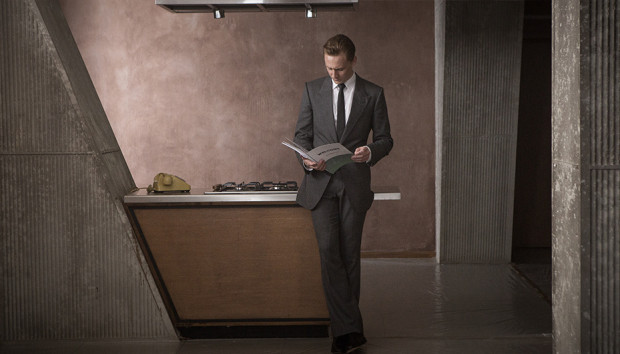
In a long and fascinating interview with the Ballardian, Ben Wheatley talks about J.G. Ballard and his adaptation of High-Rise:

Initially, I really enjoyed the cult appeal of [Ballard’s] work, or more specifically the counter-cultural aspect. His books, particularly Crash and High-Rise, were like rites of passage for anyone trying to read subversive and counter-cultural literature. Alongside Naked Lunch and Fear and Loathing in Las Vegas, they were books you had to read. But I was especially struck by Ballard’s use of language and turns of phrase, which didn’t feel like any other writer I had come across.

Although I enjoy SF, and that was also part of the charm of his novels, I also think it was books like The Atrocity Exhibition and then his 70s books that really hooked me in. When I was a teenager, there were two writers that really appealed to me: Burroughs and Ballard. They weren’t just authors and novelists in the traditional sense, they seemed much more dangerous and enigmatic than other writers. Burroughs naturally has a mystique because he shot his wife in the head and was a junkie, and therefore the extremity of his fiction was partially mirrored in his real life.

But the thing is, there was something about Ballard that was even stranger and perhaps more insidious, in the sense that he didn’t do those extreme things and was living a quiet, suburban life as a father to three children while also pouring out these amazingly perverse books. That had a big effect on me, but I was also aware of him through music, comics and other media. I wasn’t a particularly voracious reader of novels, so in some ways I experienced Ballard through a kind of cultural response to his work.

This is the best, most in-depth interview with Wheatley I’ve read on the subject of adapting Ballard and making High-Rise.

Comments closed

Ever Wanted Something More?

high-rise

Although the early reviews have not been especially kind to the Ben Wheatley film adaptation of J.G. Ballard’s High-Rise, the trailer looks amazing.  The Anthony Royal Architecture website is also a nice touch.

I can’t wait.

Comments closed

The Inner-Space of J. G. Ballard’s High-Rise

high-rise design Darren Haggar
design by Darren Haggar

With the release of the Ben Wheatley movie adaptation starring Tom Hiddleston imminent, Chris Hall looks at High-Rise and the ‘inner-space’ of J. G. Ballard’s science fiction for The Guardian:

High-Rise is the final part of a quartet of novels – the first three are The Atrocity Exhibition (1970), Crash (1973) and Concrete Island (1974) – with each book seeded in the previous one. Thematically High-Rise follows on from Concrete Island with its typically Ballardian hypothesis: “Can we overcome fear, hunger, isolation, and find the courage and cunning to defeat anything that the elements can throw at us?” What links all of them is the exploration of gated communities, physical and psychological, a theme that is suggestive of Ballard’s childhood experiences interned by the Japanese in a prisoner-of-war camp on the outskirts of Shanghai in the 1940s. It was, he always claimed, an experience he enjoyed.

The built environment is not a backdrop, rather it is integral and distinctive in its recurring imagery – from abandoned runways, to curvilinear flyovers and those endlessly mysterious drained swimming pools. Perhaps more than any other writer, he focused on his characters’ physical surroundings and the effects they had on their psyches. Ballard, who died in 2009, was also interested in the latent content of buildings, what they represented psychologically. Or, as he once obliquely put it, “does the angle between two walls have a happy ending?” – by which he meant that we project narrative on to external reality, that the imagination remakes the world. In Ballard’s fiction, nothing is taken at face value.

In High-Rise and Concrete Island especially, Ballard examines the flip side to what he called the “overlit realm ruled by advertising and pseudo-events, science and pornography” that The Atrocity Exhibition and Crash mapped out. Under-imagined or liminal spaces, such as multi-storey car parks and motorway flyovers, act as metaphors for the parts of ourselves that we ignore or are unaware of. His characters are often forced to assess the physical surroundings and, by extension, themselves rather than to take them for granted.

Comments closed