Skip to content

Tag: google

The Shiny Surface of Jonathan Ive

My ‘longreads’ to-read list is as bad, if not worse, than the pile of books I have to read right now, so it’s taken me until today to get to that very, very long New Yorker profile of Jonathan Ive, the senior vice-president of design at Apple.

Unfortunately, the whole thing is a bit disappointing and, I thought, even a little sad. By the end, Ive remains an enigma. What lingers is his famous friends, love of bland luxury brands, and just how remarkably wealthy he is (writer Ian Parker reminds you several times that Ive owns a private jet).

It seems Ive is either depressingly shallow or, more likely, these superficial things are all that he is willing to reveal about himself, which is depressing too in its own way. Ive is, no doubt, just politely protecting his privacy, but he comes across as peevish and sadly unlikeable, which is a shame. Or maybe I’m just not interested enough in industrial design and luxury brands, or Apple if it comes to that.

The article does, however, give me an excuse to post this blistering 15 minute video of NYU Stern marketing professor Scott Galloway talking a mile-a-minute about Apple, Amazon, Facebook and Google. I’m sure he’s wrong about a lot of things, but not only does he talk about Apple’s transition from tech company to luxury brand, he also offers some of the most cogent insights into the current problems facing Amazon I’ve heard in a while:


Interestingly, Ian Parker says in his New Yorker article that watch manufacturers are not worried about Apple stepping into the market. Galloway says they should be. I guess we’ll see who is right.

Comments closed

Google Doodle for Saul Bass’ 93rd Birthday

Google marks Saul Bass’ birthday with a neat animated short based on his work:


Comments closed

Midweek Miscellany

FPO: For Print Only features the fun cover for John Durak’s collection of poetry Condiments and Entrails designed by Bunch

The Oracle of Redirection — James Gleick, author of The Information, reviews four books about Google for the NYRB:

Google defines its mission as “to organize the world’s information,” not to possess it or accumulate it. Then again, a substantial portion of the world’s printed books have now been copied onto the company’s servers, where they share space with millions of hours of video and detailed multilevel imagery of the entire globe, from satellites and from its squadrons of roving street-level cameras. Not to mention the great and growing trove of information Google possesses regarding the interests and behavior of, approximately, everyone.

Glittering Delights  — Simon Schama talks to The Guardian about his recent book of essays Scribble, Scribble, Scribble:

I have this magpie instinct for the next glittering object. There are one or two things I know I can’t write about though: DIY, cricket, automobile repair. I could study it for a lifetime and not produce a word on the carburettor.

And finally…

Power, Corruption and Lies New Yorker critic Alex Ross, author of  The Rest is Noise and Listen To This, on Oscar Wilde, homosexuality, and a new “uncensored” edition of The Picture of Dorian Gray published by Harvard University Press:

[N]o work of mainstream English-language fiction had come so close to spelling out homosexual desire. The opening pages leave little doubt that Basil Hallward, the painter of Dorian’s portrait, is in love with his subject. Once Dorian discovers his godlike powers, he carries out various heinous acts, including murder; but to the Victorian sensibility his most unspeakable deed would have been his corruption of a series of young men… At the Wilde trials of 1895, the opposing attorneys read aloud from “Dorian Gray,” calling it a “sodomitical book.” Wilde went to prison not because he loved young men but because he flaunted that love, and “Dorian Gray” became the chief exhibit of his shamelessness.

Comments closed

Midweek Miscellany

L’Exception Française —  The Guardian on an exhibition in Paris celebrating the centenary of French publisher Gallimard:

Gaston [Gallimard] himself always protested that he had never had any ambition or even vocation to be a publisher. And when in 1910 he was invited to join the “adventure” of the Nouvelle revue française (Nrf), it was an example of what became a rule, letting his friends “guide his life”. Modest, somewhat detached, well turned-out and above all, perhaps, “without side”, he was to prove a magnet for writers of violently contrasting aesthetic and political allegiances. He had charm, and he had luck. He drew towards him, and elected to that most exalted of circles, the comité de lecture, such arbiters of literary taste and intellectual vigour as Jacques Rivière, Jean Paulhan, André Malraux, Albert Camus and Raymond Queneau.

Gallimard, 1911-2011: Un siècle d’édition is at the Bibliothèque nationale de France until 3 July, 2011.

Dry Eyed — David L. Ulin revisits James M. Cain’s Mildred Pierce for the LA Times:

“Mildred Pierce” is less a work of noir than it is a straightforward realist novel: dry-eyed, unsentimental, in which a woman finds grace, of a kind, first by surpassing her limitations and then by recognizing them. That’s a metaphor for what it means to be a grown-up, for what it means to have to take care of a family, to sacrifice in the name of a greater good. It’s also an acute portrait of a society in transition — that of Los Angeles between the wars.

A Map of Wrong Turns — Robert Darnton breaks down why the Google Books settlement failed for the NYRB:

The cumulative effect of these objections, elaborated in 500 memoranda filed with the court and endorsed in large part by Judge Chin’s decision, could give the impression that the settlement, even in its amended version, is so flawed that it deserves to be pronounced dead and buried. Yet it has many positive features. Above all, it could provide millions of people with access to millions of books. If the price were moderate, the benefit would be extraordinary, and the result would give new life to old books, which rarely get consulted from their present locations on the remote shelves or distant storage facilities of research libraries… How can these advantages be preserved without the accompanying drawbacks?

See also: John Naughton on the settlement in The Observer.

Geographic Ingredients — An interesting article by Alison Arieff on communities of local manufacturers for The New York Times:

“For decades we have developed a culture of disposability — from consumer goods to medical instruments and machine tools. To fuel economic growth, marketers replaced longevity with planned obsolescence — and our mastery of technology has given birth to ever-accelerating unplanned obsolescence. I think there is increasing awareness that this is no longer sustainable on the scale we have developed.”

Interestingly, one of the companies Arieff mentions is DODOcase who use traditional bookbinding techniques to make beautiful cases for iPads and e-readers.

And finally…

A quick reminder that tomorrow, Thursday March 31st 2011, is the deadline for AIGA’s 50 Books/50 Covers competition. You can enter online here.

Comments closed

Midweek Miscellany

Pharmaceutical Sincerity — Michael Bourne on Fear and Loathing in Las Vegas 40 years on for The Millions:

I can still remember sitting in the basement of my parents’ house in Northern California, practically whizzing myself with delight at that dizzying list of pharmaceuticals. I was fourteen and I’d read Catcher in the Rye and A Separate Peace and all the other books about and for nice, well-heeled boys whose lives have gone a little off the rails, but Fear and Loathing in Las Vegas was different. It wasn’t just the mind-blowing drug use or the lusty middle finger Thompson seemed to be giving straight America; no, what was so startling, so riveting to my fourteen-year-old’s mind was how sincere the whole thing seemed.

Base Camp — Levi Stahl compares J.G. Ballard to Joseph Conrad (via The Second Pass):

Ballard’s scientists, marooned on far-flung outposts throughout the galaxy, are merely Conrad’s company agents and traders thrown into the future.

Like Conrad’s characters, Ballard’s have been nominally put in charge of places that are only barely understood back home–and whose history, culture, traditions, and dangers are almost entirely a secret. Their knowledge is limited where it isn’t totally useless; their true dominion extends no farther than the walls of their base camp; and the culture they represent is utterly unwanted, even insignificant when set against against the inescapable age of the universe around them.

Disrupting Molecules — Apple designer Jonathan Ive profiled in the Daily Mail (of all places):

Ive is not like other product designers, who too often trade in slick superficialities and press releases. Ive prefers to be engrossed in fundamentals and has very little interest in personal publicity. To him, the way a thing is made is fundamental to its character: his mind occupies a workshop, not an artist’s atelier.

With an Ive product, it is impossible to say where the engineering ends and the ‘design’ begins. It’s a continuum. He thinks and thinks about what a product should be and then worries it into existence. It’s what Ive calls ‘effort and care beyond the usual’. He has very few distractions…

…With the MacBook Air, he told me it’s, metallurgically speaking, about as far as you can actually go with aluminium before you start disrupting molecules. A calm and engaging personal manner becomes almost excitable when he describes the outer limits of transforming stainless steel. This Zen-like obsession with materials, with getting to what he calls the ‘local maximum’, is what gives Apple products their extreme appearance.

Semantic Slippage — The Information by James Gleick reviewed in The New York Times:

[In] its ordinary usage, “information” is a hard word to get a handle on (even after a recent revision, the Oxford English Dictionary still makes a hash of its history). It’s one of those words, like “objectivity” and “literacy,” that enable us to slip from one meaning to the next without letting on, even to ourselves, that we’ve changed the subject.

That elusiveness is epitomized in the phrase “information age,” which caught on in the 1970s, about the same time we started to refer to computers and the like as “information technology.” Computers clearly are that, if you think of information in terms of bits and bandwidth. But the phrases give us license to assume that the stuff sitting on our hard drives is the same as the stuff that we feel overwhelmed by, that everybody ought to have access to, and that wants to be free.

Kick Out the Jams — Wired Magazine profiles everyone’s favourite funding platform Kickstarter (via Waxy):

While plenty of people are willing to extol Kickstarter’s earth-shattering potential, its founders are not among them. “We never had change-the-world aspirations,” says cofounder Yancey Strickler, who insists he just wanted to help artists get stuff made. (Strickler’s team approves every project before it’s posted, and Strickler has personally funded 340 of them, making him the site’s greatest patron.) But the world may have other plans for the site. The Kickstarter guys may have kick-started something bigger than they ever intended…[J]ust as Twitter outgrew its beginnings as a humble messaging system, Kickstarter may not be able to maintain its low profile much longer. “The most interesting companies demonstrate emergent behavior,” says Fred Wilson, a venture capitalist at Union Square Ventures, which invested in Kickstarter. “People’s use of the service is never what the creators intended.”

And finally… Just in case you’ve been in a dark room with the lights off for the last 24 hours (and who could blame you?),  a US federal judge has rejected Google’s legal settlement with authors and publishers reached in 2008. Read about at The Guardian, The New York Times, or the media outlet of your choice.  MobyLives stops just short of dancing on it’s grave, and Jacket Copy looks at what might come next.


Comments closed

Personal Projects

I’ve been thinking a lot about personal projects recently and so I found this presentation for 99% by Ji Lee, Creative Director for Google Creative Lab, really inspiring:

(via The Donut Project/SwissMiss)

1 Comment

Something for the Weekend, June 5th, 2009

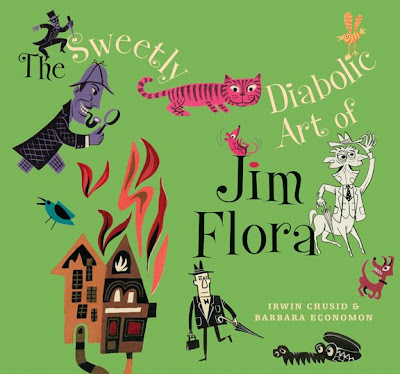
Sweetly Diabolic — A new Jim Flora compendium from Fantagraphics.

I really, truly, wasn’t going to link to any BEA autopsies — and there are plenty out there — but on the eve of BookCamp Toronto I thought Brian O’Leary’s post seem pertinent:

It would be more than nice, more than fun, more than illuminating, if we as an industry could use events like BEA as less an opportunity to predict the future and more a forum in which to examine the options. Okay, piracy is bad, but.. what if it helped sell books? Okay, we love long-form fiction and we think it should survive, but what if the people who read it now just stopped? Okay, a trade publisher provides value in choosing and curating content, but what if the world turned upside down and everyone were a writer, a publisher, a reader… Wouldn’t that be really cool?

Fingers crossed for tomorrow… Follow along on Twitter. The event account is @BookCampTO. The hash-tag is #bcto09.

Access of Evil — More on Google’s big e-book adventure at Business Week. The ‘news’ is that Google will be offering online access to e-books rather than downloads. Which, if I understand it correctly, is what Shortcovers does already. Not that anyone is giving them credit for it.

The ALPHABET chest of drawers by Kent and London, inspired by vintage printing blocks: “The perfect place to file everything from A-Z!” (via source of all good things swissmiss).

The George Orwell Archive at the BBC (via The Book Depository blog):

For two years, between 1941 and 1943, George Orwell – real name Eric Blair – was BBC staff member 9889, hired as a Talks Producer for the Eastern Service to write what was essentially propaganda for broadcast to India.

From recruitment to resignation, this collection of documents reveals the high regard in which Orwell was held by his colleagues and superiors and his own uncompromising integrity and honesty.

The Wickedest Man in the World — Jake Arnott, author of The Long Firm, on how the very real Aleister Crowley became the archetypal fictional 20th century villain. Sadly Arnott doesn’t mention that Oliver Haddo, W. Somerset Maugham’s literary Crowley, appears in the latest League of Extraordinary Gentlemen adventure.

The Future of Mainstream Media — a fascinating article about the success of National Public Radio (NPR) by Josh Catone for Mashable:

NPR’s amazing growth over the past 10 years prompted FastCompany magazine in March to call NPR the “most successful hybrid of old and new media,” and wonder if NPR could be the savior of the news industry. [T]hey owe that success to the culture of open access and audience participation that they’ve cultivated over the past decade.

And… OK I just can’t not link to Design Assembly‘s post about design-hero Wim Crouwel’s ISTD lecture.

Note: if you want me to link to your site, you just need to include a brilliant photograph of Wim Crouwel looking cool as f*ck and then use a genius soccer analogy:

“(For me) a grid is like a football pitch. You see a beautiful game of football, and then you see a not so beautiful one, but it all takes place on the same pitch”.

Yes. I am a cheap date.

4 Comments

Midweek Miscellany, June 3rd, 2009

I’m a little fatigued by all the inevitable post-Book Expo harping, hand-wringing and hubris, so please  forgive me if today’s links are a little light on book-book stuff…

Community Organizer — The New York Observer profiles John Freeman, the new editor of literary journal Granta:

Mr. Freeman believes in the inevitability of books—even if, as he will lay out in his forthcoming manifesto for Scribner, The Tyranny of E-Mail, the Internet is engendering in the people who use it habits that distract them from reading. This is the salve he has to offer a chapped and chafing industry. As people cry doom, he’s there to hold hands and assure them that it’s not that bad.

Cover Versions — Starting with Olly MossVideo Game Classics, Design Week looks at the trend of remixing just about everything to look like vintage 1960’s paperbacks.  What Consumes Me has a nice round-up of recent mash-ups (thx James!). And, if that wasn’t enough, Drawn! points to the another recent example: classic records reworked as classic Pelican paperbacks.

Which leads rather nicely to Emmanuel Polanco‘s Saul Bass inspired design for Moby Dick:

Throwing Down the Gauntlet — As widely reported elsewhere, Google are preparing to sell e-books according to the New York Times.

Making Mistakes — A fascinating interview with designer Paula Scher talking about creative failure at Psychology Today:

If you find yourself defending yourself and protecting yourself and being outraged about what’s around you, you’re in trouble. That doesn’t mean some things aren’t genuinely outrageous. But you have to ask yourself: Why are you outraged by something? What are you hiding from? What are you defending?

And, on a not dissimilar note…

Use It or Lose It — Indispensable creative advice from ad exec Dave Trott (via Mark McGuinness on Twitter):

If we wait for the right opportunity it won’t happen. It’ll stay in our drawer until the world has passed it by. Times will change and newer, more exciting things will be happening. Now it looks old and tired. Now it’s too late.

If we don’t find a way to make it happen, if we don’t take a chance and overcome lethargy and embarrassment to do it, it will disappear.

Students always ask me what I think they should do.

I tell them, “The answer is always the same two words: ‘everything’ and ‘now’.”

Everything and Now… Everything and Now…

Comments closed

Something for the Weekend, May 15th, 2009

The Story of Goddesigner Arthur Cherry discusses his elegant design (which uses Marian Bantjes’ typeface Restraint to such brilliant effect) for the new edition of Michael Lodahlr’s book at FaceOut Books.

A Manifesto — Ted Genoways, the editor of Virginia Quarterly Review, on the future of university presses and journals:

University presidents need to see what articulate ambassadors they have in their journals and presses, what tangible, enduring records they present of the variety and vigor of their sponsoring institutions…[G]reat universities extend well beyond the edges of their campuses. They reach out to the larger world, they challenge and engage the public, and the most effective and enduring way of doing so remains the written word.

HarperCollins Wants to Be Your Friend — Leon Neyfakh looks at publishers and social media in the New York Observer. Ostensibly it’s about the ever so anodyne HarperStudio, but more interesting stuff comes from the other people interviewed:

“I don’t know if it’s a direct response to the fact that publishing is in a very uncertain period right now, or if it’s just an idea whose time has finally arrived, but people right now are really interested in experimenting,” said Ami Greko, a 29-year-old digital marketing manager at Macmillan. “There seems to be a real sense of, ‘Let’s get creative—nothing is set in stone yet, so let’s just try a whole bunch of stuff.’”

Das Buch vom Jazz — The German-language version of The Book of Jazz, illustrated by Cliff Roberts ,  found in a used-bookstore by Today’s Inspiration’s Leif Peng. The black and white illustrations are wonderful.

Moaning Eton-boys & Middle-Aged Hackettes — A great defense of blogging by Nina Power at Infinite Thøught  (via PD Smith on Twitter):

Print media suffers from a lack of space; certainly it is selective, but it is also exclusive — all the stories that don’t get told, the injustices that get covered-up. We may feel we can ‘trust’ print journalists more than bloggers… but the sheer quantity and variety of information online allows for the exposure and discussion of things that might otherwise get ignored.

And finally…

The Tyranny of Data — The New York Times on Douglas Bowman‘s decision to leave his position as top visual designer at Google, and the  limitations of crowd-sourcing design:

“Getting virtually real-time feedback from users is incredibly powerful,” said Debra Dunn, an associate professor at the Stanford Institute of Design. “But the feedback is not very rich in terms of the flavor, the texture and the nuance, which I think is a legitimate gripe among many designers.”

Adhering too rigidly to a design philosophy guided by “Web analytics,” Ms. Dunn said, “makes it very difficult to take bold leaps.”

1 Comment

Something for the Weekend, March 20th, 2009

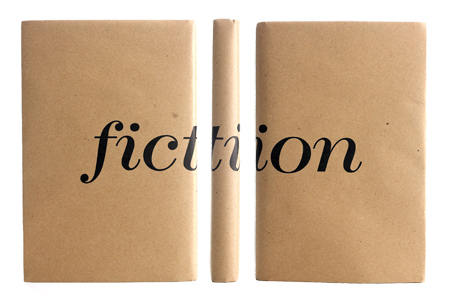
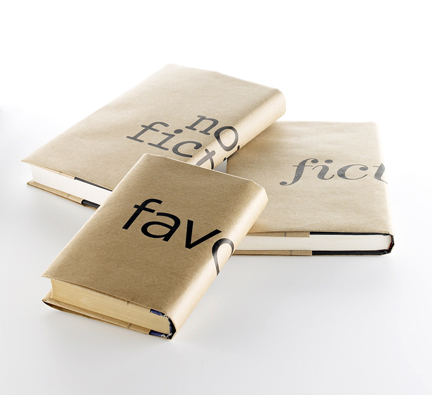
Book City Jackets— Printed at a small press in downtown New York, these lovely “updated versions of the classic paperbag bookcover” are made from recycled paper and sized to fit almost any book (pictured above). And they have a blog!  (via swissmiss & Design*Sponge).

Near Heretical — The inimitable Mike Shatkin on the story of DRM.

Don’t kill me, Robert BringhurstNic Boshart, BookNet Canada intern and coordinating editor at Invisible Publishing, offers another nice round-up of lessons for small presses from the BookNet Tech Forum.

Wish you were hereSeen Reading‘s collaborative Google map of independent bookstores.

That elusive viral componentWired on Random House, Simon & Schuster, Workman Publishing Co., Berrett-Koehler, Thomas Nelson, and Manning Publications making e-books and excerpts available on Scribd:

For book publishers, Scribd is not the only platform they are utilizing with the rising e-book hype, but the viral components are limited elsewhere… Along with navigation features like search and zoom, the books can be download (as a .pdf) and viewed on compatible e-book readers or shared across numerous social networks including Digg, Facebook and Twitter.

“The YouTube for print”PW has more on Scribd.

Sony e-book reader gets 500,000 books from Google, but Sara Nelson doesn’t think it will be enough in the LA Times:

Sony seems, instead, to be hitting hard on the theme that it’s giving options to publishers, who have not been shy about their complicated feelings toward Amazon and the power it wields.

Making public domain books more available is all to the good. But at the moment, Sony’s move appears to be too little, too late.

2 Comments

Midweek Miscellany, February 4th, 2009

Slow Burner (above) — a rather awesome — if slightly racy — cover seen at the Bookkake Blog.

How to Publish in a Recession Part 3 — The always interesting Richard Nash, the editorial director of Soft Skull Press and the executive editor of Counterpoint, talks to Scott Esposito at Conversational Reading.

The Once and Future e-book: On Reading in the Digital Age — A fascinating article on the past, present, and future of e-books and e-book readers by John Siracusa at Ars Technica.  I think — like many —  he underestimates the challenges (such as rights issues and, on a really basic level, a lack of expertise and human resources) publishers face making their titles available as e-books, but this really is a must-read.

Book Expo Canada is officially dead. It is an ex-trade show– Surprising precisely no one. The Globe and Mail has publisher reactions and a postmortem interview with Tom Best, vice president, marketing, at H.B. Fenn. What troubles me is the belief that we need something to replace it…

There’s so much written about how publishers don’t know what they’re doing… But how do you know what to do?”The New York Observer talks to former PW editor Sara Nelson:

You’re making a bet on who’s gonna like something a year and a half from now. That’s without even getting into the economy or anything—just, ‘What’s the mood of a number of people going to be a year and a half from now?’ If you thought too much about that, you’d shoot yourself.”

“We are on the verge of an explosion in independent book publishing” — Hugh McGuire of Librivox and The Book Oven chats to Allentrepreneur.

The Google Paradox — Andrew Keen, author of The Cult of the Amateur, on two new books published (in the conventional way) about Google:

“the more Google does to kill the traditional publishing industry with the free online content from its search engine, the more books will get written about the central role of Google in our new digital economy… The irony of Elsewhere USA and What Would Google Do? is that both books rely on the five hundred year-old technology of Johannes Gutenberg’s moveable type to explain the wrenching digital transformation of the 21st century.”

Who is on twitter? — I think I fall into the cateogory of “people who are concerned about the collapse of the publishing industry.” (Thanks Sio!)

Comments closed

Midweek Miscellany, Jan 28th 2009


John Updike (pictured) has died at 76The Guardian and the New York Times look back at his life and career in pictures. Designer Observer points to ‘Deceptively Conceptual’ Updike’s astute 2005 essay on book covers for the New Yorker:

Publishing forms a minor branch of the entertainment industry, and book design is increasingly a matter of fashion—that is, of attention-getting. In the visual clamor of a bookstore, the important thing is to be different; a whisper becomes a shout, and the ugly becomes beautiful if it attracts attention. Yet an utter flaunting of conventional expectations may baffle and repel the public; when the title and the author’s name are left off the front of the book… it sends a subliminal message of contempt for the written word, the product being packaged.

Batman as jazz– Brad Mackay wins top prize for funniest headline of the week for his look at the reinvention of the Dark Knight and the genius of BatManga! in the Globe and Mail.

“Content is Free… But Curation is Sacred” — Peter Collingridge at Times Emit considers the implications of the Google settlement and what happens if/when we are flooded with unmediated free “stuff”:

[A]s the amount of content we are exposed to increases, without any discernible gauge of quality, it is the trusted curators of that content to whom we will choose to give our attention, time or money, rather then trying to filter it all out personally… the curator may be the bloke in the record shop who knows my music collection and recommends something new, the staff in my local wine merchant, or a particularly good blog I follow, my newspaper – anything. However, it is not Amazon’s recommendation algorithm; it is decidedly human, and, over time, a relationship of trust is built up. If it works, that trust leads to action, purchase, attention, refinement and more trust.

See the Web Site, Buy the Book: J. Courtney Sullivan looks at author web sites and book trailers for the New York Times.

Sara Nelson, editor in chief of Publisher Weekly has been fired is “leaving as part of a companywide restructuring”. The indefatigable Sarah Weiman has a extensive round-up of the reactions in the blogosphere.

The fabulous Book Cover Archive have recently add a couple of lovely minimalist cover designs by Gabriele Wilson (pictured above). Nice.

Comments closed