Skip to content

Tag: gestalten

Hello, I Am Erik

hello-erik
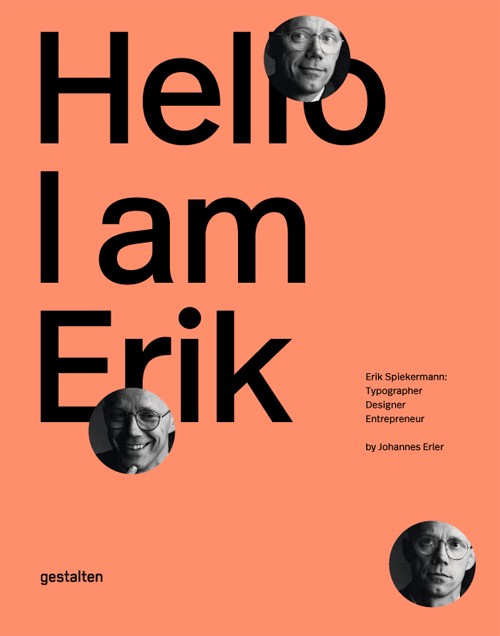
Next month, the fine folks at Gestalten are publishing Hello, I Am Erik,  a ‘visual biography’ of typographer and designer Erik Spiekermann. In this new interview with GestaltenTV, Spiekermann talks about his 30 year career, and how working with blocks of movable type is different from designing on a screen:


Comments closed

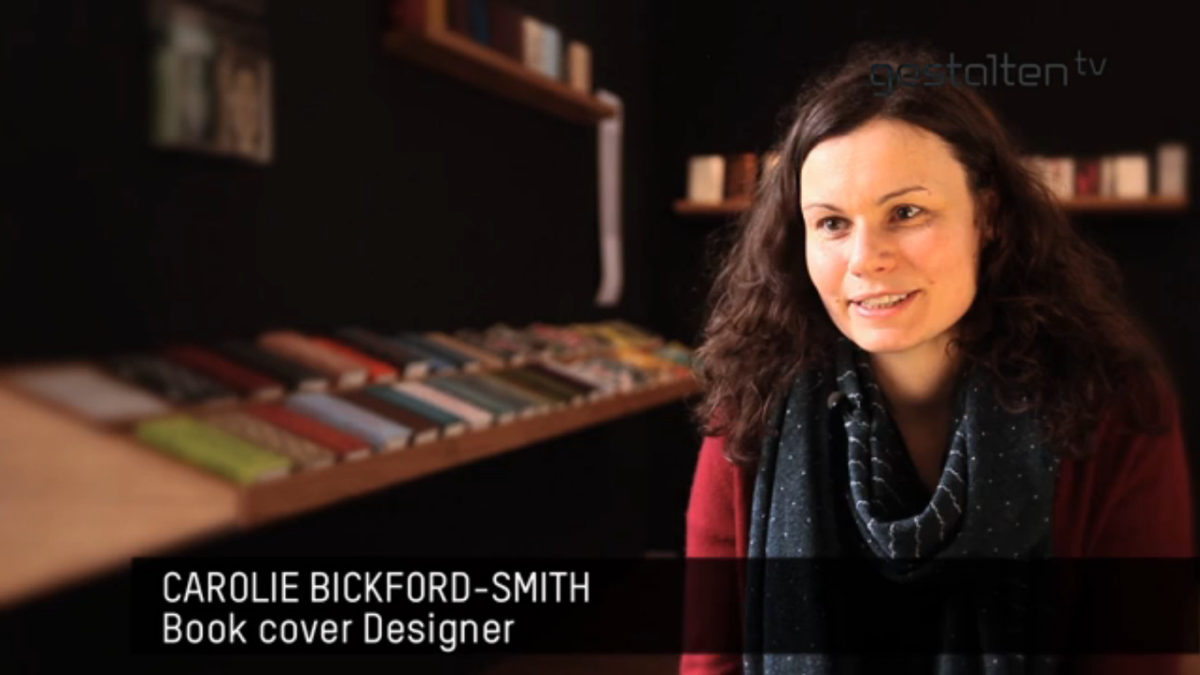
Carolie Bickford-Smith—A Series Woman

In this new interview with Gestalten.tv, Penguin Press designer Coralie Bickford-Smith talks about her love of books, her design process and the importance of research:

[vimeo 65388307 w=500]

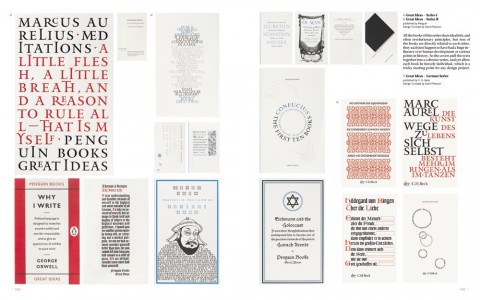
Coralie’s work is featured in Fully Booked: Ink on Paper, published earlier this year by Gestalten.


You can read my 2009 interview with Coralie here.

1 Comment

Oliver Jeffers: A Quantum of Physics

Gestalten.tv talks to Oliver Jeffers, award-winning author of picture books such as Lost and Found, The Incredible Book Eating Boy, and This Moose Belongs to Me,  about his paintings, collages, installations, and collaborative works, collected in his first monograph Neither Here Nor There:

2 Comments

Fully Booked – Interview with David Pearson and Jim Stoddart

GestaltenTV have been reposting some of their past videos, and I just came across this interview with designer David Pearson and Penguin art director Jim Stoddart from 2008 for the Gestalten title Fully Booked: Cover Art and Design for Books (currently unavailable sadly):

Comments closed

Midweek Miscellany

I really enjoyed Naïve: Modernism and Folklore in Contemporary Graphic Design, so I really think I have to pick up  Echoes of the Future: Rational Graphic Design and Illustration, also published by Gestalten. A “compilation of recent graphic design and illustration that is inspired by our collective visual memory”,  the book includes work by Gianmarco Magnani, AKA Silence Television, who (calling all enterprising art directors) ought to be doing book covers (if he isn’t already):

But moving on…

“The only thing left on the high street that doesn’t want either your soul or your wallet” — Zadie Smith on libraries at the NYRB:

What kind of a problem is a library? It’s clear that for many people it is not a problem at all, only a kind of obsolescence. At the extreme pole of this view is the technocrat’s total faith: with every book in the world online, what need could there be for the physical reality? This kind of argument thinks of the library as a function rather than a plurality of individual spaces. But each library is a different kind of problem and “the Internet” is no more a solution for all of them than it is their universal death knell.

And on a sort of related note…

The Disease-Carrying Book — John Sutherland reviews How To Do Things With Books in Victorian Britain by Leah Price for the Literary Review:

The public library, introduced in Manchester with much municipal self-congratulation in the early 1850s, was ‘free’, unlike ‘leviathan’ circulating libraries such as Mudie’s and W H Smith’s that catered to the middle classes. The lower classes lick their index fingers to turn the page. A quaint ‘fumigator’ in which Victorian public libraries could decontaminate their stock is illustrated in Leah Price’s discussion of the disease-carrying book. Victorians were wedded to the ‘miasmic’ theory of disease. Yet it wasn’t air but spittle that was the vector of the dreaded consumption.

Reality is Elsewhere — Steve Wasserman on Amazon at The Nation:

For many of us, the notion that bricks-and-mortar bookstores might one day disappear was unthinkable. Jason Epstein put it best in Book Business, his incisive 2001 book on publishing’s past, present and future, when he offered what now looks to be, given his characteristic unsentimental sobriety, an atypical dollop of unwarranted optimism: “A civilization without retail bookstores is unimaginable. Like shrines and other sacred meeting places, bookstores are essential artifacts of human nature. The feel of a book taken from the shelf and held in the hand is a magical experience, linking writer to reader.” That sentiment is likely to strike today’s younger readers as nostalgia bordering on fetish. Reality is elsewhere.

Also at The Nation Michael Naumann on Germany’s bookstores and literary culture:

Since the late 1840s in Germany, the ambiguous character of books—simultaneously a commodity and a cultural work—has defined internal discussions in the publishing business. Putting aside the implicit hubris of German nationalism, the country’s self-aggrandizement as a veritable Kulturnation, the fact remains that in Germany the cultural definition of the “book” as a major source of intellectual, scientific, economic and aesthetic self-improvement has carried the day over the capitalist notion that a book is a commodity and therefore deserving of no special considerations. The book as such is sacred. One does not throw books away.

And finally…

The Graphic Modern: USA, Italy and Switzerland 1934–66 exhibition curated by Patricia Belen and Greg D’Onofrio of Kind Co. is on display at Fordham University at Lincoln Center, should you happen to be in New York between now and July 26th.

Comments closed

Bill Moggridge: The Design of Service and Education

Bill Moggridge, founder of design company IDEO and current director of the Smithonian Cooper-Hewitt National Design Museum in New York, discusses design and the Cooper-Hewitt’s collection:

Comments closed

Ken Barber, House Industries

In this fascinating interview, Gestalten.tv talks to Ken Barber, lead letterer at the amazing House Industries, about lettering, typography, and font design:

1 Comment

Midweek Miscellany

Book Art: Iconic Sculptures and Installations Made from Books by Paul Sloman, a 220-page overview of contemporary art, installation, and design created with and from books , published Gestalten.

La Mémoire Retrouvée — Edmund de Waal, author of The Hare with the Amber Eyes, on his family’s connection to Proust, for The Daily Telegraph:

Proust played with the interpenetration of the real and the invented; his novels have a panoply of historical figures who appear as themselves mingling with characters reimagined from recognisable people. Elstir, the great painter who leaves his infatuation with Japonisme to become an Impressionist, has elements of both Whistler and Renoir, but has another dynamic force. And Proust’s characters stand in front of actual pictures. The visual texture of the novels is suffused not just with references to Giotto and Botticelli, Dürer and Vermeer, Moreau, Monet and Renoir, but by the act of looking at paintings, by the act of collecting them, remembering what it was to see something, the memory of the moment of apprehension.

Doomed — Jonathan Coe, author most recently of The Terrible Privacy of Maxwell Sim, on film adaptations of books for The Guardian:

In the course of their famous book-length interview, François Truffaut once asked Alfred Hitchcock about his approach to literary adaptation, and Hitch’s response was as magisterial, worldly and mischievous as one would expect: “What I do is to read a story only once, and if I like the basic idea, I just forget all about the book and start to create cinema. Today I would be unable to tell you the story of Daphne du Maurier’s The Birds. I read it only once, and very quickly at that.”


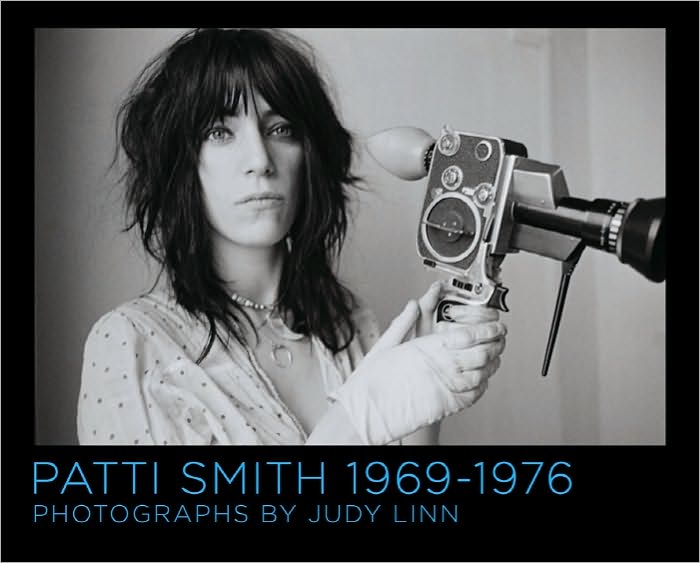
Circumventing the Male Gaze The New Yorker‘s Hilton Als on photographer Judy Linn and a new book collecting her photographs of Patti Smith:

I wonder what Patti and Judy saw in one another—I mean, beyond the description Judy provides in her little essay at the back of the book. What is the energy that one being picks up on, and how does it complement the other’s? Judy and Patti went to Detroit one summer and worked for a local paper and Crawdaddy, respectively; Patti wrote rock criticism and Judy took pictures. Lester Bangs was their friend. The world got bigger. Collaboration can be vexing, but there’s not a note of complaint in their work together. The pictures are documents of girls doing things together, sometimes in their summer dresses. And when there’s a third person present—Mapplethorpe, some other boy—they make a little room for him, but he’s rarely center frame; the pictures are rare in that they circumvent the male gaze and thus approval; instead, they document how each woman’s vision is equal to the other’s.

And finally…

Designer Data — The New York Times on data visualization:

Visual analytics play off the idea that the brain is more attracted to and able to process dynamic images than long lists of numbers. But the goal of information visualization is not simply to represent millions of bits of data as illustrations. It is to prompt visceral comprehension, moments of insight that make viewers want to learn more.

And on a related note: The Infographic Inforgraphic by Ivan Cash.
Comments closed

Kurt Weidemann 1922-2011 | GestaltenTV

GestaltenTV have posted an 16-minute interview with influential German typographer and graphic designer Kurt Weidemann who died at the age of 88 on March 31st, 2011:

Weidemann helped form the graphic identities companies such as Mercedes-Benz and Porsche, as well as designing books for the Büchergilde Gutenberg and the publishing houses Ullstein, Propyläen, Ernst Klett and Thieme.

Jürgen Siebert has written an obituary of Weidemann for FontFeed:

Weidemann was a disputatious designer. He disseminated his knowledge in numerous specialized books and countless presentations and talks. Legendary are his 10 Thesen zur Typografie, published in 1994 in the book Wo der Buchstabe das Wort führt. Ansichten über Schrift und Typografie. This resulted in his appeal: “God protect us from the vagrant creativity of the typomaniacs.” Weidemann never could reconcile with the immense variety of different typefaces. During a discussion at Swiss Mediaforum in 2010 he literally said: “There are ten, maybe fifteen very good typefaces, which I can agree with at least. There are 30,000 on the market, of which 29,990 can be sunk in the Pacific Ocean without causing any cultural damage.”

Comments closed

James Gallager | Cutting Edges

Here’s an interview with the New York-based artist James Gallagher, curator of an exhibition of contemporary collage called Cutters (currently on display at the West Cork Arts Centre in Ireland, February 7th-March 12th) and co-editor of the book  Cutting Edges published by Gestalten:

The book include collages by John Gall, Art Director at Vintage and Anchor Books, who actually mentioned the work of James Gallagher in our recent Q & A.

1 Comment

Erik Spiekermann — Putting Back the Face into Typography

In this fantastic video from Gestalten, graphic designer and typographer Erik Spiekermann, founder of MetaDesign and FontShop, and author of Stop Stealing Sheep, talks about designing type:

Spiekermann also discusses his love typography in this profile on Deutsche Welle TV:

(via I Love Typography)

1 Comment

The Story of Eames Furniture

Marilyn Neuhart, author of The Story of Eames Furniture, and her husband John both worked in close proximity to Charles and Ray Eames and key members of the Eames Office for almost 30 years. In this fascinating video interview with GestaltenTV, the couple talk about the people behind the iconic Eames designs:

The Story of Eames Furniture is published by Gestalten.

Comments closed