Skip to content

Tag: finland

Tove Jansson: Love, War and the Moomins

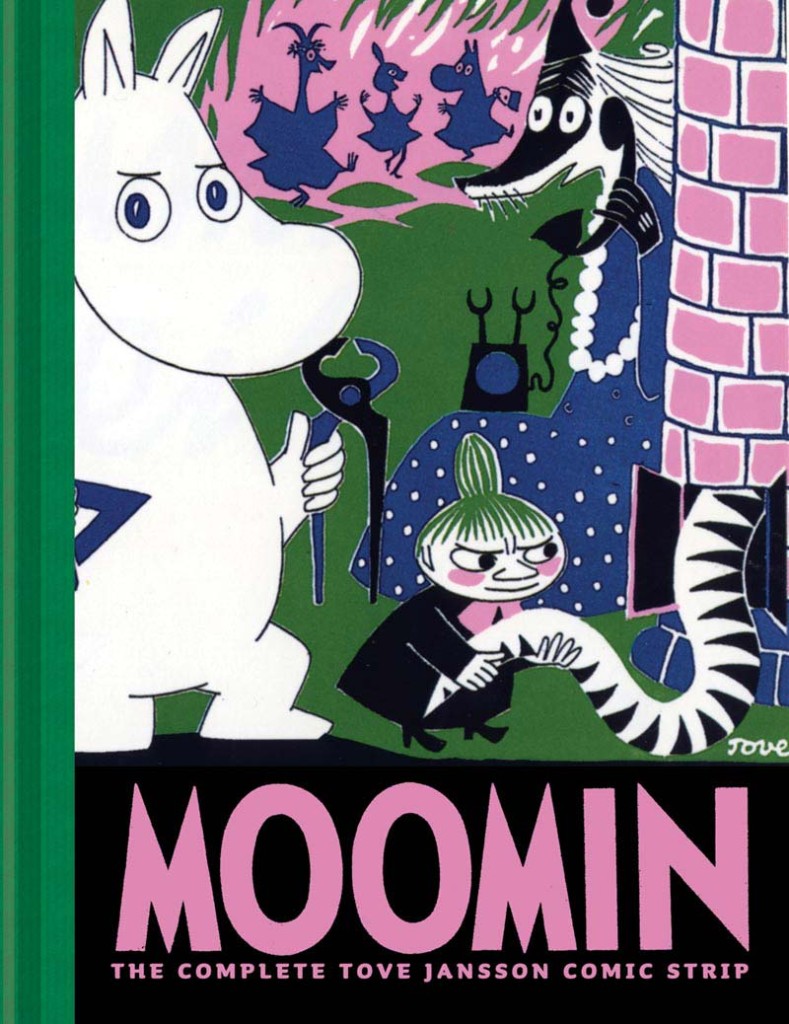
9781897299197_cfl

At BBC News, Mark Bosworth looks at the life of artist and writer Tove Jansson:

Tove Jansson grew up in an artistic household in Helsinki. Her father, a Swedish-speaking Finn, was a sculptor, her Swedish mother an illustrator.

While her mother worked, Tove would sit by her side drawing her own pictures. She soon added words to the images. Her first book—Sara and Pelle and the Octopuses of the Water Sprite—was published when she was just 13.

She later said that she had drawn the first Moomin after arguing with one of her brothers about the philosopher Immanuel Kant. She sketched “the ugliest creature imaginable” on the toilet wall and wrote under it “Kant”. It was this ugly animal, or a plumper and friendlier version of it, that later brought her worldwide fame.

Jansson studied art in Stockholm and Helsinki, then in Paris and Rome, returning to Helsinki just before the start of World War Two.

“The war had a great effect on Tove and her family. One of her brothers, Per Olov, was in the war. They didn’t know where he was, if he was safe, and if he was coming back,” says Boel Westin, a friend of Jansson’s for 20 years and a Professor of Literature at Stockholm University.

Jansson’s first Moomin book—The Moomins and the Great Flood—was published in 1945, at the end of this difficult and nerve-wracking period, with Comet in Moominland following soon afterwards.

“Tove’s anxiety and grief are embedded in the first two books. She was depressed during the war and this is mirrored in those books because they are about catastrophes,” says Westin.

Comments closed

Tove Jansson and the Postwar World

James Lovegrove reviews Tove Jansson, Life, Art, Words by Boel Westin, the first authorised biography of artist and writer, and Jansson’s own childhood memoir, Sculptor’s Daughter, first published in 1968 and now available in English for the first time, for The Financial Times:

The stories have… exerted an influence on many modern writers, for adults as well as children. Ali Smith, Jeanette Winterson and Maggie O’Farrell are self-professed Moomin fans. Philip Pullman has called Jansson a “genius”, while Frank Cottrell Boyce drew important life lessons from the Moomins at an impressionable age. “Jansson valorised coffee and pancakes and reticence and the mystery of others,” he wrote in a review of Moomin picture book The Dangerous Journey. “But more to the point she showed me how it might be just those small pleasures that keep us together when we start to grow apart.”

The young Boyce, however, was also drawn to the Moomins because he sensed an existential darkness at the heart of the books. Jansson wrote in the dominant mode of 20th-century children’s literature, fantasy, but hers was fantasy shot through with a quiet anguish. Apocalypse through natural disaster – flood, volcano, potentially earth-shattering comet – looms in the background of her stories. Characters are solitary, lonely, sometimes on the brink of despair, and acknowledge the fragility of things with an accommodating liberal shrug.

Kate Kellaway also reviews both books for The Observer:

[T]he greatest revelation, reading the memoir, is that what drove Jansson’s imagination was fear. This is a book of perils. The dark is a faceless monster with “distinct hands”. Snow is like “grey hands with a hundred fingers”. An eiderdown behaves like a fist. Ice breathes. Snakes in the carpet are almost real. The words “safety” and “dangerous” repeat themselves. The external world was always an internal landscape for Jansson. Reading her is like a return to childhood: things happen that are inexplicable when adults are in charge. It’s unwise to pretend to know what is coming next. Life, she indicates, is best approached gingerly, with respectful regard.

1 Comment