Skip to content

Tag: Fiction

Miriam Markowitz: ‘Here Comes Everybody’

I am very late to this, but Miriam Markowitz’s article for The NationHere Comes Everybody‘, on women and book publishing in 2013, is well worth reading:

More nuanced fiction that isn’t of an obvious commercial genre—much of which is written by women—often brushes up against the literary. Publishers have various terms for the books that straddle this line. One of the ugliest and yet most useful is “upmarket.” The writers who may be lumped in this category are diverse in their output and their ambitions.

One commercial editor told me that many of her writers once cherished literary aspirations, but that they’re comfortable in the “upmarket” category, in part because it’s more lucrative. “If you cash in on the monetary market, you won’t get prestige. A lot of writers are OK with that.” Few writers have control over their covers, let alone the way their books are marketed, but if an agent or publisher says that this lacy dress or that whispery veil might entice more readers, who are they to object? Readers of literary fiction, especially women, will buy commercial titles as well. But the phenomenal popularity of Fifty Shades of Grey or the Twilight series or Nora Roberts among women who do not specifically identify as “readers” suggests that the reverse is less true. It’s hard to blame women writers for trying their hand at the commercial market when the literary one is so inhospitable.

For writers of work that is unambiguously ambitious, this choice is more difficult in that it may not be an option at all.

Comments closed

Rachel Kushner and the Radical Gesture


Boris Kachka (Hothouse) profiles Rachel Kushner, author of The Flamethrowers, for New York magazine:

It’s tempting to ask just how transgressive a novel, especially a best-selling novel, can be—and whether taking a stand against mainstream values makes you subversive or just modern. In other words: Is Kushner the flamethrower for real?

The answer is, basically, yes, in both senses of the phrase: She knows what she writes about, and she’s dead serious about her ideals. There’s plenty of room in The Flamethrowers for the dark side of that idealism—murdered businessmen, casually discarded girlfriends, movements warped by violence. In many ways it’s the subject of the book. But if something ardent and glamorizing blazes through, like the flashy World War I brigade of the title, that’s because Kushner herself is a believer, a genuine and unself-conscious exponent of what she might call the radical gesture—even if those gestures are more common now among academics and art stars than any genuine underclass. In a forthcoming interview with Tin House, she calls her shimmering mosaic of a second novel a “paean, maybe, to things that have long interested me. Nothing is in the book that I had to learn about. Instead, it is filled with things I already knew … drawn from my taste, my life, my sensibility.”

The paperback edition of The Flamethrowers is out in February 2014.

Comments closed

Robert Macfarlane: Glimpsing Gormenghast

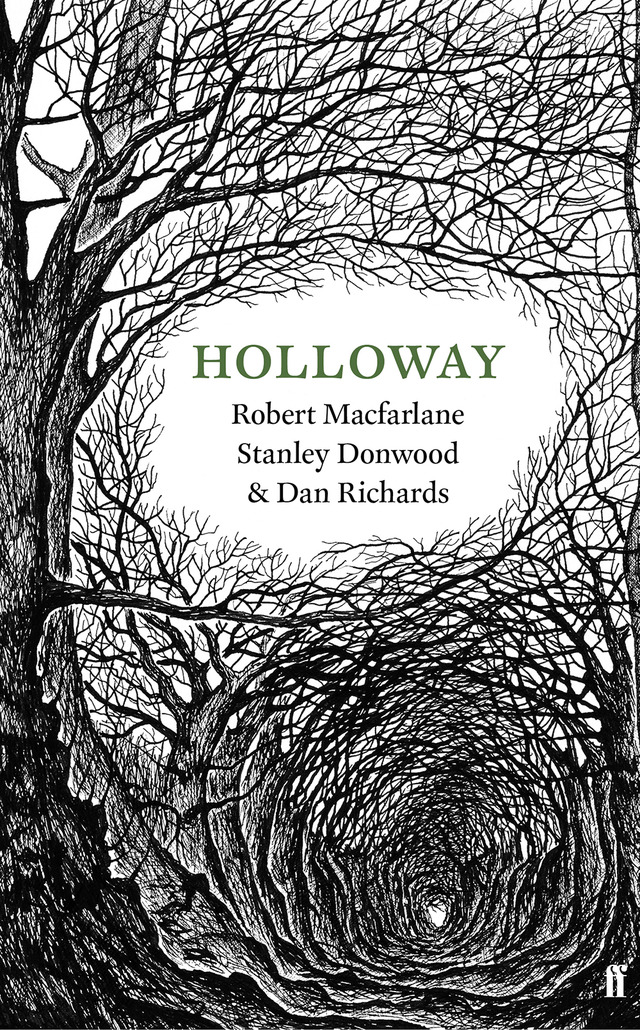
In the latest issue of Intelligent LifeRobert Macfarlane, author of The Old Ways: A Journey on Foot and co-author of Holloway, considers Mervyn Peake’s Gormenghast:

Gormenghast is a vast “labyrinth of stone”, in Peake’s phrase—except that it has no centre, for there is always another chamber to reach or further annex to access. In this respect it is less a castle, more a city—and an infinite city at that. I grew up at the end of a country lane in the English Midlands, and it was in Peake’s writing that I first sensed (fearfully, fascinatedly) what a city might feel like to inhabit.

Cities are, like Gormenghast, excessive and connective. They spawn, proliferate, self-generate: and they are sites of encounter and overlap. For every story you overhear in a city, every conversation you catch, myriad more are in the making at that moment. This is the affront that cities offer to reason, and the excitement they provoke in the mind: that they surpass all possible record. They are places of—to borrow again from Peake—intense “circumfusion”.

Comments closed

Jonathan Lethem: Nibbling Around the Edges of Culture

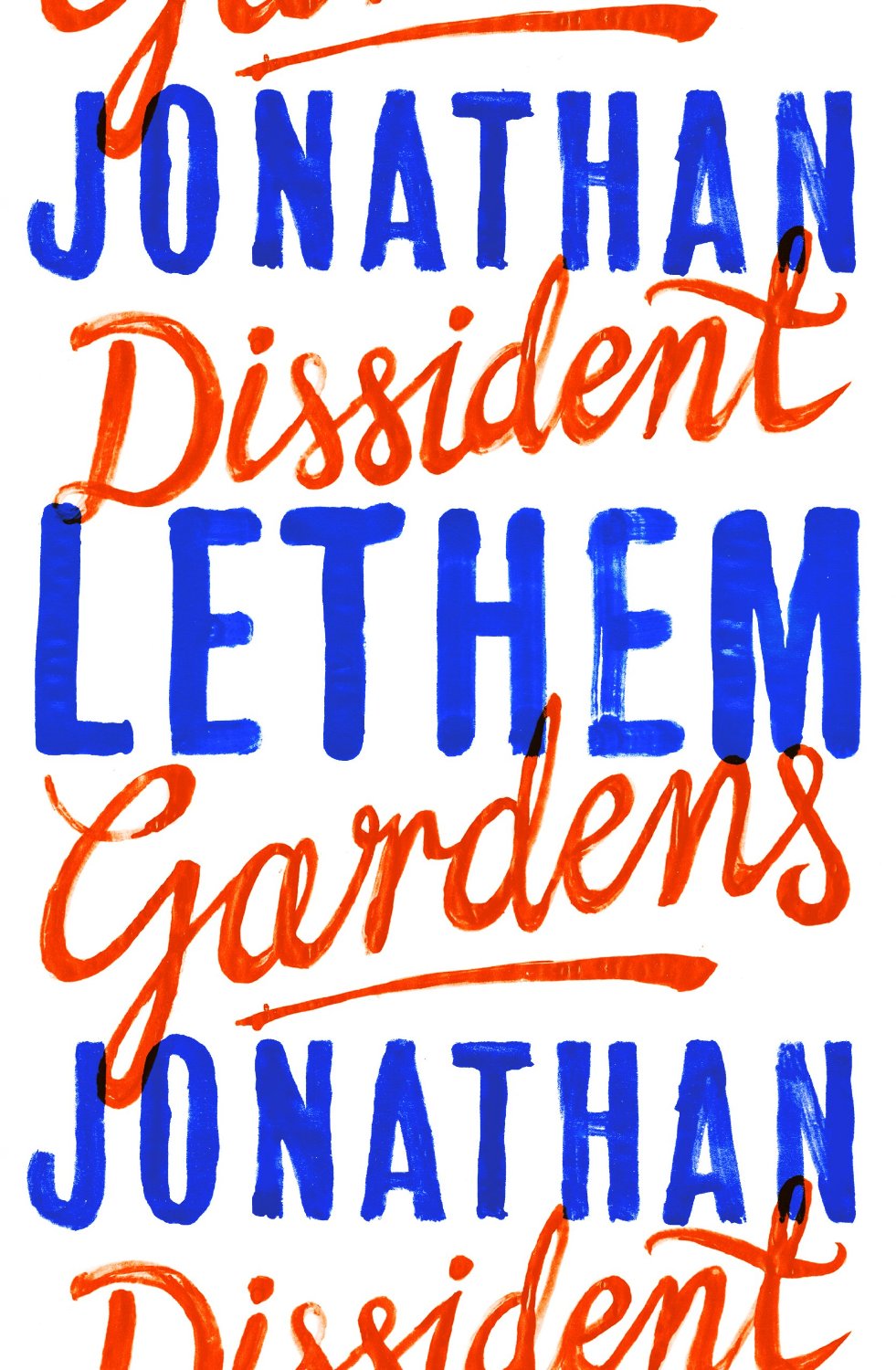
Jonathan Lethem discusses science fiction, comics and his new novel Dissident Gardens with Jesse Hicks at The Verge:

I like that Philip K. Dick and the science fiction writers that I fell in love with were intrinsically in this termite role, nibbling around the edges of the culture. I know it was uncomfortable for them, and it certainly didn’t pay as well as they might have liked, but it meant that their work had a relevance and vitality and disreputable energy that, for me as a younger reader, hands-down won over the official literary product of the same time period.

Though one of the things that’s wrong with marginal identities is that you tend to act as though the big hegemonic center is all one thing itself. “The mainstream” doesn’t agree with itself or make any kind of sense or have a coherent position, except in the very small matter of believing itself to be the only action. That’s the only thing it agrees about. [laughter] The rest of it, if you really pay any attention and care, and I started to care about all kinds of novels and all kinds of literary ventures, and possibilities — different kinds of lives that writers led — the rest of the mainstream is pretty much at one another’s throats over various matters of style and politics, minor grudges and so forth. But it looks like one big thing if you’re in exile from it.

Comments closed

Jonathan Lethem: The Author Looks Inward

Jonathan Lethem talks about writing his new novel, Dissident Gardens, with Brian Gresko at the Los Angeles Review of Books:

Of course, in the writing, Dissident Gardens couldn’t bear much of what I’d learned. Novels don’t want to be crammed with factual stuff. I mostly left it aside, including some astonishing truths, which when you first come across them, you think, holy shit, I’ve learned this crazy thing and now I’ll blow people away by revealing this knowledge in the book! But at the juncture where you’d insert such a thing, you flinch, seeing the cost is too high. The facts will intrude — either on the reader’s experience, or my own relationship to the page, to the dream. You’ve heard of killing your darlings? You’ve got to kill plenty of the world’s darling’s too

Dissident Gardens is out this week in the US & Canada (I believe you have a bit longer to wait in the UK). The book was reviewed in Sunday’s New York Times Book Review.

Comments closed

Teju Cole on Writers and Company

Author Teju Cole, author of Open City, in conversation with Eleanor Wachtel on CBC Radio’s Writers & Company:

CBC RADIO Writers and Company: Teju Cole Open City mp3

Comments closed

Edward St. Aubyn on Writers & Company and Bookworm

In a fascinating conversation, Eleanor Wachtel talks to Edward St. Aubyn about his Patrick Melrose novels on CBC Radio’s Writers and Company:

CBC Radio Writers & Company: Edward St. Aubyn mp3 

KCRW’s Bookworm also recently broadcast a two-part interview with St. Aubyn about the books.

Part One:

KCRW Bookworm: Edward St. Aubyn Part One mp3

Part Two:

KCRW Bookworm: Edward St. Aubyn Part Two mp3

Full disclosure: The collected edition of the first four Patrick Melrose novels has just been published in the US by Picador Books who are distributed  in Canada by my employer Raincoast Books. At Last, the latest Patrick Melrose novel is published separately by Farrah, Strauss & Giroux who are distributed in Canada by Douglas & McIntyre (not my employer).

Comments closed

Something for the Weekend

An interview with designer Suzanne Dean, creative director at Random House UK,  in The Daily Telegraph:

For this year’s Man Booker winner, Dean tried out, in her own estimation, about 20 different jackets. Working with the book’s themes of time and memory, she ordered vintage watches from eBay, and even smashed them up in her garden. She tried period photographs of schoolboys, and an image of a couple. Each version tilted one’s reading of the novel quite distinctly. Julian Barnes took about seven covers home and thought about them. Just as he was about to settle on one that featured old rulers and a watch, Dean had second thoughts. “I asked him to give me two more weeks.”

See also: ‘A year of beautiful books’ in The Guardian,  and ‘How designers are helping to keep the old format alive’ in The Independent.

Virtual Comics Emporium — Michel Faber reviews 1001 Comics You Must Read Before You Die by Paul Gravett:

I know what you’re thinking, those of you who’d like to get to grips with this medium but are dutifully consuming Julian Barnes’ Booker-winning chef-d’oeuvre instead. How can you be seen reading a tome with Judge Dredd on the cover and Hellboy punching demons inside? Well, look at it this way: studying 1001 Comics You Must Read Before You Die is like visiting the world’s most fabulously well-stocked comics shop. This virtual emporium may be far superior to Forbidden Planet, but it can’t afford to ignore its regular customers. If superheroes, homicidal maniacs and feisty animals are not your thing, you’ll just have to tolerate them as you discover a wealth of other delights. Eventually, the realisation may even sneak up on you that a good superhero comic is better than a bad literary novel.

And the on subject of comics…. Neal Adams on Batman cartoonist Jerry Robinson, co-creator of Robin and The Joker, who died aged 89 on Wednesday, in The LA Times:

Neal Adams, the comic book artist who became a fan-favorite in the 1960s and a champion for creator rights, said that young Robinson brought an energy and intuitive understanding of his audience to the Batman comics. Nothing showed that more, Adams said, than the addition of Robin, the plucky daredevil sidekick who provided an entry point for every kid who spent their nickels on Detective Comics, or characters such as Two-Face, which showed Robinson’s affection for Chester Gould’s Dick Tracy… “As I grew up and fell into this stuff, I realized that everything I liked about Batman ending up being the stuff that Jerry Robinson created. ‘Who is this guy? He did all that? Yes he did all that.’”

And finally…

The Individual Soul — Adam Kirsch reviews Life and Fate by Vasily Grossman for The New Republic:

[Grossman] was a former engineer turned writer who became famous as a journalist covering World War II for the Red Star newspaper; his dispatches were immensely popular and made him one of the Soviet Union’s leading writers. That’s why it came as such a shock to the authorities when, in 1960, he submitted the manuscript of Life and Fate for publication. It is, on the one hand, a paean to Soviet heroism in World War II, especially at the crucial battle of Stalingrad, which forms the backdrop to the novel. Yet at the same time, it is a brilliantly honest account of the horrors of Stalinism, and its running theme is that Communism and Nazism were two sides of the same coin.

Comments closed

Fictions | Peter Mendelsund

Knopf designer Peter Mendelsund has just posted the second of his meditations on designing book covers for fiction:

When setting out to design a book jacket for a work of fiction, whether we are aware of it or not, we designers are picking our subject matter from a limited set of bins. Though the choices we can make as designers are unlimited, the categories that define most of the choices we make when we pluck these ideas from their native fictions, are, on the face of it, quite easy to list.

Well worth reading all the way through, including the extensive footnotes.

Comments closed

Something for the Weekend

Issue #56 — Jessica Abel and Matt Madden discuss the latest volume of The Best American Comics at Comic Book Resources:

The problem with superheroes is it’s not a personal taste so much as it just requires so much insider knowledge to read these things. They don’t stand on their own. There have been about three superhero comics, maybe two, in the past five years that stand on their own. That you can just read and not have to know what happened in issue #56 and ever since. It’s a real problem, I think, and it’s a problem for the industry. How do you get into this stuff if you’re not into it already?

The Highs and Lows — Steven Heller, author of bazillion books on design, profiled in the Village Voice:

“The worst design writer is one who doesn’t tell a story,” Heller tells his students. “Facts are nice, but it’d be better to have the facts telling you some tale of highs, lows, and woes.”

Remaining Solvent — Bert Archer interviews Brooke Gladstone, author of The Influencing Machine, for the Toronto Standard:

“I see new structures already emerging, we are in the midst of a big, big change; it’s so obvious it’s pathetic to even say. We have to form new business models, modulate the ones that are already there; we need to acknowledge the role of the news consumer in the creation of news now, and acknowledge… that the precepts and principles that dominated during the time of television and mass media are beginning to disintegrate and fall back to the precepts and principles that guided journalism back when it was not a mass medium, back when you didn’t need to amass audiences at unprecedented size in order to remain solvent.”

Antisocial Behaviour — Gary Shteyngart on his novel Super Sad True Love Story and the effects of social media:

I know professors who can’t read an entire book–professors of English literature, mind you. So everyone’s attention span has been shot. We’re no longer used to processing long strings of information. When a book is no longer a book but yet another text file, it’s very hard to say, “OK, I’m gonna devote myself to the 300 pages of text on my screen” when I have all this other stuff that I need to do.

That’s why channels like HBO and Showtime have taken over to a big extent. The kind of stuff that used to appear in novel form now appears in “The Wire” or “Breaking Bad.” They deliver the narrative thrust that we need. They teach us about different worlds and different ways of living. But at the same time, they don’t require textual immersion. You just passively sit there and let these things happen on the screen.

And finally…

PJ Harvey on writing her award-winning album Let England Shake at GQ Magazine:

As I was doing my research to write this record I realized quite quickly I needed to gather a lot of historical information in order to understand more about our current-day wars, in Afghanistan and Iraq, for example. So I started going through my history books and became so interested in the Gallipoli campaign. It really resonated in me. I felt like I could relate it in a way to some of our contemporary wars and I learned a lot by looking at it, but also just the sheer scale of the mismanagement of that campaign and the scale of the loss of life affected me very deeply. And I really wanted to write about it.

I have played Let England Shake a lot this fall.

Comments closed

Midweek Miscellany

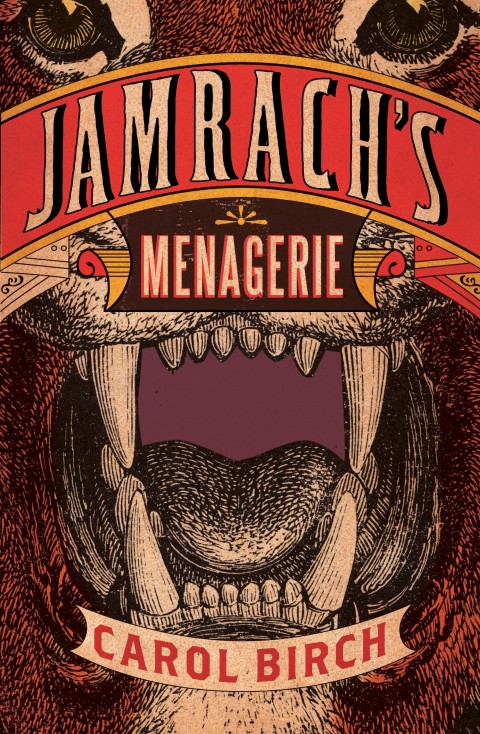
Creative Review takes  a look at the cover designs for the books shortlisted for the Booker Prize, including this beauty by the mighty Jon Gray for Jamrach’s Menagerie by Carol Birch.

Let’s Get Critical — Long-form cultural criticism, essays and reviews, curated by architecture and design critic Alexandra Lange.

Never Fashionable, Always in Style — Costume designer Jacqueline Durran on tailored suits worn by the spies in the film adaptation of Tinker, Tailor, Soldier, Spy, for The Guardian:

“I thought that lots of these middle-aged men had bought suits 10 or 15 years ago and stuck with them,” she says. “I would look at a character and try to work out where they had bought their suit.”

She decided that everything in the film could have been bought from shops within half a mile of Piccadilly in London: “Things from Savile Row, Jermyn Street, Fortnum & Mason, Burlington Arcade – one of those upper-middle-class shops that are never fashionable but always do a certain kind of clothing.”

(Related: The real-life spies of Tinker Tailor Soldier Spy)

Also in The Guardian… Michael Prodger reviews Nikolaus Pevsner: The Life by Susie Harries:

Whereas art history in Germany was a creditable discipline of long standing, in England it was a new subject – class-ridden, based on connoisseurship and, he thought, “at its worst, an activity a bit like stamp collecting”. It was this fustian world that Pevsner and other émigrés such as Ernst Gombrich, Rudolf Wittkower and Edgar Wind were to transform.

Pevsner had a hard time fitting in, not least because he was a modernist, something the British found temperamentally uncongenial. For Pevsner, though, it represented an antidote to art for art’s sake and he saw it as an appropriate expression of the spirit of the age. Art, he believed, should be functional and of service, and architecture was the most important of the arts because it was the most closely connected with human life.

And finally…

Pathos and Pantomime — Peter Ackroyd choose five books about London:

London has always had the reputation of being a city of contrast, where pathos and pantomime meet. That is true in the work of Charles Dickens and Charlie Chaplin, for example. And it is certainly true in the work of [William] Blake. So you can see patterns of the London imagination at work. It is a world of theatre. The grand theatre of the human spirit which London most readily represents, and there is scenic detail and movement and passion and the action of crowds. It is quite different from other cities.

Comments closed

Ursula K. Le Guin | Writers & Co.

Author Ursula K. Le Guin talks to Eleanor Wachtel about writing, science fiction and short stories in this archive interview for CBC Radio show Writers & Co. from 1993:

CBC Radio Writers & Co: Ursula K. Le Guin 

At the end of the interview, Le Guin reads her short story ‘Crosswords’ from the collection Searoad.

(image: Copyright © by Marian Wood Kolisch)

Comments closed