Skip to content

Tag: fantasy

The Lord of the Rings covers by Johan Egerkrans

I don’t post a lot of fantasy covers here (less than I should, no doubt), but I rather like the look of these reissues of The Lord of the Rings trilogy available in the US from HMH this month. The covers were designed by Christopher Moisan with illustrations by Swedish illustrator Johan Egerkrans. There’s something about the cover of The Return of the King in particular that reminds me of classic pen and ink fairy tale illustrations by likes of Arthur Rackham and John Bauer.

The Fellowship of the Ring, The Two Towers, and The Return of the King are available October 6, 2020.

1 Comment

The Fantastic Ursula K. Le Guin

illustration Essy May

Julie Phillips long profile of author Ursula K. Le Guin for The New Yorker is wonderful:

Starting in the nineteen-eighties, [Le Guin] published some of her most accomplished work—fiction that was realist, magic realist, postmodernist, and sui generis. She wrote the Borgesian feminist parable “She Unnames Them,” and in 1985 an experimental tour de force of a novel, “Always Coming Home.” She produced “Sur,” the epic tale of an all-female Antarctic exploring party that may be her greatest and funniest feminist statement. Her short stories began appearing in The New Yorker, where her editor, Charles McGrath, saw in her an ability to “transform genre fiction into something higher.”

In fact, it was the mainstream that ended up transformed. By breaking down the walls of genre, Le Guin handed new tools to twenty-first-century writers working in what Chabon calls the “borderlands,” the place where the fantastic enters literature. A group of writers as unlike as Chabon, Molly Gloss, Kelly Link, Karen Joy Fowler, Junot Díaz, Jonathan Lethem, Victor LaValle, Zadie Smith, and David Mitchell began to explore what’s possible when they combine elements of realism and fantasy. The fantasy and science-fiction scholar Brian Attebery has noted that “every writer I know who talks about Ursula talks about a sense of having been invited or empowered to do something.” Given that many of Le Guin’s protagonists have dark skin, the science-fiction writer N. K. Jemisin speaks of the importance to her and others of encountering in fantasy someone who looked like them. Karen Joy Fowler, a friend of Le Guin’s whose novel “We Are All Completely Beside Ourselves” questions the nature of the human-animal bond, says that Le Guin offered her alternatives to realism by bringing the fantastic out of its “underdog position.” For writers, she says, Le Guin “makes you think many things are possible that you maybe didn’t think were possible.”

Comments closed

Penguin Galaxy Series design by Alex Trochut

2001 design Alex Trochut

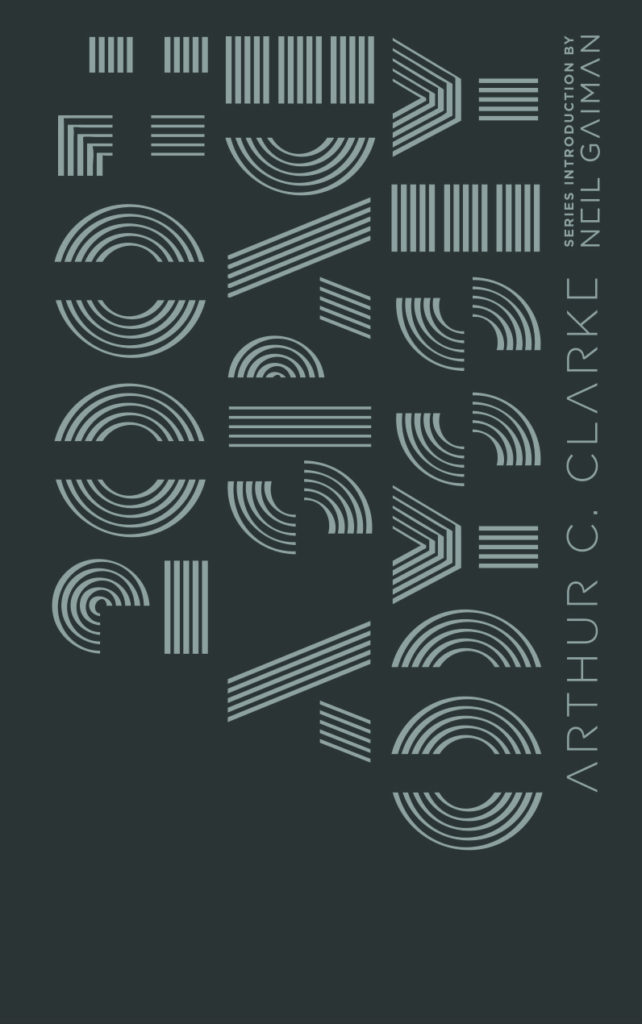
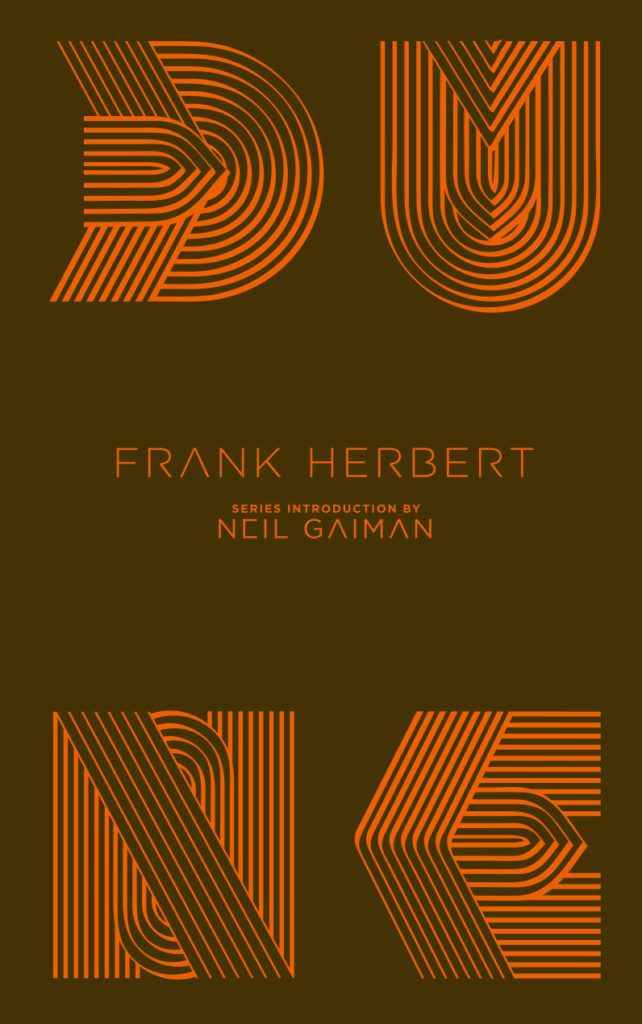
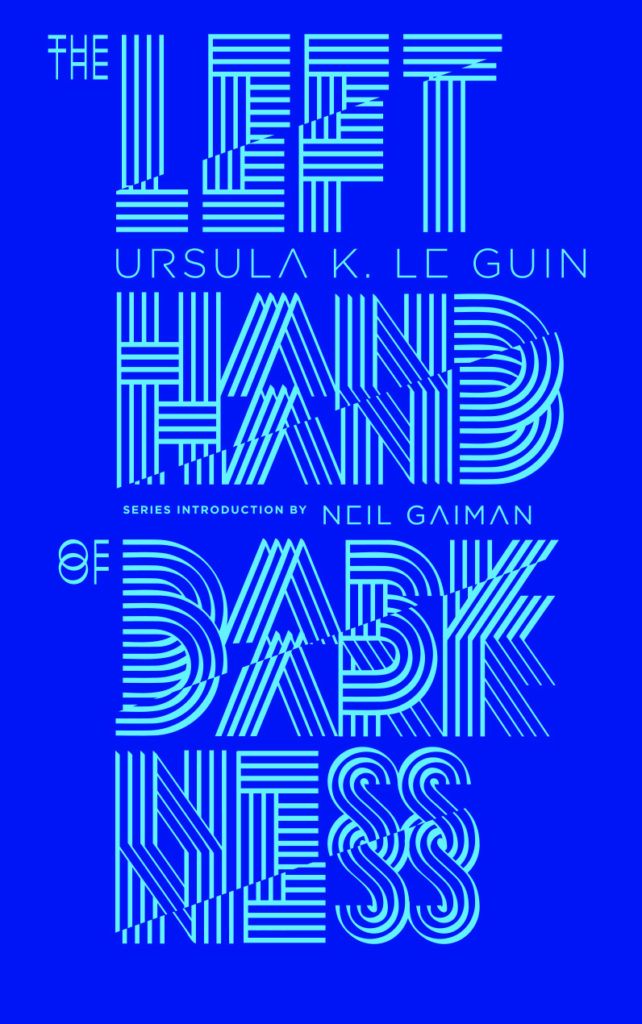
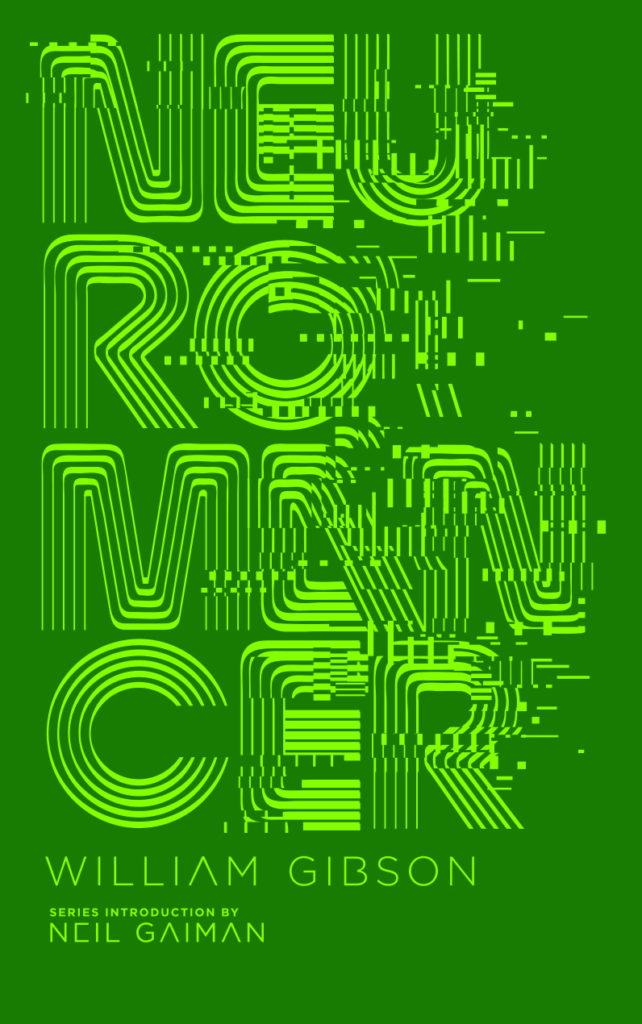
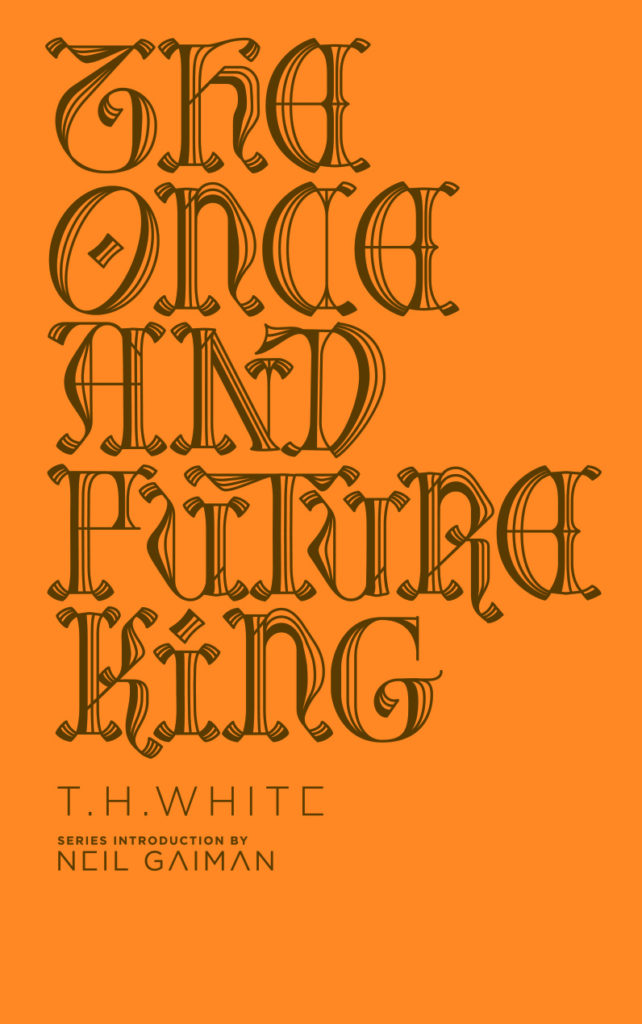
Following on from their horror classics series selected by Guillermo Del Toro, Penguin US is publishing six hardcover science fiction and fantasy classics this fall with introductions from Neil Gaiman, and (more importantly!) brilliant typographic covers by Brooklyn-based Spanish designer Alex Trochut. Available in October, the finished covers will be foil on uncoated paper over board.

dune design Alex Trochut Left Hand of Darkness design Alex Trochut neoromancer design Alex Trochut The Once and Future King design Alex Trochut Stranger in a Strange Land design Alex Trochut

Comments closed

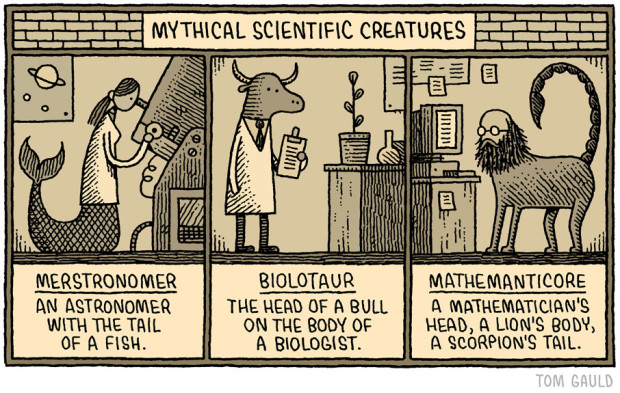
Mythical Scientific Creatures

Mythical Scientific Creatures Tom Gauld

Tom Gauld for the New Scientist.

Comments closed

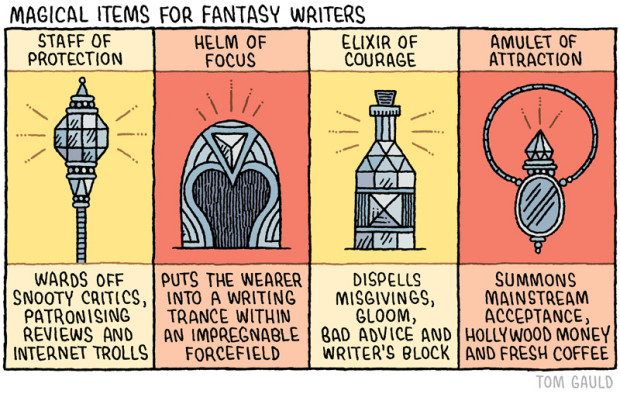
Magical Items for Fantasy Writers

magical items for fantasy writers by tom gauld

Tom Gauld.

Comments closed

The Story of ILM

Somewhat related to that Keith Phipps essay Why Star Wars? (mentioned here a couple of days ago), Wired has an oral history of Industrial Light & Magic, the special effects shop founded by George Lucas to work on the movie:

Industrial Light & Magic was born in a sweltering warehouse behind the Van Nuys airport in the summer of 1975. Its first employees were recent college graduates (and dropouts) with rich imaginations and nimble fingers. They were tasked with building Star Wars’ creatures, spaceships, circuit boards, and cameras. It didn’t go smoothly or even on schedule, but the masterful work of ILM’s fledgling artists, technicians, and engineers transported audiences into galaxies far, far away.

As it turns 40 this year, ILM can claim to have played a defining role making effects for 317 movies. But that’s only part of the story: Pixar began, essentially, as an ILM internal investigation. Photoshop was invented, in part, by an ILM employee tinkering with programming in his time away from work. Billions of lines of code have been formulated there. Along the way ILM has put tentacles into pirate beards, turned a man into mercury, and dominated box office charts with computer-generated dinosaurs and superheroes.

And if you were wondering where it all went wrong, it was probably the precise moment George Lucas had this revelation:

I never thought I’d do the Star Wars prequels, because there was no real way I could get Yoda to fight. There was no way I could go over Coruscant, this giant city-planet. But once you had digital, there was no end to what you could do.

2 Comments

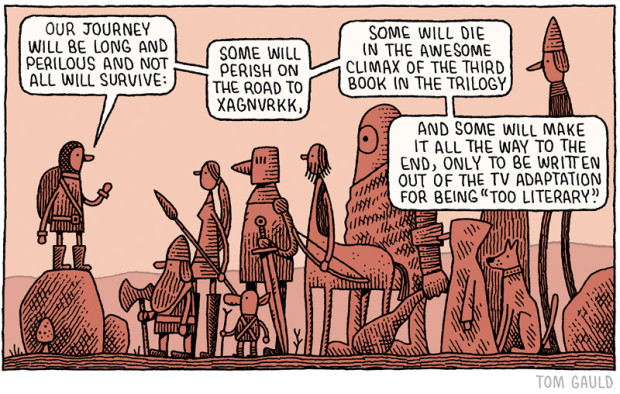
Our Journey Will Be Long…

our-journey-will-be-long-tom-gauld

Tom Gauld

Comments closed