Skip to content

Tag: europe

It Can Happen Here

With shadows of authoritarianism rising around the world, Cass R. Sunstein reviews three books on life in Nazi Germany for the New York Review of Books.

The books, They Thought They Were Free by Milton Mayer, Defying Hitler by Sebastian Haffner, and Broken Lives by Konrad Jarausch, do not focus on the well-known historic figures, but explore how ordinary people navigated such a terrible time. The contemporary parallels are chilling:

With evident fatigue, the baker reported, “One had no time to think. There was so much going on.” His account was similar to that of one of Mayer’s colleagues, a German philologist in the country at the time, who emphasized the devastatingly incremental nature of the descent into tyranny and said that “we had no time to think about these dreadful things that were growing, little by little, all around us.” The philologist pointed to a regime bent on diverting its people through endless dramas (often involving real or imagined enemies), and “the gradual habituation of the people, little by little, to being governed by surprise.” In his account, “each step was so small, so inconsequential, so well explained or, on occasion, ‘regretted,’” that people could no more see it “developing from day to day than a farmer in his field sees the corn growing. One day it is over his head.”

(via Kottke)

Comments closed
Europa Editions’ Small Objects of Desire

23womens-arena-europa

The New York Times T Magazine profiles Italian small press Europa Editions:

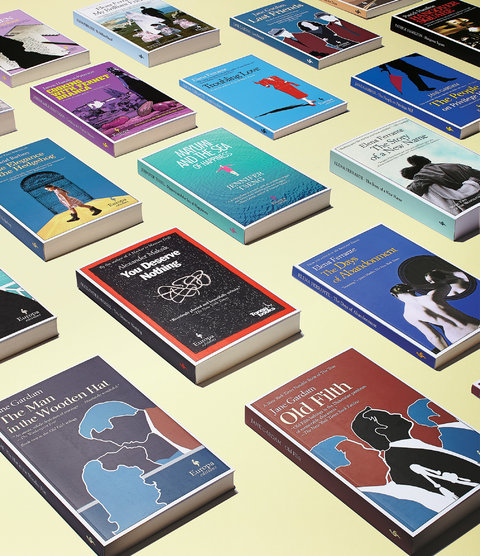
Even if you haven’t heard of Europa Editions, you’ve probably heard of some of its hits. There’s Muriel Barbery’s “The Elegance of the Hedgehog” (more than a million copies sold); Jane Gardam’s “Old Filth” (now in its 20th printing); and Alexander Maksik’s “You Deserve Nothing” (so far, the biggest title by an American). Like any good branded product, the books have an instantly recognizable visual stamp: stiff paper covers edged with white borders that frame color-drenched matte backgrounds. According to Europa’s Australian-born editor in chief, Michael Reynolds, “When you see them all together, they draw you in like a bowl of candy.”

That effect is completely deliberate. Europa books are the invention of the Italian husband-and-wife publishing team Sandro Ferri and Sandra Ozzola Ferri, founders of the independent Roman house Edizioni E/O, who have been bringing the likes of Christa Wolf and Ryszard Kapuscinski to Italian readers since 1979. Because their countrymen are notoriously unenthusiastic book readers, the Ferris designed alluring covers to tempt reluctant Italian eyes.

Interestingly, Motoko Rich already profiled Europa Edition in the Times in 2009, so I guess they must be doing something right…

Comments closed

Aldus Manutius and the Roots of the Paperback

aldus

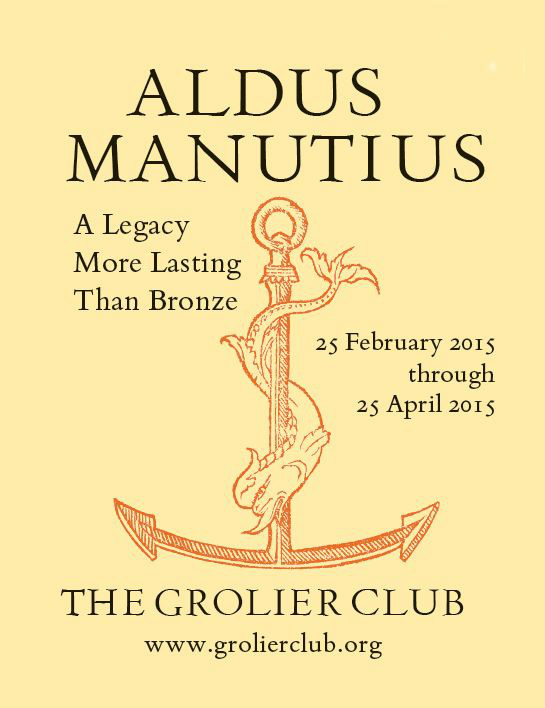
The New York Times visits ‘Aldus Manutius: A Legacy More Lasting Than Bronze‘, an exhibition of nearly 150 books from the press Aldus founded in Venice in 1494:

Gutenberg may have invented the movable-type printing press, used to create his monumental Bibles. But anyone who has ever sat in a cafe, or in the bath, with a paperback owes a debt to Aldus and the small, cleanly designed editions of the secular classics he called libelli portatiles, or portable little books.

“It’s become a cliché to call them the forerunners of the Penguin Classics,” G. Scott Clemons, the president of the Grolier Club, said during a recent tour of the installation in progress. “But the concept of personal reading is in some ways directly traceable to the innovations of Aldus’s portable library…”

…The Aldine Press, in its start-up phase, emphasized Greek and Latin lexicons and grammar manuals. In 1495, Aldus began publishing the first printed edition of Aristotle. In 1501, he released the first of his small octavo editions of the classics, books “that could be held in the hand and learned by heart (not to speak of being read) by everyone,” as he later wrote. The show includes 20 libelli portatiles, all bearing Aldus’s printer’s mark, a dolphin curled around an anchor. (The colophon is still used today by Doubleday.) Some of the books were treated as treasures, and customized with magnificent decoration that harked back to the tradition of illuminated manuscripts. Others were workaday volumes, filled with marginal scribbles….

…Aldus’s contributions to the art of printing [include the] first italic typeface, which he created with the type cutter Francesco Griffo, a shadowy fellow who broke with Aldus acrimoniously and then slugged a man to death with an iron bar before reputedly meeting his own demise at the end of a hangman’s rope. Italics, which were intended to mimic the humanist handwriting of the day, first appeared in a modest five words in a 1500 edition of the letters of St. Catherine and soon spread to other Aldines, and beyond.

And then there was the roman typeface devised for a 1496 book by the humanist scholar Pietro Bembo — the inspiration for the modern font Bembo, still treasured by book designers for its grace and readability.

“The book itself is almost frivolous,” Mr. Clemons said of the text, which recounts a trip to Mount Etna. “But it launched that very modern typeface.”

The exhibition runs until April 25, 2015.

Comments closed

German Post-War Modern

atelier-de-montrouge

Focusing on European architecture, art and design in the second-half of the twentieth-century, German Post-War Modern is currently one of my favourite Tumblrs.

Comments closed

Wes Anderson’s Elegy to Stefan Zweig

Film Review The Grand Budapest Hotel

I really wasn’t going to post anything else about Wes Anderson and Stefan Zweig, but film critic Max Nelson’s review of The Grand Budapest Hotel for the LA Review of Books is one of the best things I’ve read on the subject:

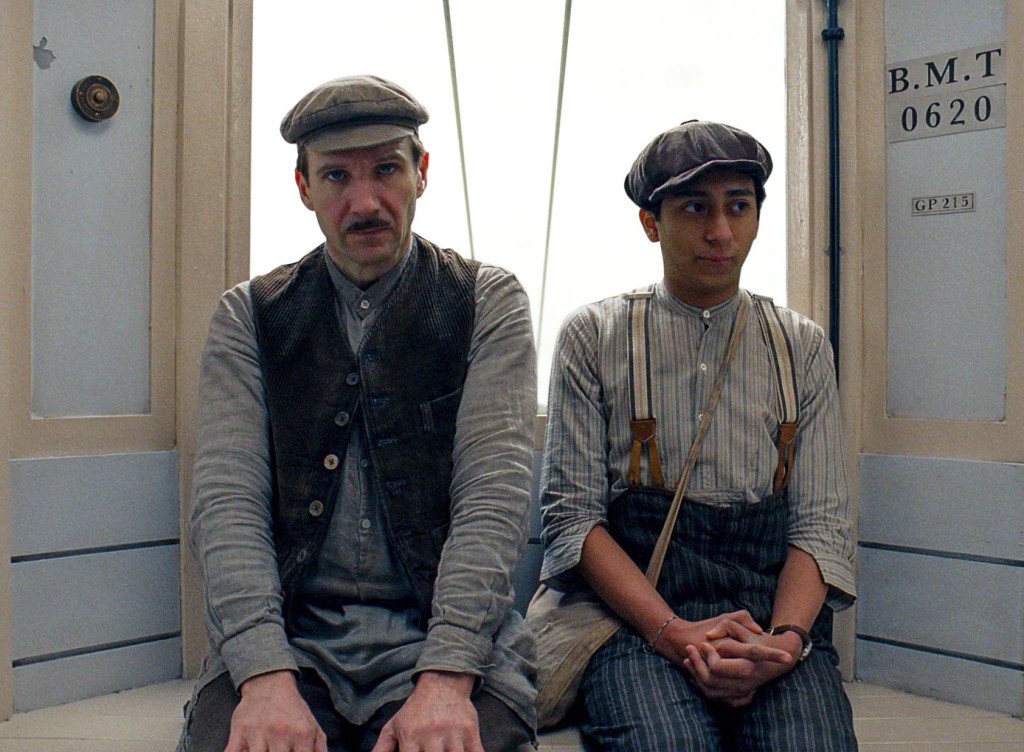
Like much of Zweig’s fiction, The Grand Budapest Hotel ends on an elegiac note. But what exactly is it elegizing? Agatha is too indistinct and vaguely defined a character for the movie to work as a tribute to lost love; her closest, warmest scenes with Zero pale in comparison to, say, Sam and Susie’s beachside dance in Moonrise Kingdom, Mr. Fox’s mid-film confrontation with his wife, or Margot and Richie’s devastating brief encounter late in Tenenbaums. You could argue that Zero, in Zweigian fashion, is conflating Agatha with the whole of prewar European life: its varied perfumes, its elaborately decorated baked goods, and its general sense of romance and adventure. But unlike prewar Vienna, prewar Zubrowka never existed anywhere other than in Anderson’s imagination. It’s difficult to imagine Zweig setting, for instance, Letter from an Unknown Woman or Journey into the Past in a fantasy country; like many of the author’s stories, they speak directly to his acute awareness of having caught the tail end of a particularly vivid chapter in his own national history. “I pity those,” he wrote, “who were not young during the last years of confidence in Europe,” for “whoever experienced that epoch… knows that all since has been retrogression and gloom.” If The Grand Budapest Hotel is an elegy for the codes and manners of fin-de-siècle Europe, then Anderson is trapped in a potentially disingenuous position: that of eulogizing a world he only ever could have accessed through the nostalgia-drenched writings of its earlier elegists, and which he can only now evoke on his own, imagined terms.


1 Comment

St Franz of Prague


At the Financial Times, Ian Thomson, author of Primo Levi: A Life, reviews three new books about Franz Kafka:

In 1982, the Italian writer and Nazi concentration camp survivor Primo Levi embarked on a translation of Franz Kafka’s The Trial. At first he was enthusiastic, hoping to improve the German he had learnt so imperfectly at Auschwitz. Instead, Kafka involved him more terribly than he could have imagined. Levi found only bleakness in the hero Josef K, who is arrested and executed for a crime he probably did not commit.

The more Levi became immersed in Kafka, the more he began to see his own life mirrored in that of “St Franz of Prague”, as he called the Czech writer. Born in Prague in 1883 into a German-speaking Jewish family, Kafka lived a life of quite exemplary tedium as an insurance clerk, rarely travelling beyond his home or that of his parents. Levi saw similar constrictions in his own life as an assimilated Jew in bourgeois Turin. Moreover, Kafka’s three sisters had all perished in the Nazi gas chambers – victims of the grotesque bureaucracy foretold by their brother two decades earlier in The Trial. Kafka must have had a seer-like sensibility, Levi thought, to have looked so accurately into the future.

Pictured above: David Zane Mairowitz’s graphic novel adaptation of The Castle illustrated by Jaromír99, published by SelfMadeHero.

Comments closed