Joe Dator for The New Yorker.
(I feel like this is a variation on a gag that has been going around independent bookstores for a while now, but it gets more accurate by the day. I guess we have to laugh or we will cry, right?)
Comments closedBooks, Design and Culture
Joe Dator for The New Yorker.
(I feel like this is a variation on a gag that has been going around independent bookstores for a while now, but it gets more accurate by the day. I guess we have to laugh or we will cry, right?)
Comments closed
I am terribly late to this, but Rachel Mead, author of My Life in Middlemarch, profiled Margaret Atwood for The New Yorker earlier this month. Atwood’s dystopian novel The Handmaid’s Tale has just been released as a TV series starring Elizabeth Moss:
Despite the novel’s current air of timeliness, the contours of the dystopian future that Atwood imagined in the eighties do not map closely onto the present moment—although recent news images of asylum seekers fleeing across the U.S. border into Canada have a chilling resonance with the opening moments of the television series, which shows Moss, not yet enlisted as a Handmaid, attempting to escape from the U.S. to its northern neighbor, where democracy prevails. Still, the U.S. in 2017 does not show immediate signs of becoming Gilead, Atwood’s imagined theocratic American republic. President Trump is not an adherent of traditional family values; he is a serial divorcer. He is not known to be a man of religious faith; his Sundays are spent on the golf course.
What does feel familiar in “The Handmaid’s Tale” is the blunt misogyny of the society that Atwood portrays, and which Trump’s vocal repudiation of “political correctness” has loosed into common parlance today. Trump’s vilification of Hillary Clinton, Atwood believes, is more explicable when seen through the lens of the Puritan witch-hunts. “You can find Web sites that say Hillary was actually a Satanist with demonic powers,” she said. “It is so seventeenth-century that you can hardly believe it. It’s right out of the subconscious—just lying there, waiting to be applied to people.” The legacy of witch-hunting, and the sense of shame that it engendered, Atwood suggests, is an enduring American blight. “Only one of the judges ever apologized for the witch trials, and only one of the accusers ever apologized,” she said. Whenever tyranny is exercised, Atwood warns, it is wise to ask, “Cui bono?” Who profits by it? Even when those who survived the accusations levelled against them were later exonerated, only meagre reparations were made. “One of the keys to America is that your neighbor may be a Communist, a serial killer, or in league with satanic forces,” Atwood said. “You really don’t trust your fellow-citizens very much.”
Comments closed
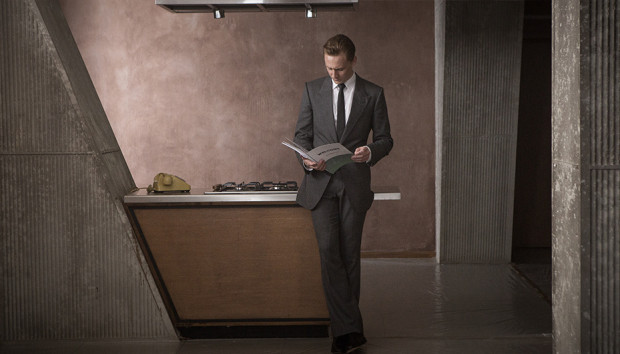
Although the early reviews have not been especially kind to the Ben Wheatley film adaptation of J.G. Ballard’s High-Rise, the trailer looks amazing. The Anthony Royal Architecture website is also a nice touch.
I can’t wait.
Comments closed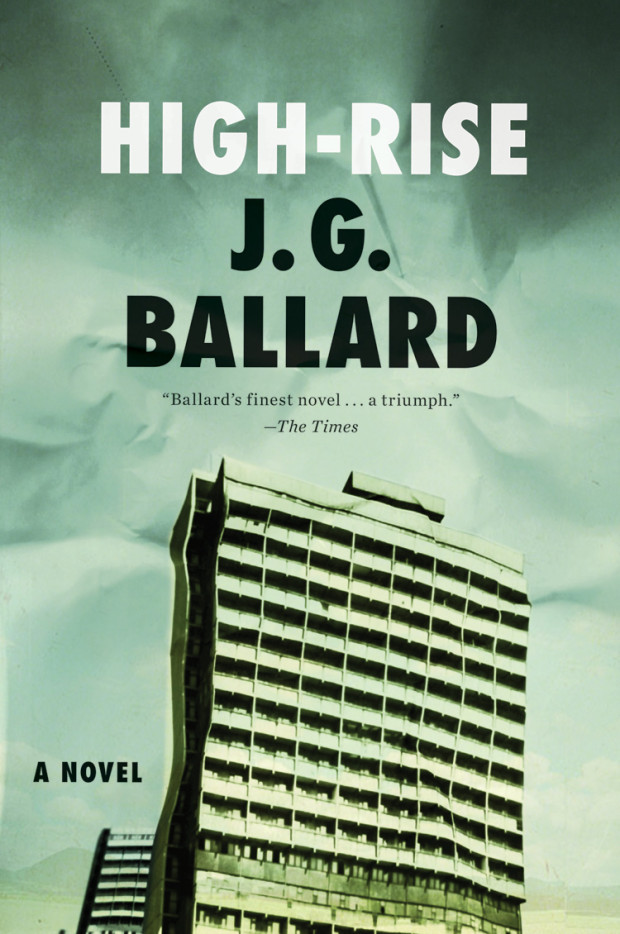
With the release of the Ben Wheatley movie adaptation starring Tom Hiddleston imminent, Chris Hall looks at High-Rise and the ‘inner-space’ of J. G. Ballard’s science fiction for The Guardian:
Comments closedHigh-Rise is the final part of a quartet of novels – the first three are The Atrocity Exhibition (1970), Crash (1973) and Concrete Island (1974) – with each book seeded in the previous one. Thematically High-Rise follows on from Concrete Island with its typically Ballardian hypothesis: “Can we overcome fear, hunger, isolation, and find the courage and cunning to defeat anything that the elements can throw at us?” What links all of them is the exploration of gated communities, physical and psychological, a theme that is suggestive of Ballard’s childhood experiences interned by the Japanese in a prisoner-of-war camp on the outskirts of Shanghai in the 1940s. It was, he always claimed, an experience he enjoyed.
The built environment is not a backdrop, rather it is integral and distinctive in its recurring imagery – from abandoned runways, to curvilinear flyovers and those endlessly mysterious drained swimming pools. Perhaps more than any other writer, he focused on his characters’ physical surroundings and the effects they had on their psyches. Ballard, who died in 2009, was also interested in the latent content of buildings, what they represented psychologically. Or, as he once obliquely put it, “does the angle between two walls have a happy ending?” – by which he meant that we project narrative on to external reality, that the imagination remakes the world. In Ballard’s fiction, nothing is taken at face value.
In High-Rise and Concrete Island especially, Ballard examines the flip side to what he called the “overlit realm ruled by advertising and pseudo-events, science and pornography” that The Atrocity Exhibition and Crash mapped out. Under-imagined or liminal spaces, such as multi-storey car parks and motorway flyovers, act as metaphors for the parts of ourselves that we ignore or are unaware of. His characters are often forced to assess the physical surroundings and, by extension, themselves rather than to take them for granted.