Skip to content

Tag: DRM

Doctorow at Bloomsbury

Whether you agree with him or not, this is an interesting — if scatter-gun — talk by Cory Doctorow on publishing, e-books, pricing, and DRM (and more) at UK publisher Bloomsbury:

There are some additional notes (and a couple of corrections!) at Cory Doctorow’s website.

(via Ted Striphas’ The Late Age of Print)

1 Comment

Midweek Miscellany, July 29th, 2009

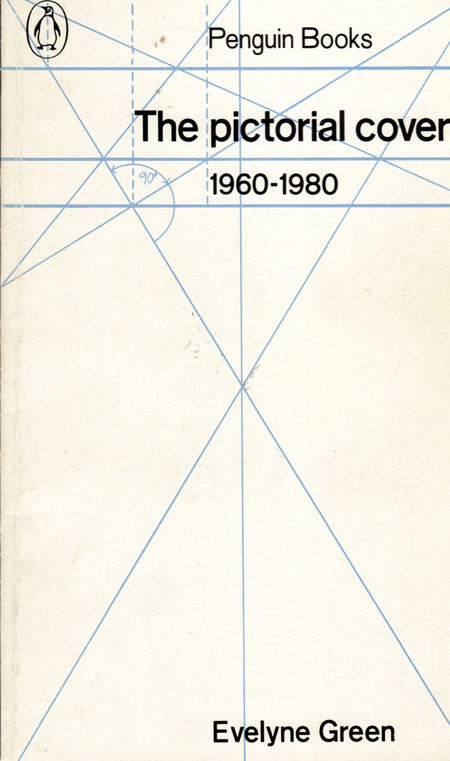
Geometric books covers at Design Daily.

The Debate That Will Not Die — Mike Shatkin weighs in on DRM and tries to find that elusive middle-ground. The discussion continues into the comments (of course)…

Unputdownable — A nice ad campaign by Saatchi & Saatchi for Penguin Books in Malaysia (via The 26th Story).

Great Ideas — The Caustic Cover Critic looks at the covers for all 20 of the new additions to Penguin’s Great Ideas series. Some fantastic typographic stuff here as you might imagine, although — to be honest — I think there are one or two weaker entries in this round and the purple motif works better for some books than others…

A New Page — (Much linked to elsewhere, but in case you missed it) Nicholson Baker’s meticulous vivisection (or “epic takedown” if you prefer) of the Kindle in The New Yorker:

The problem was not that the screen was in black-and-white; if it had really been black-and-white, that would have been fine. The problem was that the screen was gray. And it wasn’t just gray; it was a greenish, sickly gray. A postmortem gray. The resizable typeface, Monotype Caecilia, appeared as a darker gray. Dark gray on paler greenish gray was the palette of the Amazon Kindle.

This was what they were calling e-paper?

And if you can’t get enough of that Kindlenfreude feeling…

David L. Ulin, book editor  The LA Times, weighs in on Amazon’s troubling reach.

Niches — Richard Nash, formerly of Soft Skull Press, talks about his new community-based venture, tentatively called ‘Cursor’, in Publishers Weekly.

And finally…

A Journey Round My Skull has a nice post of vintage Swedish books covers from collected from the excellent  Martin Klasch. I particularly like this vampiric cover for Raymond Chandler’s The Big Sleep by Martin Gavler from 1963 (above).

Comments closed

More Knots

As has been widely, widely reported, Amazon remotely deleted copies of books by George Orwell from their customers’ Kindles last week after a rights issue with the publisher MobileReference.

Even if it was not actually a huge surprise that Amazon had the ability to claw back e-books it had sold (or — to be honest — that someone might publish something that didn’t belong to them on the Kindle), there has been a predictably hysterical reaction, fuelled — at least in part — by antipathy towards DRM and Amazon, and the delicious irony of the particular books involved.

Even Michael Bhaskar, who reignited the online DRM debate last week on The Digitalist by having the audacity to suggest that DRM might not be all bad (twice), is having second thoughts:

When I wrote the piece I was perhaps slightly self consciously swimming against the tide. However all that is made a mockery of when something like this happens – faith in the system is, well, annihilated and the issues of trust that came up are starkly thrown into relief.

Apparently the problem was a rights one and somewhere down the line the wrong books got into the system in the wrong way. Everyone was re-imbursed and the books are widely available. Does this make any difference to the body blow of seeing 1984 automatically deleted from people’s devices?

…Lets just say if this had come out last Monday, I don’t think the blog posts on DRM would have got written.

But — and perhaps I am alone on this —  I don’t think this debacle is really about DRM. I actually think it is about a publisher not knowing (or not caring) that Orwell isn’t in the public domain in the Kindle’s primary market, and a vendor — who is unable (or unwilling) to thoroughly vet submissions — making an awful customer service decision and overreacting to rectify an awkward situation (which perhaps they felt they were partially responsible for).

Of course, as Cory Doctorow rightly points out, DRM is a the ‘loaded gun’ that allowed Amazon to kill the books. In the traditional book world this would not have been possible, and it really does bring home some the scariness of ‘remote deletion’. And yet this really came about not because of DRM (the issue could have been resolved without deleting the books) but because of poor judgement (by a publisher and the vendor) and, perhaps, as Paul Biba at Teleread suggests, because Amazon still does not fully understand what they’ve got themselves into.

Comments closed

Knots

I usually avoid discussions of digital rights management (DRM) as much as possible. It’s a Gordian Knot. We can spend a lot of time and energy painstakingly untangling it, never to find a form of DRM that keeps everyone happy. Or we can  end DRM altogether with one bold stroke (“mission accomplished!”) only to discover that cutting the knot takes longer than we expected and is more complicated than we first thought. Either way, my sense is that we will continue to have some kind of hybrid situation — with some e-books ‘protected’ by DRM and some not — as we both cut and untangle all the issues…

And for all that I’m often left wandering if DRM really matters as much as we tend to think it does. Do people outside of our strange intersection of media and technology really care about it as much as we do? Are there other pressing issues that we should direct energy towards?  I have this nagging sense that as we agonise over the do-we-don’t-we of DRM, most people just want to read good books.

Nevertheless, the great DRM debate has come to the fore again as a result of Michael Bhaskar’s seemingly mild assertion that DRM Is Not Evil on Pan Macmillan’s The Digitalist blog, which resulted in the (predictable) slew of comments.  Michael has now posted a response which has garnered another slew of comments.  It’s all worth reading if you can summon the energy and want some insight into the issue (although I don’t think anyone mentions foreign rights, but perhaps some one will get to that yet…)

3 Comments