As a follow-up to yesterday’s post about paper-cut artist Rob Ryan, here’s a short film about Etsy itself from PBS Arts Off Book:
Comments closed
Published October 13, 2011
Books, Design and Culture
As a follow-up to yesterday’s post about paper-cut artist Rob Ryan, here’s a short film about Etsy itself from PBS Arts Off Book:
Comments closedArt or Death — Art Spiegelman on books, comics and technology at Publishers Weekly:
I would say that, in the future, the book will be reserved for things that function best as a book. So, if I need a textbook that’s going to be out of date because of new technological inventions, you’re better off having it where you can download the supplements or the update. If you’re going to read a quick mystery novel to keep you amused while you’re traveling, it’s fine.None of this is about the business model. It has to do with the boutique nature of a book, the idea that, as McLuhan put it, when a technology is replaced by another technology, the previous technology either becomes art or it dies.
See also: Jeet Heer reviews MetaMaus for the Globe and Mail:
One way to explain the achievement of MetaMaus is to imagine a great architect like Frank Gehry offering a guided tour to one of his classic buildings, opening up the original plans, explaining the solutions he came up with for each problem. Such an act of self-exegesis is immensely rewarding, even if the creator’s genius is as enigmatic as ever.
And, on the subject of comics… A short interview with Alan Moore in Metro:
At the moment I feel an awful lot of my comic career is behind me, particularly all of the superhero stuff – the stuff that’s owned by American corporations. I want to distance myself from that, so the stuff I’m proudest of is what I own: From Hell, Lost Girls, The League Of Extraordinary Gentlemen. I don’t read my earlier work because there are too many unpleasant associations with it. I don’t have a copy of Watchmen in the house. I’m glad the work is out there in the world, having an effect, but it’s like I’ve gone through a messy divorce.
Immersion — Author Neal Stephenson talks about writing and his new novel REAMDE at Full Stop:
I would say that people who like to engage with the details of the historical era or the technical concepts might find [my] books especially rewarding to read. For me it’s a pretty straightforward thing—you know, what readers are paying for, what they’re buying and what I’m selling is a particular kind of experience: essentially one of getting immersed in another world. And it could be a very different world (as in a science fiction book), it could be the history of our world, or it could just be a story that takes place today, like Reamde. And a way to do that — a way to create that feeling of immersion and get the reader feeling like they’re really there — is to supply a lot of details that convey a feeling of immediacy.
See also: REAMDE reviewed by Laura Miller for The Guardian.
And finally…

Filmmaker Gary Hustwit talks about his latest design documentary, Urbanized, with Print Magazine:
I love all the interviews in all the films, that’s why they are in the film. But there are definitely some that people respond to when they watch the film. Most of all Enrique Peñalosa, who is the former mayor of Bogota. He’s got some great lines in the film, like “There’s no constitutional right to parking.” He’s really charismatic and has some really common sense ideas about using the city as a tool to create equality, democracy and social equity. I also got to interview Oscar Niemeyer, the legendary Brazilian modernist architect. He’s about to turn 104 and is the oldest living architect in the world. He’s got his grandchildren working in his office. That was a big honor for sure.
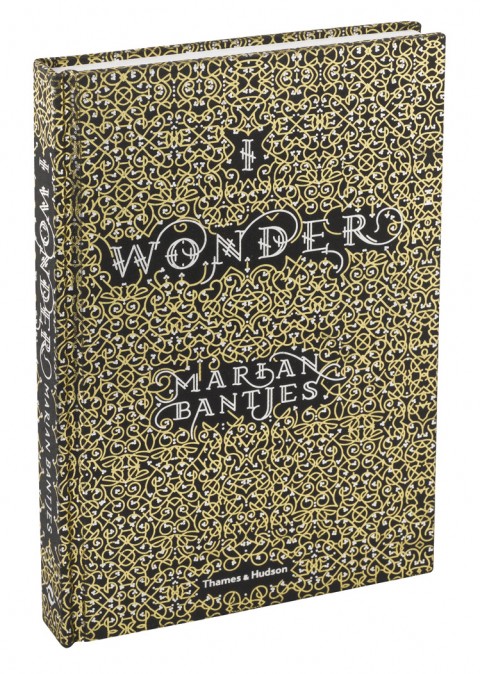
Lynda.com have made a full-length documentary about graphic artist Marian Bantjes. Currently it’s only available to members, but here is a short trailer for the film:
2 CommentsIn this short documentary for a new online series for PBS called Off Book, Jonathan Hoefler and Tobias Frere-Jones, Paula Scher, Eddie Opara, Julia Vakser and Deroy Peraza discuss typography, design, texture, and infographics:
(via The Donut Project)
Comments closed Paint It Black — Alan Moore talks to Pádraig Ó Méalóid about the latest instalment of League of Extraordinary Gentlemen, Century: 1969 (available next month) for the Forbidden Planet blog:
What we’ve got in 1969, in keeping with the League’s usual practice, is that we’ve got a world entirely composed of references to the culture of that period, or around that period. So we’re taking bits from various films, television series, books, comics, any culture of that time we’re working into the fabric of our story… I hope that people will have as much fun digging out the various references as we had putting them in there…
See also: Pádraig Ó Méalóid’s recent interview with Alan Moore for 3AM Magazine.
Gonzo Graphic Novels — Six leading cartoonists discuss their own favourite cartoonists for The Guardian. Here’s political cartoonist Martin Rowson on Joe Sacco:
Although Art Spiegelman’s Maus is a work of incredible importance, I think it gave the entire genre a bum steer. It then got into this terrible kind of introspective, personal, adolescent angstiness. All this “you have to be serious about this because it’s a serious art form”: well, it is and it isn’t. Therefore, discovering Joe Sacco was a liberation. Here is somebody who is using the medium as journalism and reportage. It’s taking the best bits of the underground comics of the 60s – the radicalism – with the personal immersion you got with Spiegelman. It’s an extraordinarily powerful way of telling a story – a true one in this case. The fact that he places himself in the heart of it makes it gonzo journalism turned into a graphic novel, although it’s not really a graphic novel, it’s a sort of visual journalism.
Also in The Guardian… Lee Rourke, author of The Canal, on The Book Barge, a bookstore in a travelling canal barge:
It is the brainchild of Sarah Henshaw. “By setting up on a canal boat,” she explained, “we hope to promote a less hurried and harried lifestyle of idle pleasures, cups of tea, conversation, culture and, of course, curling up with an incomparably good Book Barge purchase.” I was immediately sold. But why a canal boat? “I hoped that by creating a unique retail space, customers would realise how independent bookshops can offer a far more pleasurable shopping experience than they’re likely to find online or on the discount shelves at supermarkets.”
Wonderful.
And finally…
Recording the Disjunction — Errol Morris talks to the A.V. Club about truth, self-deception, and his new documentary Tabloid:
Comments closedPeople sort of imagine that they go to a documentary—and this is also true [when] you read an article, a work of journalism—that they’re [experiencing] a work of non-fiction. We know that what we’re reading is not the absolute truth. If we’re reading a first-person account, we know that each and every one of us, myself included, have a great desire to be seen in a certain way, or to be perceived in a certain way. It’s unavoidable. What a movie can do—and this is what really does interest me, it’s at the heart of documentary—is not so much delivering the so-called truth. Yes, pursuing the truth, trying to investigate what really happened, trying to uncover some underlying reality, but recording that disjunction, that distance between how people see the world and the way the world might really be—that’s at the heart of the enterprise.
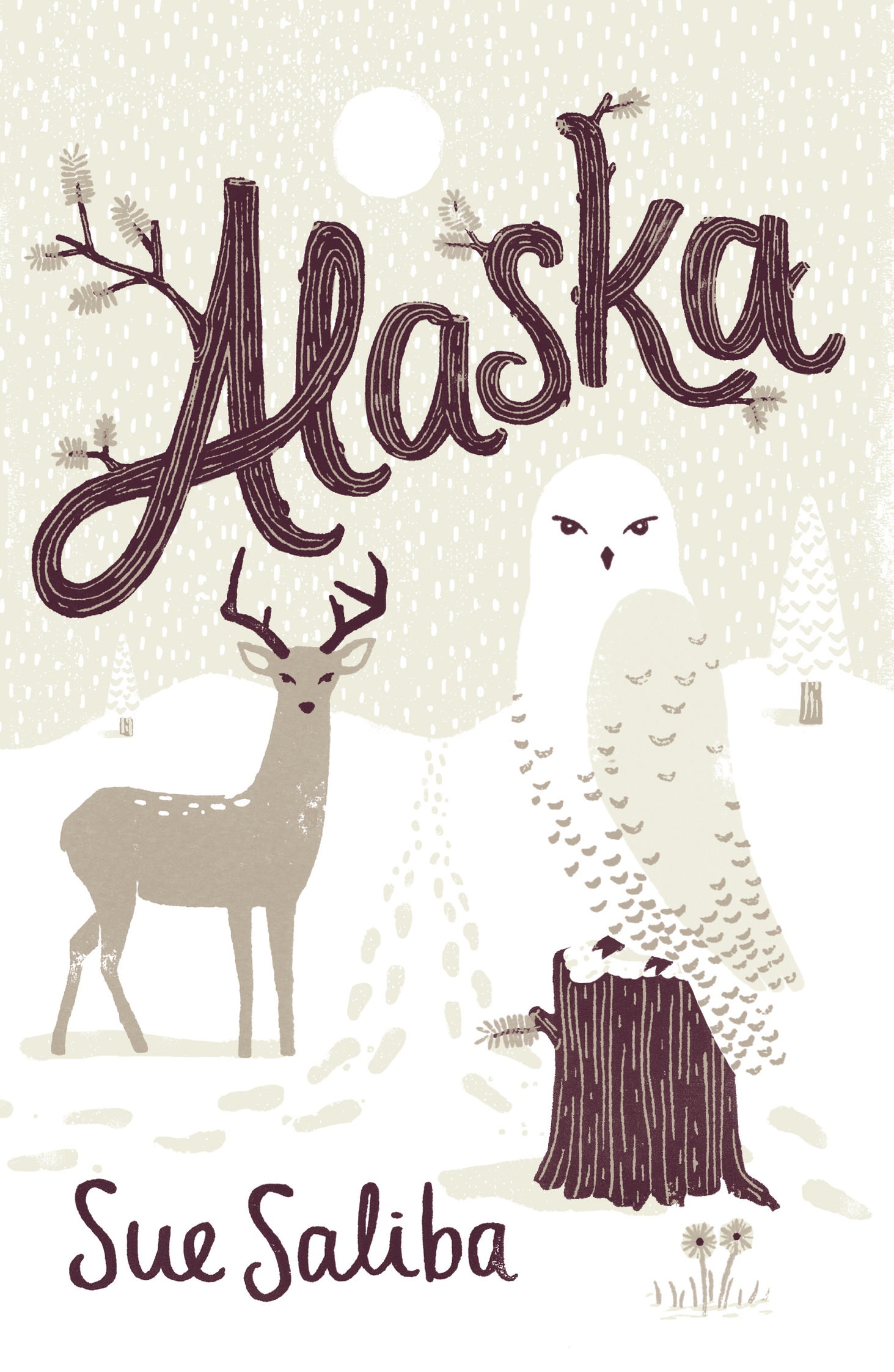 An interview with the talented Allison Colpoys, book designer at Penguin Books Australia, at The Design Files.
Particular Beasts — A brief interview with art director John Gall about teaching book design:
Each book is its own particular beast that has to be designed from the ground up. Every designer has their own way of looking at the problem and coming up with a solution. It can’t help but be personal on some level.

A Twist, Flourish or Quirk — Louise Fili and Steven Heller, authors of Scripts: Elegant Lettering from Design’s Golden Age, on script typefaces at Design Observer:
During the letterpress era [script typefaces] were in such great demand that many people “invented” them, and many others copied them. In some commercial printing shops, composing cases filled with scripts were stacked floor to ceiling to the exclusion of other type. Printers routinely amassed multiple styles of the heavy metal type fonts, each possessing a distinct twist, flourish or quirk, used to inject the hint of personality or dash of character to quotidian printed pieces… Scripts signaled propriety, suggested authority yet also exuded status and a bourgeois aesthetic. The wealthy classes couldn’t get enough fashionable scripts in their diet.
The Pilot Fish and The Whale — David Carr, media columnist at the New York Times, talks about the documentary Page One: Inside The New York Times with screenwriter Aaron Sorkin for Interview Magazine:
I think one of the things that Page One does an amazing job of demonstrating is the importance of editors. You can see our editor, Bruce Headlam, shaping, arguing, pushing back. Of course, that’s what you don’t have a lot of in the blogosphere. There is nobody pushing people to support what they’re saying, nobody arguing against the assumptions that are brought to the table…
Slow Journalism — An interview with cartoonist and journalist Joe Sacco (Footnotes in Gaza) for the A.V. Club:
[I]t’s one of the slowest art forms or media there is. You know, there’s fast food and there’s the slow food movement; I guess this is slow journalism. It just forces you into it. It’s difficult for me because I love being in the field, so to speak. I love that day-to-day thrill of being in places, and the great privilege of meeting people and going into their homes and seeing what their lives are like. I love that. But when you compare how much time is spent reporting to how much time is spent at a desk just writing and drawing, the reporting is a fraction. That’s just the way it is.
And finally…

Sing Out — Dorian Lynskey, author of 33 Revolutions per Minute, recommends five books about protest songs. The cover of 33 Revolutions per Minute was designed by Jacob Covey.
Little Scraps of Paper is a lovely series of short documentary films about how creative people use notebooks to record their thoughts and develop their ideas. The series was created last year by director Tomas Leach, assisted by Nicolas Cambier and Daniel Diego Lincoln.
In this film, Norwegian product designer Oscar Narud talks about his process:
(Thanks Kate!)
Comments closedScreening at MoMA next month, How To Make A Book With Steidl is an award-winning documentary by Jörg Adolph and Gereon Wetzel about book publisher Gerhard Steidl:
(via Coudal. Of course.)
Comments closedLinotype: The Film is a work-in-progress documentary about the revolutionary Linotype typecasting machine. Director Doug Wilson has just released a new trailer for the film:
You can help fund the Linotype: The Film at Kickstarter.
Comments closedA fascinating 54-minute documentary about news and data visualization by Geoff McGhee:
(via Information Aesthetics)
Comments closed