Skip to content

Tag: dc comics

Darkseid Is…

Mister Miracle by Tom King and Mitch Gerads was unexpectedly one of my favourite comics this year. I hadn’t previously read any books set in the ‘Fourth World’ despite it’s massive influence on comics and films. I’ve always found Jack Kirby’s grandiose, dialed up to 11, vision of the New Gods to be a little too much, even for Jack Kirby.1 But the constant overwhelming ridiculousness of it all is one of the themes of Mister Miracle. How do you stay sane, let alone have a normal life with a family, when you are constantly ground down by the world you find yourself in, and confronted daily with situations that are tragic, absurd, and just so much bigger than you?

At the Daily Beast, Entertainment Editor Melissa Leon talks to author Tom King about how his experiences as a CIA counterintelligence officer and his personal struggles with stress and anxiety shaped the book.

“The book started when I had one of those first-episode-of-the-Sopranos panic attacks and I ended up in the hospital,” he says. “It was one of those things where you ask the doctor, ‘Am I dying or am I crazy?’ And they tell you you’re crazy and you’re like, woo-hoo! Oh, wait a second.” He laughs. “I thought I was a pretty tough guy. I’d been to war twice, I’d had three kids. In my own little nerdy corner of the world I was pretty successful. But there was something brittle inside of me.”

Mister Miracle was his chance to write about those brittle parts—and about the creeping suspicion in the age of Trump that reality is fundamentally, metaphysically even, coming undone… Unremarkable events [unfold] in heightened, surreal circumstances; sometimes touching, funny, or grim. The juxtapositions are essential to King, who likens the scenes to the memory of debriefing a source in Iraq in 120-degree weather. “We were both sweating and talking about a guy getting his head chopped off. It was horrible,” he remembers. “But it was my wife’s birthday.” He recalls shuffling into a corner, calling his wife, and singing “Happy Birthday” in half-hushed tones. “That’s what life is, right? The mundane lives right next to the crazy.” …

It sounds all very grim, but somehow it isn’t. At least not completely. There is a lot of humour and affection in it too, which is why I think it works. Somehow King finds a way to be (just about) life-affirming in the end.

Gerads layered artwork is also extraordinary and, at times, beautiful. Laid out on the page in a metronomic 9 panel grid, the glitches, blurs, and repetition add to the sense of dislocation and detachment from reality, like life is being filtered and replayed through a screen.

Part of Mister Miracle’s ambition is to capture a feeling many know intimately, but which can be hard to put into words. King and Gerads articulate that dread succinctly, often with a single phrase: “Darkseid Is.” Panels black out without warning, flashing the phrase in typewriter lettering. It interrupts moments of loneliness or disassociation. But it can also be a punchline, or a shrug: When Big Barda says it, for example, she could just as well say “shit happens.”

2 Comments

Jeet Heer on Jack Kirby

At the New Republic, Jeet Heer looks back at the work of Jack Kirby, the cartoonist who shaped the Marvel Universe and remade popular culture: 

The superhero stories Kirby created or inspired have dominated American comic books for nearly 75 years and now hold almost oppressive sway over Hollywood. Kirby’s creations are front and center in the Marvel Cinematic Universe, but his fingerprints are all over the DC Cinematic Universe too, where the master plot he created—the cosmic villain Darkseid invading earth—still looms large. It was Kirby who took the superhero genre away from its roots in 1930s vigilante stories and turned it into a canvas for galaxy-spanning space operas, a shift that not only changed comics but also prepared the way for the likes of the Star Wars franchise. Outside of comics, hints of Kirby pop up in unexpected places, such as the narrative approaches of Guillermo del Toro, Michael Chabon, and Jonathan Lethem.

If you walk down any city street, it’s hard to get more than fifty feet without coming across images that were created by Kirby or inflected by his work. Yet if you were to ask anyone in that same stretch if they had ever heard of Kirby, they’d probably say, “Who?” A century after his birth, he remains the unknown king.

Comments closed

Batman: Strange Days

Batman-Strange-Days
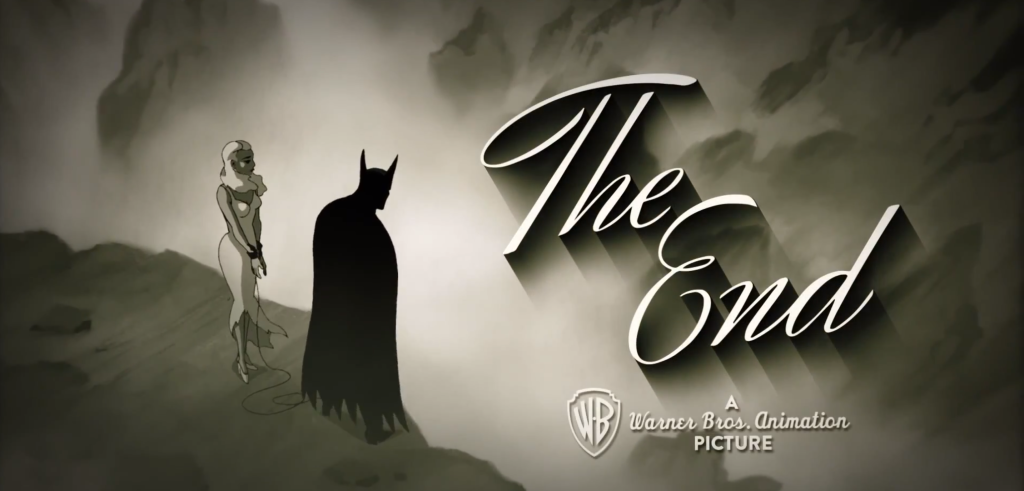
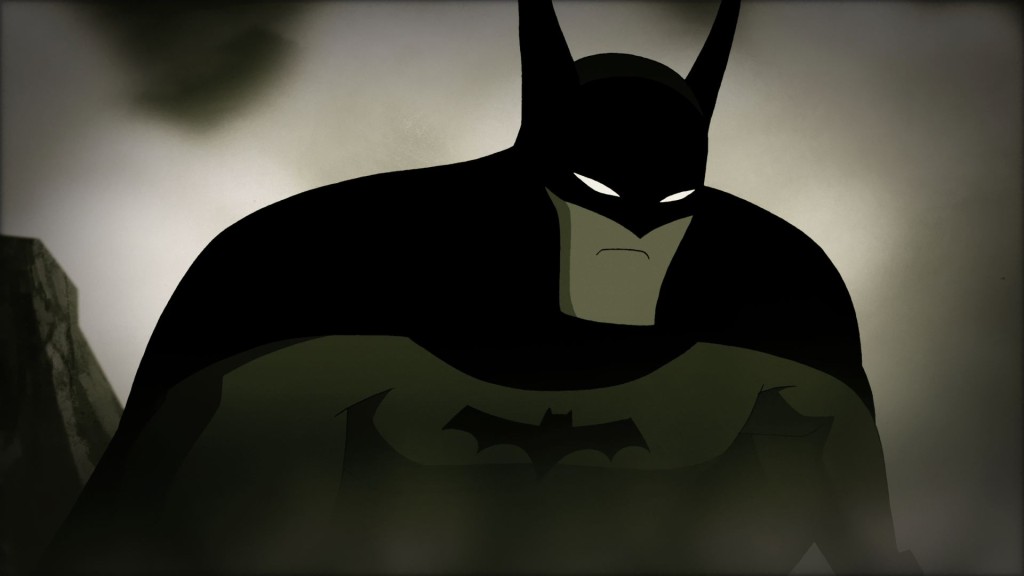
For me, and I suspect plenty of other people of a certain age, the noir-inspired Batman: The Animated Series, is still the most satisfying version of the character to come to screen. The series has long since ended but happily, Bruce Timm, co-creator of the series, has produced a new, wonderfully retro, animated short called Batman: Strange Days to celebrate the Dark Knight’s 75th anniversary:

In a recent interview with Comics Alliance, Timm talked about his work on the original series and the retro look of the new short:

I wanted to make the whole cartoon look as if it was like the cartoon itself was made in 1939, got stuck in a vault somewhere, and nobody has seen it until now. Not that I thought we were going to pull that kind of hoax, but that was the feel I wanted. I wanted it to be so authentically old school. I went back and looked at those early Bob Kane comics and even though they’re really super crude, there’s something really cool about the way Batman looks in those comics. He’s got the really long ears, they kind of stick out in an inverted “A” shape, or a “V” shape, on the top of his head because they kind of stick out on an angle; they’re really tall. He’s got tiny eyes, his trunks are long, his boots are long. He has short little gloves. I tried to incorporate as much of that in there as possible.

No surprise then that like the animated series, it reminds me a lot of the Fleischer Studios Superman cartoons from the early 1940s. The first episode of that series, “The Mad Scientist”, was released September 26th 1941 (before Superman could even fly!):

Personally, I like the episode 2, “The Mechanical Monsters, a lot:

And just as side note, when Batman first battled Hugo Strange’s giant monster men in Batman #1 (Spring 1940), he doesn’t mess about with tear gas — he actually takes them down with a machine gun. It would be the last time Batman killed anyone on purpose.
batman-strange-days-the-end

Comments closed

Superman 75th Anniversary Animated Short


Superman through the years in two minutes:

There’s a list of annotations on the DC Comics blog.

Comments closed

Karen Berger: Mother of ‘The Weird Stuff’

“It’s the weird stuff… The stuff that makes you different.”

The New York Times interviews Karen Berger, the former executive editor of Vertigo, whose departure from DC Comics has raised questions about the imprint’s future:

When Ms. Berger joined DC straight out of Brooklyn College in 1979, she was simply “another English major looking for a job” and admittedly no fan of superheroes. “I just fell into the company, fell into the business and fell in love with comics,” she said.

Inspired by the publisher’s more offbeat anthology series, like “House of Mystery” and “Weird War Tales,” Ms. Berger cultivated stories that were sometimes more human and sometimes decidedly not of this earth.

After becoming the editor of the “Watchmen” author Alan Moore, she gathered a lineup of young British writers who were eager to break into American comics and who found Ms. Berger receptive to their ideas.

“She was our generation, and not only that, she was offering us what we wanted,” said [Grant] Morrison, who gave new lives, full of angst and existential uncertainty, to discarded DC characters like Animal Man and the Doom Patrol. “It was a perfect storm for a bunch of creative punks from Britain who were suddenly being taken very seriously.”

New York Times

Comments closed