I love Tom Gauld‘s latest cover for the New Yorker so much. We just had sleet and freezing rain in Toronto so that part is accurate. But it’s not just the weather. Everything feels pretty bleak at the moment and, like many others, I have found myself seeking solace in art too.
(I also have a dog. I should post more dog cartoons)
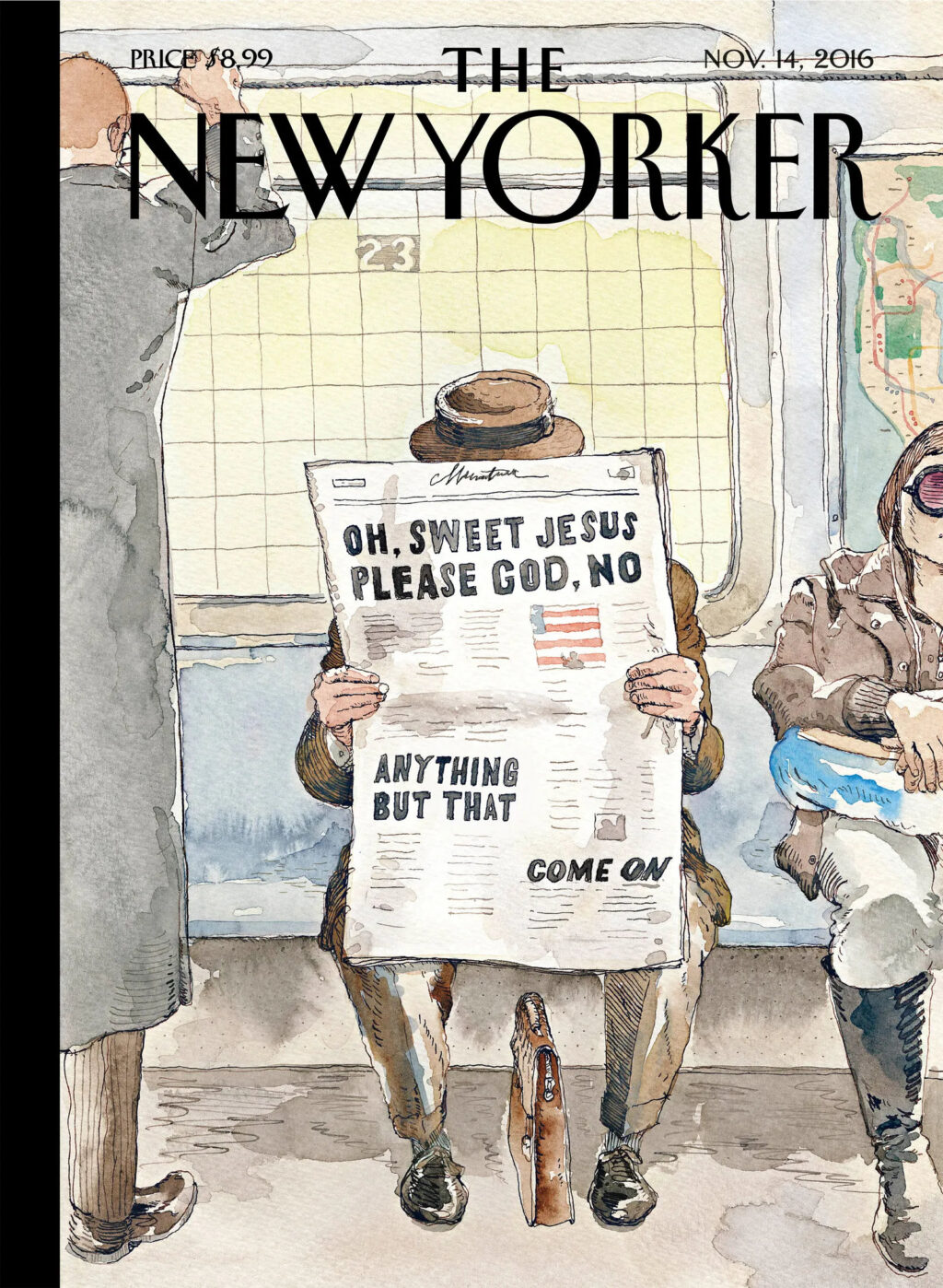
I recently came across this 2016 Barry Blitt cover for The New Yorker. I hadn’t seen it before. Obviously it’s about the US presidential election that year, but I’m not sure that much has changed.
(I feel like this is a variation on a gag that has been going around independent bookstores for a while now, but it gets more accurate by the day. I guess we have to laugh or we will cry, right?)
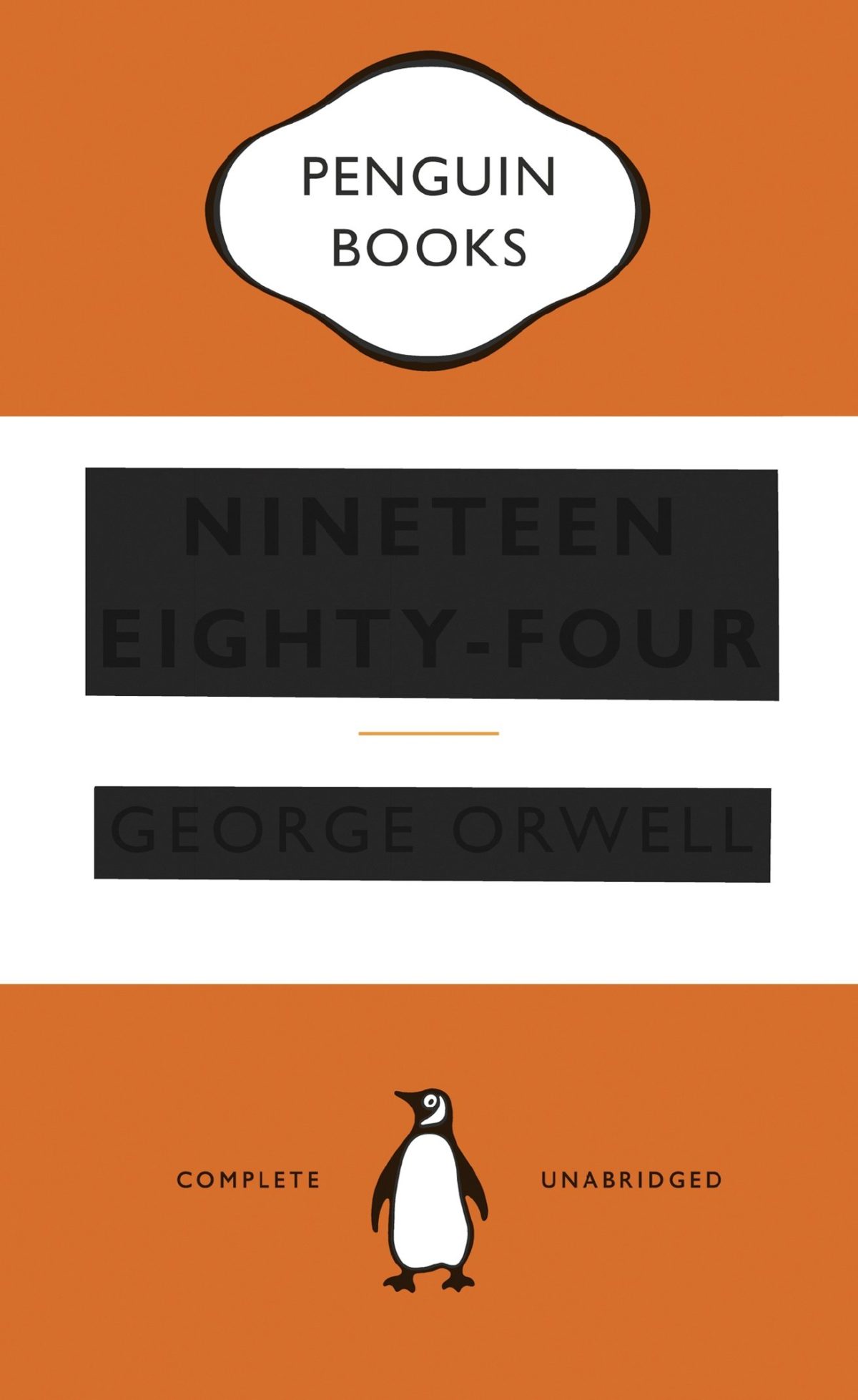
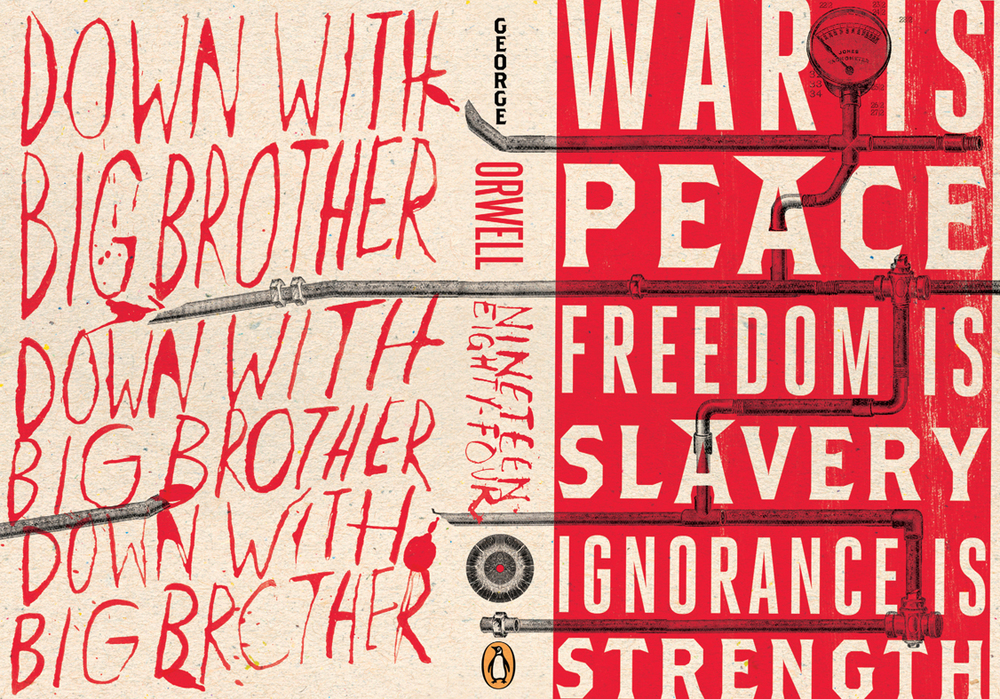
1984 by George Orwell; design by WH Chong (Text Publishing)
The dystopia described in George Orwell’s nearly 70-year-old novel “1984” suddenly feels all too familiar. A world in which Big Brother (or maybe the National Security Agency) is always listening in, and high-tech devices can eavesdrop in people’s homes. (Hey, Alexa, what’s up?) A world of endless war, where fear and hate are drummed up against foreigners, and movies show boatloads of refugees dying at sea. A world in which the government insists that reality is not “something objective, external, existing in its own right” — but rather, “whatever the Party holds to be truth is truth.”
“1984” shot to No. 1 on Amazon’s best-seller list this week, after Kellyanne Conway, an adviser to President Trump, described demonstrable falsehoods told by the White House press secretary Sean Spicer — regarding the size of inaugural crowds — as “alternative facts.” It was a phrase chillingly reminiscent, for many readers, of the Ministry of Truth’s efforts in “1984” at “reality control.” To Big Brother and the Party, Orwell wrote, “the very existence of external reality was tacitly denied by their philosophy. The heresy of heresies was common sense.” Regardless of the facts, “Big Brother is omnipotent” and “the Party is infallible.”