Skip to content

Tag: crime fiction

Something for the Weekend

FF Spinoza — A nice looking new type family designed by New York-based art director Max Phillips:

With the goal of readability in mind, Phillips named the typeface after 17th century rationalist and lens-grinder Baruch Spinoza, a man whose job it was to help people see clearly.

The family is meant as an elegant workhorse, a classic text family with just enough individual character to hold its own in display sizes. It was inspired by mid-century German book faces like Trump Mediæval and Aldus, and by the types of Nicolas Kis. The forms are narrow and economical, with open counters. The line is firm and distinct. It has strong thick strokes and serifs to help it grip the page. Its intended virtues are firmness, clarity and modesty.

Interestingly, Phillips is also author of the Shamus Award-winning mystery Fade to Blonde, and co-founder of the pulp-infused Hard Case Crime imprint.

Sign ManualThe New Yorker takes a look at Helvetica and the New York City Subway System by Paul Shaw:

Though Helvetica was always the choice font for typographic synchronization, it was simply too expensive to ship over from Amsterdam, where it was made (back in the days of metal type, lead font plates had to be imported, a costly endeavor, since the plates had to be custom manufactured to fit American printing presses). In the early sixties (much like today) New York City Transit just didn’t have the money. Instead, the MTA used a similar font called Standard, or Akzidenz-Grotesk, which took nineteen years to fully phase out. It wasn’t until 1989 that the MTA officially ratified the decision to replace it with Helvetica in its “Sign Manual.”

The review is accompanied by a slideshow of images from the book.

Something Irretrievably LostRob Young, former editor of The Wire magazine, talks about his latest book Electric Eden: Unearthing Britain’s Visionary Music with Mark Thwaite at ReadySteadyBlog:

[T]here will always be a tradition, running underneath the more visible forms of pop and rock music. At certain times it comes into focus and is a fairly hip reference point for various artists; at other times – much of the 80s and early 90s, for example – it’s practically invisible and/or unredeemable.

Right now we’re on an upswing, possible as an inevitable reaction to the huge leaps forward in digital and electronic music in the 90s; also because, when making or locating all sorts of music has become so easy and accessible, there’s a certain nostalgia for an indefinable organic quality to the production and a sense that music can be about more than purely formal concerns. This, I’m sure, is connected at some instinctive level with the destabilising effects of recent political developments here. It’s very noticeable that folk revivals tend to occur when people are afraid of something being irretrievably lost.

The Computational Process — Ted Striphas, author of The Late Age of Print, on the distinction between ‘“algorithmic culture” and “culturomics”:

I must confess to being intrigued by culturomics… Having said that, I still want to hold onto the idea of algorithmic culture. I prefer the term because it places the algorithm center-stage rather than allowing it to recede into the background, as does culturomics. Algorithmic culture encourages us to see computational process not as a window onto the world but as an instrument of order and authoritative decision making. The point of algorithmic culture, both terminologically and methodologically, is to help us understand the politics of algorithms and thus to approach them and the work they do more circumspectly, even critically.

And finally…

Just a reminder that the late and final deadline for AIGA’s reinstated 50 Books/50 Covers is April 21, 2011.

2 Comments

Henning Mankell: The Last Wallander?

The Swedish author Henning Mankell talks to NPR New’s Morning Edition about the 11th and possibly last Wallander novel The Troubled Man:

“Maybe I’m a little old-fashioned. In the times where everyone is talking about how everything is a process, I am keen on dots … you call them a period. I believe in periods. I really thought that now is the ending, to make the final period in the stories of Wallander.”

NPR NEWS MORNING EDITION: HENNING MANKELL

Comments closed

Something for the Weekend

A fittingly Alvin Lustig-like cover for New Directions by Rodrigo Corral, seen at Book Covers Anonymous.

An Open Book-Publishing Platform — Book Oven’s Hugh McGuire on WordPress as a book publishing platform. It’s an intriguing idea even if don’t accept Hugh’s belief that books and the web will be indistinguishable in a matter of years. And, to judge by the comments, it something a lot of people have been working on.

Afterlife — With the US publication of The Girl Who Kicked The Hornet’s Nest, Charles McGrath looks at Steig Larsson, the late author of the Millennium series, and his unhappy legacy in the New York Times. Sarah Weinman has more on Larsson and the new book (of course)…

Enticement and Exegesis — Knopf designer Peter Mendelsund (who, incidentally, designed the covers for US editions of the Millennium books) on author David Foster Wallace, Infinite Jest, and book cover design:

Book jacket design should concern itself with, in my estimation, equal parts enticement (“Come buy this book”) and exegesis (“This is what this book is about, more or less.”) A good cover doesn’t let one category trump the other. A good cover should not resort to cliché in order to accomplish either. But the real key here, in both categories (enticement and exegesis) is the designer’s ability to work the sweet-spot between giving-away-the-farm, and deliberate obfuscation.

Book jackets that tell you too much, suck. Book jackets that try to change the subject also suck, and are furthermore, too easy.

My interview with Peter about Tom McCarthy’s book “C” is here.

And finally…

It’s a Book, Jackass! — a cute video featuring a tech-loving donkey and a book loving ape for It’s a Book! by Lane Smith, published by Macmillan  (via Chronicle Books):

Comments closed

Something for the Weekend

David Drummond’s Parker Series for University of Chicago Press.

“a little bit Warhol, a little bit Factory Records” —  Christian Schwartz explains why he started type foundry Commercial Type at I Love Typography:

It’s much easier to be an “armchair quarterback,” second-guessing everyone else’s seemingly questionable decisions regarding everything… than it is to deal with the actual reality of budgets, technology, and timelines. Theorizing about how and why things work is all well and good, but putting our ideas into practice is of course the real test…

Typography and JudaicaSteven Heller interviews book designer and typographer Scott-Martin Kosofsky. Fascinating stuff:

It’s the best of times and the worst of times, but I have a feeling that people have always said that… In regard to print, I think we’re at a great moment, with access to mature technology and aesthetics… There’s no excuse for anything looking less than great. But books (and print in general) have lost their pride of place. Book publishers, a group nearly always behind the curve, have failed to grasp that their online counterparts spend a lot of time and money concentrating on User Experience, while they remain unfamiliar with the concept. It wasn’t always that way, but when the professionalism and discipline that was demanded by metal type fell away, things got worse and worse, especially typographically.

Punk — An interview with Jaime Hernandez about Love and Rockets and the recently published The Art of Jaime Hernandez at NYC Graphic:

“That’s how Love and Rockets started: we were just cocky and didn’t know we could fail. We went ahead and published the first one ourselves and didn’t care what the outcome would be, we just wanted to be printed. Hopefully we could sell it and make money, but there was no one to tell us not to. That was the punk part of it. The more we got good response, the more we kept doing it.”

And finally…

The Pollak Coffee Table Book seen at UnderConsideration’s FPO. Breathtakingly beautiful.

Comments closed

Something for the Weekend

Big Shit-Eating Grin — George Lois chooses 12 of his favourite Esquire covers at New York magazine. There are more iconic Esquire covers at George Lois’ website and there is, of course, a new book, George Lois: The Esquire Covers @ MOMA, published by Assouline. (NB the image above is not one of Lois’ 12, but it is great).

Objects of Desire — An interesting University College London podcast about the history of books and publishing featuring Professor Henry Woudhuysen, co-editor of the The Oxford Companion to the Book, and Professor Iain Stevenson,  author of Book Makers: British Publishing in the Twentieth Century (available in the US from University of Chicago Press) (via Ernesto Priego on Twitter).

The Dark SideThe Economist on Scandinavian crime fiction:

The cold, dark climate, where doors are bolted and curtains drawn, provides a perfect setting for crime writing. The nights are long, the liquor hard, the people… “brought up to hide their feelings” and hold on to their secrets.

Somebody’s Sins, But Not Mine — A two part interview with Patti Smith about her new memoir Just Kids at KCRW’s Bookworm. Part two is here.

1 Comment

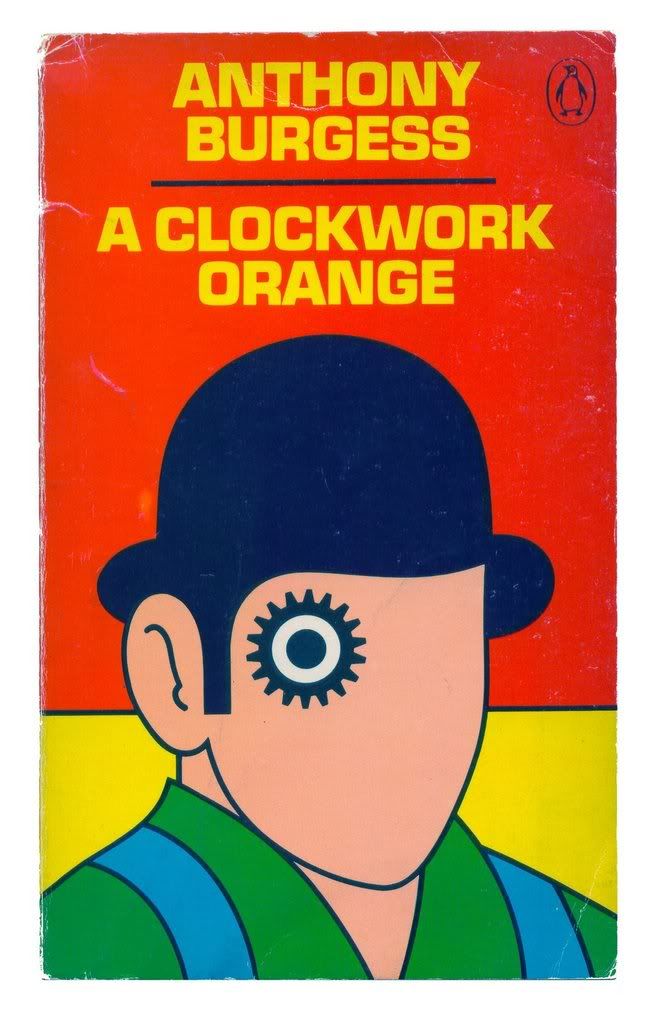
10 Websites for Vintage Books, Covers and Inspiration

1. A Journey Round My Skull — “Unhealthy book fetishism from a reader, collector, and amateur historian of forgotten literature.”

2. The Art of Penguin Science FictionA comprehensive collection of Penguin sci-fi covers from 1935 onwards.

3. BibliOdyssey“Books… Illustrations… Science… History… Visual Materia Obscura… Eclectic Bookart.”

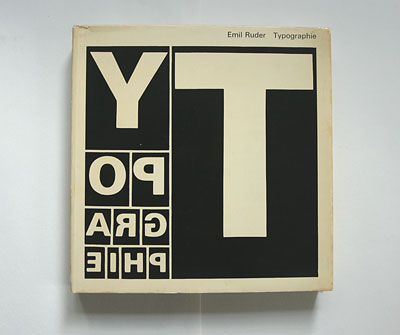
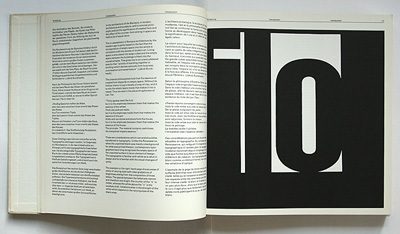
4. Book (Design) Stories — Felix Wiedler’s incredible collection of modernist design and typography books from Germany and Switzerland 1925–1965.

5. Book Worship — “graphically interesting, but otherwise uncollectible, books that entered and exited bookstores quietly in the 50s, 60s, and 70s”.

6. I Was A Bronze Age BoyComic books, crime fiction and pulp magazines curated by Mark Justice. Awesome name. Awesome blog.

7. Killer Covers of the Week — Pulpy goodness and vintage crime fiction covers expertly curated The Rap Sheet‘s J. Kingston Pierce.

8. The Pelican ProjectThings Magazine‘s collection of Pelican paperbacks organized by decade.

9. Pop Sensation — Rex Parker appraises, critiques and generally ridicules his vintage paperback collection.

10. Spanish Book CoversSpanish pulp: detectives, masked gangsters, pin-ups, skeletons, and zombies! (French language)

AND BONUS! 11. French Book Covers — But not entirely safe for work… It’s French. You have been warned.

Let me know if I’ve missed any other great vintage book cover sites. AND  I’m working on a list of book cover related photostreams and groups on Flickr so please pass on your recommendations! Cheers.

modernist book design in germany and switzerland 1925–1965 (and beyond)

17 Comments

Megan Abbott Noir Covers

For all my love of clean lines and Swiss modernism, I’m also a total sucker for trashy pulp paperback covers and film-noir movie posters, so when I stumbled across these covers illustrated by Richie Fahey for Megan Abbott‘s crime novels, I thought I should post the series:

Meg Abbott interviewed in 3:AM Magazine.

7 Comments

High-Rez Himes

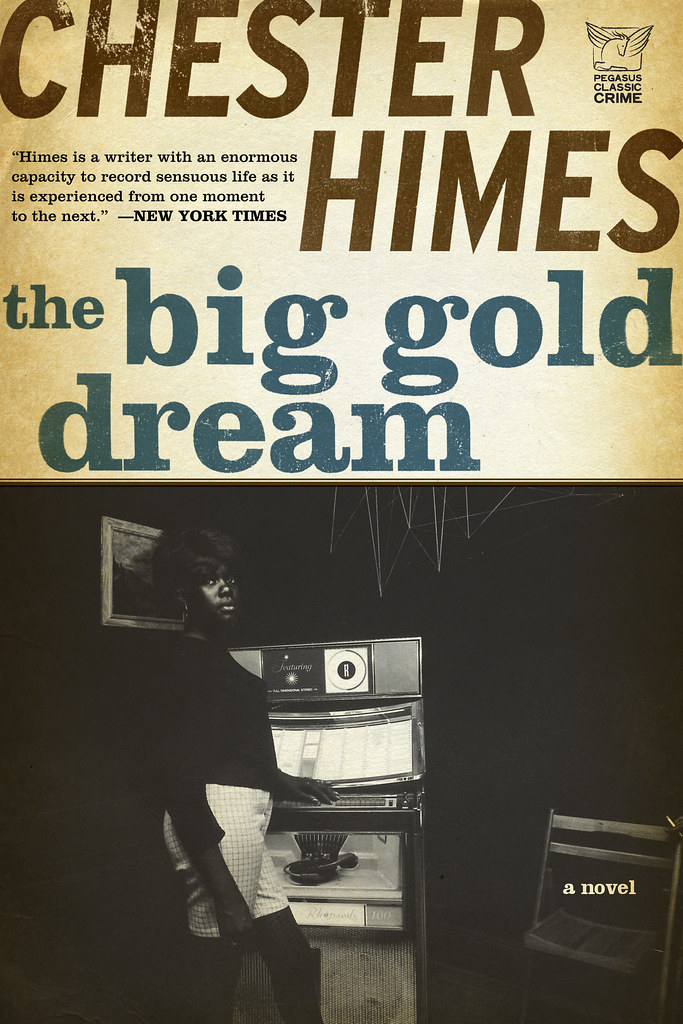
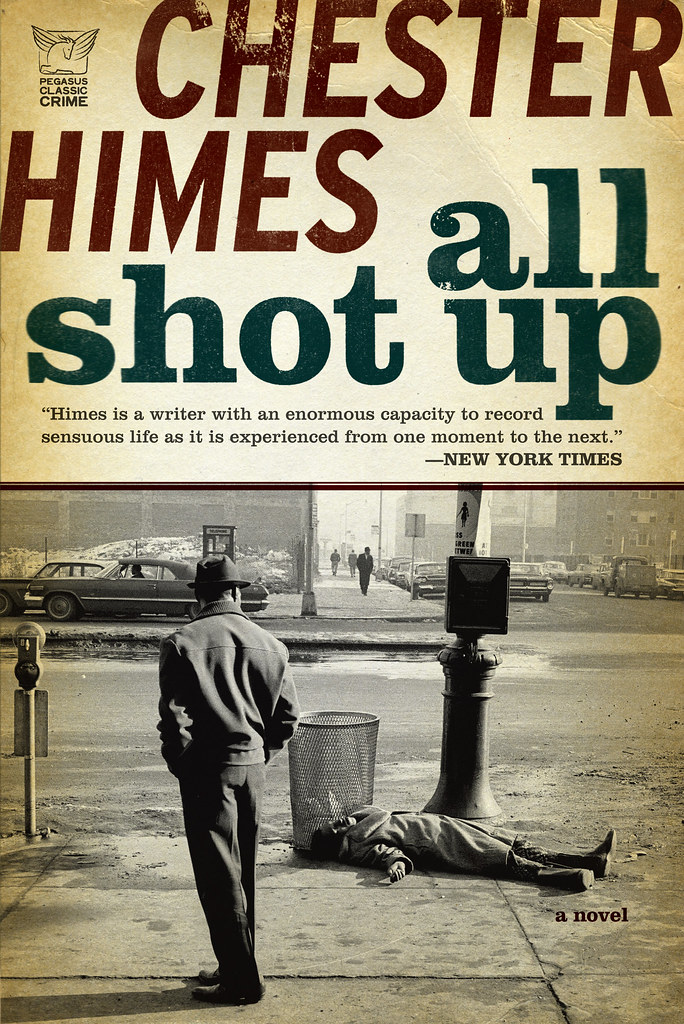
After my slightly snarky comment yesterday about publishers and designers making hi-res cover images readily available, Michael Fusco emailed me with said images for his fantastic Chester Himes covers for Pegasus.

Here they are in their full typographic glory:

Worth the wait I think…

You can see more of Michael’s work at his website and design:related portfolio.

3 Comments

Midweek Miscellany, June 24th, 2009

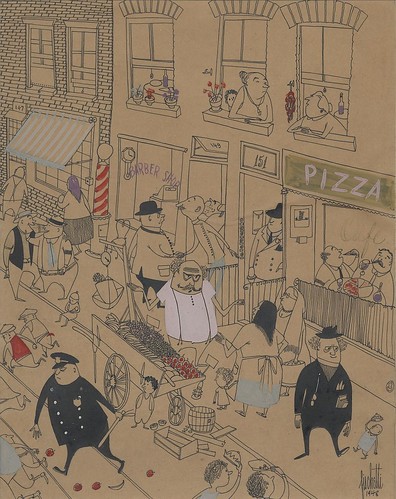
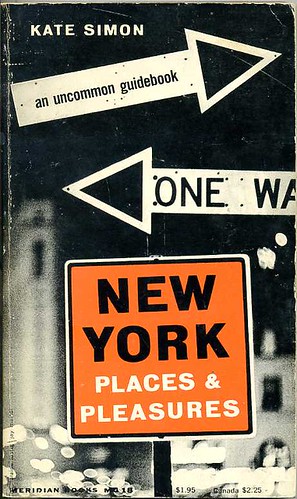
New York Places and Pleasures — Cover design by Elaine Lustig and Jay Maisel from Kyle Katz’s amazing Flickr photostream (via Design Observer).

A Very Bad Man — Douglas Wolk, author of Reading Comics: How Graphic Novels Work and What They Mean, reviews the forthcoming Darwyn Cooke comic book adaptation of The Hunter by Richard Stark (AKA Donald Westlake) — which I can’t wait to get my hands on — for the Washington Post:

Cooke has a particular gift for the space-age designs and stripped-down chiaroscuro that were in vogue a half-century ago — he previously explored them in his “DC: The New Frontier” comics — and his loose, ragged slashes of black and cobalt blue evoke the ascendancy of Hugh Hefner so powerfully you can almost hear a walking jazz bass. At times, he seems to be demonstrating how few brushstrokes it can take to communicate a precise degree of amoral machismo. Parker’s a very bad man, but it’s hard to take your eyes off him.

More stuff about  Darwyn Cooke and his Parker adaptation can be found at Almost Darwyn Cooke’s Blog (but not quite).

Buy Your Own ChainsThe New Yorker’s Willing Davidson painfully accurate observation that low industry pay and unpaid internships skew what is published (via GalleyCat):

Tiny salaries in the low ranks of publishing are miserable for the young workers, but they’re probably worse for literature… It’s a truism of the industry that most of these jobs are held by people who can afford them—people with some parental support and no student loans. Often they’ve had unpaid internships, that most pernicious example of class privilege. Their superiors are the same people, ten years later. They—we!—are smart, cultured people with good intentions, but it’s easy to see how this narrow range could lead to a blinkered view of literature.

Which leads rather nicely to…

The Intern —  Dark (and darkly funny) secrets from the lowest rung of this business we call publishing. See also Editorial Ass.

Gotham — I started with New York (and linked to The New Yorker somewhere in the middle), so I thought I’d wrap up with New York too. I came across The Mythic City: Photographs of New York by Samuel H. Gottscho, 1925-1940 a couple of weeks ago while looking for something completely different. It’s not new (it was published in 2005 to coincide with an exhibition at Museum of the City of New York), but the cover has stuck with me (something to do with the chunky cinematic type I think) and, by a happy coincidence, a copy of the book landed on my desk this week. It is beautiful. (Full disclosure: The Mythic City is published by Princeton Architectural Press who are distributed in Canada by the people who pay me).

Comments closed

Parker

Darwyn Cooke (author of one of my favourite superhero comics of recent years, the award-winning The New Frontier) talks about his comic book adaptation of The Hunter by Richard Stark (AKA Donald E. Westlake) — also the inspiration for John Boorman’s film Point Blank starring Lee Marvin — with Tom Spurgeon and writer Ed Brubaker at The Comics Reporter:

The first chapter of that book is so well written it makes me want to puke, but it was like there’s nothing visual left if you put the prose down. It’s all there. It’s an external description, people’s reaction to the guy. So it’s like, “You know what? Let’s take a good chunk of space here and see if we can achieve the feeling of that chapter purely through the visuals that he’s directing. Right down to the holes in his shoe.

Publisher IDW has a preview of the first chapter here.

Am I excited? Yes. Yes, I am.

Link

Comments closed