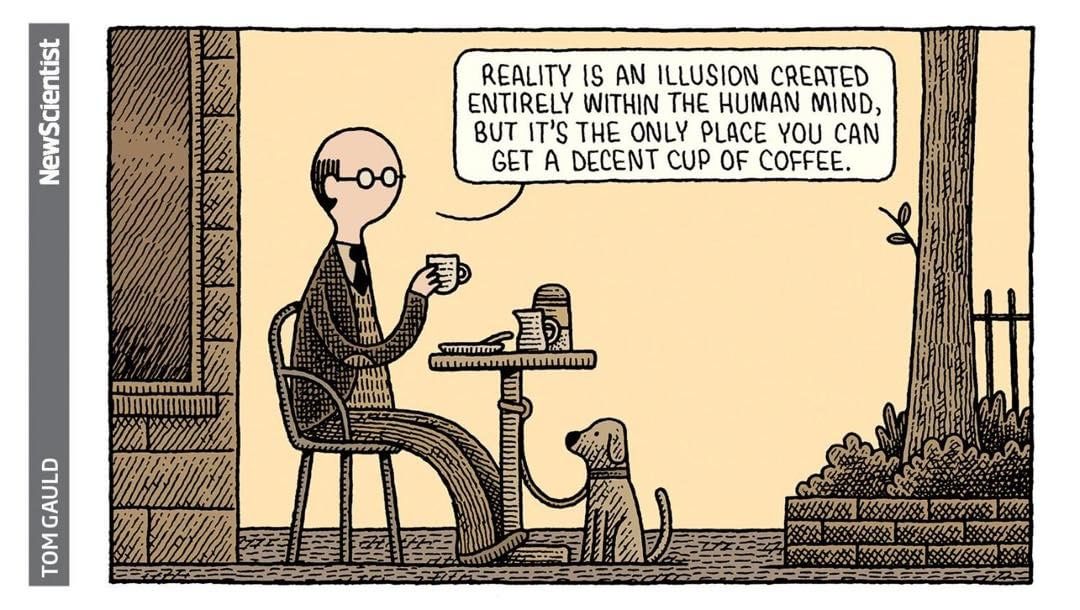
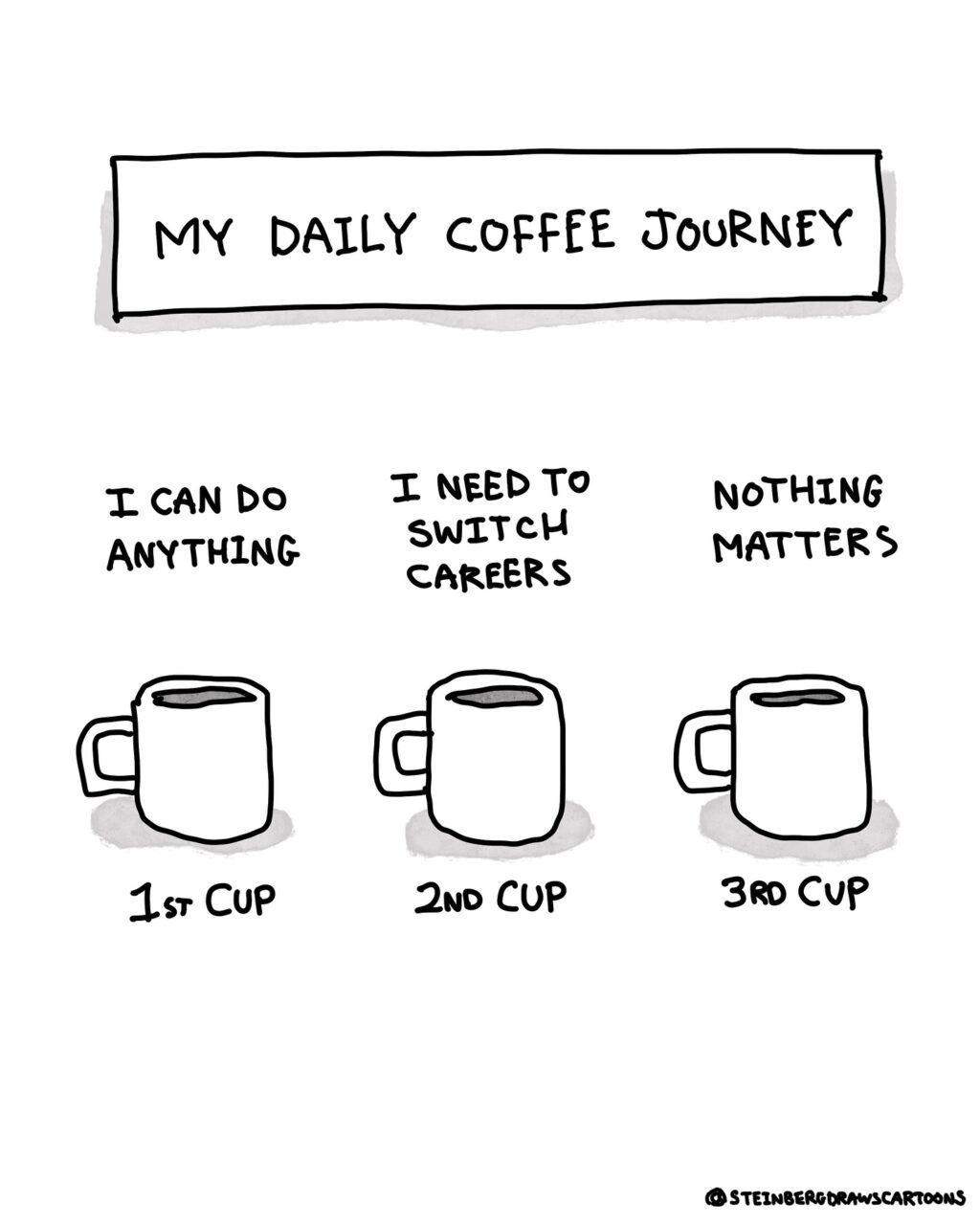
Here are a couple of cartoons I saw this week that feel pretty representative of how things are going…
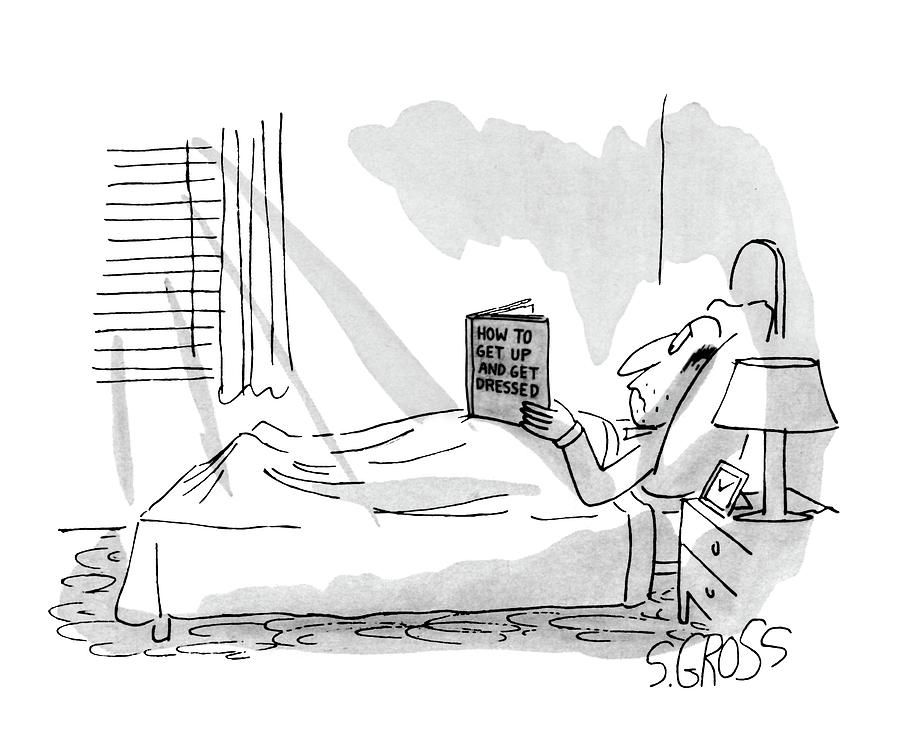
And this, by the late, great Sam Gross, is from the September 1, 1980 edition of The New Yorker.
Comments closedBooks, Design and Culture
Here are a couple of cartoons I saw this week that feel pretty representative of how things are going…
And this, by the late, great Sam Gross, is from the September 1, 1980 edition of The New Yorker.
Comments closed
Tom Gauld has drawn a new cartoon for the New York Times Books section.
This is probably my favourite panel…


The previous post about the latest cover of the NYT Magazine reminded me that Tom Gauld‘s cartoons for New Scientist magazine (like the one above, although maybe not actually the one above because it’s new!) are going to be available in book form. Department of Mind-Blowing Theories will be available in April!

Comments closed

City Air Sets You Free — Mark Lamster interviews P.D. Smith about his new book City: A Guidebook for the Urban Age, for Design Observer:
It was never my intention to write an architectural history. Cities are much more than the sum of their architecture or infrastructure. A city is made great by its people. Nevertheless, you cannot ignore the structures and spaces of a city. Winston Churchill once famously said: “We shape our buildings and afterwards our buildings shape us.” Our urban environments undoubtedly shape us as people. That’s why between each of the eight sections in the book there are essays on more concrete features of the urban landscape, such as the Central Station, the City Wall, the Skyscraper or even the Ruins. But I hope that even here I don’t lose sight of the people who use these architectural spaces. After all, they are the life-blood of the city.
Pop Detritus — Peter Paphides reviews When Ziggy Played Guitar by Dylan Jones, for The Observer:
For many critics, Ziggy was the last desperate act of a craven opportunist. A New Yorker writer flown to see the Ziggy shows fretted that “Bowie doesn’t seem quite real”. But, as long as music journalism has existed, performers – be it Bowie in 1972 or Lana Del Rey in 2012 – have been docked points for their apparent lack of authenticity.
And, besides, it was those very notions of authenticity with which Bowie was playing when he created Ziggy. After several hapless reinventions, the only hit he had to show for his efforts was Space Oddity, but, as Jones points out, Ziggy Stardust was the result of a decade spent sifting through pop cultural detritus and working out which bits he could use to turn him into a pop star.
Don’t Believe the Type — Estimable Jon Gray on the recently revealed cover design for J.K. Rowling’s new novel:
JD Salinger famously had a clause written into his contract stating that no imagery could appear on his covers. Günter Grass will only allow his own drawings. The classic orange Penguins, the poetry covers of Faber: they tell us nothing other than this is a book of note, a book of importance. JK Rowling’s name is the important piece of information, the quality assurance mark, and it is stated very simply and boldly in the brightest and clearest way possible.
(Needless to say, Jon’s thoughts are more interesting that the cover itself).
Material World — An interview with mighty Coralie Bickford-Smith:
I always start by asking myself ‘what is the most effective set of book covers I can produce using just standard materials which are simple but incredibly effective to be within the usual budget constraints?’ To marry design with materials in the most considered and best way possible. So in a way it always starts with the materials so I can make my design suit that method of printing. With the cloth classics its was all about creating a book that would be loved and cherished and not throw away. The materials were the starting point. The foiling was a real struggle at first, the detail of the design cant be too intricate. So the patterns were all designed with this in mind so that the printers could reproduce the design easily. Every material has its limits and its all about getting to grips with those limits to produce an end product that looks effortless and deceptively simple.
My interview with Coralie is here.
And finally…

The Long History of the Espresso Machine…
In the 19th century, coffee was a huge business in Europe with cafes flourishing across the continent. But coffee brewing was a slow process and, as is still the case today, customers often had to wait for their brew. Seeing an opportunity, inventors across Europe began to explore ways of using steam machines to reduce brewing time – this was, after all, the age of steam. Though there were surely innumerable patents and prototypes, the invention of the machine and the method that would lead to espresso is usually attributed to Angelo Moriondo of Turin, Italy, who was granted a patent in 1884 for “new steam machinery for the economic and instantaneous confection of coffee beverage.”
Great stuff… (see also: The Once and Future Coffeehouses of Vienna)
Comments closed The Backwards Novel Seen Backwards by Tom Gauld.
I also love Tom’s Lost Fairy Tales for a promotional concertina booklet made by his agent Heart (surely there’s a full length book to be had here?).
Ways of Reading from A Working Library:
Every book alights a path to other books. Follow these paths as far as you can.
Lovely.
Back to Basics — Booktwo.org‘s James Bridle on the Apple tablet (what else?):
I’ve spent several years urging publishers to get on board with new technologies and try new things, but equally I hope there’s space for a lot of publishers to get back to concentrating on what they do best: acquiring, editing, producing and publishing books… [W]e should probably stop scrambling to get on the latest bandwagon (vanilla Books-as-Apps, I’m looking at you), and concentrate on the basics: ebook production, metadata, integrated marketing, quality and consideration. There is a lot to be done, but this or that device will never be the be-all-and-end-all of the future of publishing.
I think James has a point. But honestly, no one I know (and that is an admittedly limited sample) believes “this-or-that device” will magically “save” publishing. Surely it is only bloggers in need of straw men and ‘journalists’ paid to hyperventilate who say that kind of shit?
Moving (swiftly) on…

Modern Myths — Will Self on H. G. Well’s The War of the Worlds in The Times:
The War of the Worlds is one of those books that demonstrates our culture’s surprising ability to continue the manufacture of myth. I say surprising, because one would think, with all the technological reproducibility of art now at our disposal — from raw print, to film, to digitisation — that there would be no room left for that hazy instability within which myth thrives.
(Pictured above: The NYRB edition of The War of the Worlds with illustrations by Edward Gorey)
And finally, completely unrelated to books…

Dear Coffee I Love You… Yes, yes, I do. (Pictured above: What I’d Rather Be Doing)
2 Comments
A-Type — The Independent has a nice look at book design and Faber & Faber’s Eighty Years of Book Cover Design by Joseph Connolly:
You could argue that the current renaissance in book design came about thanks to Penguin, always the most design-savvy of publishers. In 2004 they produced their first series of Great Ideas – small paperback editions of classic, mostly philosophical texts. They had highly tactile covers and used bold period typography to give a sense of when and where each book was coming from. The following year we got Penguin by Design, an illustrated history of 70 years of Penguin covers, and then, in 2007, Seven Hundred Penguins, a two-inch-thick collection of the best covers, shown life-size, one to a page. For seasoned haunters of second-hand bookshops, this particular item was as thrilling as a similar-sized brick of Class A drugs.
JRSM has more on the Faber book at Caustic Cover Critic.
5 Easy Pieces — Dave Daley discusses his site Five Chapters, which publishes a short story in 5 parts over the course of a week, with Ron Charles at the Washington Post‘s Short Stack blog:
“I write passionate notes to writers I admire. And I tell them about the site and why I think it’s a good place for them to be. Here’s an audience of story-lovers and book buyers… The short story is just ideal for our attention spans these days.”
Rogue Agent — Scott Esposito talks to Denise Oswald, the new Editorial Director Soft Skull, for The Quarterly Conversation:
Soft Skull is like a rogue agent—who wouldn’t want to work there? It’s exciting. I’ve always loved their shoot from the hip / take no prisoners attitude and the house’s commitment to embracing the outspoken and the contrarian, the marginal and the disenfranchised. Their books are thoughtful and deeply engaged on a ground level with the world we live in. Yet there’s always room for something elegant and literary or naughty and fun, which is a very satisfying balance at the end of the day because it helps one from becoming too self-serious.
Coffee and Memory — On topic close to my heart, research from the University of Florida has shown that caffeine both prevents and reverses symptoms of Alzheimers in mice, which, according to Donald Clark, just goes to show coffee is cognitively good for you:
Comments closedCoffee has… long fuelled learning, whether it be through the direct stimulation of the brain, increasing attention, improving memory, preventing dementia or providing a social context for debate and work. It’s something we coffee drinkers have always instinctively known!
Think, study, then post: David D. Perlmutter, author of Blogwars, discusses slow blogging on the Oxford University Press blog:
“many of the bloggers I interviewed talked about the need to feed the blog that is, if you don’t put up 2 to 3 new posts a day you lose your audience. But fast anything, unless you’re competing in the Olympics, is not necessarily the road either to author or audience fulfillment.”
I love this idea, I’m just not very good at it or, perhaps, just a bit too good judging by the number of posts in my ‘drafts’ folder! Must try harder… (via the excellent ReadySteadyBlog by the way)
The business elite still love print according to a Folio magazine survey:
“Top American business executives spend a lot of time worrying about the volatile economic climate—and a lot of time consuming media, with a vast majority of them clinging to print.”

The Best Illustrated Children’s Books 2008: a slide show of the New York Times picks (pictured). The NYT‘s Children’s Books Special Issue is here.
A bitter-sweet love: writer Ellen Jordan discusses her coffee addiction in a essay in The Age:
Comments closed“I wonder whether I’m afraid to write without coffee, afraid that every good sentence I’ve ever written came out of some mysterious alchemy of coffee and my mind. If I write with nothing, or with some pallid juice or herbal tea or decaf, will I discover that alone I have no talent?”