Skip to content

Tag: coen brothers

Pete Seeger & Llewyn Davis

Leo Braudy, author of Trying to Be Cool: Growing Up in the 1950s, on the late Pete Seeger and the Coen brothers’ film Inside Llewyn Davis, at the LA Review of Books:

Llewyn is the solitary fame seeker, doomed to be disappointed. Perhaps the Coens think he needs a brother to accompany him or be his manager, rather than his critical sister? Always he sings alone… and glares when the audience or even a friend tries to join in. For a story about the folk scene of the 1950s, there is little sense of the unconfined energies of the period, the sense of bonding and belonging that someone like Seeger, Dave Van Ronk, Ramblin’ Jack Elliott, Joan Baez, Phil Ochs, or a host of others could elicit in their audiences. Nor is there anything in Inside Llewyn Davis about the politics that the folk movement wore so explicitly on its sleeve.

Pete Seeger was nothing like Llewyn Davis. He was an emissary from the Popular Front of the 1930s, when leftwing politics was merged with American history and ideals through theater, art, and song. He had a long, rich life, long enough to see changes in American culture unimaginable in the 1950s, and he kept singing. And we, whenever we weren’t too cool to do so, sang along with him.

Comments closed

Luc Sante on Inside Llewyn Davis

The excellent Luc Sante reviews Inside Llewyn Davisthe Coen Brother’s movie about a Greenwich Village folk singer, for the New York Review Books:

Then again, it could be said that historical fiction, like science fiction, is really always about the present. Llewyn Davis is a creature of the here and now, not of 1961. He has none of the communitarian goodwill, the erudite passion, or the optimistic idealism that marked the period. He is a confused, irascible striver who isn’t sure what he is striving for, apparently seeking a career when folk music was about the last place you’d look for one. It is suggested that he has been flopping on friends’ floors for months, when, at the time, people generally only did that when they first hit town, since it wasn’t hard to scratch up the twenty or thirty bucks a month it took to rent a tenement flat fifty years ago.

But if you excise the period details, he makes sense. Whereas in a better time he would spend five or ten years woodshedding and developing a soul, he has no choice but to enter some kind of race right away or die on the vine. He is consistently crass because he feels threatened by people and ideas he can’t dominate—and he can’t dominate very much because he feels threatened. (How else to explain his heckling an Appalachian singer, complete with autoharp and authentically awkward?) Somehow he has made a connection to something that is genuine and profound—the haunting music—but circumstances force him to treat it as a card to play rather than as a path to explore.

As Sante notes in the review, while the film is based on musician Dave Van Ronk’s memoir The Mayor of MacDougal Street, it isn’t really about Van Ronk at all:

The impression is that of a young man who has a great many more mistakes to make in life before he wises up, if indeed such a thing is ever to happen, but who channels the accrued wisdom of the ages when he enters the folk-lyric continuum, becoming an entirely different person. This suggests a description not so much of Van Ronk—or Paxton, or Ochs, or Elliott—as of the man who upset the apple cart: Bob Dylan.

I can’t wait to see this movie.


Comments closed

Midweek Miscellany

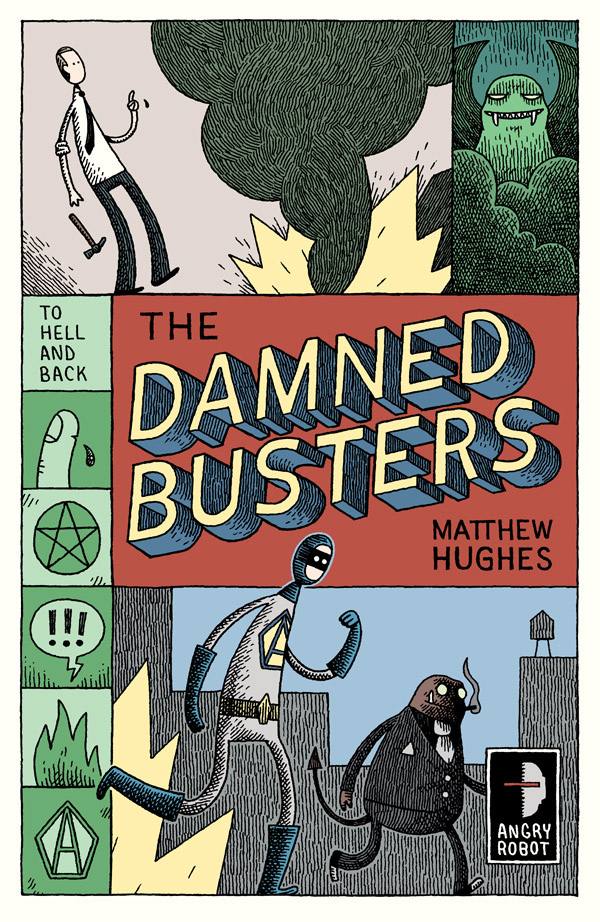
Cartoonist and illustrator Tom Gauld chats with the Angry Robot blog:

I find [robots] almost endlessly interesting. There is tragedy in their place between sentient beings and disposable products. And … they are much easier to draw than real people.

I’m hoping to interview Tom here as well sometime soon (just as soon as I think of something smart to ask him).

Hard Scenes — Actor, writer and director John Turturro talks about his work and one of my all time favourite films Miller’s Crossing at the A.V. Club (via Biblioklept):

Sometimes you think about movies, and you say, “Well, I want to try to do something that’s not exactly in a movie.” If you’ve ever been in a very dangerous situation, you know that people will do all kinds of things to keep themselves alive. It was very well-written, but you want to imagine what it’s really like to be in that kind of situation. It depends on what you’re willing to do, and in real life you would do a lot of different things. I tried to capture a little bit of that… to do something that was almost a little difficult to watch, because people aren’t trying to be heroic at those moments.

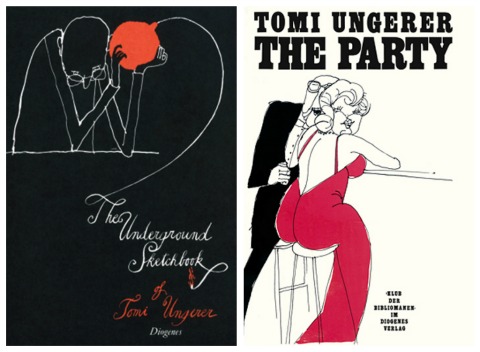
Curiosity and Collecting — Writer and illustrator Tom Ungerer in conversation with Julie Lasky at Design Observer:

One of the most important things for one’s own development is curiosity. Once you have curiosity, you just accumulate. My interests go from botany to mineralogy, geology, anatomy, history. Sometimes I’ve been bitten like bug. I buy one object and I’m so fascinated that I start collecting. And then when I finish collecting, and the collection doesn’t inspire, I give it away, like my toy collection of 6,000 pieces that I donated to my hometown museum for children.

Learning to Write — An interview with author Zadie Smith at The Literateur:

[O]ne of the things I look for in other people’s writing is the ability to confer freedom. That’s what I want to be able to do myself. I like a writer who doesn’t have to be in total control of how their readers react. More mystery, less explanation. All I can say is I’m working on it. But it’s so hard! I really feel I’m just at the base of a huge mountain called ‘learning how to write’. I’m still only 35. Learning to write is a task that takes up your whole life.

And finally…

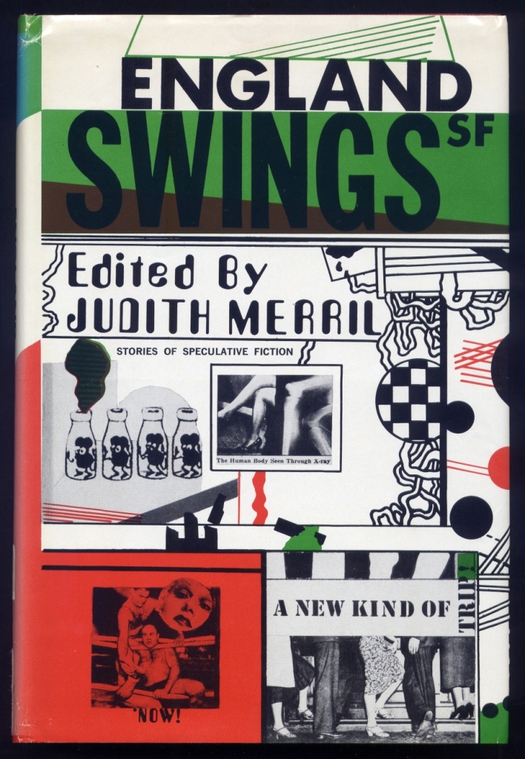
Rick Poynor on the unusual cover design for England Swings SF, published in 1968, also at Design Observer.

Comments closed

True Grit

Filmmakers Joel and Ethan Coen recently discussed their movie adaptation of Charles Portis’ novel True Grit with Terry Gross on NPR’s Fresh Air:

Most of the dialogue is taken from the book, direct from the book. And in places where it wasn’t, where we were kind of, where we were aping the language of the book because the scenes didn’t derive from the original book, it wasn’t a question of learning to – you know, it wasn’t a foreign language. It is a strikingly different use of the English language, but it was more a question of kind of aping the tone, as opposed to anything more of an exercise than that… [We] didn’t go back to the Bible, although clearly in the book, the character is steeped in the Bible. Actually, all the characters, you kind of assume that part of their speech derives from either having learned to read from the Bible or, in that probably a lot of them are illiterate, just having heard a lot of Scripture.

Meanwhile, Jeff Bridges, the dude who plays US Marshall Reuben “Rooster” Cogburn in the Coen brothers’ film, is the subject of a new PBS American Masters documentary:

[UPDATE: The full PBS documentary can be seen here]

And, if you haven’t seen the movie yet, here’s the trailer:

Comments closed