A lovely short film about bookbinder Don Taylor made by Tate Young and Ian Daffern for the new online daily Toronto Standard:
Comments closed
Published April 8, 2011
Books, Design and Culture
A lovely short film about bookbinder Don Taylor made by Tate Young and Ian Daffern for the new online daily Toronto Standard:
Comments closed
“I haven’t changed my mind about modernism from the first day I ever did it…. It means integrity; it means honesty; it means the absence of sentimentality and the absence of nostalgia; it means simplicity; it means clarity. That’s what modernism means to me…” — Paul Rand
There is something of a Modernist tendency in the design of David Drummond. It is not in a strict adherence to the grid or Accidentz Grotesk (or anything quite so obvious), but rather in the thought and purpose underlying his work. There is always a clarity and assurance to the concept and composition. There is never erroneous detail or ornament. Form most definitely follows function. To describe David’s work this way, however, is something of an injustice. His designs are far wittier (and much less pedantic) than one thinks Modernism ought to be. But then again, whoever said Modernism couldn’t be funny or irreverent? Not Paul Rand.
Perhaps it is simply better to say that David’s designs are the epitome of good ideas well executed. Their apparent effortlessness make it easy to underestimate his work. It is only when one tries to imagine how the cover could have looked otherwise that you truly realise his originality and what he has rejected or removed to get to his apparently simple designs. It should not be a surprise that Paul Rand is inspiration. After all, it was Rand who said:
“Simplicity is not the goal. It is the by-product of a good idea and modest expectations.”
Somehow that seems to get to the core of David’s work.
I am absolutely thrilled to post this interview. David’s work has received awards from AIGA, Communication Arts Magazine and Print Magazine and he is one of the finest book cover designers working today.
We corresponded by email.

How did you get into book design?
I was working in Montreal for an ad agency when I got a call from McGill-Queen’s University Press. On the recommendation of my sister, whose book they were publishing, they were interested in looking at my portfolio. That was the catalyst to start breaking out on my own.

When did you open your own studio?
I opened Salamander Hill Design in 2001
Approximately how many publishers do you work with?
I just checked the folder on my computer titled “Presses” and there are about 40 in there. Some are very active and some not at all. It kind of goes up down. Some of them are self published authors as well. There are maybe about 10 that I have longstanding relationships with that feed me with work pretty regularly.

How many covers do you work a season?
Hard to say really. I have so many that are all at varying stages of production. Right now, if I count the books on my list, there are about 30. What I have come to realize is that it is really important for me to always have a lot of work on the go. It helps to keep me in the zone where I can do my best work. I really do think the creative faculty is like a muscle that you have to keep flexing.
You were previously an art director for a marketing and communications company. Has this informed your book cover design?
This is going to sound funny but I wouldn’t really describe myself as a book cover designer. My approach to cover design is pretty much the same that I apply to any area of visual communication. I see the project as solving a visual problem, whether it is a book cover, illustration, logo or package design. Even though I have always entered work in book cover design competitions through the years, it has also been equally important for me to enter competitions like Communication Arts Design Annual to have the work judged in the larger context of graphic design as a whole.

Do you still do corporate identity work and packaging design?
Lately I have been getting back into identity work more and more. I guess I must have been missing it. Last year I decided to branch out and do some illustration work for magazines and that has been really exciting. The tight deadlines and fast turn-arounds force you to make decisions faster. I really hope to develop that more this year. Just last week someone e-mailed me about doing a poster for film festival in Italy. It always amazes me when a job like that lands in your in-box out of the blue.

Could you describe your book cover design process?
In a nutshell: present the cover brief to yourself as a problem that has to be solved. Then I try and bombard my brain with images from all kinds of sources to see if I can trigger something. For me it is about finding the visual hook. If that doesn’t work right away I tend to put it aside and take my dog Beau for a walk. I am sure all the local farmers that pass me on the road in their pick-up trucks must wonder about me and my dog walking far from home in all kinds of weather but I would honestly say it is an important part of my creative process.
I tend to like showing one concept whenever possible. I would say this is true for all of my design work. It shows the client that you have taken a stand and believe in the solution. That doesn’t mean you haven’t produced many different concepts along the way. I am sort of brutally self critical and if something isn’t working or if I am forcing it too much I put it aside and start again. I work with a lot of different clients with different protocols and some of them require that multiple concepts be presented up front. When that is the case I still try and make a strong case for the one I believe in.
I think the key to doing your best work is having a great client relationship. My brother is a poet and he compares publishing a book of poems to launching a pebble off the Grand Canyon and waiting for the sound of it hitting the bottom to come back to you. That is a bit the way I feel when I start working for a new client when you aren’t familiar with their approval process. Sometimes you launch your design out there and then — silence. I have a relationship with most of my clients where I know they want to be surprised by a solution. It does set the bar high each time but I need that challenge.
My wife works as a horse groom for a big show barn and gets up at 5:00 in the morning to get ready for work. Consequently I start my day around the same time. It’s funny — I live in farm country and basically keep farmer’s hours. The lights are also on in the neighbouring barns when I start my day. I focus on idea generation in those early hours and leave the more mundane production stuff to later in the day when my energy is flagging. The Tron, Inception, Dark Knight soundtracks come in handy at that point to keep me going.

What are your favourite books to work on?
Hard to say really. For the nonfiction stuff I love working on covers that have a great title that presents the subject in a new way. That really tends to help get the ball rolling.
What are the most challenging?
Books on the economy/Wall Street, Canadian Federalism, the Supreme Court, Native Peoples. I say this because I have done so many of them and each time you have to find a new way of presenting it. So far I have always managed to find a new take on it. I keep going back to the well and so far it hasn’t gone dry.
Do you see any current trends in book design?
Not a big fan of trends. Whenever I have been asked to judge design work for competitions the work that always grabs you are the ones that present a strong concept with a clean and simple execution. I think that is the key to producing work that is timeless.

Where do you look for inspiration, and who are some of your design heroes?
I look for inspiration pretty much everywhere. Paul Rand is a big design hero of mine because he kept on creating right to the end. I pretty much knew early on in my career that, because I’m such an oddball, the path of becoming creative director in a big agency was not really an option — not much of a schmoozer.
For me it has always been about the work.
Who else do you think is doing interesting work right now?
So many designers really. I would probably choose designers outside of the book design world like Montreal design firm Paprika — their work never ceases to surprise me.
What does the future hold for book cover design?
I truly feel privileged to get up in the morning and find a new design brief for a cover design in my in-box. Doing this type of work is a perfect fit for me and I hope to continue doing it for as long as it lasts.

And lastly… You (somewhat famously) live in a rural municipality in Quebec with a population of less than 500 people. What can you see from your studio window?
I live in a big rambling farmhouse built in 1825 on about 140 acres of land in Elgin, Quebec. The back fence line is the American border. Our farm sits at the base of the Adirondacks just where the Chateauguay Valley begins. My office is on the second floor with a view out the back. The view is always changing. Depending on the time of the year there are sheep, cows, horses, wild turkeys, deer, and an assortment of barn cats outside my window.
Wonderful! Thanks David.
David’s work can be seen at his blog and at the website for Salamander Hill Design.
1 CommentThe Sentimentalists by Johanna Skibsrud has won the Giller Prize. Earlier this week The Globe and Mail profiled printer and publisher Gaspereau Press:
The house paper is Rolland’s Zephyr Antique Laid, which the Gaspereau website describes as “a creamy, sensual book paper.” The Quebec paper manufacturer Cascades makes it by special order for a handful of literary presses. Covers, meanwhile, are printed on Neenah Classic Laid from the U.S. papermaker Neenah. For the jacket of The Sentimentalists, Steeves selected a camel-hair colour to show off the cover illustration, a pencil sketch of a Vietnam soldier by Ontario engraver Wesley Bates who is a regular contributor at Gaspereau. Not coincidentally, The Sentimentalists has already won the Alcuin Society’s award for Excellence in Book Design in Canada.
(Well played Gaspereau, well played…)
Punk-As-Fuck — A fascinating history of Soft Skull Press, whose offices in New York closed last week:
“It will never be anything but a chronic uphill battle to run an indie publishing company,” says Johnny Temple, owner of Brooklyn-based indie publisher Akashic Books (and former Girls Against Boys bassist). “I think the efforts that Sander Hicks made when he started Soft Skull, and then Richard Nash after he took over, were pretty heroic in terms of trying to keep an independent publishing company with a radical vision afloat. Soft Skull was a company of righteous outsiders and has traditionally been a great home for people who don’t fit into mainstream society. What was particularly great was that Soft Skull has developed over time an international reputation. It wasn’t the only place for someone with a devoutly outsider sensibility, but it was one of the very best.”
MobyLives has a typically searing post on the closure of Soft Skull’s office in NYC. And while we’re on the subject, Publishing Perspectives has a Q & A with Richard Nash about his new venture Cursor.
Text for Nothing? — Ben Ehrenreich on Tom McCarthy and his novel C for The Nation:
In C, Nabokovian wordplay abounds. The characters not only have names, but each name is a web of echoes and allusions. So let Carrefax lead you to “carapace”—insects are important here—or to “caracole,” with its spiraling, cryptlike depths, even to deathly “catafalque.” Dig in deeper and you’ll find “fax,” of course, short for “facsimile” and denoting not only technology and transmission but replication—key concerns in C‘s cosmography. And in that prefix you might hear kara, Turkish for “black,” or perhaps even kar, Syldavian for “king” (Syldavian being the language spoken in the fictional Balkan nation of Syldavia, where, you may recall, brave Tintin foiled a Bordurian plot to steal King Ottokar’s scepter). Jam these associations together if you like—”black king of technological transmission” is not a bad descriptor for young Serge—or let the allusions drift and frolic, as McCarthy suggests in his Tintin study, as a “dynamic set of overlayings and cross-encodings…that resonate at levels far beyond that of any individual, re-encrypting themselves as they speak.”
And finally…
Raincoast Books has entered a team for this year’s Movember in support of Prostate Cancer Canada. If you would like to support Raincoast and/or “The Wagstache” (AKA my personal attempt to look like Daniel Plainview), you can follow our progress here. Any donations — big or small — are greatly appreciated.
Comments closed“Most of the problems we are facing are the problems of success, not failure.”
Canadian designer Bruce Mau, author of Massive Change, talks about sustainability and framing the issue positively with Jeanne Park of the PBS show Need to Know.
When asked which approach — carrot or stick — is more the effective way to change people’s habits, Mau replies, “I think you have to paint the stick orange”:
(via Bookslut)
Comments closedA motion graphics tribute to Robert Bringhurst’s book The Elements of Typographic Style by Toronto-based Chris Kim, who is currently studying Radio & Television Arts at Ryerson University:
TypoElements 2010 won an Applied Arts 2010 Student Award.
4 Comments


Eye, Eye! — The Creative Review looks at the vibrant work of printing studio/small press Nobrow.
It’s an Anagram! — Indigo’s e-book initiative Shortcovers has become ‘Kobo’. Much fuss has been made about the name (and the slightly iffy redesign), but what’s more interesting is that Kobo is being spun-off from its parent company in an attempt to expand its global reach… The intrepid Mark Bertils and PW have more on the international angle; Wired think Amazon should be worried; and The National Post have a good Q&A with Kobo CEO Michael Serbinis…

Collector’s Items — Vote for your favourite Nabokov cover from John Gall‘s set of individually commissioned redesigns for Vintage.
The Decade of Dirty Design — Steven Heller, author of Handwritten and New Vintage Type (to name just a couple) on the “anti-digital” Oughts (via Charles Brock):
With the increase of the D.I.Y. sensibility, with renewed emphasis on “making things from scratch,” designers were feeling a need to make physical (not virtual) contact with their materials and outcomes…
[Perhaps less “anti-digital” than “post-digital“? Any thoughts designers?]
And finally…
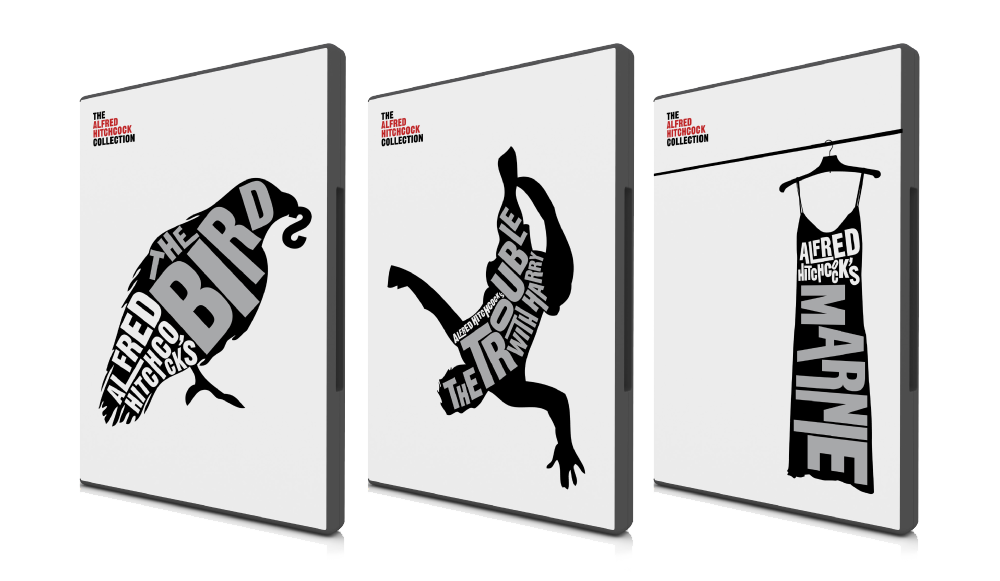
The Hitchcock Collection — a self-initiated project by London-based graphic designer Ryan Tym (via FormFiftyFive):
After recently purchasing a badly designed Alfred Hitchcock
DVD box set, I set to work on creating my own collection of
original covers. Each design features an iconic image related
to the film it represents and includes a bold typographic
title.
I would love to see Ryan design some book covers… Wouldn’t you?
3 Comments
Well, oh shit. Go fuck yourself — The pugnacious George Lois in BlackBook magazine:
The design was the idea. I don’t design, if you know what I mean. If you want Andy Warhol being devoured by his own fame in a can of Cambell’s soup, you just put the can there and you have him drowning in it. Case closed.
You’re knocked down by the idea, and the fact that it’s got complete clarity visually. Don’t complicate it with busy work.
That’s the way I do everything. If I was a doing a magazine, it’s not a question of if I’d be having more white space. It’s a question of every third or fourth spread I’d make a spread that would take your breath away — or piss you off. Or something.
“Yoda” — An interview with Dieter Rams at More Intelligent Life (Thanks Ben S.):
We have enough products. If you look at the market you have ten or 20 coffee makers that basically look all the same, doing all the same thing: they are making coffee. We don’t need 20 of these things, we need one good one.
Less, But Better… Less, But Better… [REPEAT].
The View From Toronto — National Post book critic Philip Marchand (formerly of the Toronto Star) talks to Conversations in the Book Trade:
I’m not sure how much “trouble” literature is in. The age of Tennyson was the last period in literature when “serious” literature found a mass market. Ever since, we’ve had a very small minority of readers for “serious” stuff, and a fairly large audience for thrillers, romance novels, detective novels, and so on. Then there’s the Da Vinci Code phenomenon in which everybody, from your dentist to your car mechanic, is reading a certain book – in order to be able to join in discussions about the book on social occasions, if for no other reason.
Frontmatters — Alex Camlin, Creative Director at Da Capo (interviewed here), has started a blog! Yay Alex!

This is Display! — Another site (along with the Alvin Lustig archive) that probably should have been on yesterday’s list of inspiring websites, Display is a “curated collection of 59 (and growing) important graphic design books, periodicals and ephemera.”
Comments closed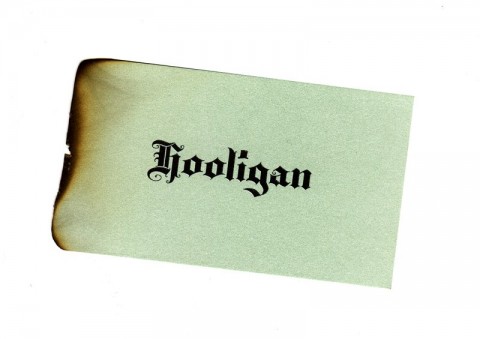
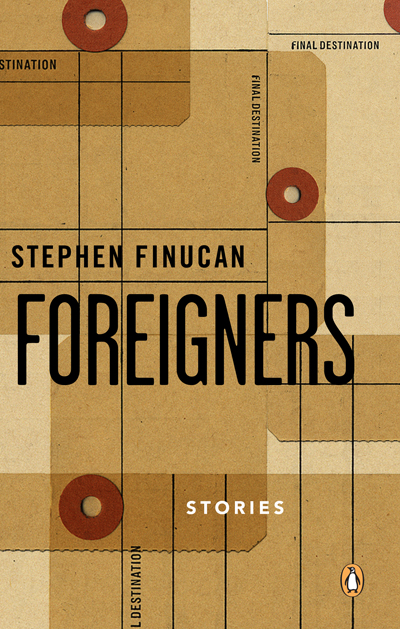
I am somewhat in awe of Canadian designer David Gee. Not only does he fashion stylishly left-field book covers for independent publishers and major houses, he is also willing to scorch individual business cards by hand using vice-grips and a blowtorch (see above).
And he does it all part-time. While holding down a day job.
To an aspiring generalist like me, knowing that David manages to work in more than one creative field is incredibly inspirational. And, as most of us struggle to do to even one thinking well, it is simply breathtaking that David’s work — in both his chosen fields — is brilliant and apparently effortless.
David and I chatted about his designs — and the day job — over email earlier this month…
How did you did get into designing books?
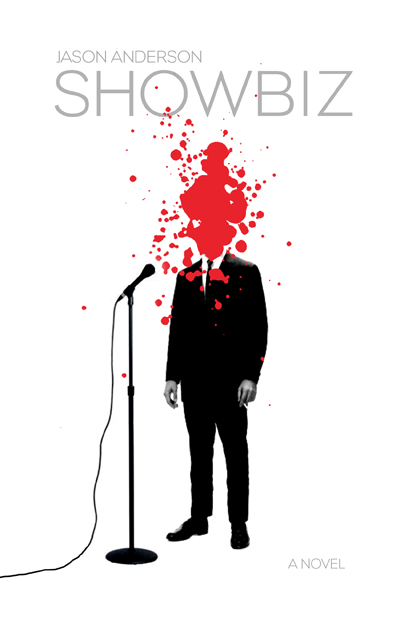
A friend of mine, Jason Anderson, wrote his first novel a few years back and he asked if I would be a ‘careful reader’ and give him some feedback on his manuscript. He later dropped a bomb on me asking if I would design the cover, too. Anyway, the publisher, ECW Press, loved the final cover and they eventually asked me for more and it all kind of snowballed from there. This cover ended up in a Quill & Quire article, an Applied Arts design annual and even GQ Italia. After a year or two of doing freelance stuff for ECW, I just started emailing other publishers and I got a lot of “Yeah, we loved that Showbiz cover!” responses.
What are the pros and cons of designing part time?
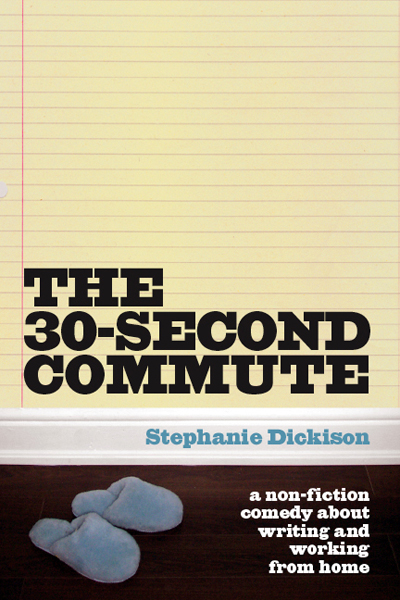
Well, the upside is that I don’t burn out too easily. Since my inbox is rarely overflowing, I can take my time with projects and make sure they get the attention they deserve or in some cases, might not deserve. Also, I find that I can still bring a bit of an outsider’s approach to my work. The cons include not being able to build up my portfolio as quickly as I’d like or log the hours that certain jobs end up requiring.
Approximately how many titles do you work on a year?
Roughly twenty or so titles a year. I don’t turn down any work at all, if I can help it. There are the usual pre-catalogue rushes but, for the most part, it’s manageably and workably steady, all year long.

Who are some of the publishers you’ve worked with?
My Main clients include ECW Press, HarperCollins, W.W. Norton, Penguin and Hamish Hamilton, to name a few. I should really try to add to my client roster but, at the end of the day, I’ve little time left for self-promotion since I’m doing this on the night shift. Add that to the “cons” list.

Do you work more on fiction or nonfiction titles?
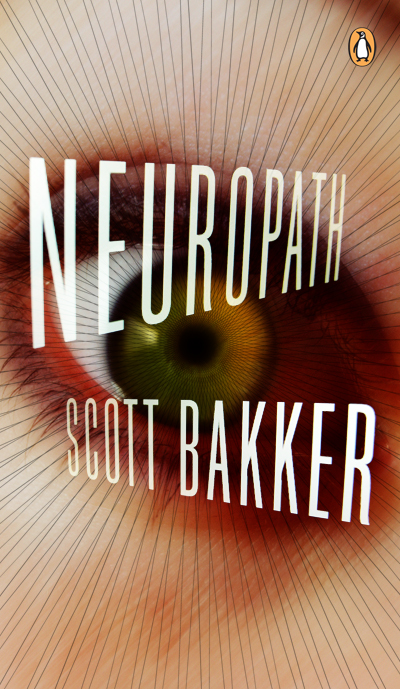
It balances out a bit but my meat and potatoes seem to be in non-fiction work. In addition to the fiction titles I’ve been doing for Penguin, they’ve been sending me a bit of science fiction work too, which has been a lot of fun. The Hamish Hamilton titles have been a big boost to my ego and hopefully my skills as a cover designer, too. HarperCollins is mostly non-fiction and ECW sends me just about anything you can think of from abstract poetry to scandalous wrestling bios.
What are your favourite books to work on?
Every job creates its own unique set of challenges, so it’s hard to say if one trumps the other. With fiction I approach the conceptual end of things more laterally and obliquely whereas with non-fiction I try to approach the execution laterally if only in order to separate the book from similar titles on that particular shelf.

What are the most challenging?
I haven’t the breadth of experience required to provide a quantitative, scientific answer to that. They’re all challenging since the last thing I ever want to do is just phone it in. I recently finished a cover for a book on the history of beer in Canada, which for a hoser like myself was just so ominously and ridiculously huge and daunting a task I think I actually lost sleep over it.
What is the “day job”?
I’m an advertising copywriter working in television and radio, mostly. My business cards say “Senior Writer” actually, even though my family still doesn’t understand what I do for a living despite the awards. (I’m required by a secret and arcane advertising edict to mention that I have won awards. Many awards.)

Does working in advertising influence how you think about book design?
I think what my day job has trained me to do is recognize a good idea in its purest, raw form. My own personal barometer goes something like “Is this actually an idea or is it just acting like an idea?” which means does the core concept have an element of truth to it, doing service to the product/service/book cover, or am I just relying on flashy execution alone?
Could you describe your design process?
It usually begins with an immediate gut-reaction to the brief, scribbling this idea down and then entirely forgetting about the project for a few days. Most of the hard work is purely mental, trying to formulate concepts and visualize their treatments. Executionally, I don’t really do a lot of back-end tinkering, making the type one-point bigger or smaller, etc. I’m pretty rigid at the mechanical stage but overall, I tend to “play it where it lies”, to borrow a golfing term (for some reason). I think this comes from my vocational history of working in lead-type print shops and sign-painting shops when I was a young lad, onto my get-your-hands-dirty fine art schooling and my Letratone and line-tape design background, all of which predate computers and their sinister ability to allow you the chance to second-guess yourself every step of the way.
Where do look for inspiration and who are some of your design heroes?
I like different designers for different reasons. I respond to David Drummond’s thinking. I always assumed he had an advertising background (which I later found out he does), as his ideas are right on the money and need little in the way of window-dressing. Peter Mendelsund’s covers have a weird quality; seemingly equal parts glib and fussy. Henry Sene Yee’s covers are quietly dignified. The usual suspects, I suppose. I’d be remiss if I didn’t doff the proverbial to my online chums Jason Gabbert, Kimberly Glyder, Ingrid Paulson, Nate Salciccioli, Christopher Tobias & Michel Vrana.
Inspiration is always in the brief. You just have to find it yourself.
What does the future hold for book cover design?
Not a clue. Same strategies, different tactics? If my own personal future of book cover design affords me the opportunity to continue to do this (and maybe work with Eric Hanson on a project or design some Donald Barthelme books), I welcome it with open arms.
Thanks David!
You can see more of David Gee’s work on his blog.
4 Comments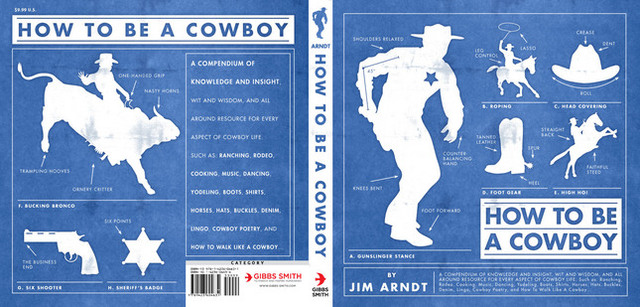
Michel Vrana, AKA Black Eye Design, has been on my radar since we first crossed paths on Twitter in the run up to Book Camp Toronto earlier this year.
I had hoped to run into the Montreal-based designer in person at Book Camp, but unfortunately, in the dehydrating hustle of the day, I didn’t get chance to introduce myself.
Nevertheless, a few weeks after the event, I came across a series of reissued cowboy books from publisher Gibbs Smith in a Raincoast sales meeting. The witty retro cover designs — with their pop culture references and knowing wink to the distinctive letterpress work of the Hatch Show Print studio — stood out among the more traditional covers in the catalogue.
It turned out that they were designed by Michel.
Small world, I thought.
A little later I found out that Michel also designed covers for Casual Optimist favourite Drawn & Quarterly (also distributed by Raincoast for the record).
And then it seemed Michel’s work was everywhere. Or perhaps it just seemed that way. My love of letterpress, comics, vintage magazines, typography, ephemera and stuff certainly make me notice his work, which often seems to draw on these elements.
Although we still haven’t met in person, we’ve stayed in touch through the electronic wonder of Twitter and email over the past couple of months, and despite some major changes at Black Eye Design during that time, Michel seemed a natural fit for this series of interviews.
You can see more Michel’s work at his design:related portfolio and, of course, follow him on Twitter @michelvrana.

Briefly, could you outline the history of Black Eye?
In 1993, I started Black Eye Productions as a comic book publishing company. Inspired by Drawn and Quarterly, I sought to do justice to all the hard work that the cartoonists put into the books I published by making sure they were well packaged and designed. Over the years, I did more and more graphic design, and less publishing, in order to pay the bills, and eventually decided to dedicate myself design full time in 1998.
From 1998 onward, Black Eye Design became a boutique design studio specializing in publication design. I spent much of my time running the studio and art directing and not as much time as I wanted doing what I enjoyed most: the hands-on design. Starting in 2006, I rolled up my sleeves and started doing book design again, though I was really splitting my time between running the company and doing hands on work. In 2009, I decided to shutter the studio and concentrate on book design full-time. It’s really what I’ve enjoyed the most over the years, from those first days as a comics publisher onward.

Do have a ‘house’ style? How would you describe it?
I’m sure anyone looking at my work would see a style more than I can. I’m sure the word ‘retro’ applies. Someone once described the work I do as ‘prop design’, where the design emulates something else but that is not always the case. My business card, for example, is set up like a vintage boxing ticket. Two of my most recent fiction covers have the titles incorporated into a matchbox and a postage stamp. So that’s probably a trend in my work.
I try to incorporate, whenever I can, a subtle ‘punchline’ into my covers. For example, the book that has the match box is called The Last Shot; it’s a collection of short stories where many of the characters are stuck at a dead end in their lives, and are looking for that one ‘last shot’ to change things. The cover has a few spent matches, and a matchbox with one last match sitting in it. I like to think a reader is going to look at the title, look at the visual and then it will click and they’ll get that little ‘Aha!’ in their head, and feel like they’re in on the joke.

The (English-speaking) Canadian book industry is largely focused in Toronto. What are the pros and cons of being a book designer based in Montreal?
It’s a pat answer, but in this day and age, you can be anywhere in the world and succeed as a graphic designer. As long as you get the word out there to the right people, you’ll find contracts. I’ve worked very hard in promoting my studio, and now myself. Not having lived/worked in Toronto, maybe it would be easier to find new projects if I lived there, but it’s hard to say for sure.
Could you describe your design process?
I front-load my process with questions, thinking and pencil sketching, rather than sitting down straightaway at the computer.
When I’m not sure I have enough info from my design brief, I’ll usually ask many questions of my publisher, editor, or art director for the project. I find that that really helps clarify things.
When possible, I also try to get a sample, or the whole manuscript to read. I use Stanza on my iPhone to read manuscripts and annotate them with ideas, as I read. When I don’t have a manuscript, I just start by writing out ideas and brainstorming.
I usually delay sitting down at the computer as long as I can. I sketch out rough thumbnails for myself, and sometimes even show these (very) rough sketches to the art director, editor or publisher I’m working with, to get the discussion going. I find that keeping everything loose and unpolished at the beginning frees me from getting too attached to any one idea, from it becoming too precious, and that keeps creativity flowing. It’s a valuable lesson I learned from designer Jan Wilker at the SVW 2008 workshop.

What are your favourite projects to work on?
I’m going to be a cliché and say that I love working on all book covers. To me, the fun in visual problem solving remains the same whether it’s a kids’ humour book about Gross Stuff, or a collection of short stories by a budding young talent. That being said, my absolute favourite ones are the ones that require me to push myself out of my comfort zone and try something new. Scary, but fun.
What are the most challenging?
The ones with a short design brief. I’ve come to realize that these seemingly ‘easy’ projects are deceptively so, and the covers often require the most revisions. Now when I get a quick design brief, I try to dig deeper with my art director, editor or publisher to find out more about their goals with the cover.
What are some of the common frustrations working with publishers?
My number one frustration would be that sometimes publishers underestimate their audience. As a culture, we’re a lot more savvy about visual communication than many people assume. We’re all continually exposed to clever ad campaigns, posters, book covers; so let’s not underestimate the intelligence and experience of the audience. For books this seems especially important, since you’re talking about a segment of the population that’s especially literate.

What do you think makes a good cover design?
Marketer Seth Godin hit the nail on the head for me, when he described the role of a cover as ‘to tee up the reader so the book has maximum impact’. The goal of a book cover is to engage the reader, and get them to pick it up, to interact with it (look at the back cover copy, maybe read a quick passage). That’s the stuff that sells the book. The cover is the invitation, and that invitation needs to be enticing.
Do you see any current trends in cover design?
Illustration and hand-drawn type are definitely a trend these days. And I think that Peter Mendelsund‘s design for Stieg Larsson’s The Girl with the Dragon Tattoo opened up the idea of type layered with the image. In fact, dimensional type, or maybe even ‘environmental type’ seems to be a meme in graphic design these days.
Where do look for inspiration?
I’m a big fan of ephemera: retro packaging, book design, comics. I love that stuff. I also try more and more to keep up to date with what other ‘big’ designers are doing, hopefully without finding myself overly influenced by their work. There are so many talented designers, photographers and illustrators online that it’s hard not to be inspired! Of course, if I ever get ‘stuck’ on a design, I find that tuning out for a while is the best way to go for me, knowing that somewhere in the back of my head, the ideas are still percolating.

Who are some of your design heroes?
The first designer I was ever aware of was Art Spiegelman. The work he did on Raw magazine, and on Maus has always been influential (right down to my love of the font Metro, which Spiegelman often uses). David Mazzucchelli would also be another cartoonist/designer that’s always impressed me: from his work on Batman Year One to his self-published Rubber Blanket, to his newest Asterios Polyp.
In 1992 I picked up a copy of Jeanette Winterson’s The Passion in London, and it was part of an edition of tiny hardcovers published as Bloomsbury Classics. The design of that first book, and the series, has always stuck with me [see pictures pf the Bloomsbury Classics here and here]. Jeffrey Fisher is the amazingly talented illustrator who worked on the series.
I’m also a big fan of Paul Sahre: I bought Rick Moody’s Demonology completely based on the elegant Paul’s cover: a photo of the multi-coloured ‘Rocket’ candy. I thought the design was brilliant at conveying the idea of the book being a collection of short stories.
Amy King is great, her work shows such variety, but it’s all so well executed. John Gall‘s paperback covers for Haruki Murakami are lovely. Of course, Henry Yee‘s work always blows me away – his cover for The Adventures of Kavalier and Klay is a favourite. And let me not forget fellow Canadian designers Peter Cocking and David Drummond. Not to mention the work of my colleagues on twitter Ingrid Paulson, Christopher Tobias, David Gee.

What do you think e-books mean for book designers?
It’s going to be interesting to see how new e-book readers shape the reading experience. I’m keeping my fingers crossed that fine typography and graphic design will continue to be important. What I can see in the future is the incorporation of more rich media into book design – childrens’ books with motion graphics, novels with musical cues, or even embedded video. Who knows, maybe we’ll even see book covers with motion graphics on the e-book front? Ultimately, I think it means that books are going to evolve. Down which path I’m not sure, but book designers will have to evolve along with them. Whether we end up with books that act like the publications in the Harry Potter world, or if they’re something completely different.
Thanks Michel!
Next Week: Alex Camlin, Creative Director at Da Capo Press.
Comments closed
Before setting up her own design studio in Toronto, award-winning Canadian designer Ingrid Paulson was senior designer at McClelland & Stewart, and art director for Key Porter and Raincoast Books.
Although Ingrid worked at Raincoast, we didn’t actually meet until BookCamp Toronto earlier this year. We only had a brief a conversation, but it was just about long enough for me to blurt out that I wanted to interview her, and for the apparently unflappable Ingrid to say “OK” (and sound like she might mean it).
And so I do want to say a big thank you to Ingrid for coming through with such grace and patience, and for providing such wonderful answers to my not-so-wonderful questions.
Could you describe your design process for book covers?
In terms of workflow? The publisher gives me a title information sheet and/or a creative brief, plus (fingers crossed) either a few chapters or the entire manuscript for the book. I always ask to read the fiction, but for non-fiction I can manage well with a concise book description and perhaps the introduction. I submit a minimum of three cover concepts to my contact at the publishing house, and wait for feedback. Then I either redesign and resubmit, or, if I was ‘on to something,’ I tweak one of the concepts until we get it right.
In terms of creative process? Um. Well.
Some cover concepts appear in my head, fully formed, by the end of my first conversation with my publishing contact. Other get dragged out of me kicking and screaming, begging to stay in the dark void of my head. Sometimes I sketch out the covers — wee thumbnails in my moleskine — whereas other times I play a Google Images lotto search using various vague terms that would describe a feeling I want to associate with the book. Sometimes the font is the first thing chosen, or I envision the type at certain sizes and placed in specific places. Other times, the image is driving the cover and the type just has to play catch-up. I’ll envision a book as predominantly red, or dark, or punchy — and that all comes from what the author has written. I’ll respond to textured sentences with textured visuals (perhaps collage?) and bleak will meet bleak. (But not so bleak as to discourage someone picking it up. The bookbuyer is in my thoughts as well, as I try to envision them and their habits, quirks, and book needs.) Needless to say, my brain gets crowded.
And then there are the days when I just stare at a wall and hope against hope I’ll figure out something clever. I haunt a lot of bookstores.
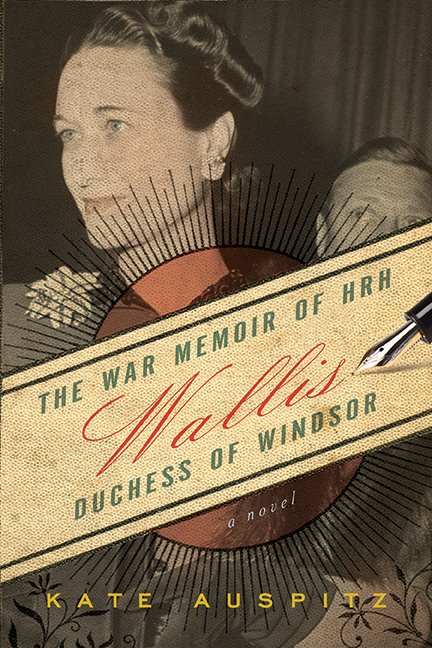
What are your favourite projects to work on?
The ones I get right on the first try.
I love working on fiction, but it takes the most concentration and, because fiction is so subjective, so evocative of the human condition (both funny and sad), designing a fiction cover can drive me nuts. There is never one absolute visual solution for fiction. Nonfiction, on the other hand, can get formulaic, but I love the simplicity of thought — punchline design, in many ways. So, for sanity’s sake, I prefer to keep a balance of fiction and nonfiction going. Cookbooks can be a blast to design, but I (sheepishly) think that comes from the photo shoot where we all end up eating most of the props (the ones that have flavour, or haven’t been sprayed with any shellac). And then there are the special projects where I’m asked to work on the cover and interior, and I am part of the planning and layout process, where I get to research the images, discuss things with the editors on a page-by-page basis. Those projects are rare, but they keep me happy for a few years at a time.
What do you think makes a good cover design?
Being able to lure someone into picking up the book and reading the back, which takes about 1.5 seconds of their time. Job done. How to do that? If we in publishing knew, we’d also be able to predict bestsellers. The best I’ve figured out is to keep it a simple visual package — don’t let the type look out of place with the image, don’t use the same colours as everyone else is using that season, stay away from looking too much like any of the other books, but make it look like a book. I dunno. The cover should evoke an emotional pull from the bookbuyer, that moment of ‘yes, that’s interesting and looks like what I want to read.’ That solution changes from book to book.

What are some of the common mistakes publishers and designers make with covers?
For publishers, they’ll try to make their book look similar to someone else’s (bestselling) book, as if to catch the wave. This is not clever, it just means the publisher is out of ideas or is feeling the year-end coming and needs to hook on to a sales-winner. It’s the publisher that took a design chance on a different look — and came out the winner in terms of sales — that is the ultimate winner. The rest end up on the remainder table eventually. Daunting. They don’t call it a ‘gentleman’s profession’ for nothing. (Or ‘gentlewoman’s’. I’m just citing the old, old adage.)
For designers, it is not being able to pitch their cover effectively. If a designer can articulate the reasons for their choices of colour, type, and image, then they have a fighting chance of getting that design through. Otherwise they are leaving it to speculation. I’ve worked both sides of the table — inhouse art director, freelance designer — and I know that it is ten times harder for a freelancer to get that voice heard in the meetings. But inhouse staff can get asked to revise designs far more often than the freelancer, as the perceived economies behind a salaried staff versus a per-project contractor sometimes give the publisher too much leeway on revisions. I’ve been inhouse with a book cover that I simply didn’t ‘get,’ but there was no way to contract out the job, as, due to costs, the publisher refused. It was a painful, long design process for all involved (not just me), and they ended up with something inferior to what they would have gotten with a designer who understood the book. As an Art Director, I could’ve just handed it to a specialist designer and, with a few good notes, gotten something much more suitable for the book.
I guess that leads to a codicil: know when to walk away. Yes, we all want to try new book categories. Just know when to draw the line, so to speak.

British and American book design styles are often seen as quite distinct (with critics and proponents of both!). Is there a Canadian style of book design?
What there is known of Canadian book design is an amalgam of quiet, well-crafted literary press style — usually hand in hand with DIY letterpress style — smashed against a desperate need for full-bleed sepia landscapes (or sleeping sepia people) and egregiously large title type. We err on the side of poetic, which can look like a wash in the stores (or worse — too literary, which could alienate those poor readers still recovering from their English high school reading list). We avoid edgy.
There is some astonishing design coming out of the cracks across the nation — David Drummond comes to mind, as does the brain trust under Peter Cocking at Douglas & McIntyre — and I hope that will win out. Clear, slightly subversive, more in tune with our world-famous sense of humour. Intelligent is the word that comes to mind.
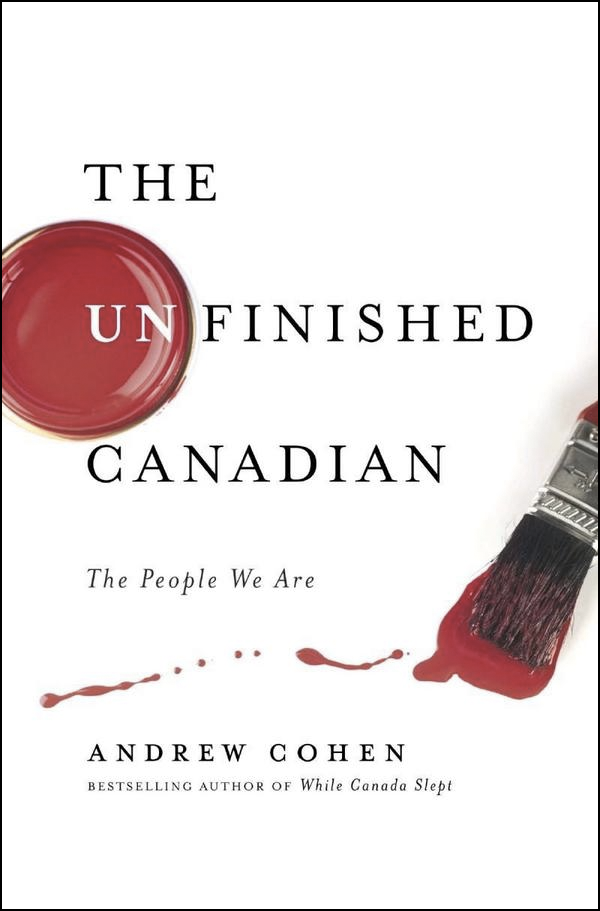
Do Canadian book designers have unique opportunities? Are they accompanied by particular challenges?
Figuring out new and exciting ways to design both hockey and ‘whither Canada’ books, which are a yearly staple on publishers’ lists. We are handy and imaginative with maple leaf imagery and the colour red.
You’re an artist as well as a book designer. Is there a tension between your artistic sensibility and the commercial design process?
Every day, and the design wins. I’ve tried to avoid overlaps, but words are images to me, so lately I’ve been working on art based around words. I try to keep it as three dimensional as possible (since my day work is two-dimensional), but then font choices become a factor and I run screaming. It helps to know that both Jenny Holzer and Barbara Kruger worked in designer/typesetter jobs early in their artistic careers.
The challenge lies in accepting and separating out design and art from their ultimate goals: design is created to communicate a product; art is created to communicate the world, in whatever form, or whatever scope, the artist chooses. There is no client in art.

How is designing book interiors different from designing their covers?
Interiors are, in many ways, a much more detailed exercise in communication. For a text-only book, I have to make sure that the reader never really sees the design, else it distract from their involvement with the text. For a picture book, the pictures stand tall, so the design should just assist the pictures. But a cover is a marketing tool, and the cover must try, in no uncertain terms, to woo the reader. It must stand out.
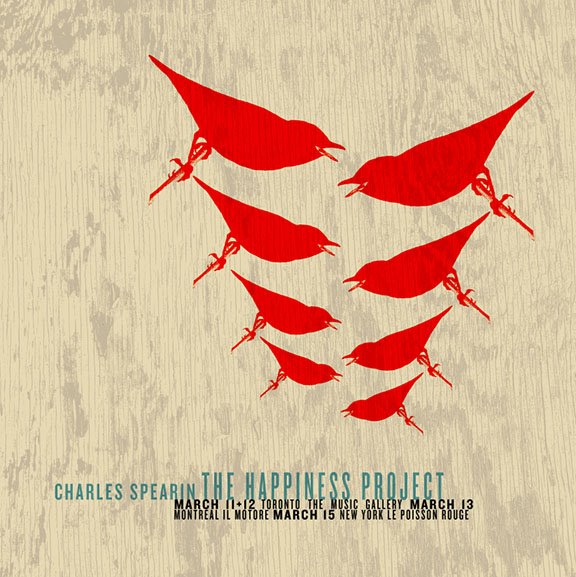
Where do you look for inspiration?
Currently? Other designers (book and non-book), as well as music poster design. There is a great revival (when did it go away?) of one-off poster designs for gigs. They are all silkscreened or letterpressed limited-edition beauties. I used to look at rave fliers all the time (when raves were the thing). I look online. I remember stuff my mom — who was an antiquer in the 1970s — used to show me, old ads and magazines. I read a lot (beyond manuscripts), so I end up with this polymathic knowledge of, say, alchemical symbols and Greek demigods. We used to be such a visual culture, pre-literacy, and I think in many ways we’re heading back there. My job is to connect the shorthand symbols of the culture, both old and new. It can fascinate me for hours, why LOLCats is the thing (and then not the thing, but what did the visual say of us?), or looking at, say, a Dutch design student’s incredibly cool/obscure website.
Who else is doing interesting work right now?
I love designers with latitute — ones that aren’t just one-trick (or one-look). Who comes to mind? Coralie Bickford-Smith, Jason Gabbert, Terri Nimmo, David Gee, Gabriele Wilson, Peter Mendulsund… They all have style that can bend to the project. I could go on, but that’s today’s list. It will change and expand tomorrow.

You’re very active with your website, blog, and Twitter etc. Is it important for a designer to engage with people online?
You know, every time I blog (or answer nice questions like yours), I sit back afterward and fear that my opinion is going to lose me a client. There is this balance one must keep when designing, as the client is always right (or deserves the design they get, depending on the outcome), yet what designers put out there does contribute to our visual worldscape. So, I try to contribute.
But I work from home (or, in Toronto parlance, I have a ‘live/work situation’). Blogging keeps me from talking to the wall too much, or thinking that the cat cares when I’m sweating to find the right sans-serif. It has been fascinating to watch how many book designers have joined Twitter lately — we all seem to find each other, this odd subgenre of designers, and I think in the future, that will result in some mind-blowing design (or a great convention in Bend, Oregon). My purpose online is to build community, to share ideas, to groan when needed, and if other non-designers join the conversation, well, then it just becomes this great party.
With the growing popularity of e-books, what is next for book cover design?
Ack! I don’t know. I really don’t. We’ll see what happens. What I do know is that there will always be a role for design, but what that role takes is anyone’s guess.
Thanks Ingrid!
Comments closed
Winnie and Wolf — cover design by Alex Camlin (the chap behind that rather wonderful Harvard Review overhaul). I’m hoping to speak to Alex for the designer Q & A series later this month.
And just while were on the subject, Caustic Cover Critic looks at the new designs for the Penguin World War II Collection.
In Search of Lost Time — David L. Ulin, Book Editor of the LA Times, on the lost art of reading:
Today, it seems it is not contemplation we seek but an odd sort of distraction masquerading as being in the know. Why? Because of the illusion that illumination is based on speed, that it is more important to react than to think, that we live in a culture in which something is attached to every bit of time.
Here we have my reading problem in a nutshell, for books insist we take the opposite position, that we immerse, slow down… Yet there is time, if we want it. Contemplation is not only possible but necessary, especially in light of all the overload.
But, if you sympathize with this perspective be warned: you are weak and you just don’t love books enough (and you’re probably a calcified narcissist).
Talking Books — I don’t agree with everything here (OK I actually disagree with a lot of it and, I’m sorry, describing the Globe & Mail as “daring” is just delusional), but Ian Brown, writer, arts journalist and broadcaster has some interesting things to say about Canadian literature and culture in a sprawling interview over at Conversations in the Book Trade:
[T]he novel is no longer the prime example of literature. Nor does it need to be. Too much attention can ossify a genre. If anything is in trouble, it’s literary fiction–but again, only because there are so many alternative ways to consume good writing these days. The book itself is a fantastic technology, but literary fiction has some serious competition for my attention.
And as this has been something of slow week, and because I was chatting about it with book designer Jason Gabbert on Twitter (who is responsible for the lovely C.S. Lewis redesigns above), I’m just going to take this opportunity to (re)plug my image library on Image Spark and (while I’m at it) my slightly stream-of-consciousness inspiration blog The Accidental Optimist.

