Skip to content

Tag: bookshelves

Midweek Miscellany

Tell Me a Story From Before I Can Remember — A silkscreen poster of an ideal bookshelf of 100 books designed by Athens-based design studio KEIK Bureau.

Going Back to Bed — Jonathan Jones on the art of Robert Rauschenberg, for The Guardian:

Bed belongs to what is arguably the greatest series of works of art ever made in America. It is said to have been Johns who came up with the word “combines” to describe the works Rauschenberg started to assemble in 1954, putting together found photographs, newspaper clippings, fabrics, furniture, tyres and stuffed animals in intense configuations, all soaked and veiled in abstract expressionist paint. Thinking about them, I find myself struggling to find any match for what Rauschenberg achieved, not just in visual art, but in other arts, such as fiction. For what he created in these complex, tantalising, epic works was that elusive cultural totem, the “great American novel”.

Airstrip 1 — David Aaronovitch on George Orwell’s vision of a totalitarian future, for the BBC Magazine:

I was brought up in a house full of books, none of them by George Orwell.

Simone de Beauvoir was there, as was Sartre and Aldous Huxley and even Lenin. The last is actually a clue as to the absence of the first.

My parents were Communists. To them Orwell was on the other side of politics – someone whose principal writings were hostile to them and what they wanted to achieve….

Comments closed

Better Bookshelves by Grant Snider

Another lovely webcomic for book nerds by Grant Snider:

(I need the childproof bookshelves)

Comments closed

Something for the Weekend

Peirene Press is small independent publisher in the UK specializing in previously untranslated contemporary European novellas. Their most recent series of books, designed by Sacha Davison Lunt, has been short-listed for the 2011 British Book Design and Production Awards in the Brand/Series Identity category.

Txt — Thomas Jones looks back at the work of author William Gibson at The Guardian:

The most striking feature of cyberspace in Neuromancer, however, the most radical way in which it differs from the modern internet, is its textlessness. Case is, or may as well be, illiterate: his skills as a cyberspace “cowboy” don’t depend on being able to read. He wouldn’t get very far as a hacker these days. The internet, as we now know it, even in the era of YouTube and podcasts, is still heavily text-based and text-dependent. Tweeting not only looks about as low-tech as you can get, it’s also all about language.

One Way or Another — Marjane Satrapi and Vincent Paronnaud talk about the film adaptation of Chicken with Plums with New York Magazine:

When you draw, you don’t have any limits; it kind of transforms our brain. Also, we had not [gone to] any cinema school, so we don’t have these techniques. Like when we started the project they were telling us things like, “Voice-over? Nobody does that any more” and “Cross-dissolve is out.” This notion of “out” and “in,” it depends on what you are saying. You don’t have one way of doing things.

Also at New York Magazine, Scott Snyder talks about the Batman #1 relaunch and rewriting Batman:

Gotham is almost a nightmare generator, filled with villains that seem to represent an extension of Batman’s greatest fears. A lot of his greatest villains feel like mirrors: the Joker is who Batman would be if he broke his rule and fell into madness; Two Face is a mockery of the duality of his life. But what I love about Bruce in particular, and the reason I’m so excited to be doing Batman, is he’s a superhero that has no powers. He takes it upon himself to go out every night, punish himself, and be the best out there. To me, that is both incredibly heroic and exciting, but also really pathological and obsessive.

Related: Scott Snyder interviewed about the same (but at greater nerdiness) at The Huffington Post.

And finally…

Here’s a short documentary about the making of the Vitsœ shelving system, originally designed by Dieter Rams in 1960 and still going strong:

Comments closed

Something for the Weekend

Potential for Infection — A lovely essay by Alan Bennett on books, libraries, and bookcases, in the LRB:

‘Books Do Furnish a Room’, wrote Anthony Powell, but my mother never thought so and she’d always put them out of the way in the sideboard when you weren’t looking. Books untidy, books upset, more her view. Though once a keen reader herself, particularly when she was younger, she always thought of library books as grubby and with a potential for infection – not intellectual infection either. Lurking among the municipally owned pages might be the germs of TB or scarlet fever, so one must never be seen to peer at a library book too closely or lick your finger before turning over still less read such a book in bed.

Not A Sexy Trend Story — Dennis Johnson’s scathing must-read post on the Borders bankruptcy (and the way it is being reported) at MobyLives:

[T]his is a story that has become about some desired and sometimes advertiser-driven trend, and not the more complex reality — which is that what’s happened is not good for either print or digital books.

If there’s anything to take away from the Borders story, it’s this: It doesn’t at all represent that fewer people want to buy print books. It represents that fewer big corporations want to sell them.

19th Nervous Breakdown — Jonathan Ross reviews Supergods: Our World in the Age of the Superhero by Grant Morrison for The Guardian:

Shaving your head before dragging up in full fetish gear and wolfing down a magic mushroom omelette may well open the door to another realm, or give you access to demons and guardian angels. I have never tried it so I can’t say with absolute certainty. But I am pretty sure that what Morrison was experiencing and is describing is a cross between a nervous breakdown and a common-or-garden trip.

See also: David Itzkoff reviews the book (less sympathetically) for The New York Times.

And on a related note… Joe Carducci reviews Absolute Dark Knight by Frank Miller for the LA Review of Books.

And finally…

Typographical reference guide FontBook is now available on the  iPad:

Comments closed

Dieter Rams and Vitsœ: 10 Principles of Good Design

Mark Adams, Managing Director of Vitsœ, discusses Dieter Ram’s 10 principles of good design and the elegant 606 Universal Shelving System with Cool Hunting:

And for those of you who just need to see a little more of the 606 Universal Shelving System (and who doesn’t?) here is a short film of it in action:

(via The Fox is Black)

1 Comment

The Ark

Created by Rintala Eggertsson Architects, Ark is a free-standing wooden tower accessed by a spiral case that connects two floors of the Victoria and Albert Museum in London. The façades of the tower consist of hundreds of shelves, holding thousands of books, which visitors can browse. The books can be read in private chambers within in the structure.

The tower is part of the ‘1:1 — Architects Build Small Spaces’ exhibition at the V&A, which runs until the end of this month. In this V&A video, the architects talk about their practice, the book tower and its installation:

(via Apartment Therapy)

1 Comment

Midweek Miscellany

Reading a Book is Reading a Book — Peter Ginna has another thoughtful post on about the Random House e-book rights controversy (which better articulates some of what I was trying to get at here).

A Decade of Fear — David Ulin, book editor of The LA Times, looks back at the last 10 years (and forward to the next).

Book Lovers Never Go To Bed Alone — a Tumblr collection of  bookshelves (via index//mb)

Hello, I’m Robot! — A somewhat surreal — but definitely awesome — Soviet kids’ book at A Journey Round My Skull

And…

Russian Artists and The Children’s Book 1890-1992 — 512 pages, full color with over 1100 images. Written and privately published by Albert Lemmens and Serge Stommels in The Netherlands. Yours for only $195 plus shipping (seen at The Daily Heller).

And…

Three Designers from Moscow — MyFonts interviews Russian type designers Vera Evstafieva, Alexandra Korolkova and Elena Novoselova.

And… Thinking of MyFonts…

…They’ve just released the rather lovely exljbris slab serif Museo Slab. Regular Museo Slab and Museo Slab Italic are free downloads.

The Book Design Review‘s Favourite Covers of 2009 — All good choices. Go vote. Now.

And… Have I mentioned just how incredible Peter Mendelsund’s new Foucault covers are…? I did? OK. Just want to make sure…

RUSSIAN ARTISTS AND THE CHILDREN’S BOOK 1890-1992.
1 Comment

Monday Miscellany, July 20th, 2009

Shelf LifeEMPRNT‘s Bookshelves Flickr Pool. I could look at other people’s bookshelves all day…

You Don’t Belong — Lee Bermejo and John Arcudi’s Superman story for DC’s Wednesday Comics is also running in US Today. Two episodes in and it looks great (even if the Flash interface is not not ideal) — there are some nice moments, especially in episode 2 (Batman as psychiatrist anyone?) and Bermejo’s art kills it (via The Ephemerist).

PW Comics Week also ran an interesting interview with DC Comics editor Mark Chiarello about Wednesday Comics a couple of weeks of back.

And thinking of comics, LA Times’ Geoff Boucher reports on the forthcoming Darwyn Cooke adaptation of Richard Stark’s The Hunter.

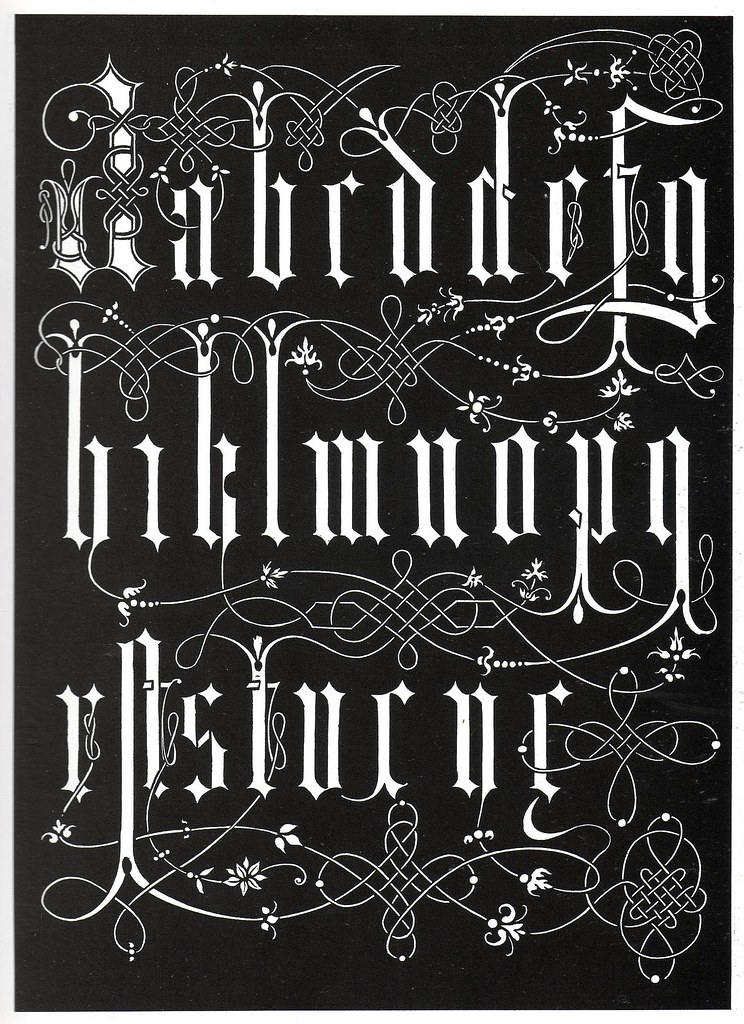
Fancy — BibliOydssey has posted some lovely samples of ornamental type.

Comments closed

Something For The Weekend, April 25th,2009

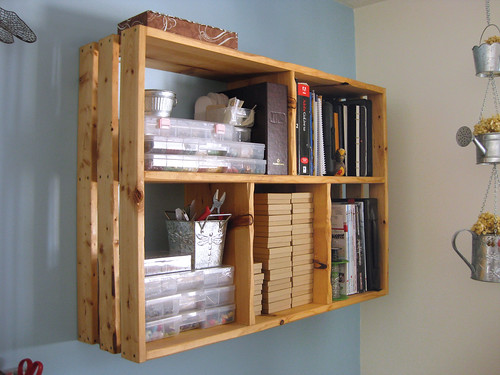
Comic Shelves by Oscar Nunez for Fusca Design (via The Ephemerist)

Goodnight Mechanical Dinosaur — Neil Gaiman on Batman in Wired (via LinkMachineGo):

[T]he great thing about Batman and Superman, in truth, is that they are literally transcendent. They are better than most of the stories they are in. That’s just Sturgeon’s Law: “90 percent of everything is crap.” Can you imagine how many thousands, or millions, of words have been written on Batman? Try to read them and you’re looking at 100,000 pages, perhaps a million, and you can assume that 90 percent of it is crap. Yet the 10 percent, and even better the 1 percent of that 10 perfect, is absolutely glorious. That pays for everything.

Tea and Cake — Louise Tucker chats to colleague Scott Pack about The Friday Project on HarperCollins’ 5th Estate blog:

It is still the only imprint to specialise in taking great web content and making books from it. That gives us a much wider brief than most people think…

Our future plans are very exciting. Our author deals will now all be profit-share arrangements with us splitting the profits of the books 50/50 with the authors. We are soon to announce some bold eBook initiatives and there is more to come.

Figuring it Out — Type legend Erik Spiekermann, co-author of Stop Stealing Sheep, on the basics of typography.  Not new, but still a great primer/reminder.


Will it sell in Moosejaw? — Book designers Bill Douglas (The Bang), Ingrid Paulson, (Ingrid Paulson Design), Angel Guerra (Archetype Design), Terri Nimmo, (Random House), and Kelly Hill, (Random House), discuss their craft in The National Post (Ingrid Paulson’s cover design for Kate Ausptiz’s The War Memoir of HRH Wallis Duchess of Windsor pictured above).

Wrapper’s Delight — A librarian at the Bodleian Library has found the earliest-known book dust jacket in an archive of book-trade ephemera:

Unlike today’s dust jackets, wrappers of the early 19th century were used to enfold the book completely, like a parcel. Traces of sealing wax where the paper was secured can still be seen on the Bodleian’s discovery, along with pointed creases at the edges where the paper had been folded, showing the shape of the book it had enclosed.

Comments closed