Skip to content

Tag: Design

Midweek Miscellany


Flaunt it — Designer Armin Vit discusses the UnderConsideration book Flaunt: Designing Effective, Compelling and Memorable Portfolios of Creative Work at For Print Only.

How Art Became the Media — Lewis Lapham, editor of Lapham’s Quarterly (formerly editor of Harper’s Magazine), at Guernica magazine (via Bookslut on Twitter):

It isn’t that the country now lacks for painters painting pictures or poets writing poems, nor is it to say that stores of human energy and hope aren’t to be found in the novels of Elmore Leonard or the songs of Bruce Springsteen. It is to say that with the dawn of Reagan’s bright new morning in America, the notion of art as the way into a redemptive future had withered on the vine. Once again, as had been customary throughout most of the country’s history, art was seen as an embodiment of the good, the true, and the beautiful only to the extent that it could be exchanged for money.

George Lois on the iPad in the New York Observer (no, I’m not entirely sure how I missed this last week either):

“magazines will never die because there is a visceral feeling of having that thing in your hands and turning the pages. It’s so different on the screen. It’s the difference between looking at a woman and having sex with her.”

Flying the Coop — Another interesting installment of the National Post‘s ‘Ecology of Books’ series, this time on authors moving from small presses to big publishing. And there’s an interesting follow up from Daniel Wells, the publisher of Biblioasis one of the aforementioned Canadian small/independent presses (via Steven Beattie).

Microdistribution — This is fascinating… The Boulder Bookstore (Colorado) is experimenting with charging self-published authors for shelf-space and promotion (via Sarah Weinman on Twitter):

“Most people will come in at one of the higher fee amounts,” Arsen Kashkashian, the store’s head buyer and the architect of the program, told me. “That surprised us.” In fact, when the store first began charging its consignment authors back in 2007 (the fee-structure idea emerged when the store’s employees found themselves “inundated with self-published books, and there was a lot of work involved and not much reward”), its staff “thought people would grumble and complain” about the charges. But authors, Kashkashian says, have been generally grateful for the opportunity to sell and promote work that might otherwise be seen and appreciated only by their friends/spouses/moms: “‘I want the marketing, I want the exposure. I worked so hard on this project, and you guys are the only ones who could help me with it.’”

And finally…
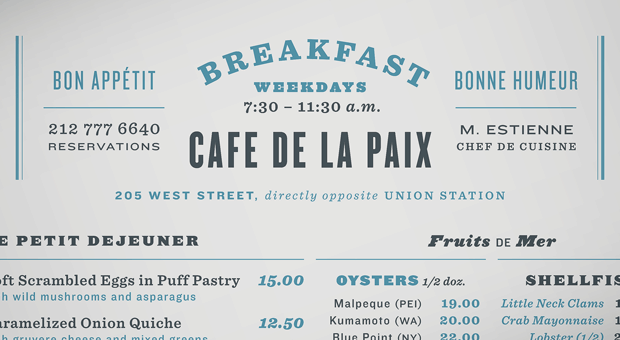
Four Ways to Combines Fonts by H&FJ, built around a beautifully simple principle: “keep one thing consistent, and let one thing vary.”

2 Comments
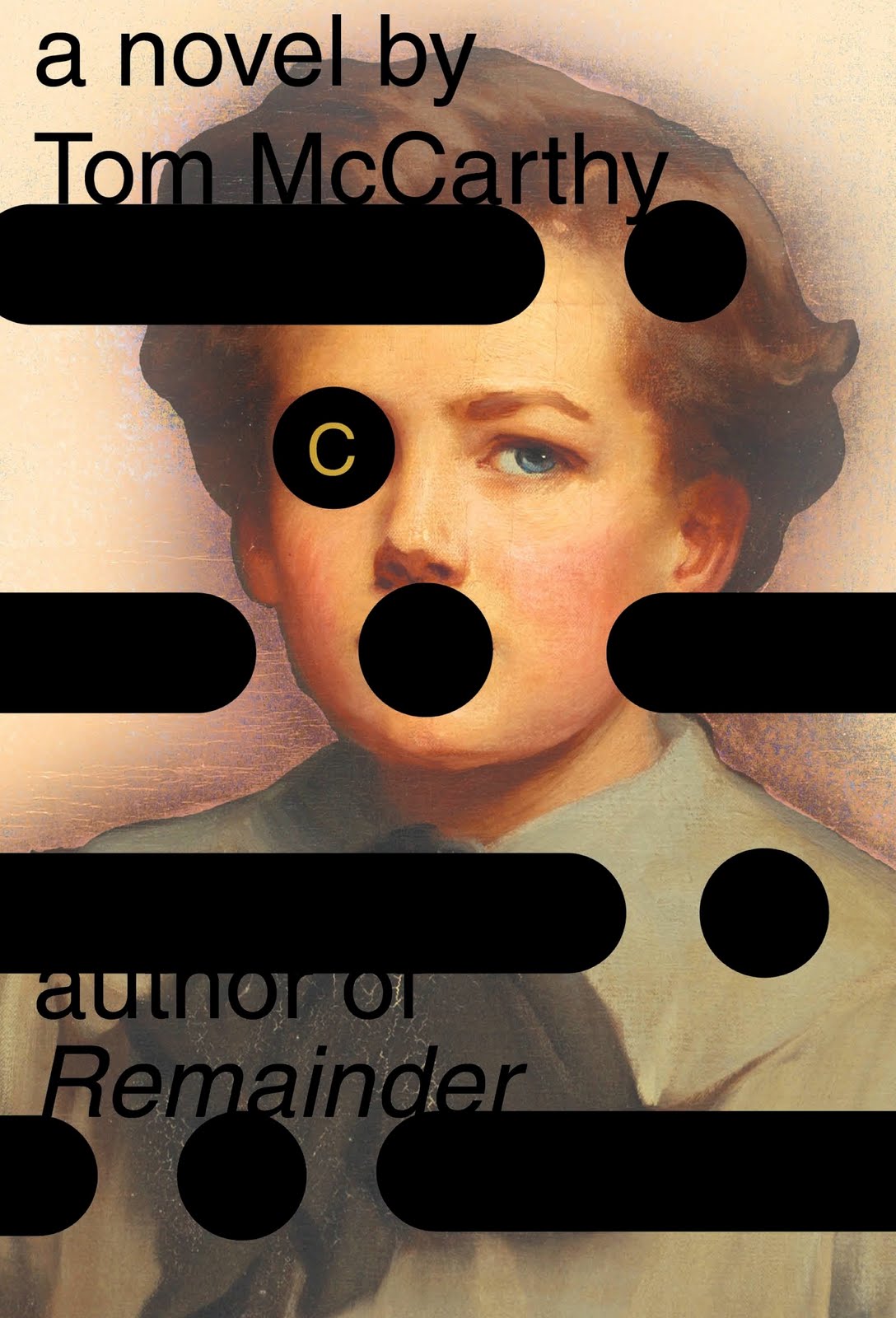
C

Tom McCarthy and Peter Mendelsund, together at last…

6 Comments

How To Design A Cover in 1:55 Seconds

Lauren Panepinto, Creative Director at Orbit Books, recently posted this entertaining “Making of the Cover Video” for Gail Carriger‘s Blameless (released in the fall) to the Orbit blog:

Over 6 hours of my onscreen compositing, retouching, color correction, type obsessing, all condensed down to a slim sexy one minute 55 seconds of cover design. Trust me, no one wants to watch it in real-time…and even then I left out the not-as-riveting-onscreen stages of my cover design process, such as reading the manuscript, sifting through… photoshoot outtakes, background photo research, etc. And since this is a series look that has already been established… there weren’t the usual batches and rounds of versions of different designs that happen with standalone or first-in-a-new-series covers. That would be a weeklong video!

And if your interested in steampunk but don’t know where to start, you might want to check out Library Journal‘s list of 20 core steampunk titles (which includes Gail Carriger’s Soulless).

UPDATE:

There is more on Lauren Panepinto’s work on this series at FaceOut Books.

2 Comments

Something for the Weekend

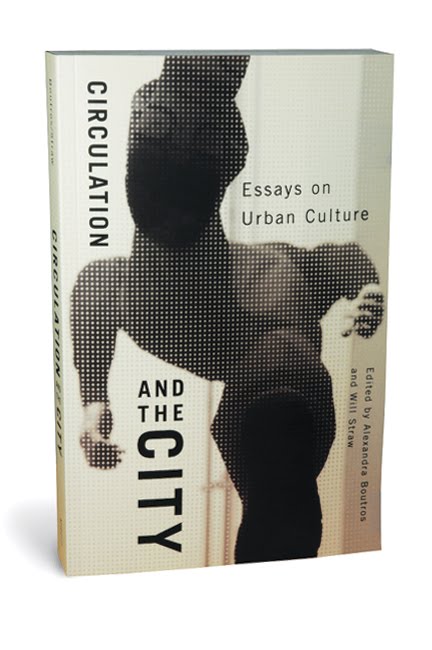
Circulation and the City design by David Drummond

New from David Drummond

The Original Spirit — Toronto indie institution This Ain’t The Rosedale Library (one of the 10 best bookshops in the world according to The Guardian) featured at Books@Torontoist, with some nice quotes from owner Charlie Huisken:

“creative knowledge [is] accumulative and comes from many sources… Being an autodidact has served me well”

Books in the Age of the iPad — Craig Mod’s article on printed books and digital publishing caused much of a flutter on Twitter yesterday. I’m not sure that I entirely agree with his thesis — which seems to imply that some kinds of content can be completely divorced from their media — but his website is beautifully designed, and more importantly he makes some interesting points. I especially like his conclusion:

I propose the following to be considered whenever we think of printing a book:

  • The Books We Make embrace their physicality — working in concert with the content to illuminate the narrative.
  • The Books We Make are confident in form and usage of material.
  • The Books We Make exploit the advantages of print.
  • The Books We Make are built to last

In that vein, more on David Pearson‘s beautiful book cover designs for Cormac McCarthy at We Made This. I love that he used rubber stamps…

And finally… Jaron Lanier, author of You Are Not A Gadget, talks about the failure of Web2.0 with Aleks Krotoski of The Guardian:

3 Comments

Monday Miscellany

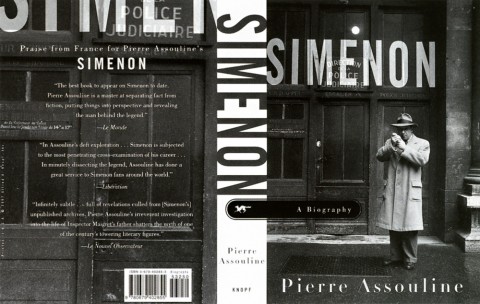
Simenon designed by Archie Ferguson

Pub Psychology — Archie Ferguson, formerly of Knopf and now art director at HarperCollins, interviewed at the CoveredUp blog:

Publishing has always seemed a lot more glamorous than it is. And if it ever was glamorous, those days are long, long gone. These days I spend a lot of time answering emails – not phone calls – from far and wide, running up and down the stairs… doing damage-control, and feeling more like I’m a psychologist as much as anything else.

Virtual CityJonathan Lethem, author of Chronic City, interviewed in The New Statesman:

Manhattan, the great secular-commercial metropolis, the world’s first and greatest city founded on concepts other than religious or national identity – and therefore a kind of science-fiction city, a conceptual project, a place unnaturally subject to the distorting forces of capital, ideology, projection, wish-fulfilment and so on – has become…a place both persistently real and unreal. Or, an unreal place where real people are living out their existence… What’s gone wrong and right in this place has a special amount to tell us.

The difference between Time Roman and Times New Roman — Because I know you’re curious.

The Form of a Book — Another lovely, insightful post from A Working Library:

On the page, the rhythm of the text emerges from both the macro design—the pleasing shape of the page, the proper amount of thumb space—and the micro—the right amount of leading, the evenness of the word spacing, the correct break of a line. On the screen, the rhythm of a text encompasses all of these things and more—the placement of a link, the shift from text to video and back again, the movement from one text to another. The rhythm becomes more complex as the orchestra gets larger, but the desire for rhythm does not subside.

In order to create this rhythm, the book must be designed and composed for the screen. A beautiful digital text can no more be arrived at by “converting” from a print design than a beautiful print book can be created by converting a Word file. The digital book will never come into its own so long as it is treated as a byproduct, unworthy of attention.

2 Comments

Midweek Miscellany

Vintage Dostoevsky, design by Michael Salu

Precisely and Concisely — The Caustic Cover Critic interviews designer and Artistic Director of Granta magazine Michael Salu:

Bizarrely, designers looking for employment are often judged by what software they’re able to use. Intellect, cultural awareness and often creativity don’t seem to be values worthy of a resume. There is no substitute for good ideas, the rest are just supportive tools. I have always been quite a craft-led designer, but I am of the generation that studied with a mac in front of them and I think its good to understand the importance of both.

The Honest Bookseller — Erin Balser of Books in 140 profiles Toronto independent bookstore Ben McNally Books for The Torontoist:

“I’d rather have a book that sells one copy that no one else will sell than to stock several best sellers you can get anywhere,” McNally says. “That’s what makes this store. That’s why people come… My first responsibility is my customer. When I think a book should be cut by a third or if there’s a subplot that goes nowhere, I have to tell you that… I’m often a very critical reader. When people come and ask me ‘Is this any good?’ I have to be honest.”

William Kentridge: Five Themes — Beautiful book design from Abbott Miller and Kristen Spilman at Pentagram.

Speaking of Pentagram… Pentagram partner Paula Scher has some blunt stuff to say about design in a interview with Pr*tty Sh*tty.

The Rules — Inspired by Elmore Leonard’s 10 Rules of Writing, The Guardian asked authors — including Diana Athill, Margaret Atwood, Richard Ford, Jonathan Franzen, Neil Gaiman, and PD James, Hilary Mantel, Michael Moorcock, Philip Pullman, Ian Rankin, Will Self, Sarah Waters, and Jeannette Winterson — for their personal dos and don’ts. (Part two is here).

On the subject of writing, the wonderful BBC radio series The History of the World in a 100 Objects has recently touched on the history of writing, literature, and mathematics in episodes about the Early Writing Tablet, the Flood Tablet and the Rhind Mathematical Papyrus. The series is a collaboration with The British Museum. Great stuff.

Diana Athill, Margaret Atwood, Roddy Doyle, Helen Dunmore, Geoff Dyer, Anne Enright, Richard Ford, Jonathan Franzen, Esther Freud, Neil Gaiman, David Hare, PD James, AL Kennedy
1 Comment

10+ Flickr Groups for Book Design and Inspiration

10 Websites for Vintage Books, Covers and Inspiration” is one of the most popular posts on The Casual Optimist, and here, at long last, is the promised follow-up: “10 Flickr Groups for Book Design and Inspiration.”

There are a lot of amazing photostreams with book sets — Covers etc, insect54, Kyle Katz, mjkghk, Montague, Paula Wirth, and Scott Lindberg to name just a few that I’ve come across — but I’ve decided to focus this post on my favourite group pools because they collate the best of these individual streams together.

I’ve also decided to highlight groups that are about specific subjects, genres, publishers, or designers, because I think these are more useful than the more general (but still interesting) book pools such as A+ Book Covers, Book Cover Club, and My Books

ABC Verlag Graphic Design books

1. ABC Verlag, Zurich — A collection of scans and images from Zurich-based ABC Verlag who specialized in graphic design and fine art books between 1962 to 1989.

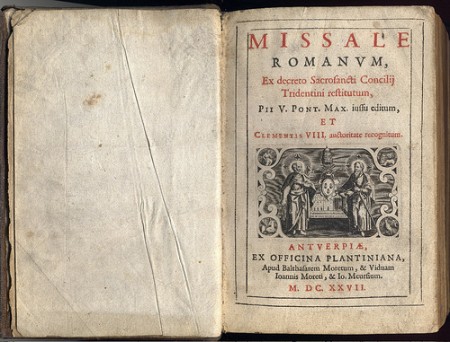
1627

2. Antique Books — images of books, covers and illustrations that are a hundred years old or more.

Design and Paper: Number 13: Spread

3. Designers’ Books — “what’s on the shelves of designers and other smart creatives.” Not to be confused with the also excellent designers-books.com pool or Book Design pool.

Literature in America

4. Alvin & Elaine Lustig Design — celebrates the work of Alvin and Elaine Lustig, both renowned for their incredible book cover designs.

They Shoot Horses Don't They

5. The Penguin Paperback Spotters’ Guild — An astonishing collection of vintage Penguins, Pelicans, Peregrines, and Puffins. Also of interest: The Great Pan! Illustrated Pan Book Covers and Vintage Fontana Books.

Playback by Raymond Chandler Cover art by William Rose

6. Pulp Fiction — As you would expect: detective novels, crime fiction, adventure comics, trashy romance, weird science, blaxploitation and more. See also: The Old-Timey Paperback Book Covers and The Crime & Mystery Book Covers.

Thoughts on Design by Paul Rand

7. The Paul Rand Modern Graphic Design Fan Club — Like the Lustig Design group, this is not just a book pool, but it does, however, include many of Paul Rand’s iconic book designs, making it essential to this list in my opinion.

I Know an Old Lady, by Rose Bonne. Pictures by Abner Graboff.
8. The Retro Kid A collection of cool illustrated children’s books from the mid-1940’s through the mid-1960’s, curated by The Ward-O-Matic illustrator Ward Jenkins.

metropolis thea v marbou

9. The SciFi Books Pool Vintage science fiction covers from the 1940s, 50s, 60s and 70s.

computers

10. Vintage Paperbacks — The place for amazing paperbacks that aren’t Penguins. Curated by graphic designer and art director Gregory Boerum, the focus is on quality stuff with design interest from the 1960’s and 70’s.

So there we have it: 10 of my favourites. What are yours?

10 Comments

Dan Mogford’s de Bonos

Earlier this week, London-based graphic designer Dan Mogford kindly alerted me to a series of fresh Edward de Bono covers he designed for the Penguin UK:

At the BPPA book cover panel last night, David Gee was lamenting publishers’ current predilection for blandly neutral Malcolm Gladwell-esque covers for certain kinds of popular nonfiction, and so I’m really glad that Dan (and Penguin) decided to go in the completely opposite direction.  I really like the slab serif (the rather lovely Stag by Christian Schwartz, Dan tells me), bold colours, and light-bulb motif they went with here.

Is it just me or do they have a certain Milton Glaser-like quality?

4 Comments

Something for the Weekend

Slim pickings in a week in which book nerds obsessed about the implications of the rumoured Apple tablet (and PS – if anyone else describes it as the fucking ‘unicorn’ it’s clobberin’ time…), while in a completely unrelated move (snarf!), Amazon announced it was going to allow iPhone style apps to be uploaded and sold on the Kindle (begging the question when does the Kindle become the Pontiac Aztek?) and — faster than you can say bait and switch — they offered self-published authors improved royalties.

But, anyway, here’s more fun stuff for your weekend pleasure…

What To Leave Out? — I Love Typography‘s favourite fonts of 2009, including the lovely Phaeton and Biographer (pictured above), as well as Jos ‘exljbris’ Buivenga’s  Calluna.

The big graphic novels of 2010 according to Publishers Weekly.

And finally… I’ve been meaning to link to this for ages, at least in part so I could post Erik Mohr‘s cover for Monstrous Affections by David Nickle

Horror Stories — Waaaaay back in November The National Post chatted with the publishers and authors from dark fiction specialists ChiZine Publications :

[W]e wanted to produce beautiful, well-written books. Books you wanted to pick up — and when you did, you wouldn’t be disappointed by what was inside. Essentially, books we ourselves wanted to read…

Genre fiction is notorious for having cheesy, sloppily executed covers with no sense of design or what is attractive to potential book buyers. We’ve been incredibly lucky that Erik has made our books look so good. And by “good” I sometimes mean “disturbing.”

Maybe what we’ve managed to do with CZP is to find a niche that wasn’t being filled…or maybe we created our own niche.

Comments closed

Midweek Miscellany

Catcher in the Rye — Illustration and hand-lettering by Toronto-based Darren Booth (self-directed project). Darren has done a rather fine Lord of the Flies cover as well.

The Catastrophist — Chris Hitchens on J.G. Ballard in The Atlantic:

For most of his life, our great specialist in catastrophe made his home in the almost laughably tranquil London suburb of Shepperton, the sheltered home of the British movie studios. He obviously relished the idea of waking one day to find himself the only human being on the planet, to explore a deserted London and cross a traffic-free Thames, to pillage gas stations and supermarkets and then to drive contentedly home.

Read the Printed Word!

I Pledge to Read The Printed Word — Buttons from readtheprintedword.org

“A Day Pass to Fucking Narnia” —  Paul Carr’s ‘Anticipating the Apple Tablet: When Journalism becomes Fan Fiction’ at TechCrunch:

I get that an Apple tablet is big news. I agree with those who say that Apple’s product launches deserve more attention than those from other companies as their products tend to be ‘game-changers’… But until the official launch announcement comes, I would rather not hear another word about Apple and their tablet. Not because it isn’t news – but because so many of the journalists anticipating the launch have dropped any sense of responsibility to their readers and replaced it with cloying fanboyism.

(Please note the funny, if slightly schoolboy, URL of the post)

And finally…

A rather fine new cover by David Drummond.

5 Comments

Something for the Weekend

Salu, Bonjour! — The Caustic Cover Critic features the awesome work of designer Michael Salu. The typography is great.

And speaking of typography…

KnockoutThe New York Times profile type jedis Hoefler & Frere-Jones:

Sitting in their New York studio in the charmingly ramshackle Cable Building, designed in 1892 by the flamboyant Beaux-Arts architect Stanford White, Mr. Hoefler and Mr. Frere-Jones are engaging advocates for their craft. They met in 1989, when they were working independently and found themselves hunting for the same antique typography books. “We’ve given up now because the prices have gone crazy,” said Mr. Frere-Jones. “Between us we own so many that if there’s something we don’t have, it’s either an uninteresting variation or there’s only one in the world and it costs $20,000.”

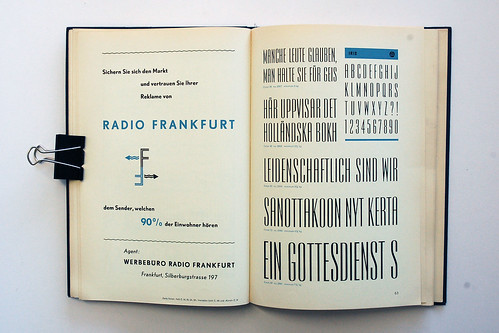
Schriftenkatalog — Beautiful pages from a 1960’s Dutch type catalogue on Flickr (via Inspire Me)

And… The history of the ampersand at the Webdesigner Depot (thanks Nic).

A Guide to Online Publicity (For Dummies) — Freelance writer, editor and blogger Lindsay Robertson’s common sense — but on the money — “do’s and don’ts” for flacks like me approaching bloggers like er… me (via Kottke).

And finally…

Two lovely posts at The Silver Lining featuring the work of Elaine Lustig Cohen: Part 1 and Part 2. There are more Elaine Lustig Cohen book covers at ephemera assemblyman and there is an amazing Flickr pool devoted to the design work of Alvin and Elaine Lustig here.

1 Comment

Goodbye BDR

Just like every other book blogger (and their mum),  I was sadden to read that Joseph Sullivan has decided to put his blog The Book Design Review on an “indefinite hiatus.”

The BDR has consistently been one of my favourite book blogs and was one of the first I added to my RSS reader.

It was a revelation to discover a blog that was about books and design. But more importantly The BDR made me realise that book blogs could be about the people who made books as well those that wrote them, and that enthusiasm might just be more interesting than snarkasm.

Nevertheless, I understand why Joe is taking a break (and I hope it is just a break, even though I don’t really think it is). Taking blogging seriously — taking the time to curate material and write about it well — can wear you down. There is (self-imposed) pressure to deliver, and when it doesn’t pay (and it doesn’t) it is hard to justify — especially if other creative projects fall by the wayside…

But, to be honest, I also feel kind of responsible. In the 5 years since Joe started The BDR a lot of other book design blogs like mine (even though I tell myself this isn’t really a book design blog) and sites like FaceOut Books and Pieratt‘s The Book Cover Archive have cropped up. Imitation may be the sincerest form of flattery, but it’s also fucking irritating. Even though he’s always been very kind to me, I’m sure Joe must have thought WTF? on more than one occasion. Perhaps the Amazon poll for the best book cover of 2009 was the final straw?

All I really know though is that I will miss The BDR terribly, and that will try not to disappoint Joe’s regular readers who chose to haunt The Casual Optimist in its (hopefully temporary) absence.

Thanks again Joe. (And sorry).

(Pictured: The Great Perhaps, designed by Jamie Keenan, one The BDR‘s Favourite Book Covers of 2009)

5 Comments