Skip to content

Tag: book covers

50 Covers for 2013

I decided to go in a slightly different direction with my covers list this year (see my lists for 2012, 2011, and 2010). It’s just a straight up list of the fifty covers designs with a few annotations and links a long the way. I’m sorry for woeful under-representation of Australian and NZ designers, and for completely ignoring the entire non-English-speaking world. I will try and do better in 2014. But until then, here, in alphabetical order, are my fifty covers of 2013:

33 Comments

Q & A with Luke Pearson

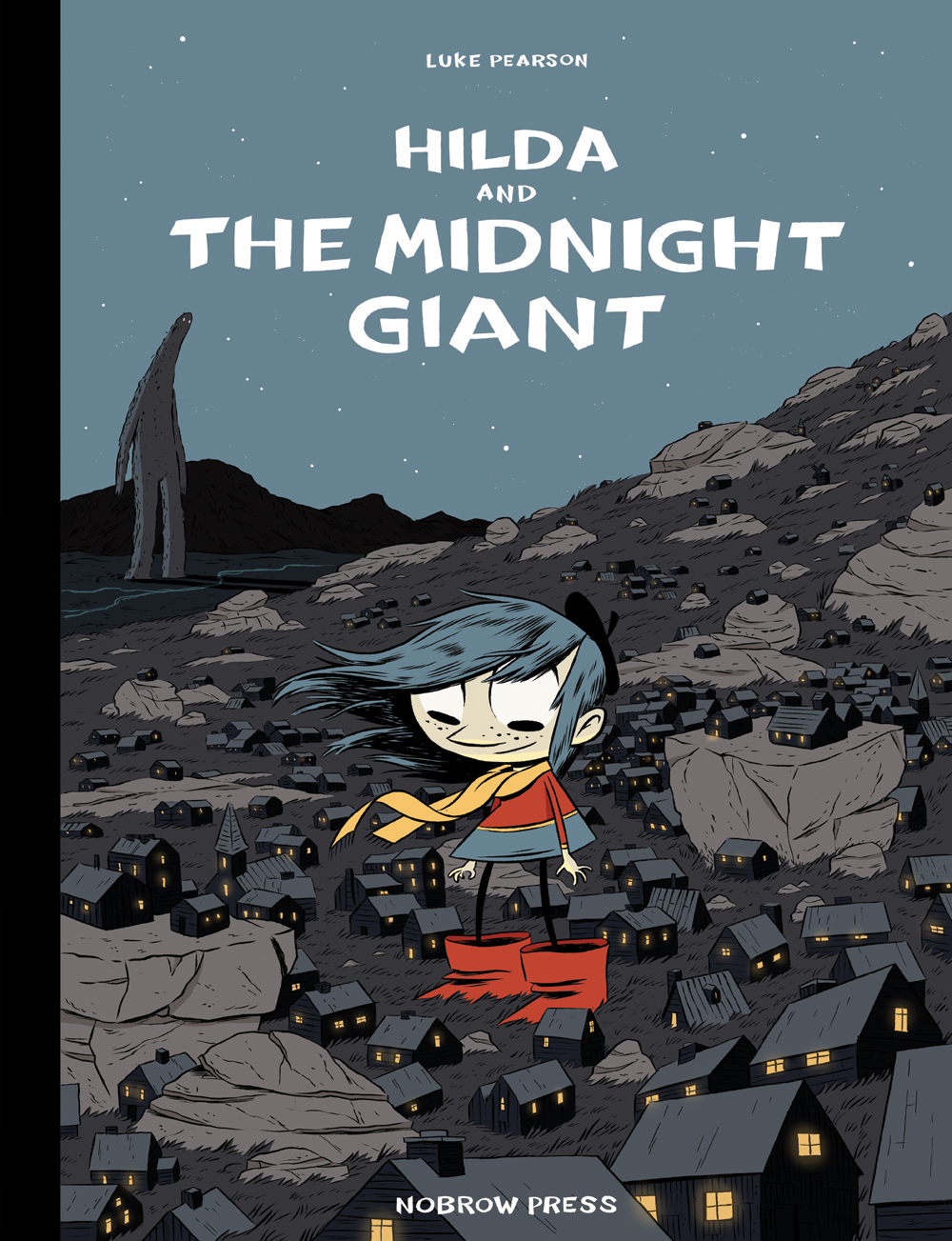
I’ve been a fan of Luke Pearson‘s work since picking up a copy of Hilda and the Midnight Giant from Nobrow Press a year or so ago. The beautiful illustrations, quality printing and oversize format gave it the exotic feel of the comics albums British school kids used to sneak back from vacations in France (and maybe still do?). Despite my immediate sense of nostalgia, the comic itself was fresh, different and delightfully free of cynicism. I read it over and over with my kids, and then savoured it on my own after they were asleep.

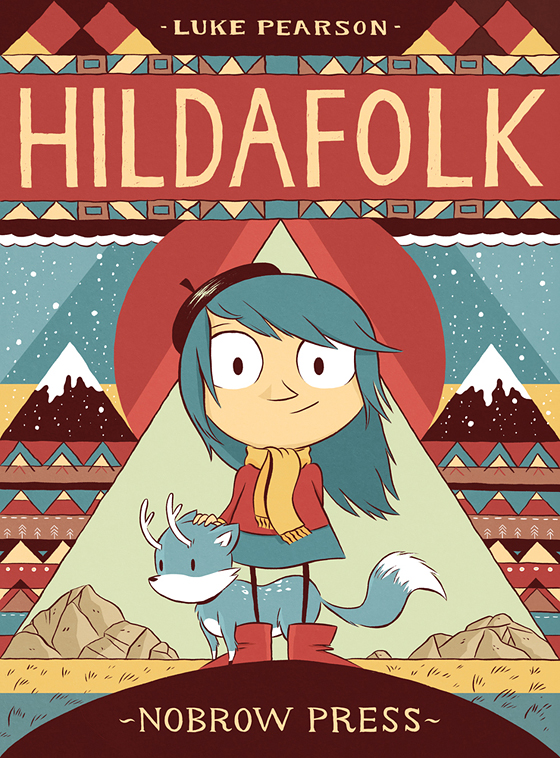
Happy to find a kids comic that adults could also love, I quickly went back and found a copy of Hildafolk (recently reissued in hardcover as Hilda and the Troll) and bought Hilda and the Bird Parade as soon as it was published. While seemingly drawing inspiration from Northern European stories and Tove Jansson’s magical Moomin books, Hilda’s world has it’s own, unique mythology — a strange wood man, truculent elves, troll rocks, sea spirits, salt lions, flying furballs, and lonely, ancient giants. The wide-eyed and blue-haired child and her mother are a curious and reassuring modern presence in this old and magical world. The fantastical is everyday to them — something to be fitted around work and school. Their problems are the problems of the real world — where to live, how to make friends with the neighbours, how to do the right thing…
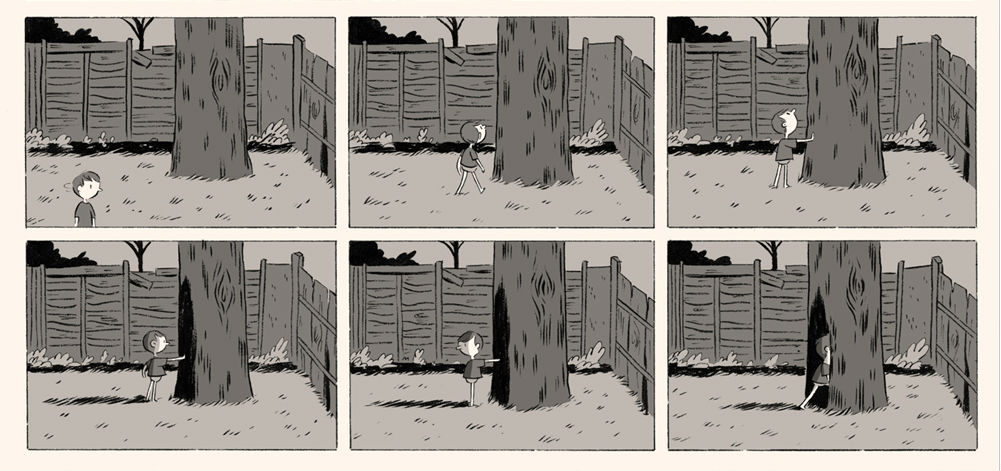
This juxtaposition of the modern and the magical is also evident in Luke’s comics for adults. But where the Hilda comics are unabashedly bright and joyful, the adult comics are filled with melancholy and sadness. Like Kevin Huizenga‘s Glenn Ganges comics, the fantastical in Luke’s adult comics is shadowy, nightmarish, and all the more unsettling for its appearance in mundane, familiar settings. The monsters and ghosts in stories like like You Mustn’t Be Afraid (included in the anthology Nobrow 7: Brave New Worlds), and the full-length graphic novel Everything We Missare the personal demons (sometimes scary, sometimes familiar) of the world weary, not the new friends of a child in unexplored territory. But for all their apparent differences, at their heart the Hilda stories and Luke’s adult comics are fundamentally about the same things: people, relationships, and about understanding one’s place in the world.

I recently spoke to Luke for the Raincoast Blog about ‘The Boy Who Drew Cats,’ his wonderful contribution to the newly published kids anthology Fairy Tale Comics. Here, we talk about his influences, his comics and his book cover illustrations. We corresponded by email.
When did you first start drawing comics?

When I was very young. I think I probably started drawing speech bubbles as soon as I figured out how to draw people. I used to draw comics about a character called Super Rabbit and show it to my grandparents.

Did you always want to be a professional cartoonist?

I probably did at some point when I was a child. It was obviously something I always thought about, but I was only really familiar with the smallest selection of comics and was entirely ignorant to how the industry worked, so it seemed like a crazy, unachievable dream to ever expect to get to that point. I eventually wound up going to university to study illustration and going into that I was prepared to basically just try and be an illustrator and it was only through the process of that that I remembered that comics were something that I still liked doing and that it was actually weird that I wouldn’t be doing them.
What was the inspiration for the Hilda books?

I draw really heavily on Scandinavian folklore (particularly Icelandic and Norwegian) for the Hilda comics. I got hooked on that initially from researching Icelandic folktales for a map project we were set at university. I really liked how strange and low-key they were. Not much happens and then the weirdest thing will happen, but it’s described really plainly and matter-of-factly and then it will end really abruptly. I tried to fuse some of the stuff I’d read for that with memories from an earlier family holiday to Norway which had a big effect on me and set a bunch of ideas in motion that for a long time I had nothing to do with.
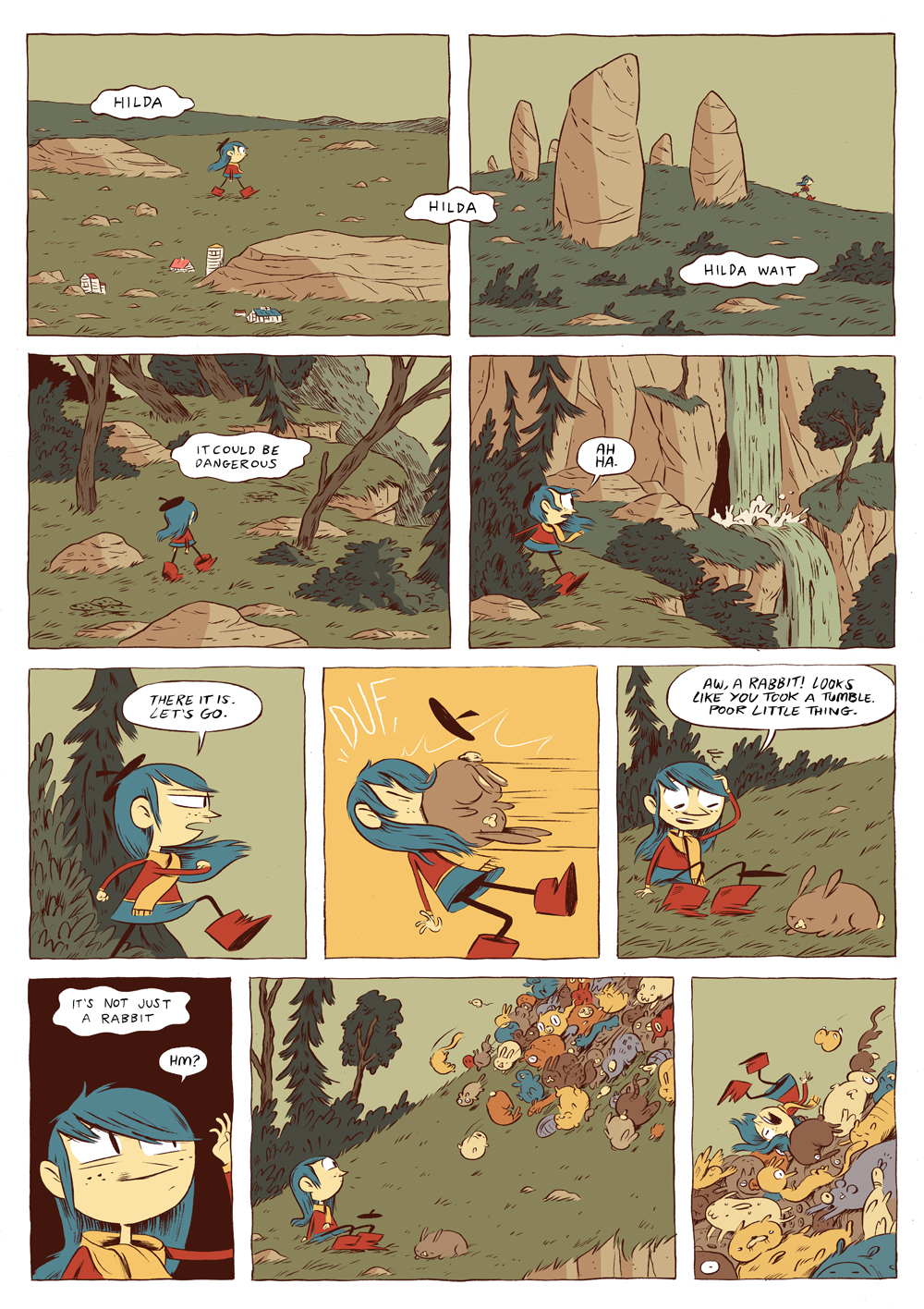
The series has drawn comparisons to Tove Jansson beloved Moomin stories. Has Jansson been an influence on your work?

The 1990 tv series was my first exposure and I always felt like it was key in the shaping of my psyche somehow. I came relatively late to discovering the full breadth of what she did. If I had to choose to have an idol, I guess she would be it, maybe. So obviously she is a big influence on me, as a cartoonist, illustrator and a writer. I always feel a bit weird about any comparison though, because I can’t tell if it’s meant kindly or if it’s more like ‘I can see where you steal your ideas’. Hilda was designed very self consciously, at least initially, to resemble a kinder Little My.
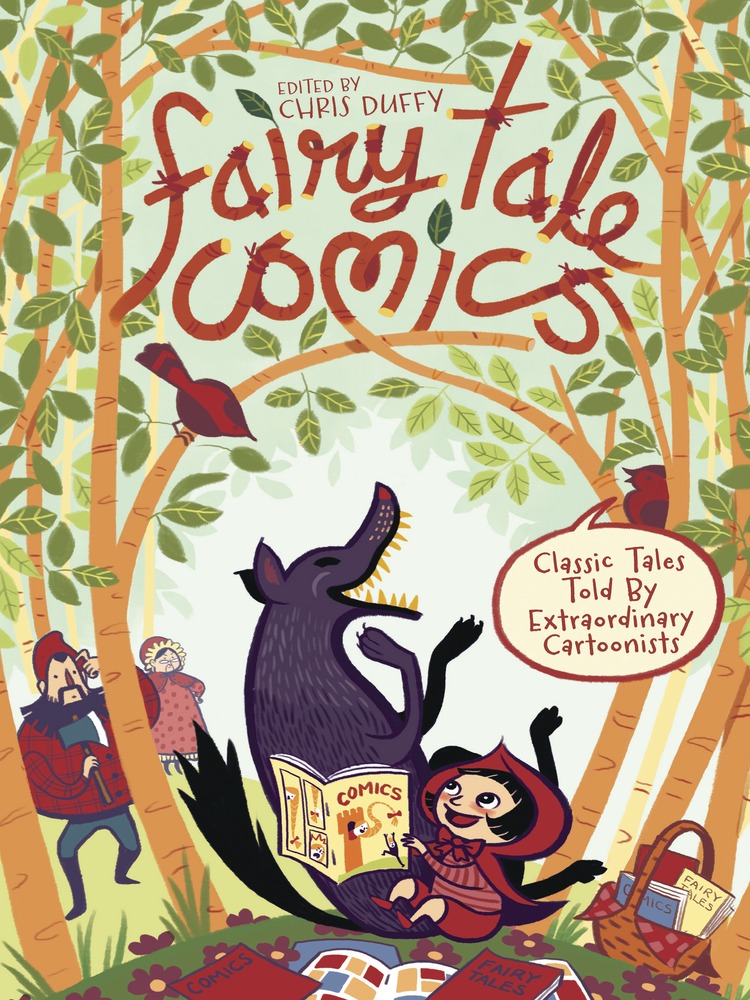
Your contribution to Fairy Tale Comics, ‘The Boy Who Drew Cats’, has a similar magical quality to Hilda. What attracted you to the story?

It was actually one of a couple of stories suggested to me by Chris Duffy, who edited the book. I liked how far removed it felt from the kind of Brothers Grimm stories that I generally think of when I think ‘fairytales’. It’s more like a horror story with a lot of weird details that seemed fun to me. I liked the Japanese setting. I was also completely unfamiliar with it so I didn’t have to feel the weight of past interpretations on me as I adapted it.
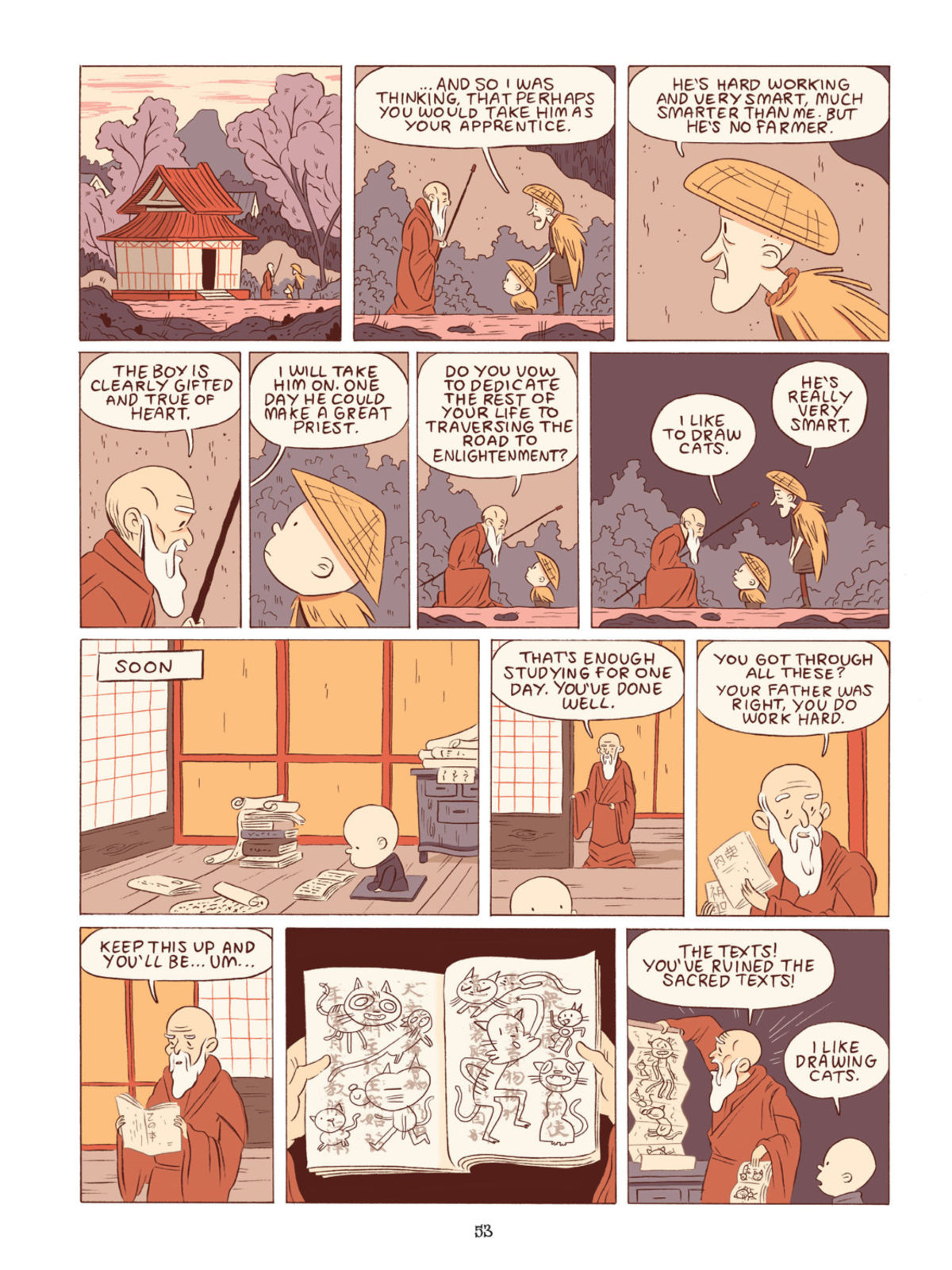
I love that the child at the centre of ‘The Boy Who Drew Cats’ looks a lot like Harold from ‘Harold and the Purple’ Crayon. Has Crockett Johnson been an influence on your work?

Actually no! I’m not super familiar with Crockett Johnson’s work at all. He actually started off as Charlie Brown and then I pulled his features around a bit.
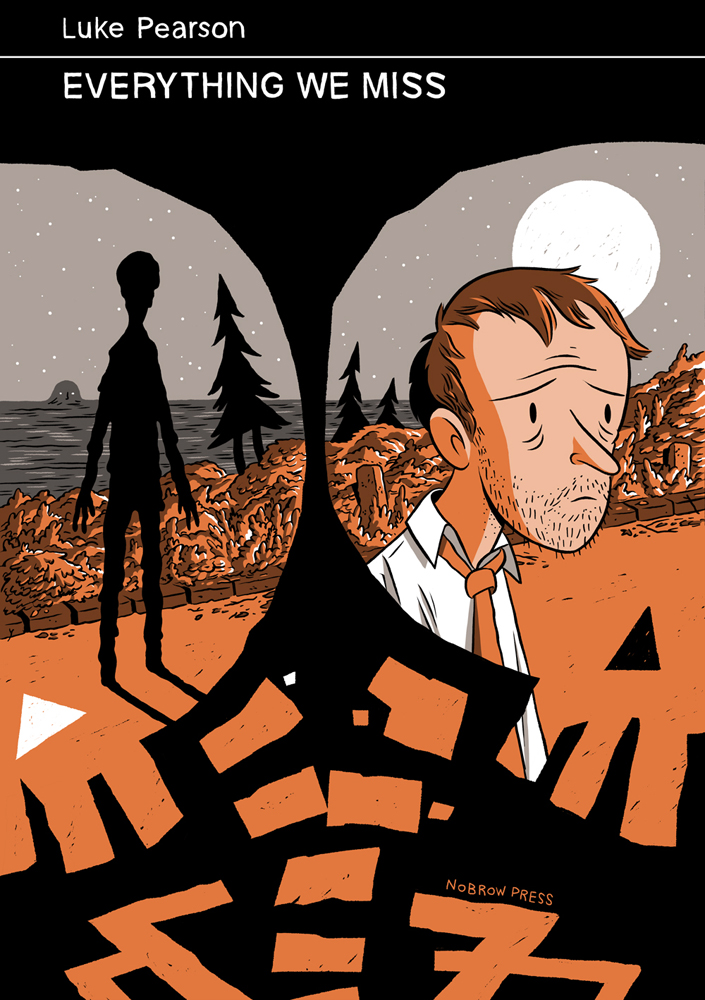
Do you approach your comics for kids differently from your adult comics?

I think this is the only kids comic I’ve done that isn’t a Hilda comic. Usually I’d point out that I draw my kids comics (Hilda) in a different style to how I tend to draw my adult stuff. I guess really I’m just talking eyes here. Hilda is full colour with big eyes and my other comics tend to be limited colour with dot eyes. This is full colour with dot eyes so I guess it sits in the middle. Less superficially, I’d say I try to be really clear in regards to storytelling and try and wrap things up neatly with my children’s work.

Briefly, could you describe your working process?

I generally draw and ink on paper, scan, colour in photoshop. I switch between brush pens, brushes, fineliners and dip pens. I don’t have any particular paper that I always use. I’m starting to enjoy occasionally inking in photoshop now, which I’m just using a wacom tablet for.
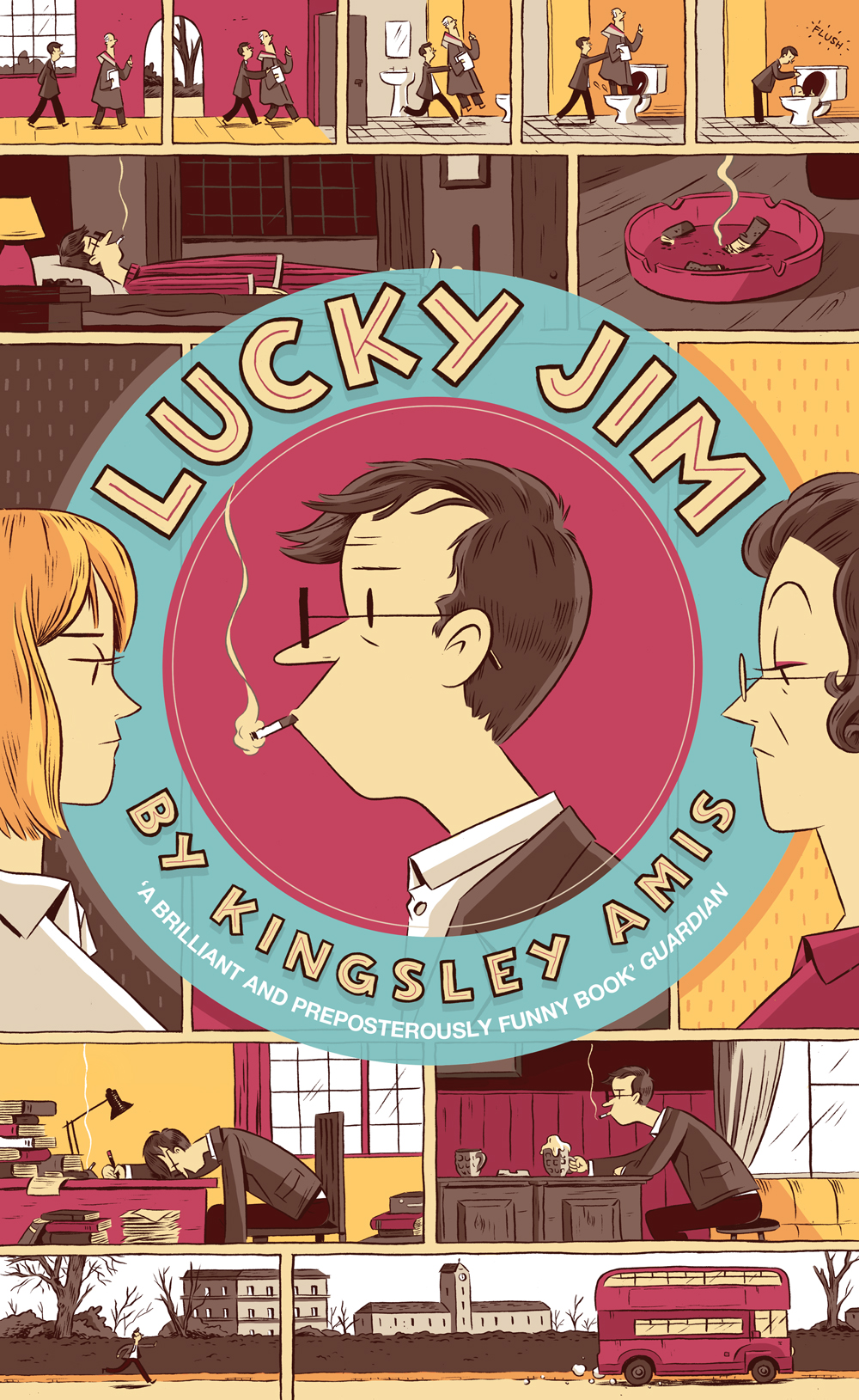
How is illustrating a book cover different from drawing comics?

Other than involving the same technical skills, it’s different in every way. I guess you are kind of trying to ‘tell a story’ with a cover, but really you just want to create an image that’s striking, intriguing, aesthetically pleasing and somehow captures the tone of the book. I’d say it feels a lot easier than a comics page, because you can just spend all your time fine tuning and perfecting this one thing until it’s ready, rather than having to worry about fifteen different images and making sure they all look good and all fit on the page and make sense when read one after the other. That said, it’s a totally different thing and requires different skills.

Are there any books you would love to illustrate?

Watership Down or something by Franz Kafka. I wouldn’t want to do them in the style I draw my comics though. My taste in book covers is not quite in sync with the ones I’ve actually drawn.

What have you read recently?

I just finished reading Tenth of December by George Saunders. I just bought a couple of collections of Michael Dougan comics which I really like.

How did you get involved with Adventure Time?

I got an email asking if I wanted to take a storyboard test, which I took and I guess they liked it. There’s no interesting story there really. I’ve boarded on two episodes so far, ‘Candy Streets’ and ‘Frost & Fire’ and should be doing some more some time soon.
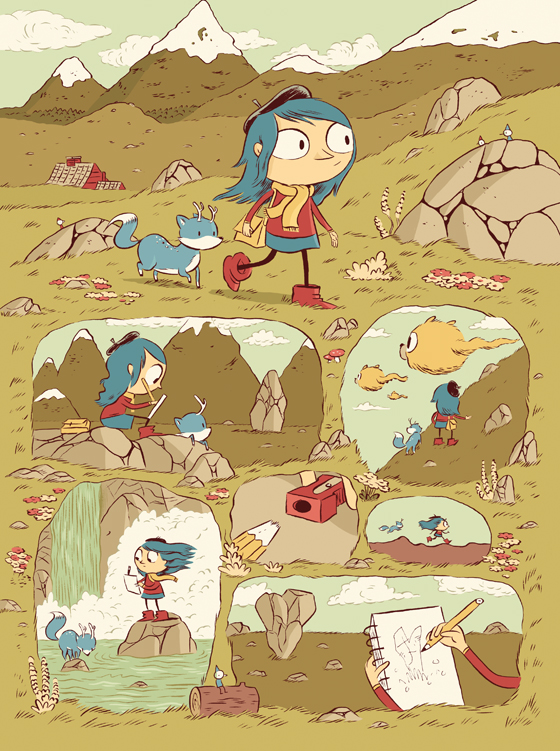
Where do you look for inspiration, and who are some of your cartooning heroes?

I try to just pay attention to things and take everything in as inspiration in some way or another. But you know, I also just look at tumblr and stuff like every one else does. Some of my heroes are Tove Jansson, Chris Ware, Osamu Tezuka, Gene Deitch and Philippa Rice.

Who else do you think is doing interesting work right now?

Loads of people, but the more I list the more I feel like I’m missing out. My favourite cartoonist right now is Anatola Howard.

Have you thought about creating web-comics?

Yes, but I can’t see myself ever having a dedicated site for a specific regularly updated comic. I usually put my shorter comics online if I can and I wish I could do that more often. I can definitely see myself doing a regularly updated thing for a limited period of time at some point.

Do you worry about the future of books and print?

I can’t say it’s ever kept me up at night.

Thanks Luke!

2 Comments

Some Recent Book Covers of Note

I haven’t posted a lot of book covers recently, so to amend the situation here’s a completely unscientific selection of a few designs that have caught my eye recently:

Middle C by William Gass; Design by Gabriele Wilson

Sorry Please Thank You by Charles Yu; Design by Cardon Webb

On the Map by Simon Garfied; Design by Roberto de Vicq

Me and the Devil by Nick Tosches; Design by Keith Hayes

Lionel Asbo by Martin Amis; Design by Jamie Keenan

The Flamethrowers by Rachel Kushner; Design by Charlotte Strick

London Underground by Design by Mark Ovenden; design by Matthew Young

The Silence of Animals by John Gray; designer unknown (image: Animalia N.1 by Carnovsky)


NB: You can find more book cover designs at The Accidental Optimist and my Pinterest.

Comments closed

Tom Gauld Book Covers

The esteemed Tom Gauld recently posted a delightfully bonkers new cover illustration for Stevyn Colgan’s book Constable Colgan’s Connect-O-Scopeand I thought it was about time we had a retrospective of Tom’s book covers around here:

The Three Musketeers by Alexandre Dumas (2007)

The Tribes of Britain by David Miles (2006)

Strange Eventful Histories by Shiamin Kwa (2012)

Stories by Neil Gaiman and Al Sarrantonio (2011)

Shadow Show edited by Sam Weller and Mort Castle (2012)

Family Fang by Kevin Wilson (2011)

The Damned Busters by Matthew Hughes (2011)

Costume Not Included by Matthew Hughes (2012)

Hell To Pay by Matthew Hughes (2013)

Nobrow #6 by various (2012)

Goliath by Tom Gauld (2012)

And finally, Tom’s new book You’re All Just Jealous of My Jetpack has just been published:

You can read my Q & A with Tom here.

(full disclosure etc., Tom’s two most recent books, Goliath and You’re Just Jealous of My Jetpack, are published in North America by Drawn & Quarterly and distributed in Canada by my employer Raincoast Books)

Comments closed

Something for the Weekend

Flavorwire asked a number of prominent designers — including Coralie Bickford-Smith, John Gall, Peter Mendelsund and Barbara deWilde —  to choose their favourite book covers designs from the previous year. I feel a slight tinge of regret that the cover for R.J. Palacio’s Wonder designed by Tad Carpenter didn’t make it on to my list

Mind-Boggling — Tom Spurgeon interviews Sean Howe, author of Marvel Comics: The Untold Story, at The Comics Reporter:

I worried that it would seem like the world’s longest wikipedia entry. There were so many things I wanted to include. I had a very good sense of what the narrative arc was. There’s a rise and fall, rise and fall, rise and fall structure here. If I were writing a play, I’d be failing miserably. But you can’t allay that stuff, you can’t recraft the narrative, without fictionalizing it. Having to get into everything that was going on as Marvel was commercially ascending, like in the early 1980s, I guess that I felt a responsibility to not over-summarize. I constantly worried that I was reciting too many facts as I went. Then I hear from people who are like, “Wow, that was a quick read. I wish you’d done more descriptions.”… Which boggles my mind.

From Psychopaths Lairs to Superhero Mansions — Charlotte Neilson on modern architecture in film, at ArchDaily:

We all know that psychopaths prefer contemporary design. Hollywood has told us so for decades. From the minimal lairs of Bond adversaries to the cold homes of dysfunctional families, modernist interiors scream emotional detachment and warped perspectives.The classic film connection between modern buildings and subversive values is well documented and, for the architectural community, quite regrettable. The modernist philosophy of getting to the essence of a building was intended to be liberating and enriching for the lives of occupants. Hardly fair then that these buildings are routinely portrayed with villainous associations.

And finally…

A (very) long review of Ryszard Kapuściński: A Life by Artur Domosławski at Dissent magazine:

Kapuściński’s genius was his dissection of comportments, his insight into politics that derived from conversations and observations of regular people. Clearly, his books were something other than traditional journalism, and he never claimed otherwise. Indeed, he was acclaimed in both Poland and the West precisely for offering a new kind of journalism. Domosławski relates the various criticisms, but suggests that the Catalan critic Luis Albert Chillón probably had it best when he wrote of Kapuściński creating a “formerly unknown symbiosis” combining “the information-gathering techniques that belong to investigative journalism, the art of observation that is typical of reportage, and a quest for a kind of poetic truth, which through a narrative mode that is closer to myths, legends and folk tales than to realistic novels, transcends the boundaries inherent in simple documentary truth.”


Comments closed

Lip Service

The most recent cover of Playboy is, as some have been quick to point out, reminiscent of John Gall’s original cover design for the Vintage edition of Lolita by Vladimir Nabokov, reissued in 2005. John’s design is more subtle than the Playboy cover and more effective for it (but then Lolita is not Playboy after all):

Were Playboy inspired by the book cover? It seems unlikely. The image in John’s design was actually rotated for the final cover and looks quite different:

If I remember correctly the change was made because original orientation was too suggestive. For Lolita. (Just think about that for a minute.)

Is it also seems unlikely that they were inspired by Georgia O’Keeffe (Black Iris III pictured above) although there are some obvious similarities. Has anyone used O’Keeffe for the cover of Lolita?

Interestingly, the cover for the current Penguin edition of Lolita uses a similar colour palette to the Vintage edition and (to a lesser extent Playboy). The head is upright in this version as well. The vertical line of the nose is broken the horizontal features of the eyes and mouth, as well as by the title. Disconcertingly, the photograph and the round sans-serif font are suggestive of a YA novel. Perhaps that unsettling thought is the desired effect?

John’s design for Vintage replaced an earlier photographic cover by Megan Wilson which took an altogether different approach,  placing the book firmly in a historical context. It’s interesting, however, that John’s unused design echoes the crooked vertical line created by the legs in Wilson’s image:

While maintaining a vertical line, David Gee’s unpublished cover cuts to the chase in a far more clinical fashion…*

Inadvertently referencing spatialist painter Lucio Fontana

And one cannot talk about vertical lines and vaginas without mentioning Barnett Newman and his infamous “zip”. Or at least I can’t. But surely Mr Newman wasn’t thinking smutty thoughts was he?

Somehow I doubt Playboy was influenced by either Fontana or Newman. However, here is a 2003 poster for the Vagina Monologues designed by Chermayeff & Geismar that pre-dates both Playboy and Gall. The message is different, I think, but the photograph is clearly being used in a similar way. I’m sorry I don’t have a better image:

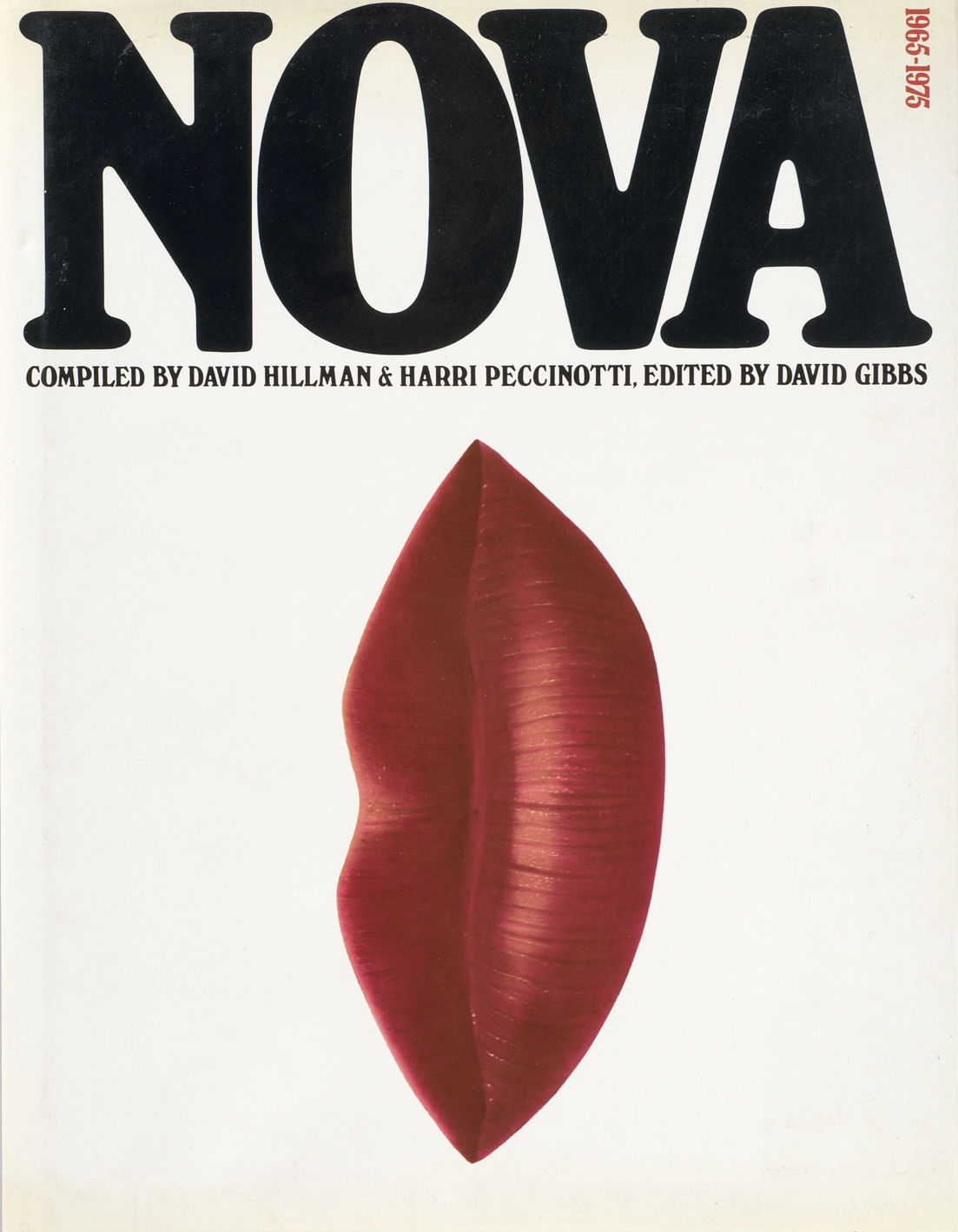
And finally, here is the cover of Nova 1965-1975, which utilizes an original cover from the innovative women’s magazine where Harry Peccinotti was art director. Is this the design that started it all?

*You can see many (many) more Lolita book covers here, and read Print magazine’s article ‘Recovering Lolita’ about John Bertram’s cover competition, here. The mighty Peter Mendelsund also weighs in on covering Nabokov here.

Comments closed

Truman Capote Designs by Megan Wilson

Megan Wilson has designed a striking new set of covers for the Vintage paperback editions of Truman Capote with some lovely bold type and photographs by Leombruno-Bodi, William Eggleston, Richard Rutledge and Olivia Parker.


Photo credits:
Music for Chameleons / Leombruno-Bodi
In Cold Blood / William Eggleston
Answered Prayers / Richard Richard Rutledge
Other Voices, Other Rooms / Olivia Parker

2 Comments

Midweek Miscellany

Expanded Original — Geoff Dyer, author of Otherwise Known as the Human Condition, on Penguin Modern Classics and the paintings used on their covers:

The use of different paintings meant each book was a “modern classic” in its own particular way. A side effect was that books I was reading for an education in literature doubled as an introduction to art history… Since then the happiest moments in 35 years of museum-going have occurred when I’ve seen these Penguin Modern Classic paintings on a gallery wall. Especially since the cover often showed only a detail of the original. Seeing the works themselves revealed exactly what had been lost, though I invariably saw it the other way around, with the painting as an expanded version of the Penguin original.

Sci-Fi Diet — Mike Doherty interviews Gary Shteyngart, author of Super Sad True Love Story and Absurdistan, in Caplansky’s Delicatessen in downtown Toronto:

“My cholesterol is in the science-fiction realm,” he says. You’d expect him to be gargantuan, like Misha Vainberg, the gourmand oligarch from Absurdistan who’s always asking his manservant to make him meat pies, but Shteyngart is a slight fellow, with big black-rimmed glasses and a perpetually amused mien. He’s an ideal dining companion, if you’re not a rabid vegetarian, his speech a mixture of astute cultural observations, probing bons mots and moans of contentment.

That Synching Feeling — James Meek, author of  The People’s Act of Love, on e-books and social reading:

Once there were private libraries; then there were public libraries; now there is the ghost library, where poltergeistic fellow readers may not only be reading the same book as you at any moment but actually underlining the page of the book you are reading seconds before you get to it. They may be next door; they may be in Kamchatka; they may be anywhere, so long as they have Kindle and wifi.

And finally…

An epic twopart interview with John Hodgman, whose new book That Is All has just been published, at the AV Club. It is totally worth it, if only for the extended rant about children, mortality, the apocalypse and Cormac McCarthy’s The Road:

I did a little math, and was like, “Wait a minute, Cormac McCarthy is like 75 years old! And he has a 12-year-old son! No wonder he wrote this book!” I’m like, “Cormac McCarthy, you jerk, you’re not talking about the apocalypse, you’re talking about your personal apocalypse, because you’re an old man who’s not going to get to see his son grow up. That’s what this book is about. And for you, it feels like the end of civilization, and an intolerable world, and you can’t say goodbye to a son that you can’t guide through this awful world that allows you, an old person, to die.” I’m like, “How dare you, Cormac McCarthy, put me through all that when you’re the one going through this personal apocalypse?”

Comments closed

Something for the Weekend

The Technological Sublime — Rick Poyner on the science fiction artist Chris Foss and Hardwarea new book collecting his work, at Design Observer:

These visionary images have a stillness, a control of atmosphere and a mood of mystery and wonder, even when something huge, alien, imponderable and beyond our terrestrial grasp is taking place. Foss loves the paintings of J.M.W. Turner and his finest pictures, often from the 1970s, seem as much concerned with ambience and painterly effect — they are cosmic cousins of Turner’s Rain, Steam and Speed, at least in spirit — as with the engineering of the vast structures they depict. They are also early visual encapsulations of what came to be known in the 1990s as the technological sublime. The vertiginous sense of awe, wonder, poetry and terror that people experienced in nature, when opening their senses to the sky, mountains, forests, rivers or oceans, could now be felt when contemplating the frightening immensity of a machine’s harnessed power, the magical effectiveness of electricity, or the boundless matrix of digital connection.

(Pictured above: Chris Foss, The Bloodstar Conspiracy by Stephen Goldin and E. E. “Doc” Smith, Panther, 1978)

Those Who Can… — Eric Olsen, journalist, editor and co-author of We Wanted To Be Writers, discusses writing and picks 5 books on the subject:

There are always ways that you can help a writer along. You’re not going to take a mediocre writer and turn him or her into a great writer, and there are also some things that can’t be taught, like the basic desire to be a writer. That seems to be a given. You’re not going to make someone want to be a writer. Sometimes what goes on in a writing workshop is that you convince the writer that he doesn’t want to be a writer. That is a kind of teaching too…

 The Source Code of Our Being — Tom McCarthy, author of Remainder and C, on the influence of Freud:

As a writer, I’m in love with Freud. I can’t imagine any serious writer not being. Freud, ultimately, concerned himself not with the mind, nor with the individual, but with the question of meaning’s emergence in the world, and of the mechanisms through which this emergence takes place. What, according to him, are these mechanisms? Why, they’re substitution and elision, condensation and displacement, metaphor, metonymy — in short, the very mechanisms at work in a poem or a novel. For Freud, if you want to understand mental and social life you don’t take a biopsy of a murderer’s brain or observe groups of people in a room: you study Antigone and Hamlet. That’s why his case-histories read like Gothic novels. It’s why his best patients are fictional characters like Jensen’s Norbert and Goethe’s Werther. And it’s why his preferred model for memory is a mystic writing pad.

And finally…

A short film homage to author Jorge Luis Borges by Ian Ruschel:

Comments closed

Something for the Weekend

The New Museum — Steven Heller profiles Will Schofield, the man behind the awesome 50 Watts blog, for The Atlantic:

For want of money, Schofield notes that he always bought cheap used copies and mass-market editions of the books he actually read. “So before I ever thought about design history, I had stacks of books from New Directions, Grove, Calder, Doubleday Anchor, Ace, and the Time Reading Program. Once I learned the names, I realized I had been long been admiring the work of designers like Paul Rand, Alvin Lustig, George Salter, Milton Glaser, Seymour Chwast, George Giusti, and Roy Kuhlman and illustrators like Edward Gorey and the Dillons.”

A Country Without Libraries — A stirring defence of public libraries by poet Charles Simic for the NYRB:

I don’t know of anything more disheartening than the sight of a shut down library. No matter how modest its building or its holdings, in many parts of this country a municipal library is often the only place where books in large number on every imaginable subject can be found, where both grownups and children are welcome to sit and read in peace, free of whatever distractions and aggravations await them outside. Like many other Americans of my generation, I owe much of my knowledge to thousands of books I withdrew from public libraries over a lifetime. I remember the sense of awe I felt as a teenager when I realized I could roam among the shelves, take down any book I wanted, examine it at my leisure at one of the library tables, and if it struck my fancy, bring it home. Not just some thriller or serious novel, but also big art books and recordings of everything from jazz to operas and symphonies.

See also: Why Libraries Still Matter by Laura Miller for Salon.

God Arrived by Train — An interesting article about the philosopher Ludwig Wittgenstein, and an exhibition on his life currently on display at Schwules Museum in Berlin, 60 years after his death:

Wittgenstein may have gained a reputation as a solitary, tormented and alienated philosopher, but the exhibition seeks to show the many social ties he had in England and Austria, which continued after he was no longer active in academia. Among others, he formed connections with prominent figures such as the philosophers of the “Vienna Circle” (whose school of logical positivism was deeply influenced by his thinking ) – architect Adolf Loos, writer and satirist Karl Kraus and economists Piero Sraffa and John Maynard Keynes. When Wittgenstein returned to Cambridge University in 1929, Keynes wrote to one of their friends: “Well, God has arrived. I met him on the 05:15 train.”

And finally…

Slate has an excerpt from The Influencing Machine by Brooke Gladstone and illustrated by Josh Neufeld, mentioned earlier this week.

Comments closed

Jason, Mon Amore

A few years ago when I still worked at Pages, one of the creative/media executives who frequented the bookstore sent his assistant to exchange a copy of comic book by award-winning Norwegian cartoonist Jason that he’d bought from us earlier that day. The book, she said, was faulty. Apparently there were pages missing so the story didn’t make sense and her boss wanted a new copy. She had a receipt so I swapped the book without much thought. It wasn’t until after she’d left and I looked through the returned book that I realised there was nothing wrong with it. The pages were all there, her boss just hadn’t got it. She would be back later for a refund.

In a sense, the confusion was understandable: Jason’s anthropomorphic comics are surreal and require concentration to follow.

In another sense, the dude was simply an idiot because Jason is awesome.

Jason is perhaps the most unique visual stylists working in comics today. Each individual panel is a work of ligne claire pop art: flat, beautifully coloured and amplified for effect.

The deceptively simple stories — often thrillers and off-beat romances — feature anti-heroes, guns, girls, historical figures, b-movie monsters, robots, and aliens. They’re a brilliant mix of silent pictures, film noir, La Nouvelle Vague, classic literature, crime fiction, sci-fi and pulp magazines. There are obvious elements of Hergé, but strange, deadpan, and imbued with ennui and loneliness, Jason’s comics also evoke Hitchcock, Godard, Jarmusch, and Lynch.

In I Killed Adolf Hitler a hit man goes back in time to assassinate Adolf Hitler with unexpected personal consequences. In The Left Bank Gang Fitzgerald, Hemingway, Pound, and Joyce are graphic novelists planning a heist in 1920’s Paris. In Why Are You Doing This? Alex is framed for the murder of his best-friend.

Published in North America by Fantagraphics, Jason’s most recent book, Werewolves of Montpellier, features a thief who disguises himself as a werewolf. A 6 page preview is available on the Fantagraphics blog. If you haven’t checked out Jason’s work already, now’s a great time…

More of Jason’s artwork can be seen on the Fantagraphics’ on Flickr photostream.

6 Comments

Something for the Weekend

Sorry (again) for the late (and lack of) posting recently. This week, the BookNet Tech Forum in Toronto kept me out of the office and away from the blog. If you’re interested in the conference, the ACP‘s Sarah Labrie has a great round up of the main day here.

But on to the links…

Alexander S. Budnitz’s INCREDIBLE ASB Cover Archive. This site should definitely be added to this list (via Karen Horton’s ace Daily Design Discoveries).

Thick and Thin — Umair Haque on social media at The Harvard Business Review:

The social isn’t about beauty contests and popularity contests. They’re a distortion, a caricature of the real thing. It’s about trust, connection, and community. That’s what there’s too little of in today’s mediascape, despite all the hoopla surrounding social tools. The promise of the Internet wasn’t merely to inflate relationships, without adding depth, resonance, and meaning. It was to fundamentally rewire people, communities, civil society, business, and the state — through thicker, stronger, more meaningful relationships.

I don’t entirely agree with everything in this post (and I wonder how much of it has to do with Haque’s recent Twitter mauling as SXSW?) but it’s a timely reminder that quality is more important than quantity.

Fine Hypertext Products — A podcast interview at The Pipeline with Jason Kottke founder of one of the most consistently interesting blogs out there (and a big influence on this one) kottke.org. There is also an interesting earlier interview with Jim Coudal president of design studio Coudal Partners.

Straight-Talking — The Book Oven’s Hugh MacGuire interviews Don Linn, former CEO of Consortium Book Sales & Distribution and publisher at The Taunton Press:

Too many titles now are bought (often at way too high a price), produced sloppily and just tossed into the market without adequate support. This benefits no one. Second, I’d like to see all publishers implement workflows (using XML or other flexible tools) and production processes that make their content more agile… Finally, I’d just encourage more intelligent experimentation and attempts at innovation. I sense paralysis on the part of a large number of publishers based on a (not irrational) fear of making the wrong bet during this chaotic time.

(NB: It’s also interesting to read why Don felt digital publishing venture Quartet failed, although I kind of think some of that stuff should have been obvious to them before they started).

And finally…

The Rise of the “Paper-Bounds” — Leif Peng excerpts a 1953 Fortune magazine article on mass-market paper-bounds at the always brilliant Today’s Inspiration. There’s more here, here, and here

Comments closed