Skip to content

Tag: blogs

Tim Parks on Where I’m Reading From

Where I'm Reading From (1)

At BOMB Magazine, writer Tim Park discusses his new book Where I’m Reading From, a collection of his essays from the NYRB Blog, with Scott Esposito (co-author of The End of Oulipo):

In a way, this book is an autobiography of someone brought up with a very particular relation to books, in a religious family, in an English literary tradition, who on becoming an adult, for private personal reasons, set himself literary goals that were gradually revealed as spurious. Also, it’s about a person from the literary center—English, London— who has spent more than thirty years in another country, Italy, that is out of the literary mainstream. And a writer who also, by chance, became a translator and went on to teach translation. My life has been a long process of awakening to the reality, the changing reality, of the contemporary book world, which is a million miles from the naïve vision I had when I started writing books at twenty-two. Since it is in the publishers’ interests, and indeed the University’s, to sustain a false picture of what the book world is like and what the contemporary experience of books amounts to, my articles were a response to this, and an attempt to get my own head straight about what I’m really doing and the environment I move in. One is seeking at last to be unblinkered about it all.

And, if you missed it, Park reviewed What We See When Read by designer Peter Mendelsund on the NYRB Blog earlier this month:

One of the pleasures of his book is his honesty and perplexity at the discovery that every account he offers of the process of visualization very quickly falls apart under pressure. We do not really “see” characters such as Anna Karenina or Captain Ahab, he concludes, or indeed the places described in novels, and insofar as we do perhaps see or glimpse them, what we are seeing is something we have imagined, not what the author saw. Even when there are illustrations, as in many nineteenth-century novels, they only impose their view of the characters very briefly. A couple of pages later they have become as fluid and vague as so much of visual memory. At one point Mendelsund posits the idea that perhaps we read in order not to be oppressed by the visual, in order not to see.

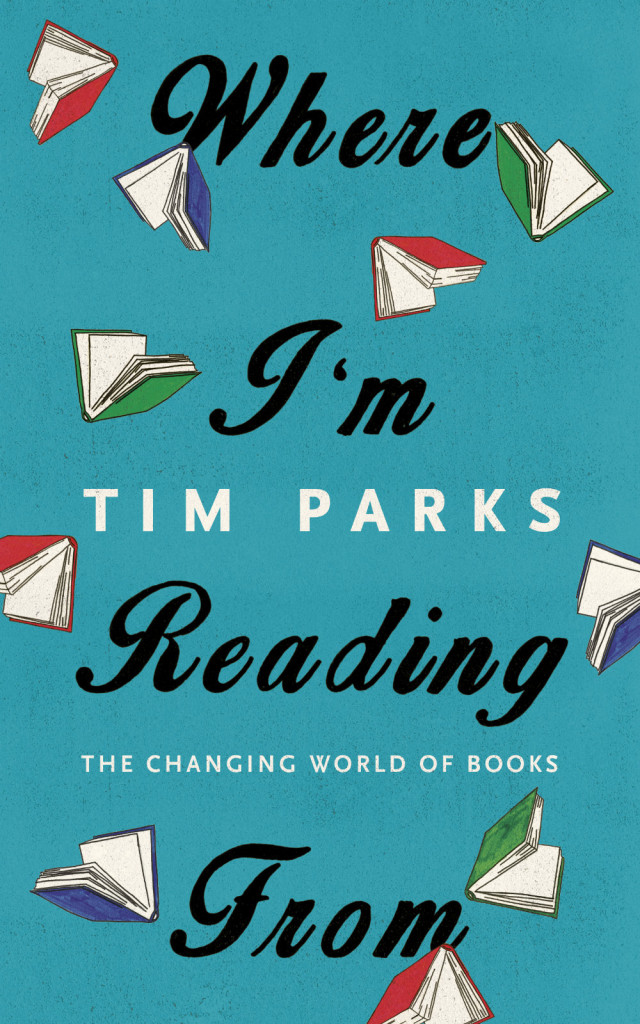
(Pictured above is the cover of the UK edition, published by Harvill Secker in December last year, of Where I’m Reading From designed by James Paul Jones. The US edition, which has a more utilitarian cover, was just published by New York Review of Books)

Comments closed
50 Watts

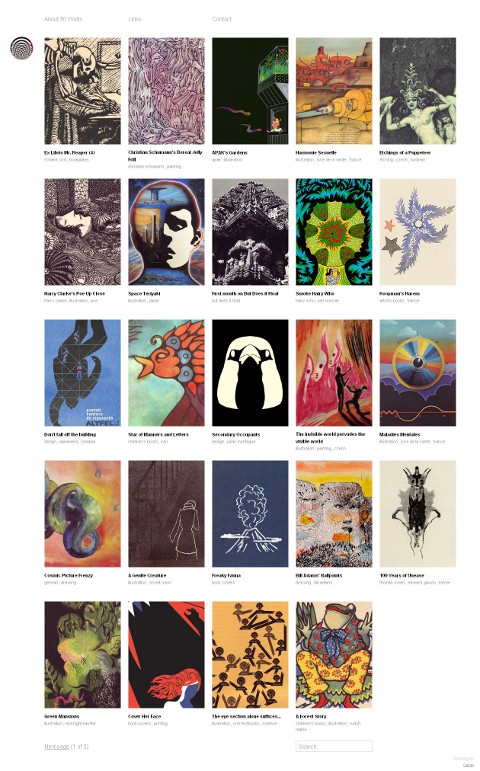
Will Schofield’s wonderful blog A Journal Round My Skull has been relaunched as 50 Watts using the Cargo platform:

The new name has something to do with Charlie Watts, Beckett’s Watt, Charles Wright & the Watts 103rd Street Rhythm Band, dim light bulbs, riots, cheap amps, chaos theory, and the friend who threatened violence if I didn’t drop my old moniker.

I didn’t threaten violence, but I certainly got the name wrong more times than I care to mention. 50 Watts looks great and I should be able to remember the name this time.

Make sure you update your bookmarks and RSS reader.

Comments closed

The Silver Lining

The Silver Lining blog is so good right now it’s giving me a headache: Art, books, ephemera, photography… All the good stuff, all in one place…

That is all. Carry on…

(pictured: De Sainte in New York, book cover by Dick Bruna seen at The Silver Lining)

2 Comments

Daily Discoveries on Design

Karen Horton is co-founder of the design community site design:related and Art Director at Little, Brown and Company. Her Tumblr blog Daily Discoveries on Design is currently one of my favourite RSS Feeds. It’s full of great design, art, books, photography and inspiration — so much so, that it makes feel like a total sloth for my inability to post here daily. If you’re not subscribing already, you really should be.

You can find Karen own work (also great) on design:related (where else?).

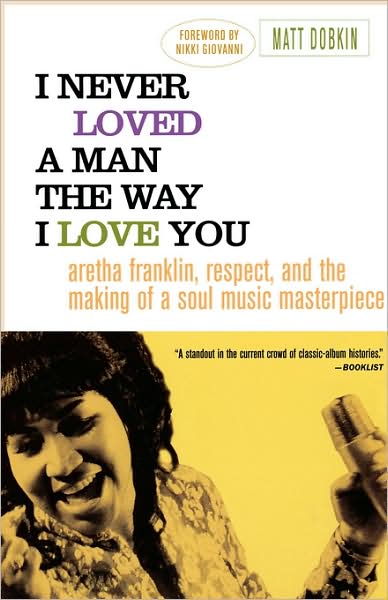
(pictured: I Never Loved a Man the Way I Love You, cover design by Karen Horton for St. Martin’s Press).

1 Comment

Monday Miscellany, Nov 10th, 2008

Think, study, then post: David D. Perlmutter, author of Blogwars, discusses slow blogging on the Oxford University Press blog:

“many of the bloggers I interviewed talked about the need to feed the blog that is, if you don’t put up 2 to 3 new posts a day you lose your audience. But fast anything, unless you’re competing in the Olympics, is not necessarily the road either to author or audience fulfillment.”

I love this idea, I’m just not very good at it or, perhaps, just a bit too good judging by the number of posts in my ‘drafts’ folder! Must try harder… (via the excellent ReadySteadyBlog by the way)

The business elite still love print according to a Folio magazine survey:

“Top American business executives spend a lot of time worrying about the volatile economic climate—and a lot of time consuming media, with a vast majority of them clinging to print.”

Ghosts in the House! Written and illustrated by Kazuno Kohara.

The Best Illustrated Children’s Books 2008:  a slide show of the New York Times picks (pictured).  The NYT‘s Children’s Books Special Issue is here.

A bitter-sweet love: writer Ellen Jordan discusses her coffee addiction in a essay in The Age:

“I wonder whether I’m afraid to write without coffee, afraid that every good sentence I’ve ever written came out of some mysterious alchemy of coffee and my mind. If I write with nothing, or with some pallid juice or herbal tea or decaf, will I discover that alone I have no talent?”

Comments closed

Generous Criticism

“Being generous in speaking of another’s work doesn’t mean “heaping praise”. It means delivering the critique from a place deeper than the insignificant nitpicking that comes so easily, deeper still from a place that harbors no envy, and even further down where the critique is offered in a genuine effort to improve the project, to the benefit of the discipline as a whole. Everyone wins.”

I came across Nam Henderson’s  Archinect op-ed on ‘Generous Criticism’ via Michael Surtees DesignNotes.

Design blogs, like DesignNotes, Design Observer, Ace Jet 170, Grain Edit,  and Swissmiss – to name just a few – are such an inspiration. The breadth of the design community’s interests, the generosity, willingness to share, and sheer enthusiasm for what they do is remarkable.

I wish I saw more of this kind of online dialogue about publishing.

The best lit-blogs, like ReadySteadyBlog, and Sarah Weinman’s blog, Confessions of an Idiosyncratic Mind, rightly save their enthusiasm for writing and writers. But blogs that concern themselves with the business of books lack that kind of energy.

Although there are notable exceptions –  James Bridle’s booktwo and Shelf Awareness come to mind – the book business seems to have very little to say for itself, and even less that is positive. We hear so little  about the agents, publishers, editors, designers, publicists, sales reps and booksellers who just nail it. Instead our conversations are dominated by  hell-in-a-handcart pessimists or told-you-so digital evangelists. We link to the same gossipy controversies and angry rants. We take cheap shots and wonder why we’re being marginalized by things that are more fun.

We seem short generosity and lacking in curiosity.

Publishing is not perfect, but we do some great stuff. Of course we should be critical, but we should do it to improve what we do, not to tear it down. To go back to Nam Henderson:

“we should, as a community of professionals, be able to expect respectful commentary, considered and generous… if something is bullshit, SAY SO… If someone is skating by on laziness, call them out and challenge them – positively – to make a better effort. And challenge yourself, in every critique, to be generous: reflect on what you’re seeing in the bigger context…, identify the elements that are good, apply the logic of the good parts to the overall scheme to see where improvements can be made. Think about how much effort you would want a critic to put into a comment made to you.”

I can’t say I am without fault. I’m as snarky as the next guy. But I hope — and strive — for something better.

2 Comments