Skip to content

Tag: Authors

Le Carré | Stuart Bache

I’m a big fan John Le Carré’s spy stories, so I was really pleased to see these wonderfully stark redesigns for Sceptre by British designer Stuart Bache, who I interviewed last year about his cover designs for the Canongate editions of Gil Scott-Heron.

You can see all 14 covers in the series here.

Comments closed

Too Much Information

That the reality of machines can outpace the imagination of magic, and in so short a time, does tend to lend weight to the claim that the technological shifts in communication we’re living with are unprecedented… The scale of the transformation is such that an ever-expanding literature has emerged to censure or celebrate it. A series of books explaining why books no longer matter is a paradox that Chesterton would have found implausible, yet there they are, and they come in the typical flavors: the eulogistic, the alarmed, the sober, and the gleeful.

The New Yorker‘s critic-at-large Adam Gopnik reviews the recent spate of books about the internet and our minds — including Cognitive Surplus by Clay Shirky, The Shallows by Nicholas Carr, and Hamlet’s Blackberry by William Powers — neatly dividing them into the categories “Never-Betters”, the “Better-Nevers”, and the “Ever-Wasers”:

The Never-Betters believe that we’re on the brink of a new utopia, where information will be free and democratic, news will be made from the bottom up, love will reign, and cookies will bake themselves. The Better-Nevers think that we would have been better off if the whole thing had never happened, that the world that is coming to an end is superior to the one that is taking its place, and that, at a minimum, books and magazines create private space for minds in ways that twenty-second bursts of information don’t. The Ever-Wasers insist that at any moment in modernity something like this is going on, and that a new way of organizing data and connecting users is always thrilling to some and chilling to others—that something like this is going on is exactly what makes it a modern moment. One’s hopes rest with the Never-Betters; one’s head with the Ever-Wasers; and one’s heart? Well, twenty or so books in, one’s heart tends to move toward the Better-Nevers, and then bounce back toward someplace that looks more like home.

It is an article unlikely to satisfy either the evangelists or doom-mongers, but it sounds about right to me in a smart-alecky sort of way…
Comments closed

Technologies That Changed Our Brains

I think what the book… gave us a more attentive way of thinking. What the book does as a technology is shield us from distraction. The only thing going on is the, you know, the progression of words and sentences across page after page and so suddenly we see this immersive kind of very attentive thinking whether you are paying attention to a story or to an argument, or whatever. And what we know about the brain is the brain adapts to these types of tools.

And so the ways of thinking that we learned from the tools we can then apply in other areas of our lives. So we become, after the arrival of the printing press in general, more attentive more attuned to contemplative ways of thinking. And that’s a very unnatural way of using our mind. You know, paying attention, filtering out distractions. So the book, I think, like the map before it, like the clock, created or help create a revolution in the human mind in the way our habits of mind and ultimately the way we use our brains.

Nicholas Carr, author of The Shallows, discusses how the map, the mechanical clock, and the printed book have shaped human thought, and how the human brain adapts to new technology at The Big Think:

1 Comment

Q & A with John Williams, The Second Pass

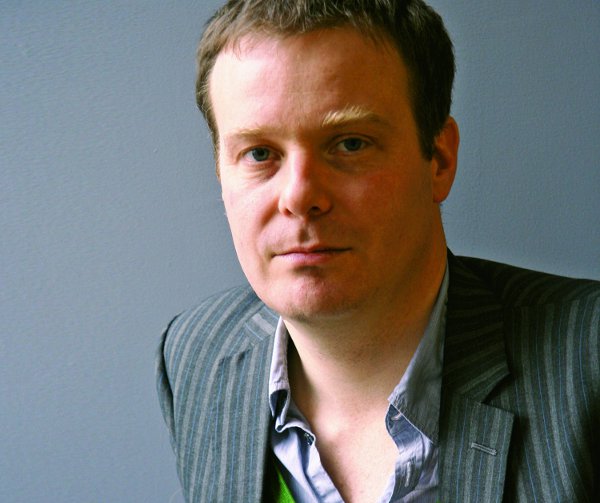
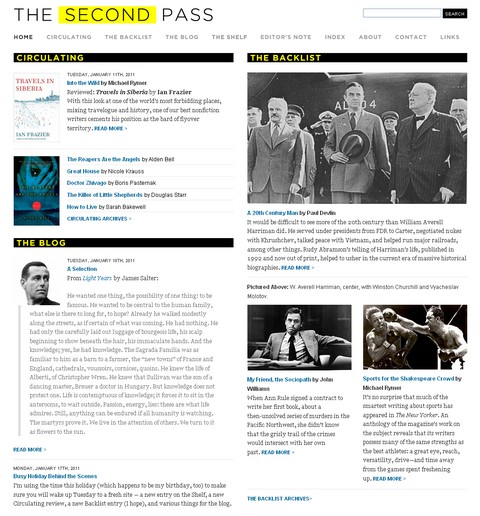
I feel a special admiration for The Second Pass. Launched almost two years ago — shortly after first tentative posts at The Casual Optimist — and with a list of whip-smart contributors, it seemed to signify a second wave online literary journals that built on the success of groundbreaking sites like  Bookslut and ReadySteadyBlog. Well-designed and appropriately eclectic, it had wider horizons than ailing newspaper review pages, and yet Brooklyn-based founder John Williams — who previously worked in publishing — seemed less prone to the snark so commonplace among some of the more established online literary set.

I was, needless to say, surprised when I first received an email from John. The idea that he had even heard of the less-than whip-smart The Casual Optimist seemed so… unlikely. And yet, John and I have remained in touch on and off for the past year and half, and I have even contributed to The Second Pass, so I thought it was high time I talked to him about the site and its recent book party in Brooklyn.

We corresponded by email…

For those people unfamiliar with the site, could you describe The Second Pass?

The site is an online magazine devoted to books new and old. It features reviews of new books, essays about older and more obscure books, and a blog about books of all stripes. That’s the basics. It’s a place where serious readers of all kinds can enjoy themselves and, from time to time, maybe learn about a book or author they might not otherwise learn about.

What makes The Second Pass unique?

Unique is a strong word. There are other sites and publications that pay attention to obscure books, but I think the site’s regular devotion to it — including out-of-print books — is rare, if not entirely unique. I also like to think the writing is generally at a level that separates it from many other online-only enterprises.

What lessons have you learned in the first 20 months of editing the site?

Plan ahead. And have contingency plans. I’ve learned those lessons, though I’m still learning to act on them.

Appearance and readability often seem to be an afterthought for websites about books, but that doesn’t seem to be the case with The Second Pass. Did a lot of planning go into the design of the site?

Yes, my friend Strath Shepard spent time coming up with several visual ideas for the site, and I chose from among them — any one of which I would have been thrilled with. I wanted to make sure the site looked good, because I think design is as important online as anywhere else. It should be strong and inviting without being an obstruction or a distraction, in my opinion.

Is it easier or more difficult for independent online literary journals to find an audience today?

Easier than it was in the past online? I’m not sure about that. My unscientific sense is that many more people are spending time online, but that the idea of a big audience for niche blogs or journals is more or less a dead dream. Reaching a certain core number of readers is easy enough online, if you’re patient and steady in your production, but I think the audience for serious books coverage is inherently limited in a way that can be hard to admit. I would rather try to reach the maximum of that particular audience (and I have no idea what that number would be; my site’s traffic is surely a tiny sliver of it) than start throwing too many things at the wall to try to reach a more general audience. I think the pressing need for lots of traffic is reflected at a place like The Huffington Post, where the books coverage is a hodgepodge of too-frequently-published pieces that don’t feel unified in any satisfying way. But those people who work for places where increasing traffic is paramount — to paraphrase David Letterman, I wouldn’t give their troubles to a monkey on a rock. I’m happy there’s no one above me worrying about traffic.

What other book sites do you read regularly?

Maud Newton, The Book Bench, Paris Review Daily, Bookslut, The Millions, John Self, Levi Stahl’s I’ve Been Reading Lately, the Barnes & Noble Review, Mark Athitakis, Novel Readings, and yours. Those might be the ones I check most regularly, off the top of my head, but I drop in on many more, most or all of them on the links page at The Second Pass.

Where does the name of your blog, A Special Way of Being Afraid, come from?

It comes from a Philip Larkin poem called “Aubade,” which is a terrifying and beautiful confrontation of the fear of death. It begins: “I work all day, and get half-drunk at night. / Waking at four to soundless dark, I stare.” And a bit later: “This is a special way of being afraid / No trick dispels. Religion used to try…” It’s always been one of my favorite poems, and I thought that phrase would make a good blog name, back in 2005, when I started it. I still like the name.

How has the experience as founder and editor of The Second Pass been different from blogging?

I started the older blog while working for a big publishing house, partly as a way to maintain the habit of writing and to develop my own voice while in a job that made it difficult to find time for those things. Especially in the beginning, I felt it was important to keep the blog regularly updated, for the exercise of it and for building readership, however modest. I feel that pressure more keenly with The Second Pass, since I have more ambitions for it. Ideally, I would update it far more often than I do. I also work with other people on The Second Pass. I wear all the hats, but I rely on reviews and essays from other writers, a social part of the experience that I really enjoy but that makes it different from the more dictatorial nature of the blog.

The blog is also more wide-ranging. I’m probably a reader first and foremost, but I’m also a longtime fan of music, movies, and sports, among other things. Not to mention the more personal things I might ruminate about over there. I still consider the blog a useful outlet for those things, though I’ve been terribly neglecting it for the past several months, if not longer.

The Second Pass held its first event in November. What made you decide to throw a party?

I had been meaning to have a party ever since last March, when the site celebrated its one-year anniversary, but was stymied by various obstacles that wouldn’t have stymied someone with more resolve. I thought it would be fun to have a party, and figured it couldn’t hurt the site’s visibility. Plus, I wanted to showcase some of the fantastic people who have written for the site.

Who read at the event?

Carlene Bauer, Will Blythe, and Maud Newton read from works of fiction in progress. Jason Zinoman read from his book about horror movies in the 1960s and ’70s, which is being published here next summer. And Lauren Kaminsky read an excerpt from a terrifically weird book called Listen, Little Man by Wilhelm Reich, a screed written by an Austrian psychoanalyst who worked with Freud and later seemed to have cracked up pretty good. I’m hoping Lauren will write about the book (and him) for the site at some point.

Do you think the evening was a success? And will you be organizing more events in future?

I thought it was a big success. I’m biased, of course, but the readers couldn’t have done a better job, there was plenty of wine and food, and everyone seemed to have a good time. Melville House, an independent publisher and bookstore in Brooklyn, was a gracious host. And yes, I’m certainly hoping to do it again, perhaps in Manhattan next time, when the site turns two (which happens March 10) or soon after.

Do you think interest in live book events will see the same kind of revival that live music events have in recent years?

I think live book events, at least in New York, have been thriving in recent years. My dirty little secret is that I find many traditional readings dull. Not all, but many. Lots of good writers just aren’t good readers, which is no knock on them. It’s not their job, and they’re very different skills. Only a few lucky people have both. I think it’s also asking a lot of a text to keep people interested for a long stretch of time while it’s read aloud. (I’m not a big fan of audio books for that reason, though this is probably saying much more about my aural attention span than about the worth of audio books.)

Who are some of your other favourite authors?

William Trevor, Richard Russo (especially pre-Pulitzer), Marilynne Robinson, David James Duncan, Dostoevsky, Lorrie Moore, Wilfrid Sheed, Nabokov, William James, Martin Amis (back when), Iris Murdoch, Richard Ford (the Bascombe books, particularly), to name a few.

What were your favourite books of 2010?

I recently finished The Killer of Little Shepherds by Douglas Starr, a nonfiction story set in late-19th-century France, which tells the parallel stories of a serial killer on the loose and a criminologist who was doing a lot to introduce the set of forensic techniques that we now, thanks to TV, simply refer to as “CSI.” It’s a gripping story, smartly told. I also enjoyed Brady Udall’s The Lonely Polygamist. He’s an old-fashioned storyteller, sweeping and just the right amount of sentimental, and this novel is about a Mormon with four wives and 28 children.

What books are you looking forward to reading in 2011?

I’m glad you asked this, because it reminded me that I’m behind in figuring out what the site will cover this year. I’m a fan of Jonathan Coe’s work, and his new novel, The Terrible Privacy of Maxwell Sim, is coming in March. Just today, I received a galley of House of Exile by Evelyn Juers, a biography of Heinrich Mann, his wife Nelly, and their circle of famous friends. I’ve been looking forward to its U.S. publication since I read a terrific review in the TLS. And of course, there’s David Foster Wallace’s novel in April. Though I’m skeptical of posthumous releases, including this one, I’m as curious as every other fan of his.

Thanks John!

Photo credit: Justin Lane

credit Justin LaneJ
Comments closed

Midweek Miscellany

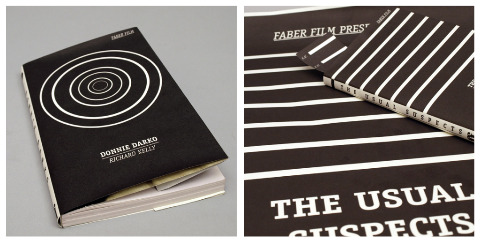
Another great set of designs for the 2009 D&AD student award brief for typography sponsored by Faber and Faber, this time by Rinse Design (via Cosa Visuales). See also: Ed Cornish’s designs for the brief.

Phaidon have relaunched their website and it is really rather nice (via FormFiftyFive).

The Imaginary PresentMike Doherty interviews William Gibson about his new novel Zero History for The National Post:

In his earlier books, Gibson says, he aimed to devise “futures that felt as though they were filled with designed artifacts, as indeed they would be. I can’t think of too many science fiction writers who’d bother trying to do that.” In the [new] series, his devotion to design has gone into overdrive, reflecting the idea that “everything is ‘designer,’ ” even though “with most things, you’ll never know the name of a designer.”

PopMatters also spoke to the author about the new book.

Code — Jennifer Egan, author of A Visit From the Goon Squad, reviews Tom McCarthy’s C for The New York Times:

[McCarthy] aligns disparate things into larger patterns full of recurring images: analogies between the human body and earth, and machinery; hums and whirs; film screens; bowels and tunnels; electric circuits; cauls and other silken membranes. These repetitions come to feel like the articulation of a larger code — as if, were readers to plot their exact positions throughout the novel, they would discover a hidden message.

What Ever Happened to Reading Properly? — ReadySteadyBlog’s Mark Thwaite on critics misreading of  Gabriel Josipovici’s What Ever Happened to Modernism?:

It’s interesting that Josipovici’s book which, in many ways, is both a call to read more carefully and an enquiry into why reading carefully is beyond so many cultural gatekeepers, has been read so sloppily by so many of its critics… Josipovici doesn’t invoke marginal or avant-garde writers, nor praise typographical or narrative playfulness over stale traditionalism, but rather brings us back to canonical writers (a good part of his essay is taken up with Wordsworth) and allows us to see what was at stake for those artists in their work, and what is at stake for us as readers.

And finally… It’s Vignelli week at Design Observer:

Debbie Millman’s 2007 interview with Massimo Vignelli (excerpted from her book How To Think Like a Graphic Designer):

I’m interested in “essence” — my major aim is really to get to the essence of the problem. And just throw away everything that’s not pertinent to it. At the end of a project, my work should be the projection of that experience, the essence of effect. It’s a habit that you get into… The essence is what is left when there’s nothing else that you can throw away.

Michel Bierut profiles Lella Vignelli:

Massimo has often defined their working relationship like this: “I’m the engine, and Lella is the brakes.” The first time I heard this as a young designer, it was clear to me which was more important. If you were a designer, wouldn’t you want to be the engine, powerful, propulsive, driving forward? It was only years later that I remembered something my high school driving instructor once said: “You don’t get killed in a car accident because the car won’t start. You get killed because the breaks fail.”

And, there is an interesting, beautifully shot, video interview with Massimo Vignelli by photographer John Madere here.

There will surely be more good stuff as the week progresses…

Comments closed

John Le Carré’s Final TV Interview?

John Le Carré talks to Jon Snow of Channel 4 News about his new book, Our Kind of Traitor, in what the author says is his final British television interview:

Snow blogged about the experience of interviewing Le Carré here.

(via PD Smith)

Comments closed

Tom McCarthy Podcast

Tom McCarthy reads from his his new novel C and discusses the book with Sarah Crown, online editor of The Guardian‘s book page:

Tom McCarthy Guardian Podcast

My interview with book designer Peter Mendelsund and Tom about C is here.

2 Comments

Midweek Miscellany

Killing Her Softly — Joseph O’Neil reviews Martin Stannard’s biography of Muriel Spark for The Atlantic (thx Ben):

In one of her memoirs, [Doris] Lessing suggests: “Writers, and particularly female writers, have to fight for the conditions they need to work.” This sounds like an understatement, particularly in relation to the last pre-feminist generation, to which she belonged. Dipping into it, we see that Penelope Fitzgerald, a mother of three, did not publish until the age of 58, that Iris Murdoch and Flannery O’Connor and Patricia Highsmith were childless. Spark may not have been alone in associating motherhood with artistic and personal annihilation. (Other patterns emerge. Highsmith, Lessing, and Spark all loved cats, and in fact Spark received a cat from Highsmith, with whom she also shared itinerancy and a gleefully vicious imagination. If you took scoops of the temperaments of Doris Lessing and Patricia Highsmith and added a dollop of Flannery O’Connor—for the cold Catholicism—the resulting gelato would taste a lot like Muriel Spark.)

Sensory Deprivation — The ubiquitous Jonathan Franzen, author of Freedom,  interviewed at the A.V. Club:

Where does this stuff come from? It comes from sensory deprivation. It comes from turning down all the volume knobs to the one setting—or somewhere between zero and one—on everything, so I can actually hear myself think and I can actually poke around inside myself. We’re all so used to cultural noise being played at full volume. It can come as a surprise, even to myself, how much you can know about what’s going on by listening to almost nothing. It’s important, because if you have it up at full volume, you can’t hear yourself think, and all you want to do is chase after the stuff that’s going on.

And if you think Mr Franzen might have got a little too big for his boots, then following Emperor Franzen on Twitter might be for you (“I was on the cover of TIME. That’s TIME magazine, bitches…”).

Fighting the Last War — John Le Carré talks to the BBC Radio 4 Today Programme about his new novel Our Kind of Traitor (released next month):

“I was laughed at, in a way, when the Cold War ended and the wall came down… ‘Poor old Le Carre, what will become of him? Nobody’s spying anymore.’ The reality is, the budgets have never been bigger, the recruitment has never been more wholesale.”

Boredom — Lee Rourke, author of The Canal, interviewed for 100th issue Bookslut:

We’re in constant thrall, either waiting to be used by technology or desperately trying to catch up with it. Boredom is the realization of an acute emptiness caused by this widening void… There’s nowhere for us to go now. We are stranded. We have been marooned. My novel, The Canal, is a summation of this sense of dread: this slow realization that things, everything, is speeding up and moving away from us. We have been left with the inability to deal with what this distance creates within us…

And finally…

Living in Conservative Times — Tom McCarthy reviews What Ever Happened to Modernism? by Gabriel Josipovici for The Guardian:

In cultural terms, we live in deeply conservative times… We shouldn’t imagine, though, that things were that different in the golden age of modernism. Ulysses was printed, in 1922, on a small, private press in Paris, in a run of 1,000; Kafka’s Metamorphosis, on its small-press publication in 1915, sold 11 copies – of which 10 were bought by Kafka. Yet can anyone, now, name the successful middlebrow writers of 1922 or 1915? Of course not.

(And, as this is a blog for people who like to live under rocks, Tom’s novel C was shortlisted for the 2010 Man Booker Prize yesterday.)

3 Comments

Midweek Miscellany

The Eyes Have It — An interview with gentleman book cover designer and advertising copywriter David Gee about his design for Jim Hanas’s e-book short story collection Why They Cried. You can find my interview with David here.

Writers on Process — Writers of every stripe talking about how they write (via Largehearted Boy).

In Their Own Words — A BBC archive of television and radio interviews with modern British novelists including Virginia Woolf, Daphne du Maurier, Anthony Burgess, J.G. Ballard,  and Muriel Spark. One could quibble about about selection of some of  contemporary novelists, but otherwise this is pretty amazing collection.

And speaking of archives…

Design is History is an expanding reference for graphic design history created by designer Dominic Flask.

And finally…

The only page of Jason’s silent and sadly aborted adaptation of Edgar Allan Poe’s The Black Cat.

e-book short story collection, Why They Cried

3 Comments

The Books That Made Me: China Miéville

China Miéville, author of one of my favourite novels this past year The City and the City, talks to Claire Armitstead about the six books that inspired him for a new Guardian Books podcast series ‘The Books That Made Me’. The books range from Beatrix Potter’s Tale of Jeremy Fisher to Max Ernst’s surrealist Une Semaine de Bonté:

The Books That Made Me: China Mieville

Miéville latest novel is Kraken.

4 Comments

Q & A with Peter Mendelsund and Tom McCarthy

In the early days of The Casual Optimist I scribbled out a short list of book designers I wanted to interview. More designers have been added since then, but a few of the original list remain un-interviewed. At the top of the list has been the name I actually wrote down first: Peter Mendelsund.

As Senior Designer at Knopf, Mendelsund’s designs feature here regularly. Much as I love his covers, however, Peter has been interviewed extensively elsewhere. I just haven’t known how to approach his work in a way that he would find interesting.

That was until I saw the shockingly subversive jacket design for Tom McCarthy‘s new novel “C”. The pairing of Mendelsund, the designer who is a musician, and McCarthy, the author who is an artist, was — it seemed to me — inspired.

A perfect opportunity…

What follows is primarily an interview with Peter about that design for “C”. But over the course of a few emails, Peter and I both decided to bring Tom into the conversation. I had met Tom shortly after the release of his debut novel Remainder and Peter had, it transpired, met Tom in New York after Knopf had signed “C”. It made sense to both of us.

It is a long, but absolutely fascinating exchange. Peter kindly answered my questions more fully than I had any right to expect and Tom, who was contributing from Stockholm, was more than gracious in less than ideal circumstances. I’m grateful to them both.

7 Comments

Paul Auster Granta Interview

“A lot of hesitation, stopping and starting, and re-thinking” — Author Paul Auster talks about his new book Invisible and his writing process with  Granta magazine’s US Editor John Freeman.

Comments closed