Skip to content

Tag: art

Corita Kent: The Pop Art Nun

I recently came across this short PBS Artbound documentary from 2021 on artist, educator, and social justice advocate Corita Kent (1918-1986), which is well worth 20 minutes of your time.

I don’t remember when I first came across Sister Corita’s work. It was probably not until I moved to Canada and became more interested in design and applying typography and lettering to art. Certainly, she was not someone I learnt about in school. It’s hard to know whether that is the result of a parochial British education, or more generalized misogyny and prejudice in art history, or a bit both. But, as the documentary makes clear, she remains a source of inspiration for artists, designers, and teachers 40 years after her death.

The ‘Ten Rules’ she helped create with the students of the Immaculate Heart College Art Department seem as relevant today as they must have at the time they were first written:
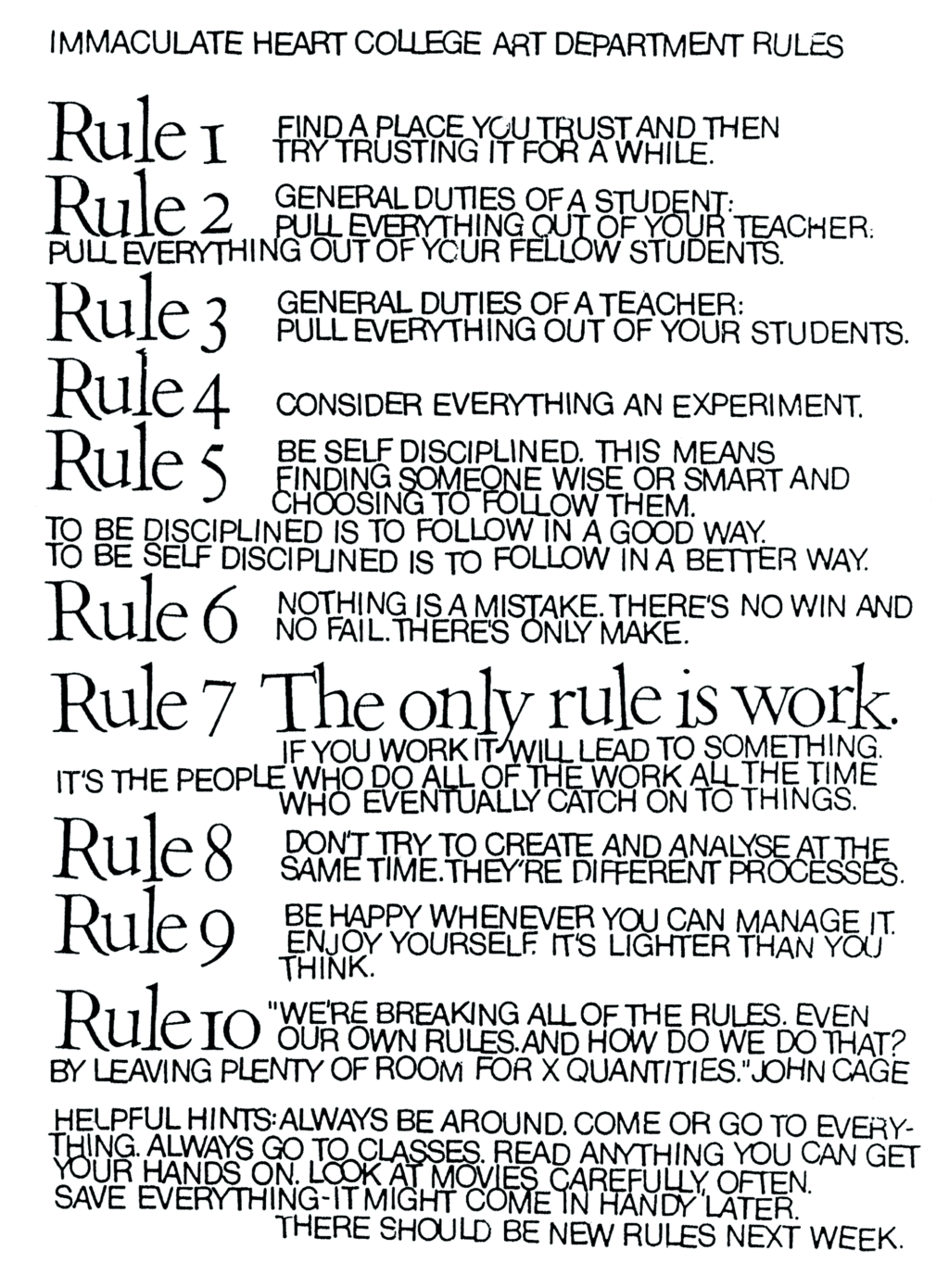
You can listen to former students, artists, community organizers, and others read and reflect on the Ten Rules here.

(Video via Letterform Archive!)

Comments closed

Tom Gauld’s Winter Sun

I love Tom Gauld‘s latest cover for the New Yorker so much. We just had sleet and freezing rain in Toronto so that part is accurate. But it’s not just the weather. Everything feels pretty bleak at the moment and, like many others, I have found myself seeking solace in art too.

(I also have a dog. I should post more dog cartoons)

Comments closed

Make Meatballs Sing: The Life and Art of Corita Kent

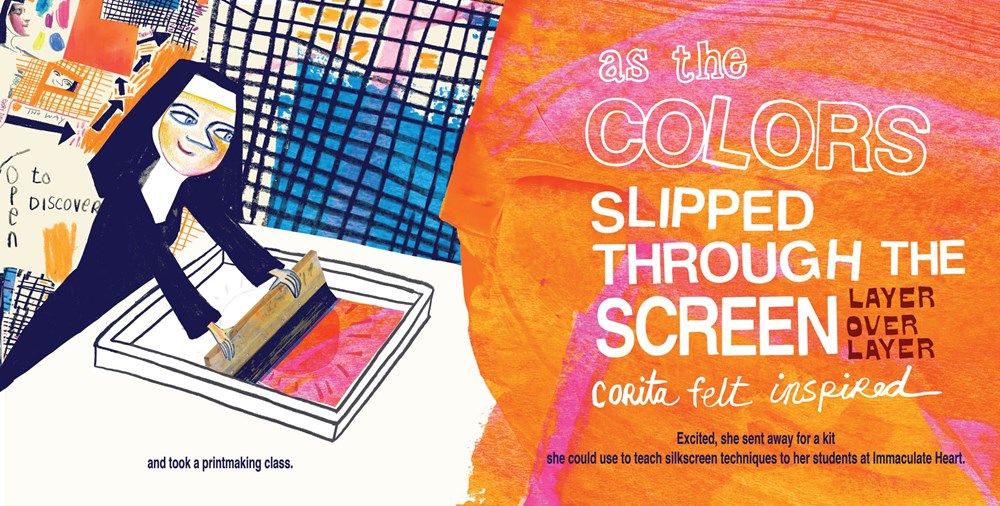
Available this month from Brooklyn-based independent children’s book publisher Enchanted Lion, Make Meatballs Sing by Matthew Burgess and illustrated by Kara Kramer is a new picture book about the life and work of the innovative and unconventional artist, educator and social justice advocate Corita Kent (1918–1986).

Matthew Burgess is the author of Enormous Smallness: A Story of E. E. Cummings, illustrated by Kris Di Giacomo, and last year’s Drawing on Walls: A Story of Keith Haring, illustrated by Josh Cochran, also available from Enchanted Lion.

Comments closed

The Lord of the Rings covers by Johan Egerkrans

I don’t post a lot of fantasy covers here (less than I should, no doubt), but I rather like the look of these reissues of The Lord of the Rings trilogy available in the US from HMH this month. The covers were designed by Christopher Moisan with illustrations by Swedish illustrator Johan Egerkrans. There’s something about the cover of The Return of the King in particular that reminds me of classic pen and ink fairy tale illustrations by likes of Arthur Rackham and John Bauer.

The Fellowship of the Ring, The Two Towers, and The Return of the King are available October 6, 2020.

1 Comment

Amy Sherald on Making Breonna Taylor’s Portrait

“She sees you seeing her. The hand on the hip is not passive, her gaze is not passive. She looks strong!…I wanted this image to stand as a piece of inspiration to keep fighting for justice for her. When I look at the dress, it…reminds me of Lady Justice.”

Artist Amy Sherald, who painted Michelle Obama for the National Portrait Gallery in 2018, talks about her portrait of Breonna Taylor for Vanity Fair‘s September issue, ‘The Great Fire’, guest-edited by Ta-Nehisi Coates.

Comments closed

Work in Progress with Stanley Donwood

Artist Stanley Donwood talks about his artwork for Radiohead, his collaboration with author Robert MacFarlane on Ness, and his own book Bad Island, published earlier this year by Hamish Hamilton (and slated to be published in the US by W.W. Norton this fall).

Comments closed

American Uprising

Inspired by Eugène Delacroix’s ‘Liberty Leading the People’, artist Kadir Nelson explains how he illustrated the July 2020 cover of Rolling Stone to accompany Jamil Smith’s cover story on Black Lives Matter.

Nelson also illustrated the cover of June 22 issue of The New Yorker. The magazine has an interactive version of the cover, entitled “Say Their Names”, on their site.

Comments closed

Coralie Bickford Smith: How To Become An Illustrator

In this really lovely video, designer, author and artist Coralie Bickford-Smith explains how to become an illustrator (even if you are shy!):

Coralie’s latest book, The Song of the Tree, was published in the UK last month.

Comments closed

Geoff McFetridge: AIGA Medalist

“Dude… it sounds like you’re making it up.”

Comments closed

Fight the Power with Joy

Theo Inglis, whose book Mid-Century Modern Graphic is published this month, has a lovely post on the AIGA Eye on Design blog about the work of artist, teacher, activist, and designer Corita Kent:

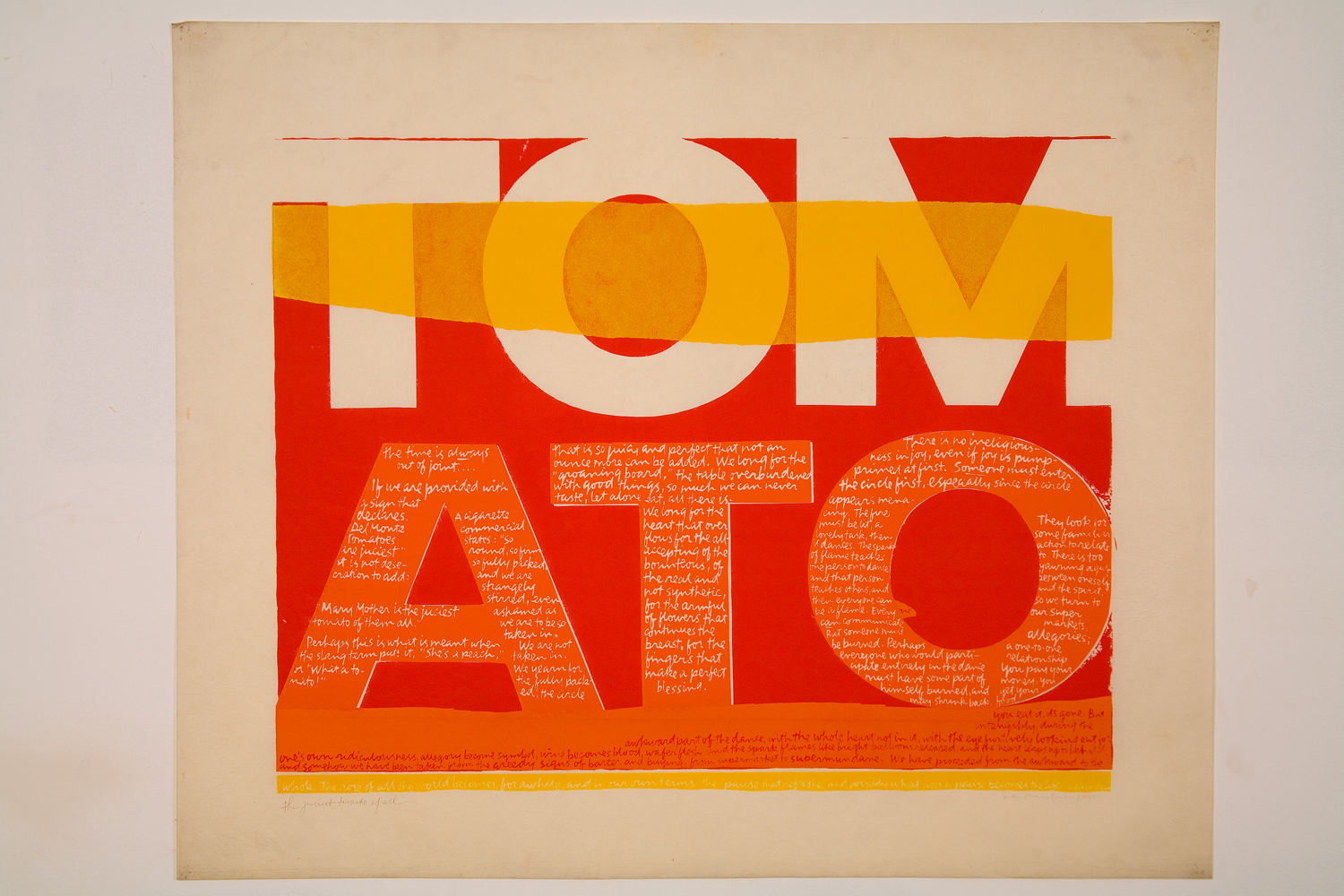
In 1962, Kent saw work by Andy Warhol for the first time, and her aesthetic changed markedly, becoming bolder, flatter, more abstract and brighter, often with saturated, almost fluorescent, colors. Her new style was so successful that it became became known as “nun art,” and was often imitated. Her adherence to the Pop Art aesthetic was well suited to her joyous aims: Kent said she wanted her art to “give people a lift” and help them get “more fun out of life.”

Pop Art’s celebration of the urban everyday also empowered Kent to introduce more quotidian sources into her text works. During the ’60s, she began to incorporate lyrics from pop songs, advertising slogans, and snippets of text seen on signs and packaging into her work, often pairing them with religious text. It was a move that elevated the ordinary to the spiritual, and became a frequent theme in Kent’s art and teaching. She found delight in the commonplace, and believed that the divine could be seen anywhere, even amidst the chaos of the modern city. Kent often took her students on urban expeditions—even day-long trips to gas stations and car lots—armed with cameras and viewfinders.

The largest ever exhibition of Corita Kent’s work in the UK, Corita Kent: Power Up, is currently on display at House of Illustration in King’s Cross until May 12.

Theo’s book is available May 7 from Pavilion Books. 

Comments closed

Race, Power, Money: Olivia Laing on Jean-Michel Basquiat

At The Guardian, Olivia Laing, the eminently readable author of To the River, The Trip to Echo Spring, and The Lonely City, on artist Jean-Michel Basquiat: 

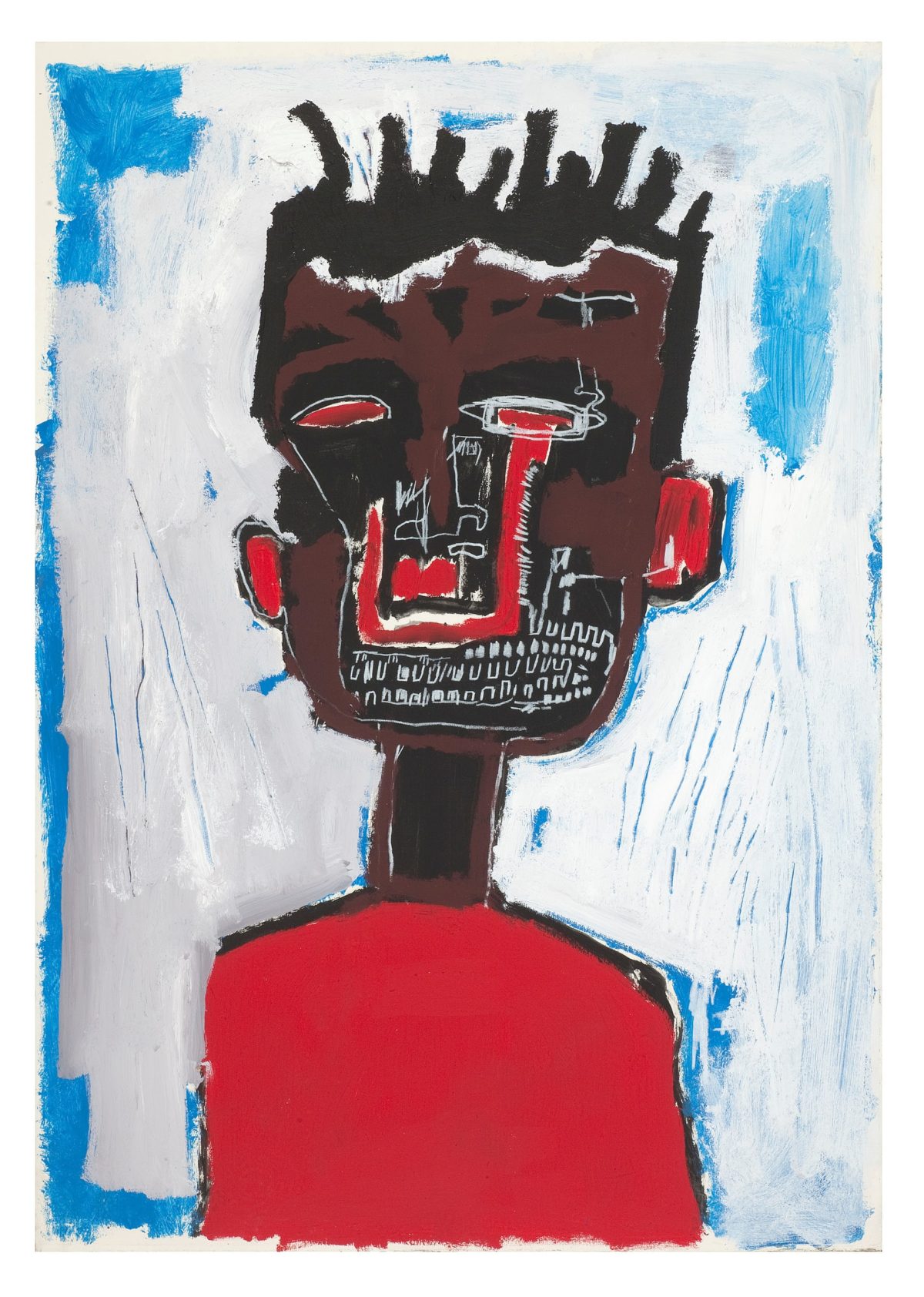
There is a graphomaniac quality to almost all of Basquiat’s work. He liked to scribble, to amend, to footnote, to second-guess and to correct himself. Words jumped out at him, from the back of cereal boxes or subway ads, and he stayed alert to their subversive properties, their double and hidden meaning. His notebooks, recently published in an exquisite facsimile by Princeton, are full of stray phrases, odd combinations. When he began painting, working up to it by way of hand-coloured collaged postcards, it was objects he went for first, drawing and writing on refrigerators, clothes, cabinets and doors, regardless of whether they belonged to him or not…

…A Basquiat alphabet: alchemy, an evil cat, black soap, corpus, cotton, crime, crimée, crown, famous, hotel, king, left paw, liberty, loin, milk, negro, nothing to be gained here, Olympics, Parker, police, PRKR, sangre, soap, sugar, teeth.

These were words he used often, names he returned to turning language into a spell to repel ghosts. The evident use of codes and symbols inspires a sort of interpretation-mania on the part of curators. But surely part of the point of the crossed-out lines and erasing hurricanes of colour is that Basquiat is attesting to the mutability of language, the way it twists and turns according to the power status of the speaker. Crimée is not the same as criminal, negro alters in different mouths, cotton might stand literally for slavery but also for fixed hierarchies of meaning and the way people get caged inside them.

Comments closed

Gerhard Steidl is Making Books an Art Form

Photograph by Mark Peckmezian for The New Yorker

Rebecca Mead’s long profile of publisher Gerhard Steidl for The New Yorker is a wonderful, fascinating read:

Each Steidl title is unique, printed with a bespoke combination of inks and papers. But to the informed eye, and the informed hand, a Steidl book is as distinctive as an Eggleston photograph. Unlike another German art publisher, Taschen—which is known for reproducing risqué images by the likes of Helmut Newton in enormous formats that would crush most coffee tables to splinters—Steidl produces books that invite holding and reading. Steidl dislikes the shiny paper that is often found in photography books, and prefers to use uncoated paper, even though it takes longer to dry and thus makes a printing cycle more expensive. He opts for understatement even with projects that would tempt other publishers to be ostentatious. “Exposed,” a collection of portraits of famous people by Bryan Adams, the rock star turned photographer, has no image on its cover. Bound in blue cloth, the book looks as if it might be found on a shelf in an academic library. Steidl wants his creations to satisfy all the senses. When he first opens a book, he holds it up close to his nose and smells it, like a sommelier assessing a glass of wine. High-quality papers and inks smell organic, he says, not chemical. To the uninitiated, a Steidl book smells rather like a just-opened box of children’s crayons.

I love this part about the attention to the detail:

Designing a book’s packaging is a process Steidl particularly relishes. “He wants to pick the cover, he wants to pick the endpapers,” [Robert] Polidori told me. “He treasures this limited one-on-one time with the artist. It’s almost a love act.” Sometimes Steidl indulges in a brightly colored ribbon for a bookmark, like statement socks worn with a formal suit. He pays attention to elements that barely register with most readers, such as the head and tail bands—colored silk placed where the pages attach to the spine. “It’s a tiny bit of fashion,” Steidl said. “With Karl [Lagerfeld], it is the buttons. With me, it is the head and tail bands.” For Gossage, he chose black bands and black endpaper, to contrast with the colored ink on the pages. The endpaper was made from cotton, and would cost thirty cents per book, as opposed to the seven cents it would cost if he used offset paper. “Using the cheaper one saves significant money for the shareholders,” he said. “But I am the only shareholder.”

Comments closed