Skip to content

Tag: amazon

“E” is for Experiment (Not E-books)

Guy LeCharles Gonzalez, Audience Development Director at F+W Media, had an interesting op-ed at Publishing Perspectives last week about e-books and e-readers:

[T]here is a lot of R&D money being poured into [e-readers] — that’s how technology companies work — and one or more of them may eventually click with consumers, but right now it’s a fledgling market and the hype surrounding it has reached irrational levels in publishing circles… There are many fundamental business issues that need to be addressed related to e-books — rights, royalties, pricing, distribution, marketing — and it’s up to publishers, agents and authors to figure them out together and not be distracted by every new shiny object the technology companies come up with.

Although clearly not a big advocate for e-readers, Guy raises a lot of the question marks that I think still hang over the devices in a fairly balanced way, and the article as a whole expresses a lot of the doubts I hear from other quietly skeptical people in publishing.

Needless to say, the whole thing is worth reading and Guy has more to say on the subject at his blog loudpoet.

1 Comment

Something for the Weekend

The Pox and the Covenant — A nice new entry in the “metacover” category from DWG‘s midfield general Jason Gabbert.

Book Publishers Have Reason to Resist Amazon — Columnist John Gapper in the Financial Times (via MobyLives):

The idea that book publishers are failing to act in their own interests because they somehow do not want to serve their customers, or because they do not “get” electronic distribution ignores the business reality they face… In any case, why is it illogical for publishers to defend their own business interests against those of Amazon, which is a public company trying to extend leverage over them to benefit its own shareholders?

Not Saving The Newspaper Business Any Time SoonThe Awl does the math on McSweeney’s gorgeous newspaper project The San Francisco Panorama. Hint: it doesn’t quite add up. Although that’s probably wasn’t the point. (via Sarah Weinman. Who else?).

The 50 Best Comic Book Covers of 2009 at Complex — Something for everyone here, including the wonderful Gorey-esque cover pictured above by Skottie Young (via Veer).

The Tempest Wakens — a short web comic for Tor’s Cthulhu Christmas, by the awesome Teetering Bulb team Kurt Huggins and Zelda Devon.

Comments closed

A Question

I’ve been staying clear of the publishing shit-storm du jour — Random House’s claim to backlist e-book rights and Stephen Covey’s decision to sell exclusive digital rights to two of his bestselling books to Amazon rather than his traditional publisher Simon & Schuster — because I simply don’t know enough about rights. But, Peter Ginna, publisher and editorial director of Bloomsbury Press, (who should know a thing or two) has a couple of interesting related posts, ‘The E-Book Wars Have Really Begun’ Part 1 and 2, on the issues.

Leaving the specifics of Covey aside (because I just don’t think you can generalize from his position), Peter Ginna doesn’t seem to think Random House has much of a leg to stand on. Nor, for that matter, does Richard Curtis, or the Author’s Guild. And agents are understandably unhappy…

But my question (to someone who does know something about rights) is if e-books remain essentially shovelware and aren’t substantially transforming the original book as edited and designed by the publisher, don’t Random House kind of have a point?

[Before you yell at me — I’m just curious!]

5 Comments

E-Reading the Tea Leaves

While The Wall Street Journal recently suggested that e-readers are more eight-track than iPod and Forrester Research predicted that B&N will steal market share from Amazon and Sony in 2010, Joe Wikert, General Manager & Publisher at O’Reilly Media, made the even bolder prediction that Amazon — in the face of stiff competition from other e-readers and multi-use devices like the iPhone — “will completely exit the Kindle hardware space within the next 3 years”.

Although predicting the future is a mug’s game (and Amazon are particularly adept at being at least 2 or 3 steps ahead of the pundits), I think that Joe — an early Kindle advocate — might actually be onto something and Amazon really might be prepared to let the device, if not the format or apps, die quietly.

Does this mean that Amazon made a mistake in launching their own e-reader?

I don’t think so.

If publishers had rushed to embrace the Kindle, Amazon would have completely pwned the distribution of e-books (and had publishers even further over the proverbial barrel).

But even though this hasn’t quite worked out, Amazon are still sitting pretty. The Kindle has undoubtedly increased the popularity of e-books and Amazon — the best known and largest online bookstore — is the natural beneficiary. Even if manufacturing the hardware becomes too much like hard work, Amazon will still sell a lot of e-books and the Kindle will surely have served its purpose as a beachhead…

Kindle and Shortcovers

And on the subject of the Kindle, it’s been interesting to see Indigo, Canada’s biggest book retailer, respond to Amazon launching their e-reader north of the border.

Joel Silver, President of Indigo, — who apparently reads on his Blackberry — discussed e-readers and e-books on Business News Network last week (there’s also an interesting follow up interview with the estimable Jason Epstein) and Michael Serbinis, President of Indigo’s e-book initiative Shortcovers, took a few (slightly uncharitable) pot-shots at the Kindle in a recent interview with The National Post.

But, as Shortcovers clearly demonstrates, Indigo have been preparing for the arrival of the Kindle for a while, and — if you have a spare hour — it worth listening to Michael Tamblyn, their VP of Content, Sales & Merchandising, re-enact his Tools of Change presentation Your Reading Life, Always With You to see where they are going…

So what do you think is the future of e-readers? Any thoughts?

Comments closed

Midweek Miscellany, November 11th 2009

The Nabokov Collection — Art Director John Gall on the Vintage Nabokov redesign at Design Observer:

Nabokov was a passionate butterfly collector, a theme that has cropped up on some of his past covers. My idea was also a play on this concept. Each cover consists of a photograph of a specimen box, the kind used by collectors like Nabokov to display insects. Each box would be filled with paper, ephemera, and insect pins, selected to somehow evoke the book’s content. And to make it more interesting… I thought it would be fun to ask a group of talented designers to help create the boxes.

John’s short essay is accompanied by a great slide show of the specimen boxes (above: The Luzhin Defense by Paul Sahre; below Speak, Memory by Michael Bierut).

And Joseph at The BDR has a nice follow up post, with a couple of nice vintage Nabokov covers.

So, do the specimen boxes (lovely as they are) work as covers? You tell me…

Amazon releases a Kindle app for PCs. But who cares? Hmm… I don’t know if I ‘care’ as such, but I do think it’s significant. Is it one more nail in the plastic coffin of single use devices? There’s more on the app at the Washington Post

And while we’re on the subject of e-books…

The Internet Isn’t Killing Anything — From Russell Davies:

Something That’s Growing Is Not The Same As Something That’s Big.

Something That’s Declining Is Not The Same As Something That’s Small.

…Worth remembering I think.

Best Illustrated Children’s Books of 2009 — The New York Times choose their favourites (accompanied with a lovely slide show). The New Yorker‘s Adam Gopnik talks about the selection process with Sam Tanenhaus on the Book Review Podcast (pictured above: Tales From Outer Surburbia written and illustrated by the awesome Shaun Tan).

And finally…

A sneak peak at the new Krazy & Ignatz cover by Chris Ware for Fantagraphics.

1 Comment

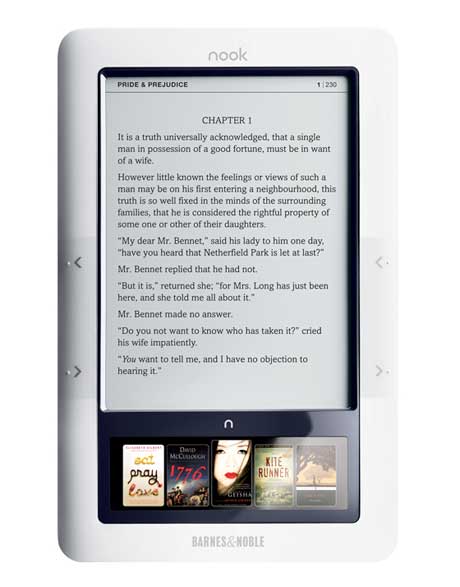
The World’s Most Advanced E-Reader or the Worst Product Name Ever?

Despite being lumbered with “the worst product name in recorded history”, Barnes & Noble‘s new dual screen e-reader the ‘Nook’ is getting a lot of favourable reviews.

An appallingly kept secret, the Nook was officially unveiled earlier this week and is being widely touted as a ‘Kindle Killer’ (whatever that actually means).

Direct comparisons with Amazon’s e-reader are inevitable of course — especially given the Nook will go on sale for $259, the same price as the Kindle 2.  And, if nothing else, US publishers seem relieved that Amazon finally has some serious competition from the country’s largest bookstore chain.

As reported in Publishers Weekly and the New York Times, part of what is attractive to publishers (aside from the simple fact it is not owned by the Amazon) is that the Nook is relatively flexible and supports formats, including ePub. and — perhaps more crucially in the short term — PDFs, that can be read on other devices.

Of course, that B&N has 1,300 stores and already understands books (and the publishers that publish them) doesn’t hurt.

Much is also being made of the Nook’s promising ‘LendMe’ feature, which will let readers share their books (within limits) with others, even though some people aren’t entirely happy about it.

Unsurprisingly, B&N are describing the Nook as “The World’s Most Advanced eBook Reader”, although it is unclear whether the Nook will be available outside the US, which could be problematic in the long run (especially as Amazon and Sony both have global reach). The Guardian Technology Blog does point out, however, that the Nook’s 3G wireless is provided by AT&T, “one of the GSM [Global System for Mobile Communications] providers in the US, so from a technical standpoint, it should be easy to launch the reader internationally.”

But does B&N really have the will or the way to make the Nook available beyond its US home base? And could it do so successfully?

Ultimately perhaps, the real question though is whether there is actually a mass market — either in the US or internationally — for single purpose e-readers. Some smart people clearly think so, but given that non-proprietary formats like ePub can be read on more useful, convenient and competitively priced multi-purpose devices such as laptops and cellphones (and whatever else Apple are currently cooking up), and that books still look like the most robust, simple and elegant format — I’m not so sure…

Comments closed

Missed Things: Wednesday

Henry Sene Yee, Creative Director of Picador, discusses the elegantly understated cover design for Time by Eva Hoffman, the latest addition to Picador’s BIG IDEAS // small books series.

And I’ve mentioned this before but it bears repeating: Picador are putting their catalogues — and, therefore, their outstanding cover designs — on their Facebook page.

Logicomix by Apostolos Doxiadis and Christos H. Papadimitriou reviewed in The New York TimesThe Guardian, and FT. It sounds kind of awesome. The book also has a nice website with lots of content.

The Inevitable Frontier — Jennifer de Guzman, editor-in-chief at the independent comics publisher SLG Publishing, on digital comics in PW:

Right now, sales from digital comics aren’t going to mean we can pack up print publishing. Not even close. But despite being in the midst of it rather than a wide-eyed observer, I can see that in the near future digital comics are going to be playing a bigger role for all publishers than they do now. And it’s better to be so integrated in the change that you don’t notice that it’s happening than to find yourself left behind and marveling at “the things they can do now.”

“Issues” — A less than warm reception for the Kindle in Australia:

Jeremy Fisher, executive director of the Australian Society of Authors, said he was advising his 3000 members to resist publishing through the Kindle.

“As I understand at this point in time, Amazon asks for a very, very big discount from publishers for their works to be included in Kindle so that the return coming back to the publisher is smaller and the return coming back to the author is smaller,” he said.

“The person making the most money is Amazon.”

Hmm… Yes, well, moving swiftly on…

Jacket Whys — A really nice blog about children’s and YA book covers.

And on the subject of kids books…

Who The Wild Things Are –Artist Roger White looks at the inspiration Maurice Sendak’s Wild Things for the Boston Globe:

The Wild Things looked like nothing ever seen in a children’s book. Rendered in simple ink-hatch over watercolor sketches, they evoked a perfect mixture of proto-adult dread and anarchic, childlike glee – an eternal, platonic form of the kindly monster. From the moment they appeared in 1964, they seemed bracingly and completely original. But in fact Sendak’s monsters had a long series of ancestors and descendants…

But according to Bruce Handy, deputy editor at Vanity Fair, (and his children) kids don’t actually like Where the Wild Things Are… Umm… What?

Comments closed

Midweek Miscellany, July 29th, 2009

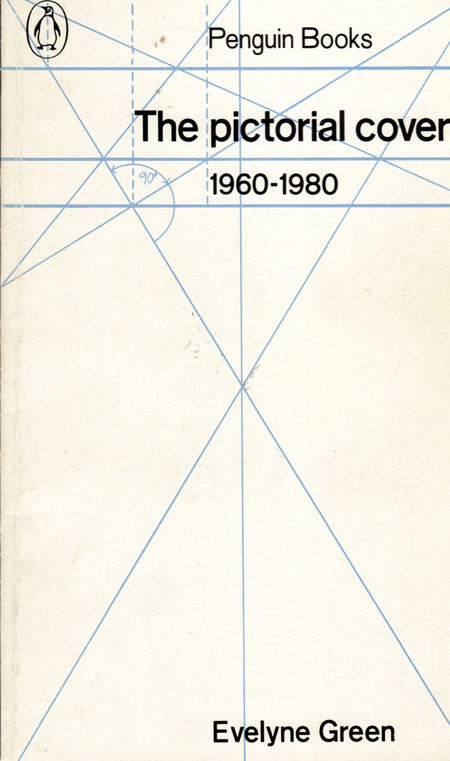
Geometric books covers at Design Daily.

The Debate That Will Not Die — Mike Shatkin weighs in on DRM and tries to find that elusive middle-ground. The discussion continues into the comments (of course)…

Unputdownable — A nice ad campaign by Saatchi & Saatchi for Penguin Books in Malaysia (via The 26th Story).

Great Ideas — The Caustic Cover Critic looks at the covers for all 20 of the new additions to Penguin’s Great Ideas series. Some fantastic typographic stuff here as you might imagine, although — to be honest — I think there are one or two weaker entries in this round and the purple motif works better for some books than others…

A New Page — (Much linked to elsewhere, but in case you missed it) Nicholson Baker’s meticulous vivisection (or “epic takedown” if you prefer) of the Kindle in The New Yorker:

The problem was not that the screen was in black-and-white; if it had really been black-and-white, that would have been fine. The problem was that the screen was gray. And it wasn’t just gray; it was a greenish, sickly gray. A postmortem gray. The resizable typeface, Monotype Caecilia, appeared as a darker gray. Dark gray on paler greenish gray was the palette of the Amazon Kindle.

This was what they were calling e-paper?

And if you can’t get enough of that Kindlenfreude feeling…

David L. Ulin, book editor  The LA Times, weighs in on Amazon’s troubling reach.

Niches — Richard Nash, formerly of Soft Skull Press, talks about his new community-based venture, tentatively called ‘Cursor’, in Publishers Weekly.

And finally…

A Journey Round My Skull has a nice post of vintage Swedish books covers from collected from the excellent  Martin Klasch. I particularly like this vampiric cover for Raymond Chandler’s The Big Sleep by Martin Gavler from 1963 (above).

Comments closed

More Knots

As has been widely, widely reported, Amazon remotely deleted copies of books by George Orwell from their customers’ Kindles last week after a rights issue with the publisher MobileReference.

Even if it was not actually a huge surprise that Amazon had the ability to claw back e-books it had sold (or — to be honest — that someone might publish something that didn’t belong to them on the Kindle), there has been a predictably hysterical reaction, fuelled — at least in part — by antipathy towards DRM and Amazon, and the delicious irony of the particular books involved.

Even Michael Bhaskar, who reignited the online DRM debate last week on The Digitalist by having the audacity to suggest that DRM might not be all bad (twice), is having second thoughts:

When I wrote the piece I was perhaps slightly self consciously swimming against the tide. However all that is made a mockery of when something like this happens – faith in the system is, well, annihilated and the issues of trust that came up are starkly thrown into relief.

Apparently the problem was a rights one and somewhere down the line the wrong books got into the system in the wrong way. Everyone was re-imbursed and the books are widely available. Does this make any difference to the body blow of seeing 1984 automatically deleted from people’s devices?

…Lets just say if this had come out last Monday, I don’t think the blog posts on DRM would have got written.

But — and perhaps I am alone on this —  I don’t think this debacle is really about DRM. I actually think it is about a publisher not knowing (or not caring) that Orwell isn’t in the public domain in the Kindle’s primary market, and a vendor — who is unable (or unwilling) to thoroughly vet submissions — making an awful customer service decision and overreacting to rectify an awkward situation (which perhaps they felt they were partially responsible for).

Of course, as Cory Doctorow rightly points out, DRM is a the ‘loaded gun’ that allowed Amazon to kill the books. In the traditional book world this would not have been possible, and it really does bring home some the scariness of ‘remote deletion’. And yet this really came about not because of DRM (the issue could have been resolved without deleting the books) but because of poor judgement (by a publisher and the vendor) and, perhaps, as Paul Biba at Teleread suggests, because Amazon still does not fully understand what they’ve got themselves into.

Comments closed

Something for the Weekend, June 26th, 2009

2009 Penguin Design Award — Peter Adlington’s abstract design for The Secret History by Donna Tart (pictured above) took 1st place. More on the Penguin Blog.

The Good Design Book — Christopher Simmons, graphic designer and principle at the San Francisco-based design firm MINE, records the progress and process of writing and designing his new book on design (via Unbeige). The whole concept reminded me that I should also mention the crowdsourced Smashing Magazine Book.

OK, Go — Kassia Krozser, Kirk Biglione, and Kat Meyer (and an unnamed “veteran of the book industry”), put their money where their collective mouth is, and launch digital publisher Quartet Press (and they’re accepting submissions).

The Debrief — Organizer Hugh McGuire pens his personal thoughts on BookCamp Toronto for Book Oven.

One of the most powerful things about BookCamp, compared with other events I’ve been to, is that this was not just a grassroots group. There was high-level engagement from the publishing industry, with publishers, editors, senior VPs, production managers, marketers, and interns, and everything in between. It was great to see the honest debate and conversation being lead by these insiders, who are truly grappling with the future of their business and their passion.

And VANTAP‘s Sean “Crazy Horse” Cranbury  adds his 2 cents on #bcto09 at the Books on The Radio blog, and teases BookCamp Vancouver.

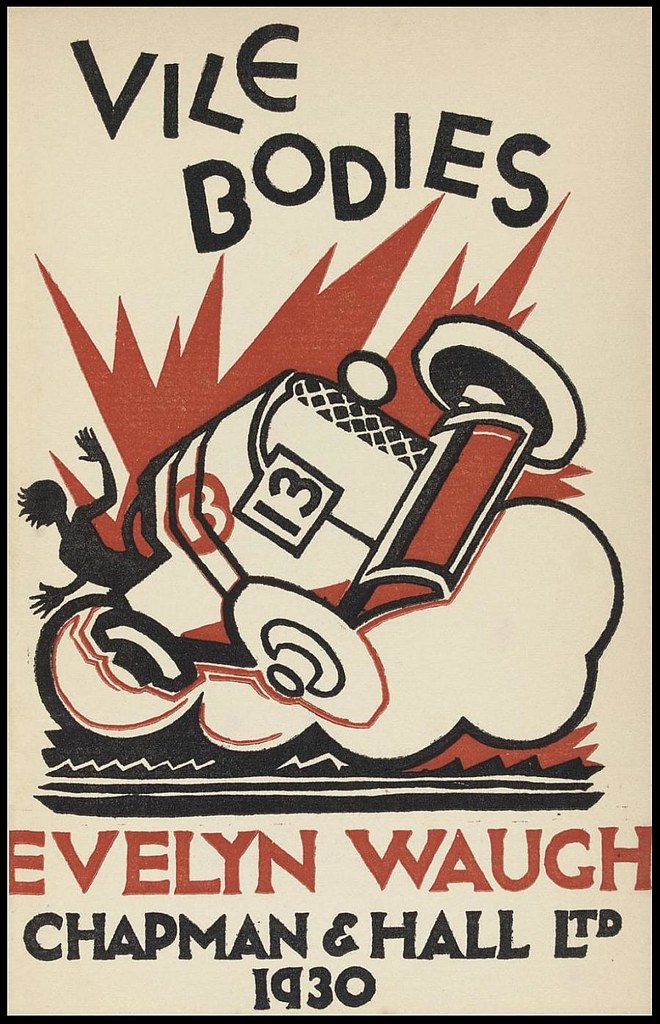
Vile Bodies — The 1930 first edition cover of Evelyn Waugh’s second novel seen at BibliOdyssey.

And last, but not least…

Apples and Oranges — The article about the evolution of Amazon by Adam L. Penenberg, author of the forthcoming Viral Loop: How Social Networks Unleash Revolutionary Business Growth, that launched a great Twitter chat with @FastCompany and yesterday’s ’26 Things…’ list (which could have easily been twice as long). 

Comments closed

26 Things Not Related To Amazon

Oh dear. I’m really not an Amazon-hater. But this morning I inadvisedly took Fast Company magazine to task on Twitter for only writing book industry stories about Amazon and the Kindle.

In their response, Fast Company rightly pointed out that the Fast Talk section of the April edition of the magazine  featured technology — aside from the Kindle —  that is changing book publishing. It included  (short) interviews with Josh Hug, CEO and co-founder of Shelfari (which is in fact owned by Amazon), Julia Cheiffetz, Senior Editor at HarperStudio, the team behind Scholastic’s 39 Clues, Steve Haber developer of the Sony e-reader, and Eileen Gittins, CEO of Blurb.

Funnily enough, I had actually bought April issue of Fast Company and completely forgotten about this (admittedly somewhat forgettable) feature. Suitably chastened, I apologised for my sweeping generalization.

I am grateful (and slightly amazed) that Fast Company took the time to reply to my glib missive and put me straight. However, I do think there is a tendency — not just isolated to Fast Company — to use Amazon as the only frame of reference in stories about the book trade.

With this in mind,  I challenged myself to pull together a quick list of current book-related things that I think are exciting that don’t (as far as know) have anything to do with Amazon (yet).

So here is a completely personal, off-the-cuff list of 26 book companies, ideas, projects, blogs, websites and trends that I think are inspiring, interesting, exciting, or worth watching (and are unconnected to Amazon):

(And yes, I realise there is a certain irony in writing a list that’s not about Amazon just to prove not everything has to do with Amazon)

  1. The Afterword
  2. Authonomy
  3. BookArmy
  4. BookCamp
  5. The Book Cover Archive
  6. The Book Depository
  7. Bookkake
  8. BookNet Canada
  9. Cell phone novels
  10. Drawn & Quarterly*
  11. Faber Finds
  12. FaceOut Books
  13. Gollancz’s collaboration with the D&AD Global Student Awards
  14. Google Books
  15. Gutenberg Rally beta
  16. Harlequin
  17. iPhones
  18. McNally Robinson
  19. Shortcovers
  20. Unbooks
  21. Twelve
  22. Twitter
  23. VANTAP
  24. Vromans
  25. We Tell Stories
  26. WW Norton’s Book Design Archive

Who or what would be on your list?

*Full disclosure: D+Q are distributed in Canada by Raincoast Books.

3 Comments

Something for the Weekend, June 5th, 2009

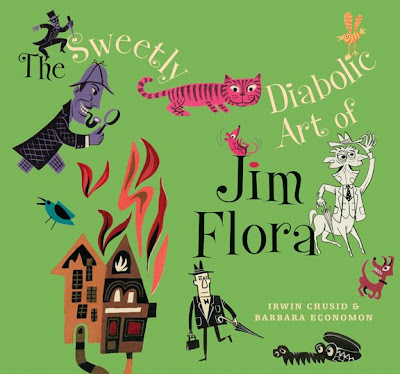
Sweetly Diabolic — A new Jim Flora compendium from Fantagraphics.

I really, truly, wasn’t going to link to any BEA autopsies — and there are plenty out there — but on the eve of BookCamp Toronto I thought Brian O’Leary’s post seem pertinent:

It would be more than nice, more than fun, more than illuminating, if we as an industry could use events like BEA as less an opportunity to predict the future and more a forum in which to examine the options. Okay, piracy is bad, but.. what if it helped sell books? Okay, we love long-form fiction and we think it should survive, but what if the people who read it now just stopped? Okay, a trade publisher provides value in choosing and curating content, but what if the world turned upside down and everyone were a writer, a publisher, a reader… Wouldn’t that be really cool?

Fingers crossed for tomorrow… Follow along on Twitter. The event account is @BookCampTO. The hash-tag is #bcto09.

Access of Evil — More on Google’s big e-book adventure at Business Week. The ‘news’ is that Google will be offering online access to e-books rather than downloads. Which, if I understand it correctly, is what Shortcovers does already. Not that anyone is giving them credit for it.

The ALPHABET chest of drawers by Kent and London, inspired by vintage printing blocks: “The perfect place to file everything from A-Z!” (via source of all good things swissmiss).

The George Orwell Archive at the BBC (via The Book Depository blog):

For two years, between 1941 and 1943, George Orwell – real name Eric Blair – was BBC staff member 9889, hired as a Talks Producer for the Eastern Service to write what was essentially propaganda for broadcast to India.

From recruitment to resignation, this collection of documents reveals the high regard in which Orwell was held by his colleagues and superiors and his own uncompromising integrity and honesty.

The Wickedest Man in the World — Jake Arnott, author of The Long Firm, on how the very real Aleister Crowley became the archetypal fictional 20th century villain. Sadly Arnott doesn’t mention that Oliver Haddo, W. Somerset Maugham’s literary Crowley, appears in the latest League of Extraordinary Gentlemen adventure.

The Future of Mainstream Media — a fascinating article about the success of National Public Radio (NPR) by Josh Catone for Mashable:

NPR’s amazing growth over the past 10 years prompted FastCompany magazine in March to call NPR the “most successful hybrid of old and new media,” and wonder if NPR could be the savior of the news industry. [T]hey owe that success to the culture of open access and audience participation that they’ve cultivated over the past decade.

And… OK I just can’t not link to Design Assembly‘s post about design-hero Wim Crouwel’s ISTD lecture.

Note: if you want me to link to your site, you just need to include a brilliant photograph of Wim Crouwel looking cool as f*ck and then use a genius soccer analogy:

“(For me) a grid is like a football pitch. You see a beautiful game of football, and then you see a not so beautiful one, but it all takes place on the same pitch”.

Yes. I am a cheap date.

4 Comments