Skip to content

Tag: alex ross

Something for the Weekend


Read This — Alex Ross, author of The Rest is Noise and Listen To This, on books about music at FiveBooks:

There’s a long list of bad examples of vague and gushy writing about music in literature, but there’s also a string of distinguished examples. I wrote a piece for The New Yorker a couple of years ago where I talked about my favourite composers in literature. It makes me very happy when I see a novelist going to the trouble of getting the musical details right, because this is part of the conversation on classical music that we very much need. To have plausible and vivid representations of composers and classical musicians in literature and in film is very important.

(Disclosure: the paperback editions of The Rest is Noise and Listen To This are published by Picador in the US and are distributed in Canada by my employer Raincoast Books)

Building from the Bones of a Superstore —  Businessweek on the decline of Borders and the opportunities for independent bookstores in the US:

Despite rising online book sales and digital downloads and the Great Recession, bookstores in the area were profitable—right up until they closed. Even Davis-Kidd, locally owned until the Joseph-Beth Booksellers chain purchased it in 1997, had been solvent, undone not by the collapse of the local market but by the bankruptcy of the parent company… Nashville lost its bookstores not because people there had abandoned physical books and retailers. For the most part, it lost them remotely, at the corporate level.

It’s Just a Device — Errol Morris talks to Stephen King about the Kennedy assassination and his new novel 11/22/63:

When you write about the past, the more you write, the clearer the past becomes. It’s like being regressed under hypnosis. My view of the past is that attitudes change, but they change very slowly. Underneath, they stay pretty much the same. “The fundamental things apply as time goes by.”

The Artist and The Scientist — Paola Antonelli, critic and curator at MoMA, on type design for Domus magazine:

Font designers who are able to marry critical and commercial success are a unique mixture of two basic clichés: the artist and the scientist. They are eclectic, curious, obsessive and absorbed, as well as rigorous, punctilious, enamoured of rules and limitations, and loyal to a higher code of design behaviour. They are an even more different breed among the many different breeds of designers working today. Contending now with the dynamic methods of communication provided by tablet computers, smartphones and other supports for text and brand, they deal with each family of fonts as if it were truly made of individuals, live characters that need to be able to fend for themselves once released into the wider world. In this vein, font design might just be the most advanced form of design existing today.

And finally…

Failure and Disappointment — Comedian Ricky Gervais on the difference between American and British humour:

Americans say, “have a nice day” whether they mean it or not. Brits are terrified to say this. We tell ourselves it’s because we don’t want to sound insincere but I think it might be for the opposite reason. We don’t want to celebrate anything too soon. Failure and disappointment lurk around every corner. This is due to our upbringing. Americans are brought up to believe they can be the next president of the United States. Brits are told, “it won’t happen for you.”

Have. A. Nice. Day.

Comments closed
Midweek Miscellany

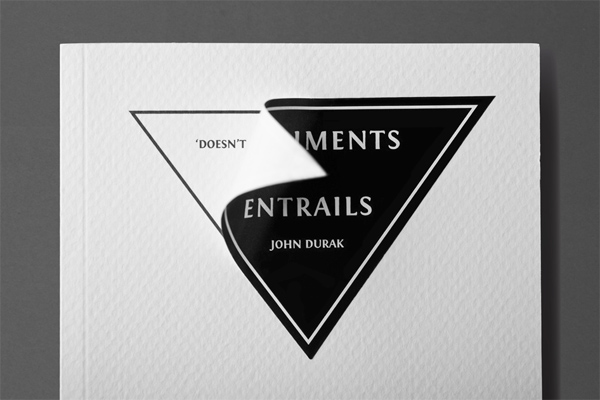
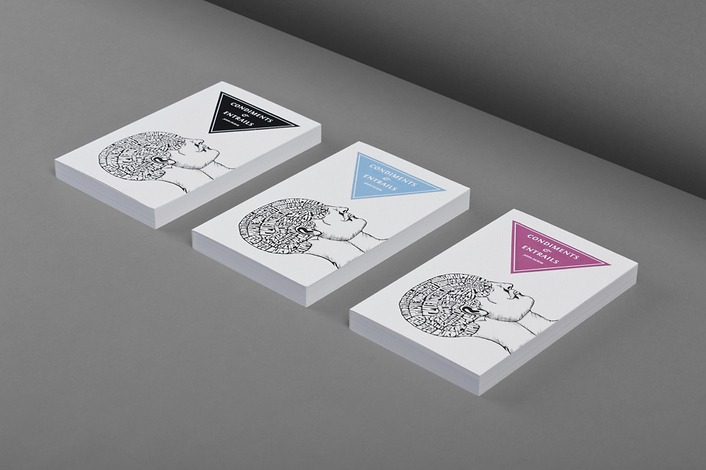
FPO: For Print Only features the fun cover for John Durak’s collection of poetry Condiments and Entrails designed by Bunch

The Oracle of Redirection — James Gleick, author of The Information, reviews four books about Google for the NYRB:

Google defines its mission as “to organize the world’s information,” not to possess it or accumulate it. Then again, a substantial portion of the world’s printed books have now been copied onto the company’s servers, where they share space with millions of hours of video and detailed multilevel imagery of the entire globe, from satellites and from its squadrons of roving street-level cameras. Not to mention the great and growing trove of information Google possesses regarding the interests and behavior of, approximately, everyone.

Glittering Delights  — Simon Schama talks to The Guardian about his recent book of essays Scribble, Scribble, Scribble:

I have this magpie instinct for the next glittering object. There are one or two things I know I can’t write about though: DIY, cricket, automobile repair. I could study it for a lifetime and not produce a word on the carburettor.

And finally…

Power, Corruption and Lies New Yorker critic Alex Ross, author of  The Rest is Noise and Listen To This, on Oscar Wilde, homosexuality, and a new “uncensored” edition of The Picture of Dorian Gray published by Harvard University Press:

[N]o work of mainstream English-language fiction had come so close to spelling out homosexual desire. The opening pages leave little doubt that Basil Hallward, the painter of Dorian’s portrait, is in love with his subject. Once Dorian discovers his godlike powers, he carries out various heinous acts, including murder; but to the Victorian sensibility his most unspeakable deed would have been his corruption of a series of young men… At the Wilde trials of 1895, the opposing attorneys read aloud from “Dorian Gray,” calling it a “sodomitical book.” Wilde went to prison not because he loved young men but because he flaunted that love, and “Dorian Gray” became the chief exhibit of his shamelessness.

Comments closed

Alex Ross | School of Life

In this short interview, Alex Ross, music critic of The New Yorker and author of The Rest is Noise and Listen to This, discusses music and music criticism:

Thanks to the chaps at We Made This for directing me to The School Life of video series.

Comments closed

Bring the Noise: Alex Ross Talks to Paul Morley

Paul Morley interviews fellow music critic Alex Ross, author of The Rest is Noise and Listen to This,  for The Guardian:

Morley’s post about critics, and meeting Alex Ross, is also worth reading:

I’ve always liked a critic who doesn’t think like anyone else. Someone who takes me so much by surprise with their opinions, approach and rigour that they themselves become a kind of artist. I like a critic who demonstrates that they deserve to evaluate and document the work and art of others by writing in such a way that the work makes more sense, sometimes only makes sense, because of what they write and why they write it. I loved critics, whether it was Kenneth Tynan, Susan Sontag, Tom Wolfe, Richard Meltzer, John Updike, Roland Barthes, Pauline Kael, Angela Carter or Lester Bangs, for the way they made it clear, with such evangelical poise, precision and purpose, that without the great critic, the world, and the worlds of those that made up the world, was never properly finished off.

Comments closed

Something for the Weekend

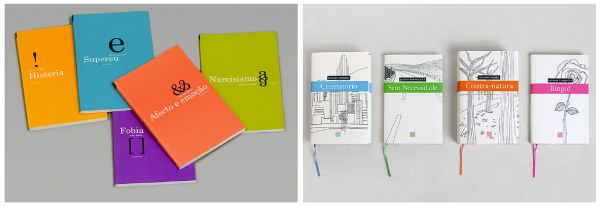
The stunningly beautiful book design work of FBA, a graphic design consultancy based in Coimbra, Portugal, seen at Cosa Visuales.

The Cosa Visuales post also introduced me to Spined, the design blog of Spanish graphic designer Álex Durana. Worth a look.

Wall of SoundAlex Ross, music critic for The New Yorker and author of The Rest is Noise and Listen to This, talks about his workspace at From The Desks Of…

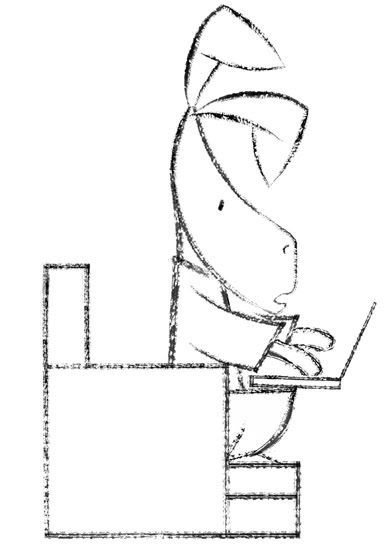
My study is stereotypically overstuffed with books and CDs. On the desk I keep well-thumbed reference works—the Chicago Manual of Style, Strunk’s Source Readings in Music History, and Paul Griffiths’s Penguin Companion to Classical Music—together with two books that my spirits when sagging: the Wallace Stevens collection Palm at the End of the Mind and William James’s The Varieties of Religious Experience. I leaf through Stevens in search of a fresh word or rhythm I can apply somewhere on the page: for me, he’s the supreme magician of the modern English language. I look to James for philosophical guidance—he shows the way out of ideological traps and abysses.

Also of interest: Designer Jarrod Taylor, shares an annotated photo of his desk in the art department of HarperCollins, New York.

But speaking of The New Yorker… James Surowiecki on what we can learn from procrastination:

The idea of the divided self, though discomfiting to some, can be liberating in practical terms, because it encourages you to stop thinking about procrastination as something you can beat by just trying harder. Instead, we should rely on what Joseph Heath and Joel Anderson, in their essay in “The Thief of Time,” call “the extended will”—external tools and techniques to help the parts of our selves that want to work. A classic illustration of the extended will at work is Ulysses’ decision to have his men bind him to the mast of his ship. Ulysses knows that when he hears the Sirens he will be too weak to resist steering the ship onto the rocks in pursuit of them, so he has his men bind him, thereby forcing him to adhere to his long-term aims. Similarly, Thomas Schelling once said that he would be willing to pay extra in advance for a hotel room without a television in it.

And finally…

Jackasses and pirate-loving Monkeys — Author and illustrator Lane Smith talks (apparently to himself) about the charming It’s a Book (via The Second Pass):

I like arranging and rearranging books on my bookshelves. In other words, I am a nerd.

Not to say that I’m not excited by the new technologies and reading devices introduced (it seems) nearly every month, I am. But I’m sure on some level I’ll always be a traditional book guy. Then again I’m the kind of guy who still watches silent movies and listens to vinyl.

Unlike Grandpa (me), today’s kids are whip smart and tech savvy. I know eventually everything will be digital and kids won’t even know from a regular old book book and that’s fine. Truthfully? The reason I made the book? Certainly not to “throw down the gauntlet” as one critic has stated. Naw, I just thought digital vs. traditional made for a funny premise.

Comments closed