Skip to content

Tag: 1984

1984

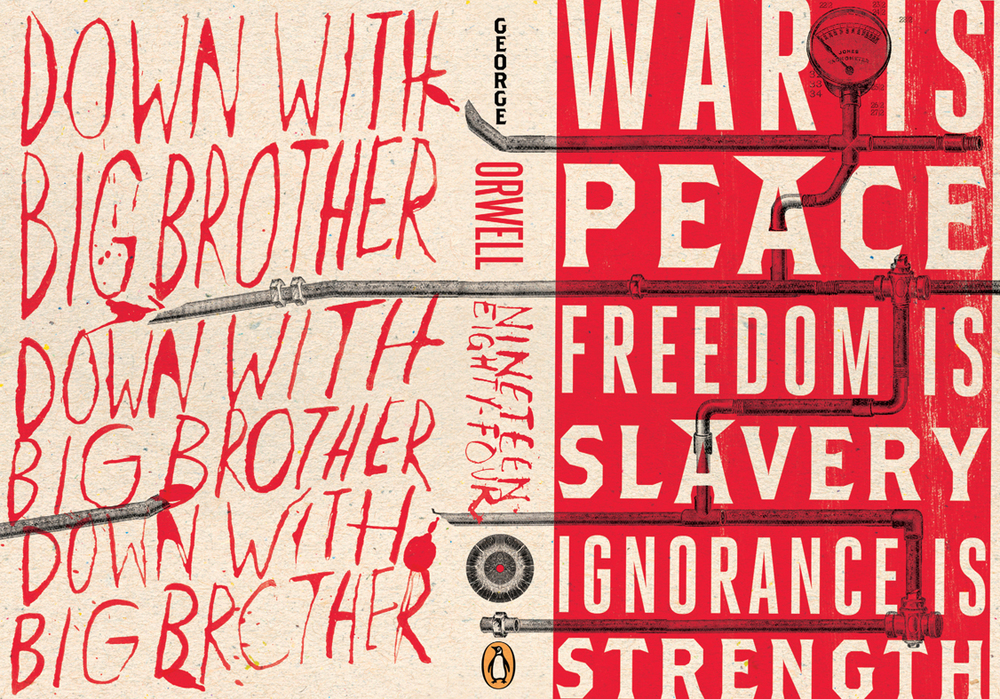
1984 by George Orwell; design by WH Chong (Text Publishing)

The dystopia described in George Orwell’s nearly 70-year-old novel “1984” suddenly feels all too familiar. A world in which Big Brother (or maybe the National Security Agency) is always listening in, and high-tech devices can eavesdrop in people’s homes. (Hey, Alexa, what’s up?) A world of endless war, where fear and hate are drummed up against foreigners, and movies show boatloads of refugees dying at sea. A world in which the government insists that reality is not “something objective, external, existing in its own right” — but rather, “whatever the Party holds to be truth is truth.”

“1984” shot to No. 1 on Amazon’s best-seller list this week, after Kellyanne Conway, an adviser to President Trump, described demonstrable falsehoods told by the White House press secretary Sean Spicer — regarding the size of inaugural crowds — as “alternative facts.” It was a phrase chillingly reminiscent, for many readers, of the Ministry of Truth’s efforts in “1984” at “reality control.” To Big Brother and the Party, Orwell wrote, “the very existence of external reality was tacitly denied by their philosophy. The heresy of heresies was common sense.” Regardless of the facts, “Big Brother is omnipotent” and “the Party is infallible.”

Michiko Kakutani, New York Times

As Nineteen Eighty-Four is suddenly more relevant than ever, I thought I would share a few of the recent covers for Orwell’s classic novel…

1984 by George Orwell; design by David Pearson (Penguin Classics)
1984 by George Orwell; design by Gray318 (Penguin)

1984 by George Orwell; illustration Daniel Mitchell (Penguin Random House Spain)
1984 by George Orwell; illustration by Marion Deuchars (Penguin Modern Classics)
1984 by George Orwell; design by Shepard Fairey (Penguin)


Save

2 Comments

Midweek Miscellany

WHAAM! — Comics historian Paul Gravett on Roy Lichtenstein’s appropriation from comics:

Lichtenstein’s… success, his getting away with turning supposedly anonymous ‘found’ comic art into high-priced paintings, continues to directly encourage others to do the same. But there is a difference—comics are no longer uncredited, trashy mass culture, and what worked as a lucrative schtick back in the Sixties art world is now largely drained and devoid of any shock value or irony… Five decades on… it is high time for the comics world and the art world to properly debate these issues, and to celebrate these hugely talented but still largely ignored visual storytellers.

(Pictured above: a page from ‘The Star Jockey’ drawn by Irv Novick, from All-American Men of War #89 February 1962)

See also: David Barsalou’s Deconstructing Lichtenstein project

(If Gravett underestimate’s Lichtenstein’s ingenuity in recontextualizing comic book panels, and his lasting influence on art AND comics, it is truly astonishing to see how poor Lichtenstein’s paintings are in direct comparison to the work he borrowed from.)

Blowing Shit Up — A long essay by Richard Nash on the business of literature at the VQR:

Selling a book, print or digital, turns out to be far from the only way to generate revenue from all the remarkable cultural activity that goes into the creation and dissemination of literature and ideas. Recall again all the schmoozing, learning, practice, hustling, reading upon reading upon reading that goes into the various editorial components of publishing; the pattern recognition; the storytelling that editors do, that sales reps do, that publicists do, that the bookstore staff does. Recall the average feted poet who makes more money at a weekend visiting-writer gig than her royalties are likely to earn her in an entire year. You begin to realize that the business of literature is the business of making culture, not just the business of manufacturing bound books. This, in turn, means that the increased difficulty of selling bound books in a traditional manner (and the lower price point in selling digital books) is not going to be a significant challenge over the long run, except to free the business of literature from the limitations imposed when one is producing things rather than ideas and stories. Book culture is not print fetishism; it is the swirl and gurgle of idea and style in the expression of stories and concepts—the conversation, polemic, narrative force that goes on within and between texts, within and between people as they write, revise, discover, and respond to those texts.

See Also: Book Publishers Scramble to Rewrite Their Future by Evan Hughes for Wired.

And finally…

The New Statesman has posted five classic book reviews from their archive, including V. S. Pritchett’s review of 1984 by George Orwell:

Nineteen Eighty-Four is a book that goes through the reader like an east wind, cracking the skin, opening the sores; hope has died in Mr Orwell’s wintry mind, and only pain is known. I do not think I have ever read a novel more frightening and depressing; and yet, such are the originality, the suspense, the speed of writing and withering indignation that it is impossible to put the book down. The faults of Orwell as a writer – monotony, nagging, the lonely schoolboy shambling down the one dispiriting track – are transformed now he rises to a large subject. He is the most devastating pamphleteer alive because he is the plainest and most individual…



Comments closed

David Pearson’s 1984

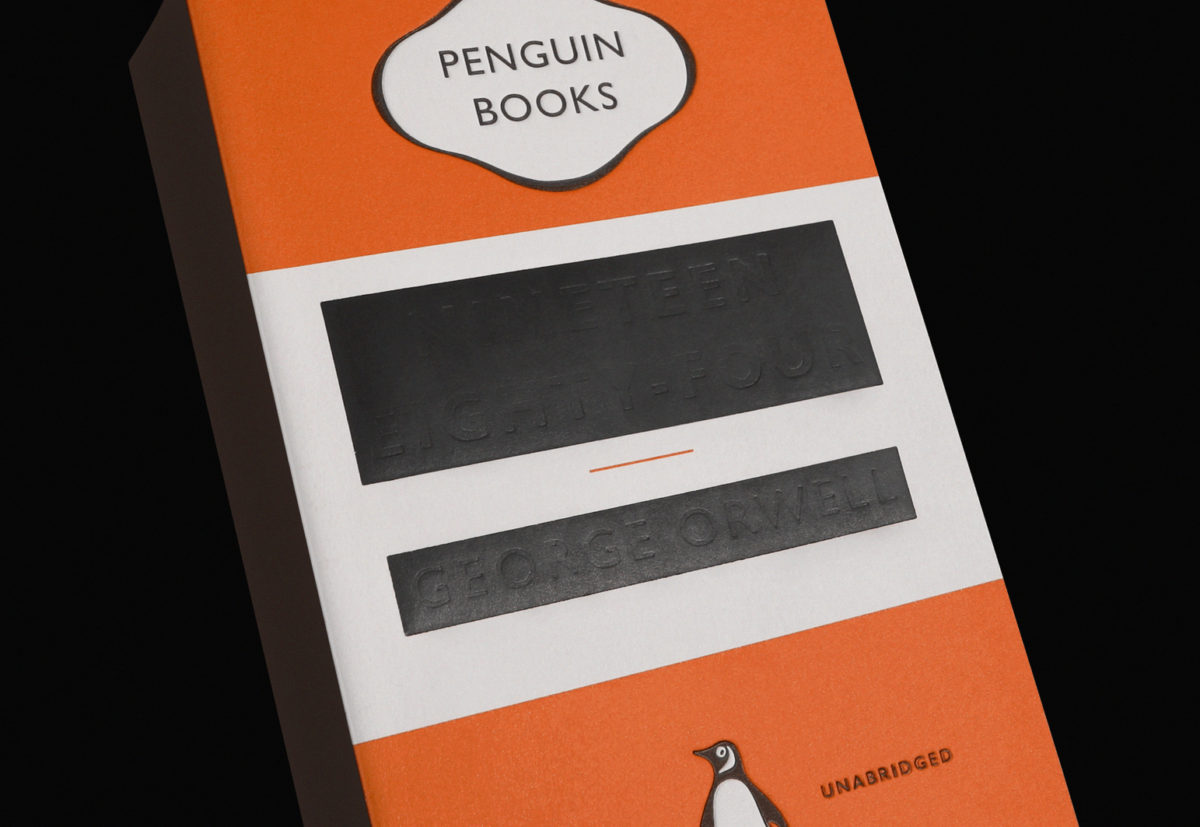
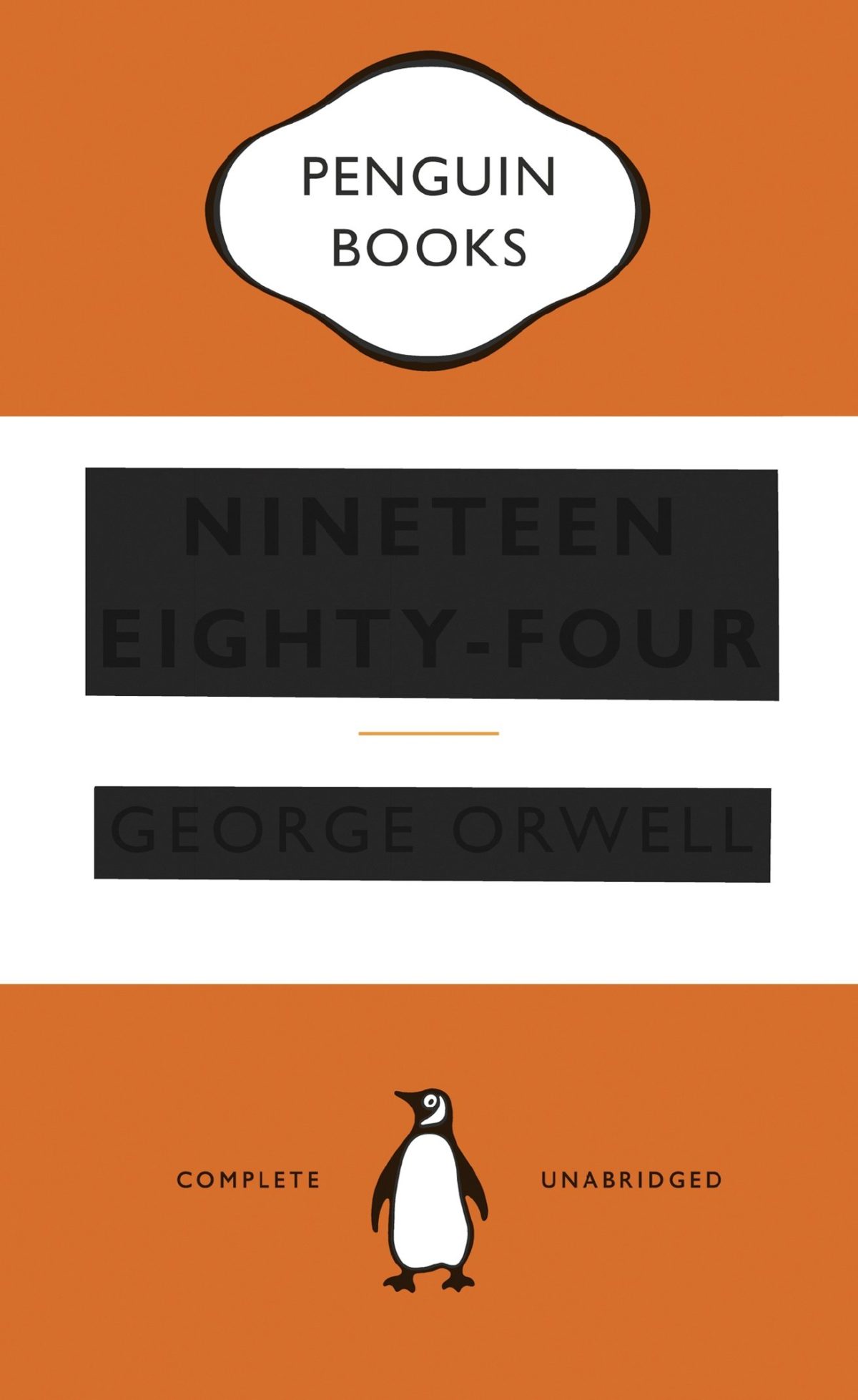
Although I’ve only just posted my favourite book covers of 2012, here’s an early contender for the 2013 list: George Orwell’s 1984 designed by David Pearson for Penguin UK.

According to David, his initial proposal was a die-cut version of the cover, but the final design (more effective in my opinion) uses matt black foil to obscure the lettering instead.

This new edition will be available on January 3rd.

14 Comments

Monday Miscellany, October 26th, 2009

The brilliant Helen Yentus has redesigned the covers of Chinua Achebe’s books for Anchor with illustrations and hand lettering by Edel Rodriguez who has some amazing sketches of her work on the series at her portfolio site.  (Covers first seen at wonderful Caustic Cover Critic blog, with additional details and links from estimable John Gall.)

Pixellated Penguin — Anna Rafferty, Managing Director of Penguin Digital (UK), profiled in The Marketer Magazine:

Although volume sales of books has dropped 9.2 per cent this year… and the onset of digital publishing means a reassessment of how content is provided, Rafferty says the recession has not affected the way she markets Penguin. “We’ve always been against paying for things. We are a content company with access to the words and opinions of the funniest, most intelligent and entertaining authors in the world.”

Difficult Women — Mary-Kay Wilmers, editor of the London Review of Books (which celebrates it’s 30th anniversary this year), profiled by Nicholas Wroe for The Guardian.

Anti-Ironic — Product designer Joey Roth (designer of the beautiful Sorapot teapot) interviewed at Boing Boing:

I see designers and companies whose work represents a disposable, ironic, trend-driven view of product design as my ideological enemies. Irony was the dominant approach a few years ago, and it’s still popular. I think it has no place in design, since physical resources are consumed when something is mass-produced, and a joke is only witty for so long. My desire to design objects that represent a more thoughtful, sustainable view grew partially from the ironic, anti-design trend I encountered as I was getting into design.

I sort of feel the same way about books…

All Cover Archive — Ben Pieratt has posted some of his early design’s for the Book Cover Archive logo at his new General Projects Blog.

Ben also had a nice post about books and logos at the BCA blog last week…

And speaking of the BCA blog, Ben recently posted about James Le Beau-Morley‘s cover design and layout concepts for 1984:

3 Comments