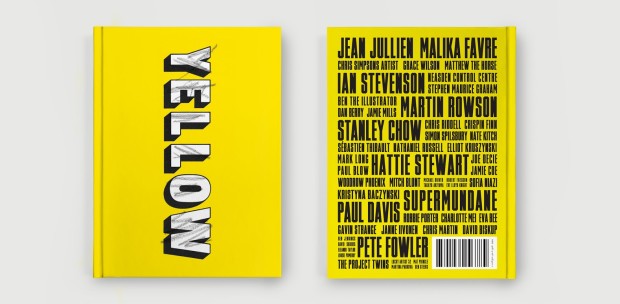
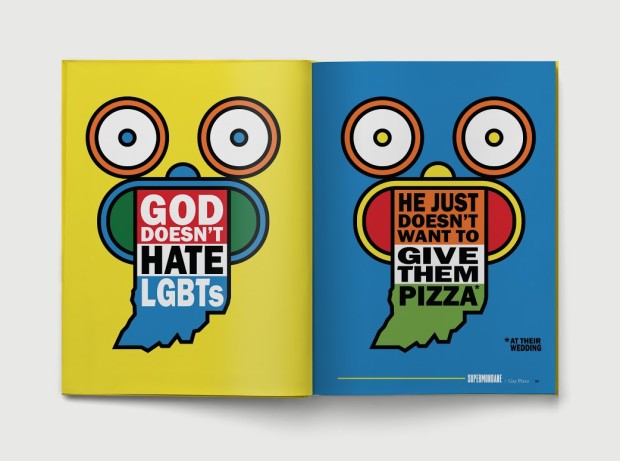
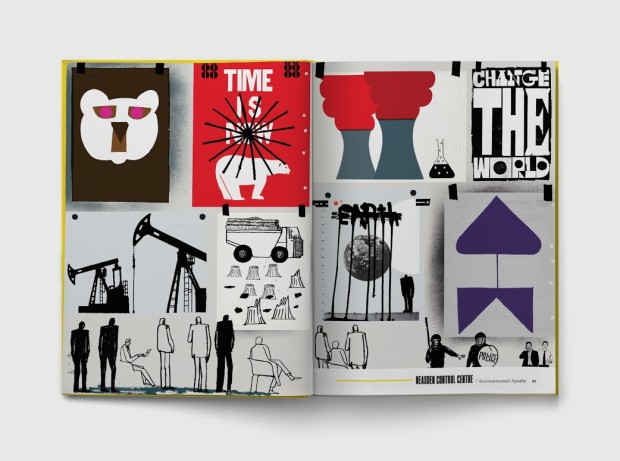
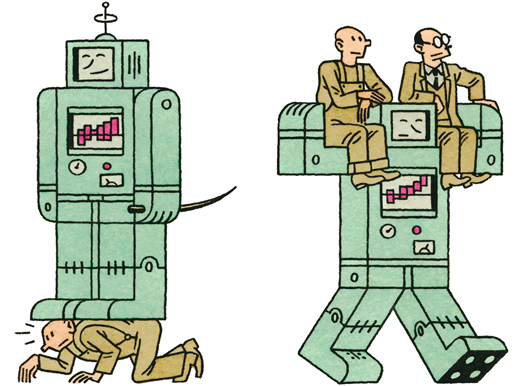
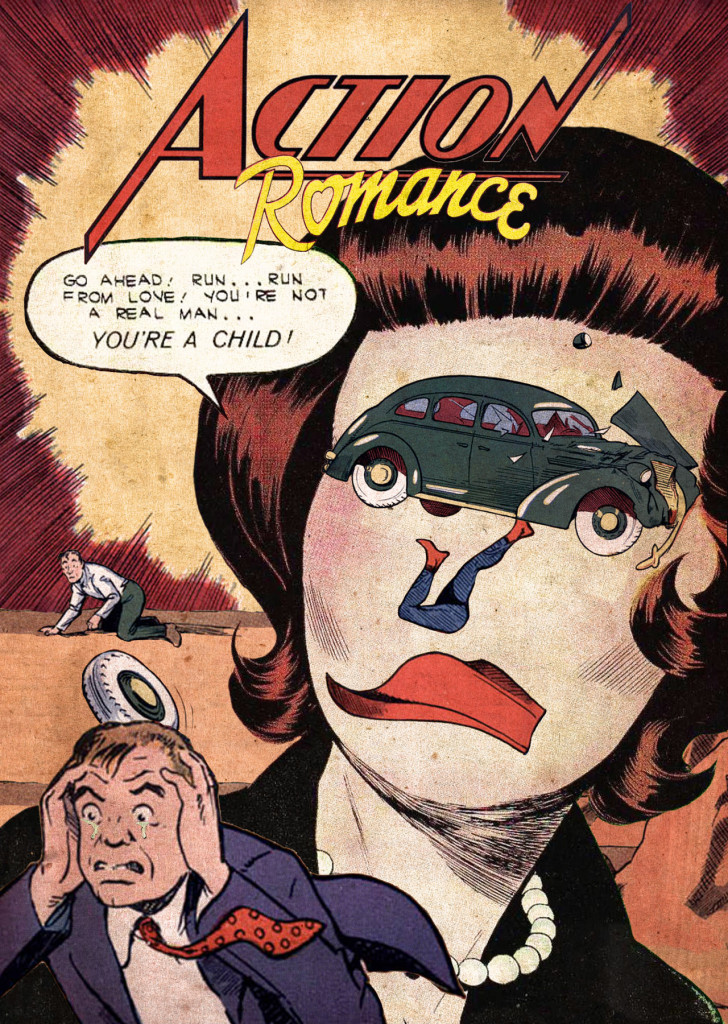
Back in November 2014, the team behind free bi-monthly comic anthology OFF LIFE asked 52 artists to illustrate 52 weeks of news. Now, with the 52 weeks nearly up, editor Daniel Humphry, art director Steve Leard, and production manager Sarah Hamilton are KickstartingYellow, a hardback collection of every piece from the year with additional interviews and commentary. Contributors include Jean Jullien, Hattie Stewart, Supermundane, Stanley Chow, and a whole host of other talented illustrators. OFF LIFE’s goal is £10,000. You can support the project here.
Supermundane for YellowNeasden Control Centre for Yellow
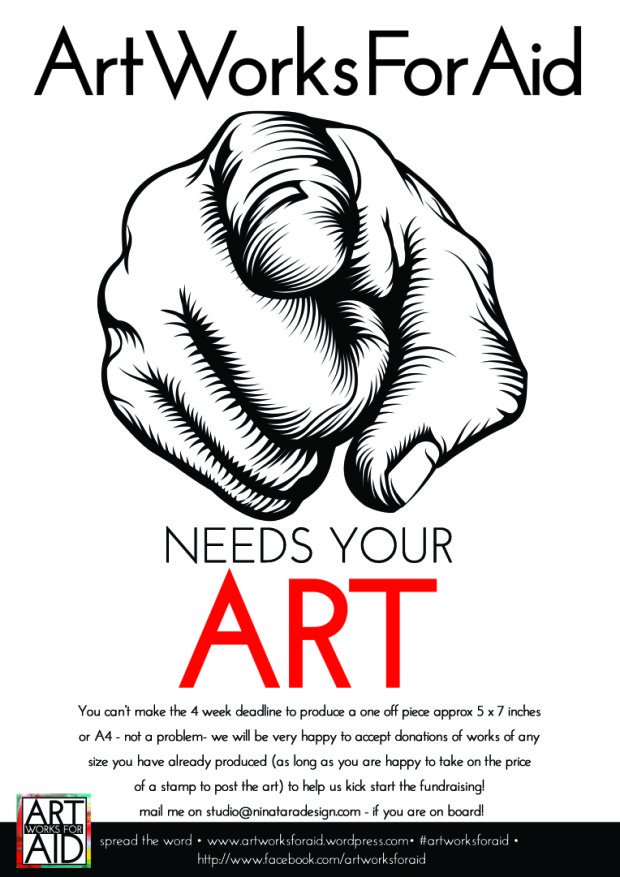
In response to the refugee crisis currently unfolding in Europe, designer and illustrator Nina Tara has set up Art Works For Aid.
Nina is asking artists, illustrators, designers and photographers to donate small works of art to be sold at auction to raise funds for organizations such as Human Relief Foundation helping refugees.
If you would like to help by buying an artwork, the first AforA auction is today. If you’re a ‘creative’ and you would like to donate a work of art just send an email to Nina.
You can find more information about the initiative on the AforA blog, and see images of some of the work that has already been donated on the AforA Facebook page.
Before turning his attention to graphics and advertising, Italian artist and designer Bruno Munari (1907-1998) made his mark as a member of the Futurists, an avant-garde art movement fascinated by modernity, mass production, and pushing at technological limits.
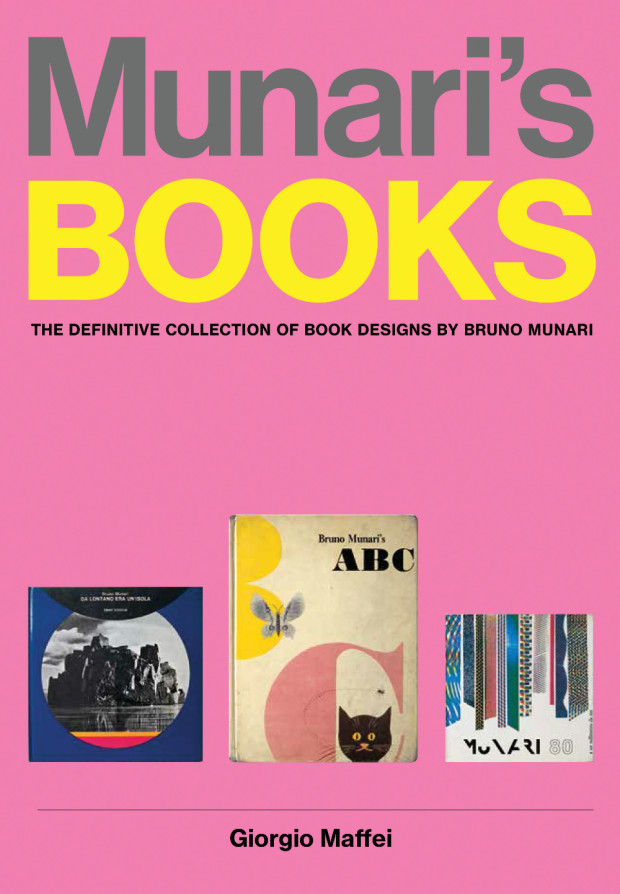
The influence of Futurism — not to mention modernism’s jokers Dada and Surrealism — is apparent throughout Munari’s Books, a collection of Munari’s book design recently published in English by Princeton Architectural Press. Munari relentlessly experimented with typography, photography, collage, and printing materials. There is a book made of metal, another that comes with a hammer. There is page after page of special papers, unique bindings, loose pages, punches, tears, and flaps. The breadth (and the volume!) of his work is staggering, and it all crackles with this restless sense of innovation, urgency, and provocation.
Bruno Munari’s ABC (image credit: Cleveland: World Publishing Company, 1960)
“A great children’s book, with beautiful expressive figures, the right story, printed simply, would not be accepted (by some parents), but children would love it.”1
But Munari’sdesigns and illustrations are also surprisingly full of warmth and wonder. This is most apparent in his expressive illustrations, and the large number of books Munari produced for very young children. Even readers familiar with Bruno Munari’s ABCand Bruno Munari’s Zoo, may find themselves astonished at just how many other extraordinary children’s books he created that aren’t currently available in English.
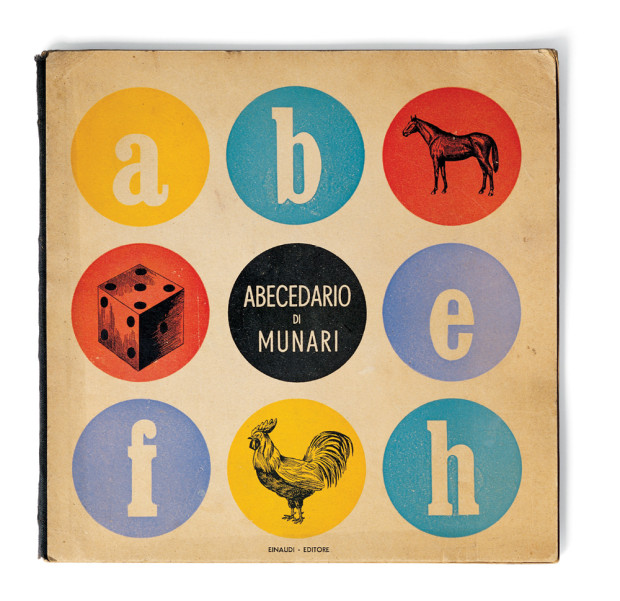
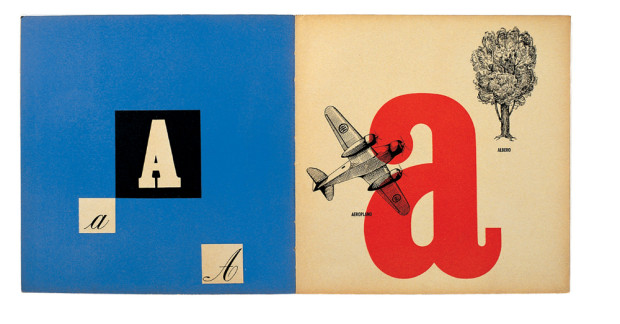
Abecedario de Munari (image credit: Rome: Emanuele Prandi, 1942)Abecedario de Munari (image credit: Rome: Emanuele Prandi, 1942)
“we need to deconstruct the myth of the artist-hero who produces only masterpieces for the intelligent. We have to show that as long as artists are outside the problems of everyday life, only a few people will be interested. And now, in these days of mass culture, artists must climb down from their pedestals and be so kind as to design a butcher’s sign.”2
If Munari’s Books has a shortcoming, it is the rather academic introductory texts (they will be useful for better design writers than me, but I got little sense of the Munari’s life or the personality behind the designs from them). Fortunately, the book is peppered with lively quotations from Munari himself. The most pithy come from Arte come mestiere, a collection of Munari’s writing on design first published in English in 1971 as Design as Art (and reissued as a Penguin Modern Classic in 2008). The short essays in Arte come mestierewere originally written for Milan daily newspaper Il Giorno, and they address everyday life as well as design. They’re witty, discursive (and sometimes even surprisingly practical), and a perfect accompaniment to the illustrations in Munari’s Books.
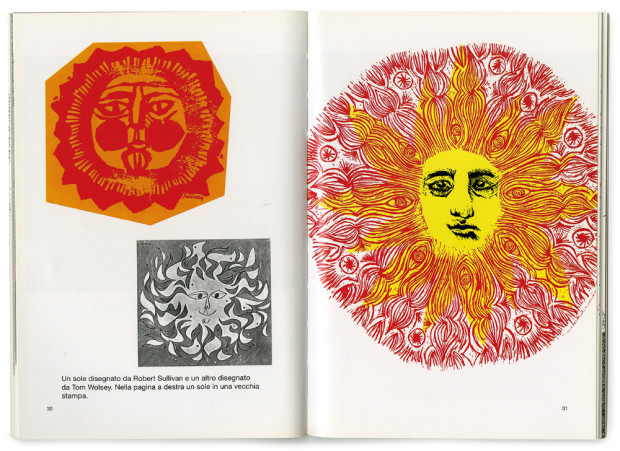
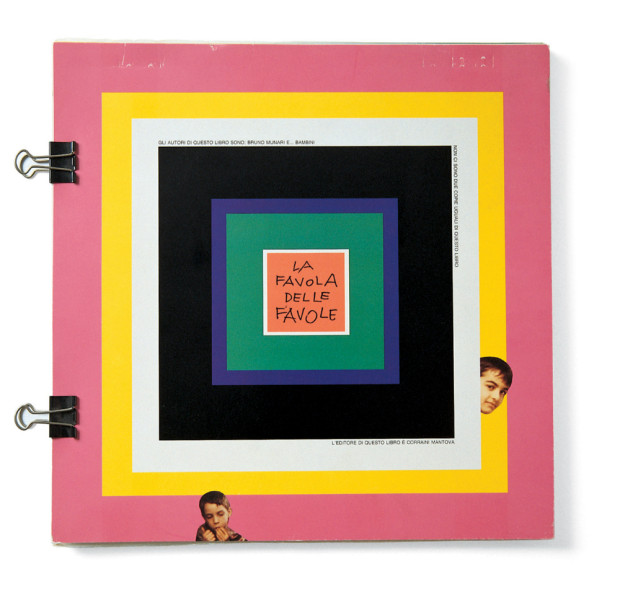
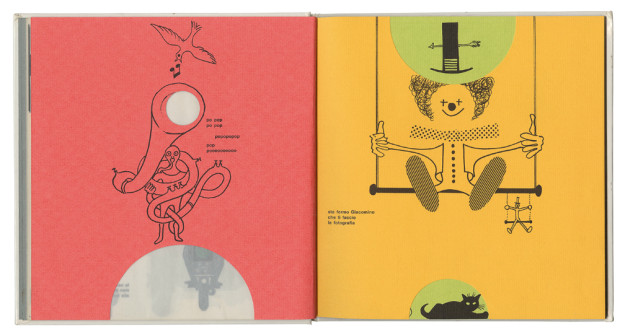
Disegnare il sole (image credit: Mantua: Graziano Peruffo, 1980)La favola delle favole (image credit: Mantua: Maurizio Corraini Editore, 1994)Nella nebbia di Milano (Mantua: Graziano Peruffo, 1968)
Sarah Shatz: Françoise MoulySarah Shatz: Françoise Mouly
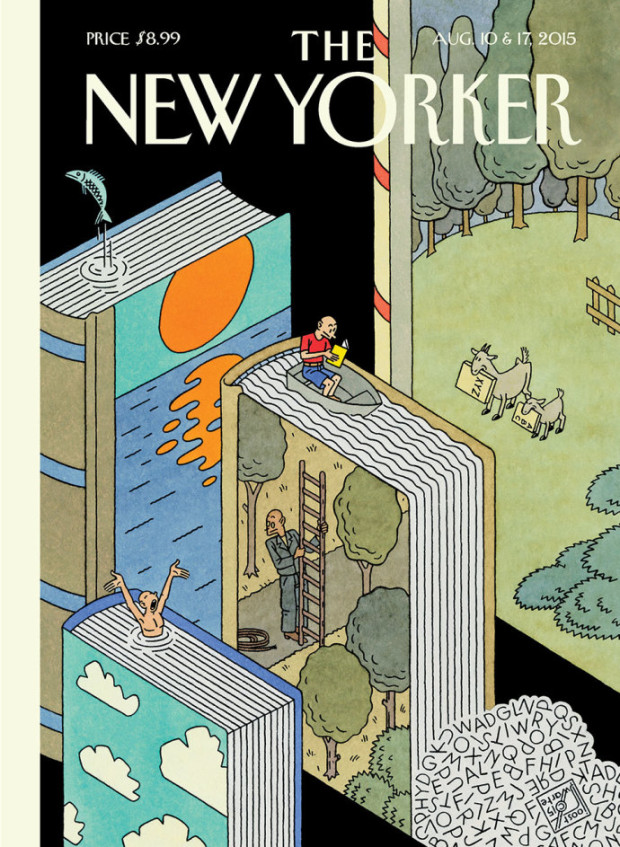
It’s Nice That has a great interview with the remarkable Françoise Mouly, co-founder of comics anthology Raw, editorial director of TOON Books, and, of course, art editor at TheNew Yorker:
“One of the things we had at Raw which I have tried to keep is not having a house style, it doesn’t all look alike. Raw really was the sum of its parts but you can’t say that Raw magazine was Joost Swarte or Charles Burns or Sue Coe.
“At The New Yorker when I came in there was a house style, a nice cat-on-the-windowsill type watercolour and you could look at the covers and see the common denominator. I have tried to never let it settle into, ‘Oh that’s a New Yorker cover’ except in the approach.”
“Cartooning has an edge on all other media. You don’t need anything else such as canvas and paint, or camera and actors: the road to expression is only a sheet of paper and a pencil away.”
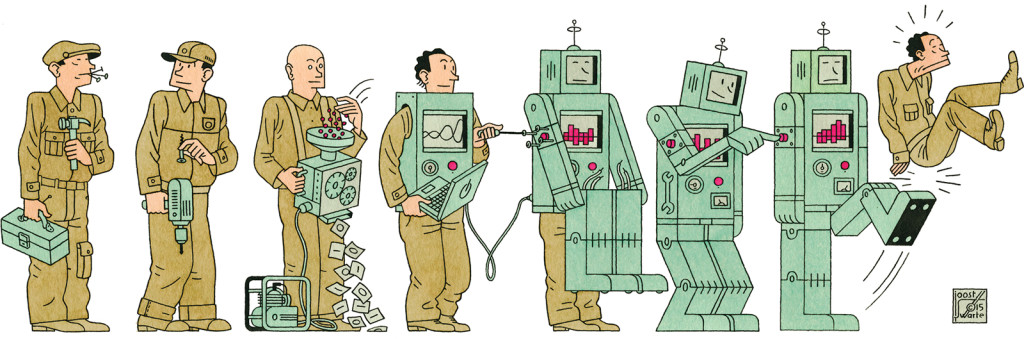
Writing at the MIT Technology Review, David Rotman looks at the impact of automation and digital technology on jobs with reference to a number of recent books related to the subject including Rise of the Robots: Technology and the Threat of a Jobless Futureby Martin Ford, The Great Divide by Joseph Stiglitz, and The Second Machine Age by Erik Brynjolfsson and Andrew McAfee. But if you find that all too depressing to contemplate — and who doesn’t? — you can at least enjoy the wonderful Joost Swarte illustrations that accompany article …
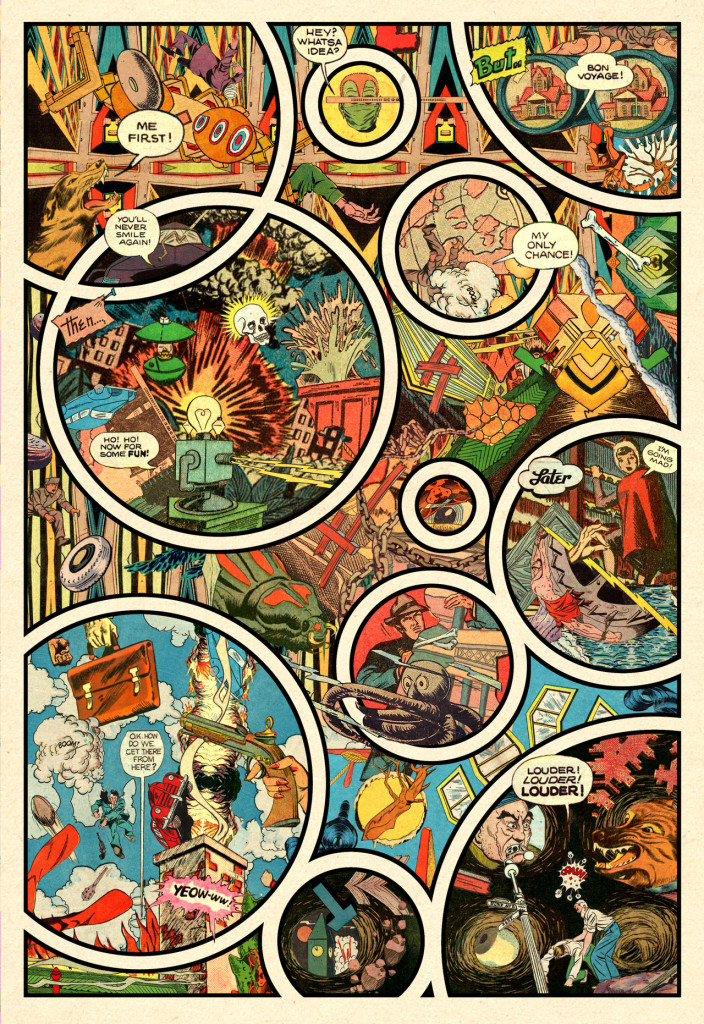
Thanks to David Gee (and others), who alerted me to the extraordinary Samplerman comics this week.
You can read an interview from earlier this year with Yvan Guillo, the French cartoonist and designer behind Samplerman, at It’s Nice That:
I’ve always downloaded tonnes of scans of American comics, from the golden age to the bronze age. I could scan the ones I have but I’ve done it only once or twice. I don’t really read the stories, but I love how they look: the cheap paper, the bright primary colours, the screen-tone, the drawings, the conventional representation of landscapes, the simplicity of the lines. I have to make a choice among this mountain of graphic elements. I pick what I like: face, hand, clothes, tree, car, text balloon etc. and start to (digitally) cut them out. At the same time I start to place the elements on one or several pages made of blank comic panels. Some elements are duplicated, rotated, arbitrarily cut in half, reduplicated and mirrored. It’s a mix of kaleidoscope and collage; I add, I move, I replace until I feel it’s done. At the end it has to remain visually surprising and dynamic.
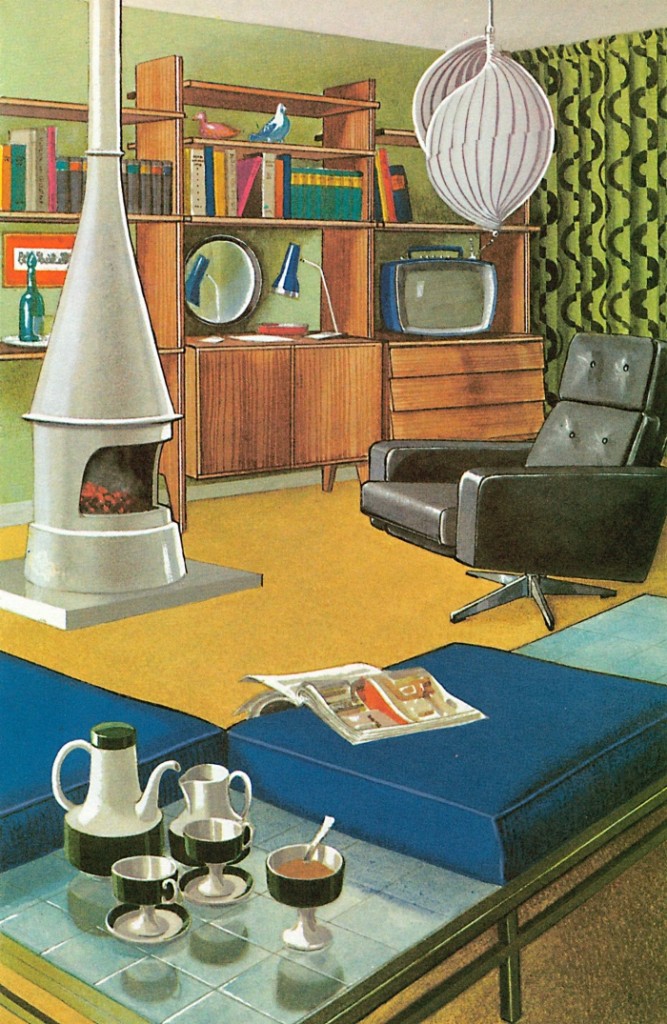
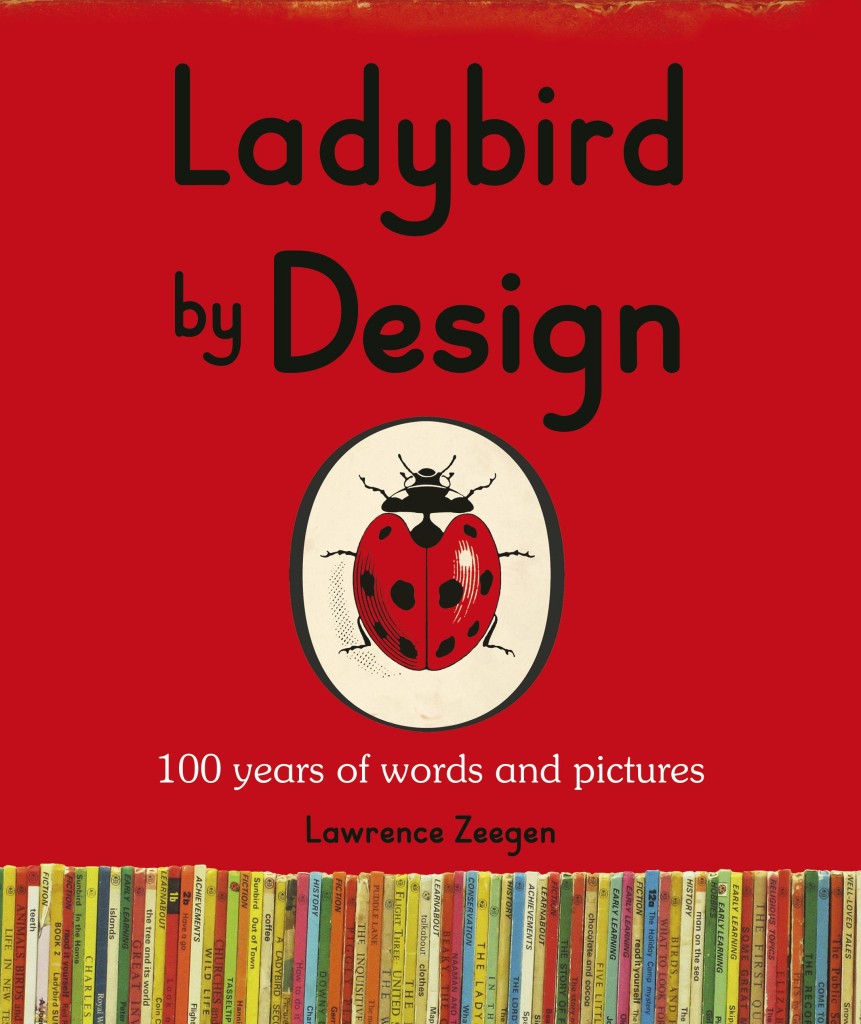
The Guardian‘s Kathryn Hughes visits Ladybird By Design, an exhibition of over 200 original illustrations from the golden age of Ladybird Books:
To enter Ladybird’s world again is to relearn a universe that is both strange yet uncannily familiar. Inevitably the books express the values of their times. In the Peter and Jane series (aka Key Words Reading Scheme), Peter tends to hang out with Daddy in the garage, while Jane helps Mummy get the tea. Fair-haired and blue-eyed, every one in the children’s world looks exactly like them, apart from Pat the dog.
Still, if Ladybird books were conservative on gender and race, they were positively brisk on class. The world of Peter and Jane – and all the other children who appear in the Ladybird universe doing magic tricks, going to the shops, taking batteries apart or learning to swim – is both modern and modest. As illustrated by Berry, Wingfield and Martin Aitchison, the children appear to live in one of the postwar new towns. Their home is probably privately owned but it could conceivably be a newly built council house. Their adventures involve going on a train or to the beach with Mummy and Daddy. There are no prep-school japes here, no solving of improbable mysteries or clifftop rescues.
Perhaps this achievable utopia was a compensatory fantasy for the illustrators who, born around 1920, had mostly known childhoods far harder than this. Busy providing a safe, stable environment for their own little Peters and Janes, men such as Berry and Wingfield showed a world where things were, on the whole, getting better. Modernity increasingly presses into the frame: Jane and Peter eat off a table that looks like knock-off Habitat, Mummy wears slacks and Daddy even starts to help with the washing-up. More disruptive changes, though, are kept at a safe distance. Carnaby Street, with all its troubling freedoms, has no place in the Ladybird world, nor does the cold war or Vietnam.
For those of you who didn’t grow up in the UK, Ladybird Books were slim illustrated hardcover books for children. They were educational, or at least ‘improving’, and so creepy that I think they’ve actually scarred the national psyche. If you are of certain age, the books trigger a shiver of queasy nostalgia — without Ladybird Books the horrifying weird of The League of Gentleman or Scarfolk is just inconceivable — and yet I still think of them fondly. Sort of.
The exhibition, which opens later this week, takes its title from a forthcoming Penguin book called Ladybird by Design. Writtenby Lawrence Zeegen, Professor of Illustration and Dean of the School of Design at the London College of Communication, the book celebrates 100 years of Ladybird, and examines the social and design history of the publisher. It is sure to be smashing.
In an interview with CBC Radio in 1958, pianist Glenn Gould recounted how he came to play Beethoven in a gas mask. Now CBC Music have turned that anecdote into a charming short film illustrated by designer Heather Collett, and animated by Philip Street and John Fraser:
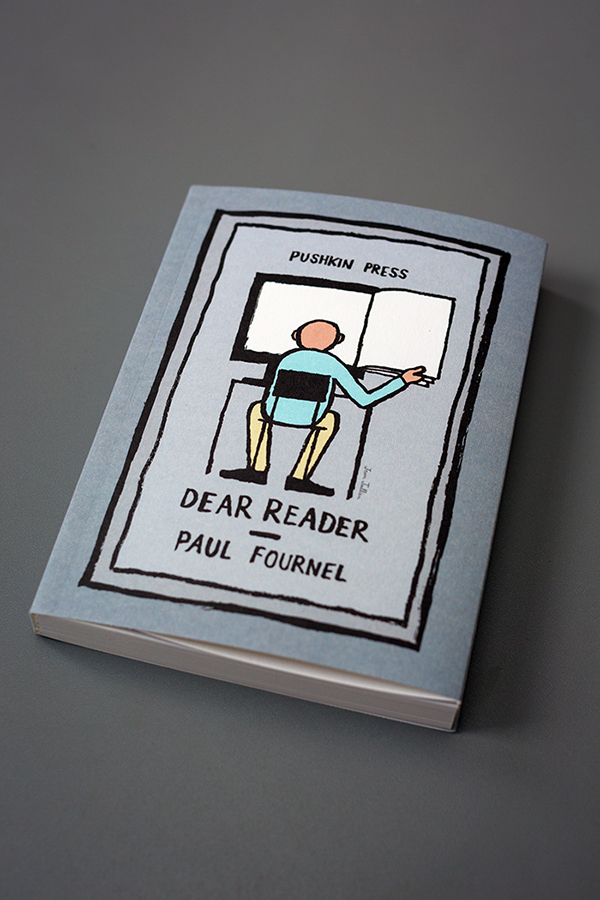
Another cover featured in this month’s round-up was Jean Jullien‘s illustrated design for Dear Reader by Paul Fournel, published by Pushkin Press. In this short film by Handsome Frank, Jullien talks about his work, drawing with a brush, his relationship with technology, and laughing at yourself:
Even if you don’t immediately recognize Stanley Chow‘s name, you will have seen his illustrations for The New Yorker, Wired, and Entertainment Weekly among other places. Most likely, you have have seen his portraits of pop culture icons online too. In the film, Chow talks about his process, inspiration, and doing the work he loves:
You can buy prints of Stanley Chow’s work from his print shop.