Based on the short story “Her Lover” by Maksim Gorky, BOLES is short animated film by Špela Čadež about a writer with writer’s block and the woman who lives next door:
Comments closed
Published February 10, 2017
Books, Design and Culture

Hilton Als on James Baldwin, movies, and Raoul Peck’s documentary I Am Not Your Negro, for The New Yorker:
Comments closedOne has the sense, in the sections of “I Am Not Your Negro” that are devoted to Baldwin’s relationship to film, that Peck is stepping in to make the film that Baldwin couldn’t make. From the beginning of his career, Baldwin longed to make movies. In the introduction to his 1955 landmark collection, “Notes of a Native Son,” he wrote, “About my interests: I don’t know if I have any, unless the morbid desire to own a sixteen-millimeter camera and make experimental movies can be so classified.” To my knowledge, Baldwin never satisfied that desire (morbid, perhaps, because he knew of the herculean effort that goes into getting any movie made), but he never stopped yearning to be a filmmaker. Like a number of other significant twentieth-century authors—James Agee, Truman Capote, Susan Sontag, and his friend Norman Mailer—he knew that the page was not enough in the modern world; cinema was a powerful medium with many more “readers.” What would his life as an artist have been like, and what would American cinema be like now, had it opened itself up to him?
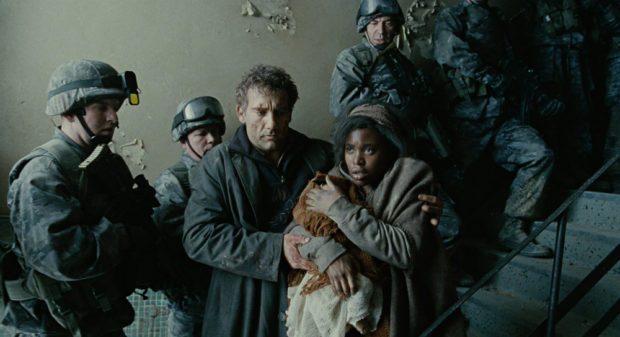
A decade after its first release, Vulture looks back at the terrifying new relevance of Alfonso Cuarón’s 2006 film (based loosely on a novel by P. D. James), Children of Men:
Comments closedChildren of Men is having a remarkable resurgence — not just because of its tenth anniversary but because of its unsettling relevance at the conclusion of this annus horribilis. There have been glowing reappraisals on grounds both sociopolitical (Children of Men is “obviously something that should be on people’s minds after Brexit and after the rise of Donald Trump,” political scientist Francis Fukuyama declared in September) and artistic (“Children of Men, like no other film this century, and perhaps no other movie ever, solves the meaning of life,” wrote Vanity Fair columnist Richard Lawson in August). It’s getting the kind of online attention it sorely lacked ten years ago, generating recent headlines like “The Syrian Refugee Crisis Is Our Children of Men Moment” and “Are We Living in the Dawning of Alfonso Cuarón’s Children of Men?” As critic David Ehrlich put it in November, “Children of Men may be set in 2027,” but in 2016, “it suddenly became clear that its time had come.”
Cuarón, however, is not feeling like taking an overdue victory lap. Curled over a table in an upscale Mexico City restaurant recently, the 55-year-old director gets a little irritated when I laud the film’s imaginative prescience. “This thing was not imagination,” he says, jabbing his index finger into the tablecloth. By Cuarón’s estimation, anyone surprised at the accuracy of his movie’s predictions was either uninformed or willfully ignorant about the way the world already was by 2006. “People were talking about those things, just not in the mainstream!” he says. He was reading about refugees, know-nothing reactionaries, and eerie disruptions in biological processes during the early ’00s. If Children of Men can be said to have a message, Cuarón encapsulates it: “What’s really relevant now,” he tells me, “is to stop being complacent.”
A Jim Jarmusch documentary about Iggy Pop and The Stooges? YES.
Gimme Danger is scheduled for a limited release on October 28th.
Comments closed
One for the letterpress obsessives and tool aficionados, The Last Punchcutter is a beautiful, wordless film capturing Giuseppe Brachino — who was the head of the engraving department of the Nebiolo Company from Turin — hand-cut a punch for metal type:
(via Coudal)
Comments closed
Remember Those Great Volkswagen Ads? is a short documentary about the classic, highly influential ad campaigns created by Manhattan advertising agency Doyle Dane Bernbach (DDB) for Volkwagen in the 1950s and 60s:
(via Kottke)
Comments closedWelcome to The Last Bookstore is a short, inspiring documentary about Josh Spencer, owner and operator of The Last Bookstore in downtown Los Angeles:
Comments closed
Nicholas Dawidoff on the films of Robert Frank for The New Yorker:
Comments closedCritics, including Manohla Dargis, of the Times, and younger filmmakers, such as Richard Linklater and Jim Jarmusch, consider Frank the godfather of independent American personal cinema. They revere his contempt for standard approaches, his willingness to try anything, his willingness to fail. But I am a pretty conventional moviegoer. I found his shaggy-dog day-in-the-life film of his Beat-poet friends, “Pull My Daisy,” from 1959, and his long meditation on mental illness, love, family, and conventions of behavior, “Me and My Brother,” from ten years later, beautiful and arresting. But much of the work was mystifying to me. Frank had laid out and sequenced “The Americans” meticulously. Some of the films, by contrast, seem like near-random collages. Was he trying to say something about spontaneity? Was there a method at all?
One day, I confessed my confusion to Frank. He said abruptly that he was displeased with his films: “It was bigger than me. I failed.” Showing his longer films to small audiences got so “boring,” he said, that one day he cut a couple of them up, stitched together sections of one with chunks of another, and then showed an audience what amounted to two fresh movies. By this point, I knew Frank to be notoriously sly and puckish, and ambivalent about everything. I still had the feeling that I was missing something, that he had groped toward a significant vanishing point, and that, in the films, deeper forces were at play than even he was admitting.
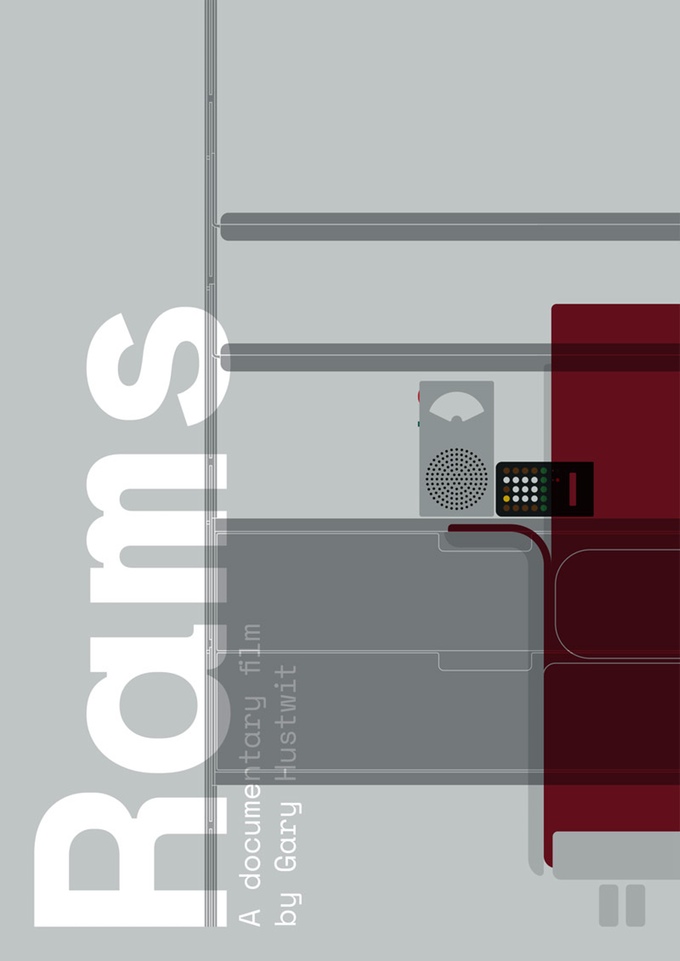
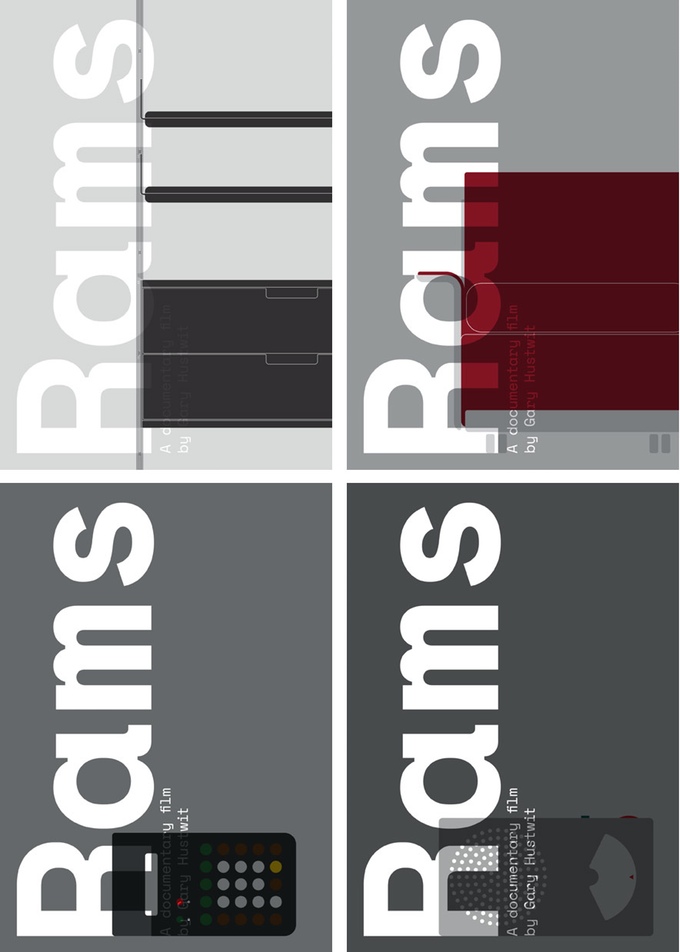
Gary Hustwit, the director of the documentaries Helvetica, Objectified, and Urbanized, is making a feature-length documentary about the life and work of designer Dieter Rams:
You can support the production on Kickstarter.

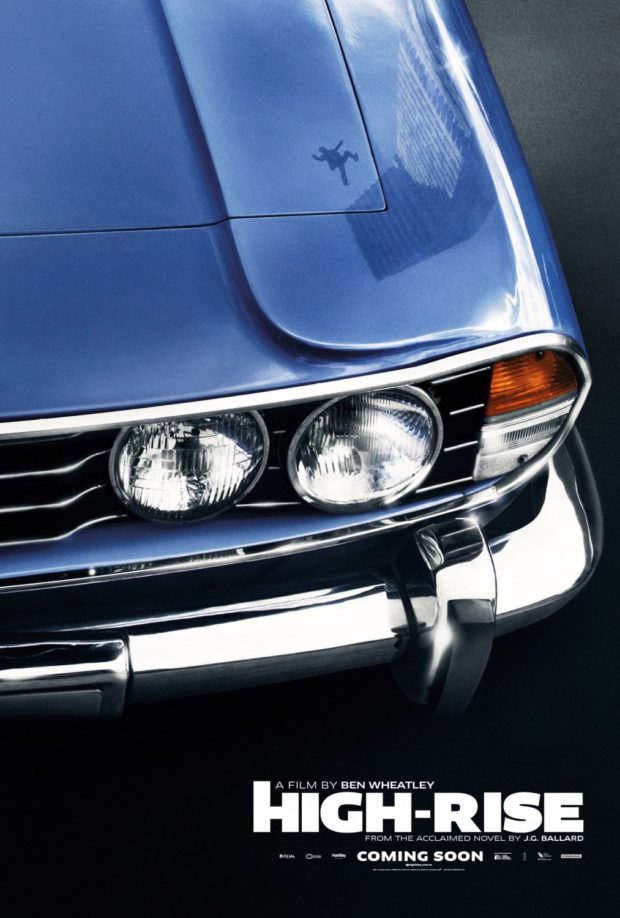
In a long and fascinating interview with the Ballardian, Ben Wheatley talks about J.G. Ballard and his adaptation of High-Rise:
Initially, I really enjoyed the cult appeal of [Ballard’s] work, or more specifically the counter-cultural aspect. His books, particularly Crash and High-Rise, were like rites of passage for anyone trying to read subversive and counter-cultural literature. Alongside Naked Lunch and Fear and Loathing in Las Vegas, they were books you had to read. But I was especially struck by Ballard’s use of language and turns of phrase, which didn’t feel like any other writer I had come across.
Although I enjoy SF, and that was also part of the charm of his novels, I also think it was books like The Atrocity Exhibition and then his 70s books that really hooked me in. When I was a teenager, there were two writers that really appealed to me: Burroughs and Ballard. They weren’t just authors and novelists in the traditional sense, they seemed much more dangerous and enigmatic than other writers. Burroughs naturally has a mystique because he shot his wife in the head and was a junkie, and therefore the extremity of his fiction was partially mirrored in his real life.
But the thing is, there was something about Ballard that was even stranger and perhaps more insidious, in the sense that he didn’t do those extreme things and was living a quiet, suburban life as a father to three children while also pouring out these amazingly perverse books. That had a big effect on me, but I was also aware of him through music, comics and other media. I wasn’t a particularly voracious reader of novels, so in some ways I experienced Ballard through a kind of cultural response to his work.
This is the best, most in-depth interview with Wheatley I’ve read on the subject of adapting Ballard and making High-Rise.
Comments closed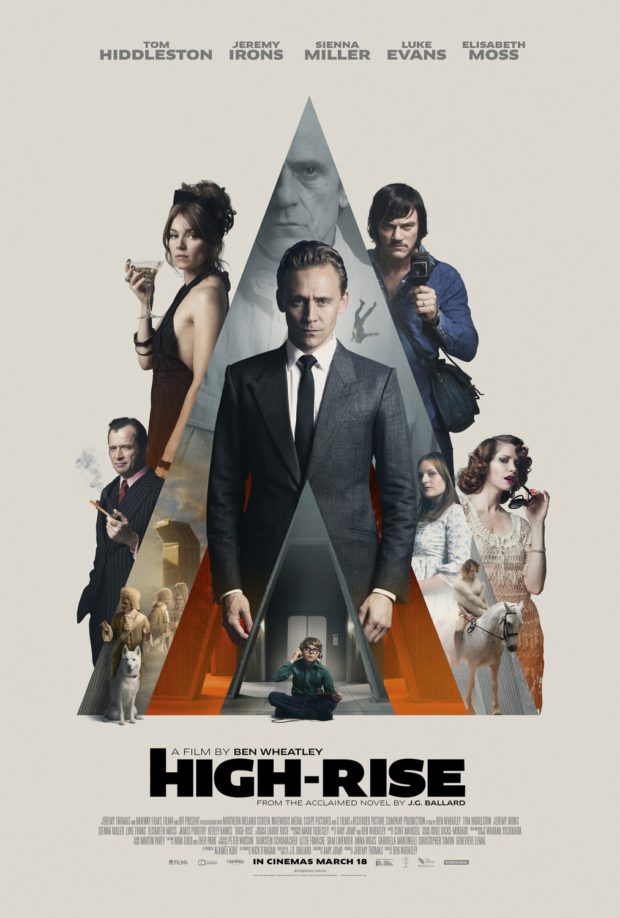
Andrew F. Sullivan, author of ultra-violent urban noir WASTE,1 reviews Ben Wheatley’s adaptation of High-Rise by J.G. Ballard for TIFF.Net:
Wheatley and Ballard point to a pattern—a dissolution of social order that cannot be prevented by technology or progress. Even the most unnatural setting seems to only drive humanity back to its base needs—food, water, shelter, flesh. The past, the basest parts of being human, carry more weight than any building, any new technological development. Elevators become new traps for the hunters. The supermarket on the seventh floor is one last place to forage. Even the soundtrack reimagines this future past for the audience, Portishead performing ABBA’s pop hit “S.O.S.” as a warning for the residents and viewers alike—a dirge for a new world.
Residents begin to harvest the building itself for what they need and reject the outside world. Wheatley’s design team has mimicked the 70s-era incredibly well, but everything is innovative. The products and designs on the shelves are made specifically for this brave new world. The future is behind us. The high-rise becomes a place unto itself—a slow motion horrorshow.
Much like his previous work, Wheatley refuses to provide a straight narrative for the audience and at times, the film descends into an anarchic blend of images without the rules to bind them—as it should. We scurry past a horse on a rooftop, a gang of TV presenters armed with baseball bats and chair legs, a dog drowned in the pool. Parties turn into rituals, sacrifices, religious ceremonies and then dissolve back into chaos once again. Wheatley’s camera starts out sleek and mannered, transitioning smoothly from one floor to the next. However, once the social order slides, the narrative structure breaks under the strain. Viewers slider from one party to another, the camera following bodies as they rise and fall. The film itself opens with an ending.
Edwin Turner has also written about High-Rise at Biblioklept. Ed’s opinion of the movie is less favourable than Andrew’s, but his post also pointed me to Tasha Robinson’s interesting review of the film at The Verge:
There’s a touch of Luis Buñuel’s ‘Exterminating Angel’ in the way everyone in the building seems to be stuck there, isolated from the outside by mutual consent, for no reason anyone cares to address. But Wheatley’s visual style never feels beholden to Buñuel. It’s more familiar from 1960s speculative-fiction films. The Brutalist architecture and cold sterility of the building suggests Jean-Luc Godard’s ‘Alphaville,’ and the polished futurism and stiffly remote characters are reminiscent of François Truffaut’s ‘Fahrenheit 451.’ The retro cars, suits, and architecture all put ‘High-Rise’ more in a quaint, remote past than a dystopian future. They also add to the sense of otherworldliness that hangs over the film.
And so does the sense that High-Rise is driven more by Wheatley’s poster-ready striking images — a suicide falling from a high balcony in ultra slow motion, Laing expressionless and spattered with paint — than by any sort of human drives. “Laing would surrender to a logic more powerful than reason,” Hiddleston narrates, hand-waving away any irrational behavior. No one in the film really operates on reason, they just represent emotional factions. Wilder becomes a feral, untrustworthy spirit of the denied and oppressed. Ann becomes an equally monstrous symbol of the selfish, out-of-touch aristocracy that actively enjoys spitting on everyone below them. Both sides are poisonous. Laing isn’t an innocent caught in the middle, he’s desperately looking for a place to fit in, and his narrative isn’t about saving anyone, not even himself.


2 Comments