I’ve written about Norwegian cartoonist Jason for The Casual Optimist before and his work appears here with unerring regularity — if you are a frequent reader you are no doubt already familiar with it.
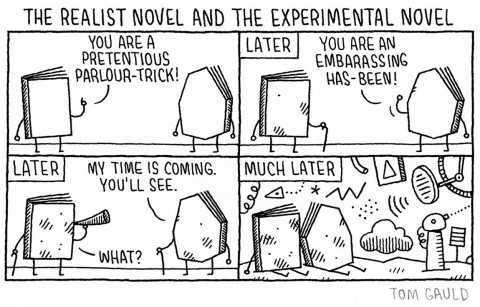
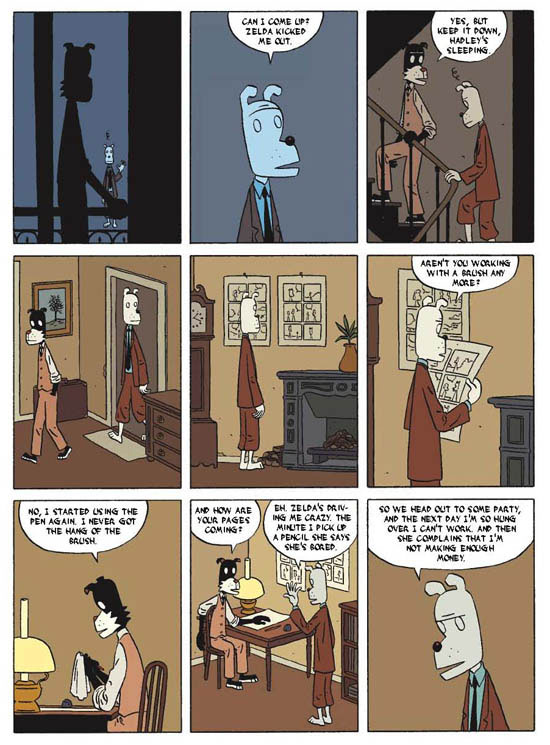
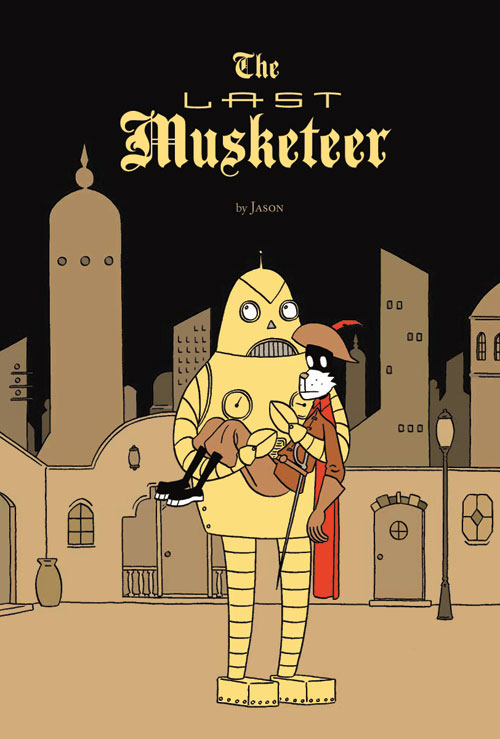
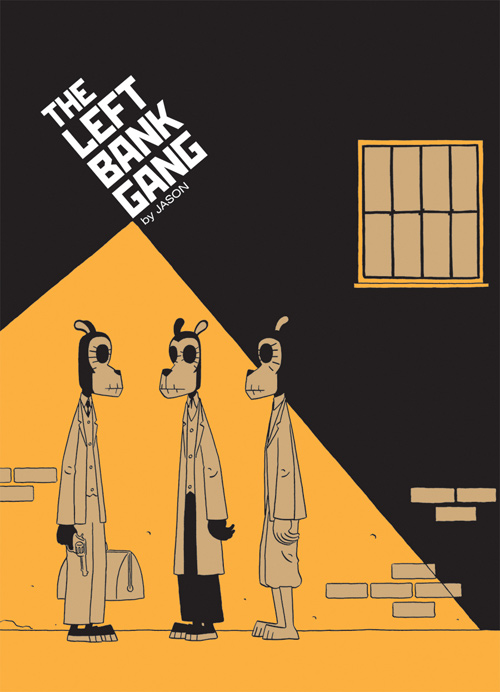
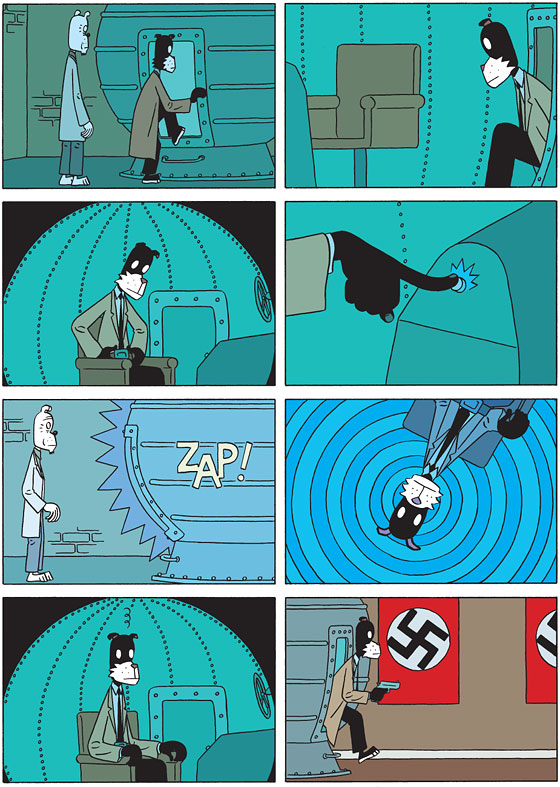
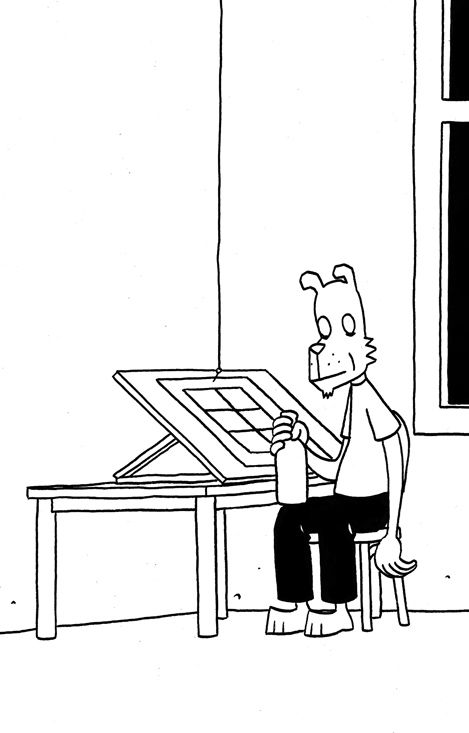
Like British cartoonist Tom Gauld who I interviewed early this year, Jason’s comics are immediately identifiable. You cannot mistake them for the work of someone else. And again, like Tom, Jason’s work references both the pop and the high-brow: zombies and werewolves on the one hand; Hemingway and the Beats on the other. The result is both original and off-beat. His protagonists are like renegades from a Max Fleischer cartoon who’ve inadvertently wandered into a Jim Jarmusch movie… Anthropomorphic animals smoking cigarettes, drinking coffee, talking about French actresses. Action and slapstick wrestle with ennui and loneliness.
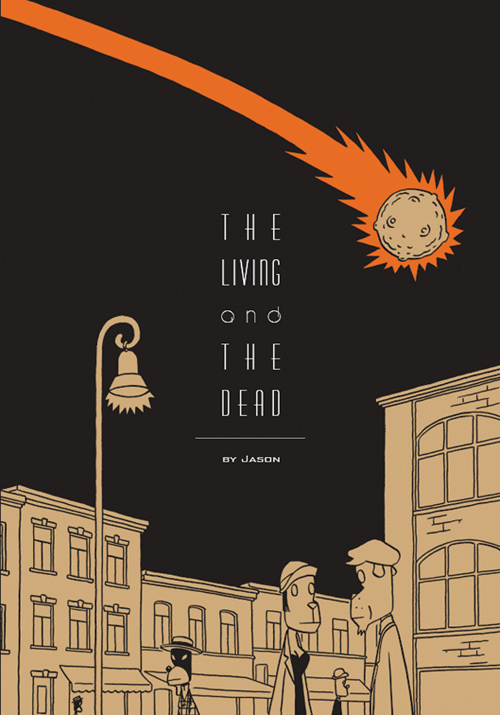
Jason, whose work has been translated into Swedish, Spanish, German, Italian and French, currently lives in Montpellier, France. He was kind enough to talk to me in English. His new short story collection Athos in America will be published in December by Fantagraphics.
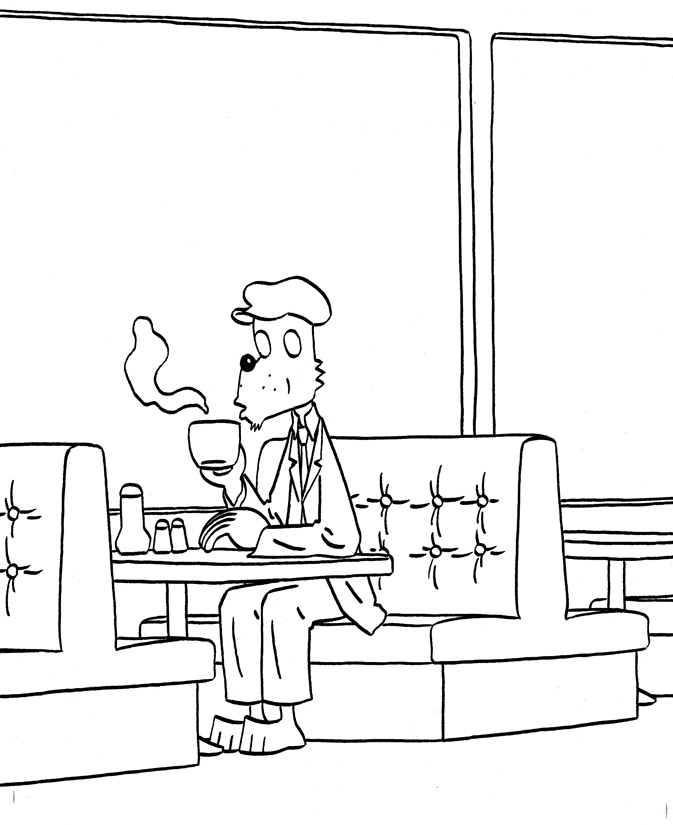
When did you first start drawing cartoons?
Around age 13, I guess. And then at age 16 I started selling cartoons and one page strips to a Norwegian humour magazine. I did that through high school.
Did you always want to be a professional cartoonist?
No, it was a hobby. To become a cartoonist in Norway was not much of an option. I went to art school to become an illustrator, but my career never took off, so I kept doing comics. I met other cartoonists in Oslo, there was sort of a little scene. And then I moved to France to be closer to the French comic book industry. I did books that were translated into English, French plus some other languages, and the last seven or eight years I’ve been able to have an income almost exclusively from doing comics.
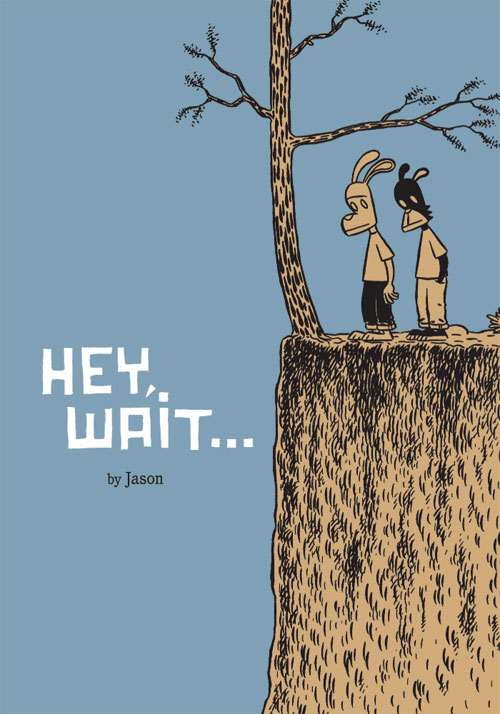
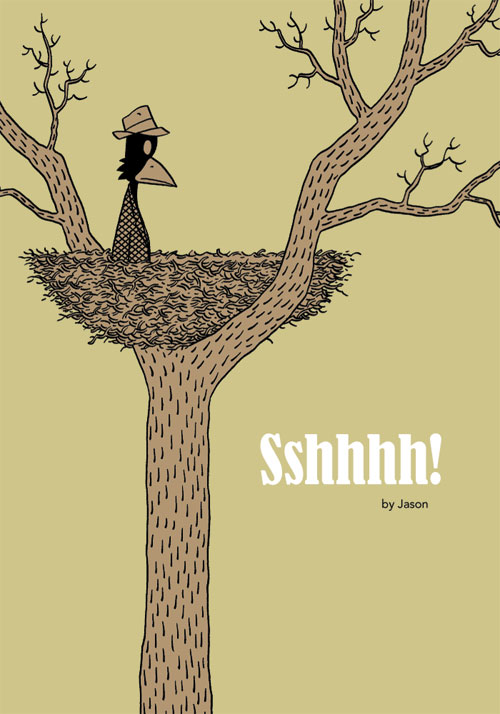
How did you become involved with your US publisher Fantagraphics?
We sent — that is me and my Norwegian publisher, Jippi — we sent Hey, Wait… to Fantagraphics. I’m still not quite sure if Kim Thompson read our submission or if he had already read the French version, but anyhow, they decided to publish the book, and then later Shhh! And The Iron Wagon. And for some strange reason, the books seem to sell okay, so I’m still published by them. [Hey, Wait…, Shhh! and The Iron Wagon are collected in the book What I Did]
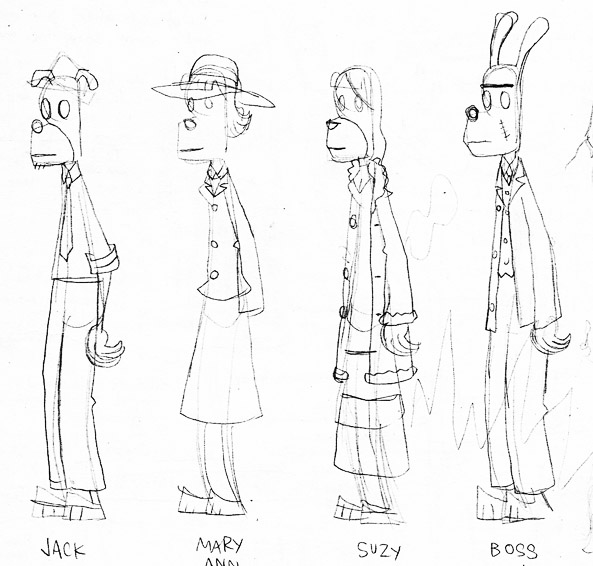
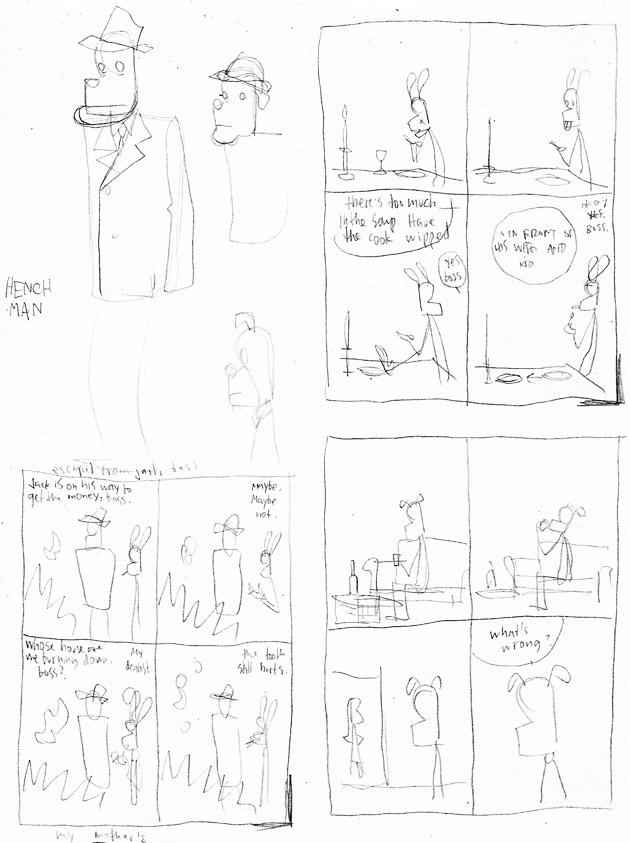
Briefly, could you describe your working process?
I have ideas in my brain, just lying there, that I sometimes think about. This can last years. Then suddenly I can get ideas for dialogues. I write this down. It’s maybe four or five pages. I can start working on those, and at the same time think about what’s going to happen next. I don’t write a full script. It’s based on improvisation. I write pieces of dialogue. Or sometimes I sketch out the pages first, the images, and write the dialogue after. I usually work on nine or ten pages at the same time, pencil a bit here , then ink it, and then pencil a bit there and ink that. It’s the completely wrong way of doing it, by the way, but it seems to be the only way I can work.
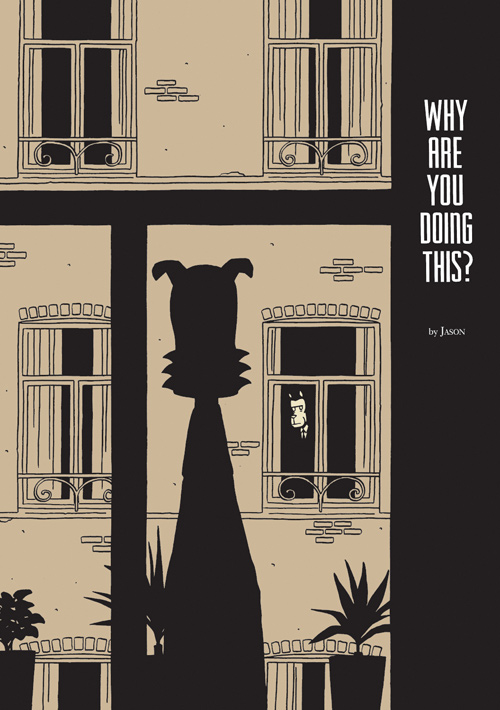
Your work often references classic movies. What are some of your favourite films?
How much room do you have? I like Fred Astaire and Ginger Rogers films, film noir, Brian De Palma, John Ford, especially The Searchers and Howard Hawks, especially Rio Bravo, Buster Keaton, Laurel and Hardy. Paris, Texas, Down by Law, Animal House, Blues Brothers, Fanny and Alexander, Five Easy Pieces, The Last Picture Show, Miller’s Crossing, Roman Holiday, On The Waterfront, Life of Brian. Days of Heaven by Terrence Malick is probably my favourite film.
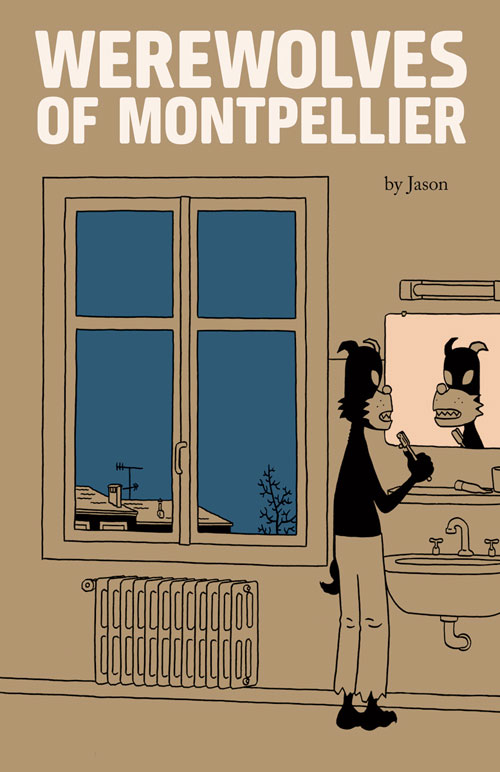
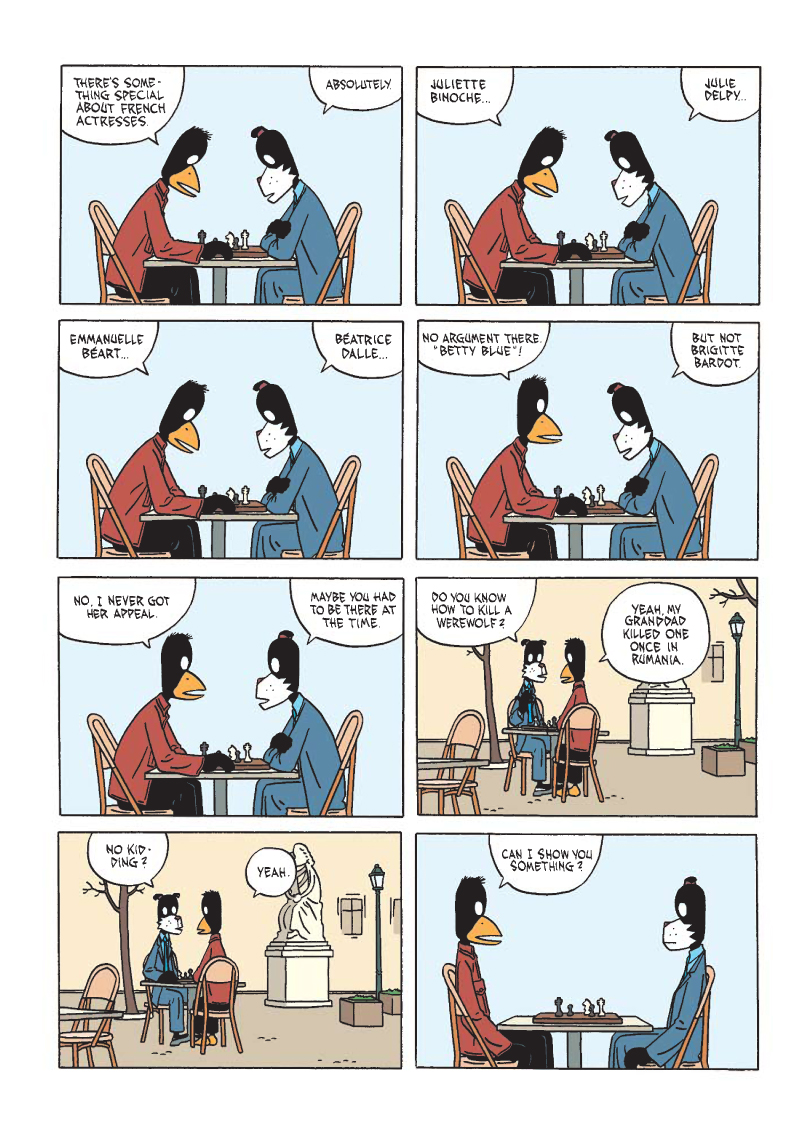
In your recent book Werewolves of Montpellier, one of the characters says they don’t understand the appeal of Brigitte Bardot. Really?
Yes, really! What, you like her? She just looked a little stupid to me. I find Catherine Deneuve a lot more appealing, or Emmanuelle Beart and Julie Delpy to stick with French actresses.
You recently post a list of your 5 favourite Tintin books. Has Hergé been an influence on your work?
Yes, very much so. It was one of the first cartoonists that appealed to me. I borrowed his albums at the library as a kid. I started drawing my own cartoons. And I think you can have a much worse teacher than Hergé. It’s not really the clear line that is the most important thing, even if that is part of what I like with him, it’s more the very clear storytelling that you find in his books. On page three you’re hooked. I think you can read his books in a foreign language, in Russian, and still understand the story and enjoy it. I don’t re-read the books that often, but I often take them out, my favourite albums like The Broken Ear and The Shooting Star, and just look at the drawings.
What do think about the new Steven Spielberg adaptation?
I’ve only seen the trailer. It doesn’t look that bad. I don’t want to just completely rule it out, like its a sacrilege and that Spielberg has no right to adapt Hergé. Not sure about the computer animation, but the original plan was apparently live action with a computer animated Terry [Milou/Snowy], and I think I really would have hated that. And the European animation films, based on each album, are just terrible. Everything that is exciting and funny in the albums are completely lost in the animation films. So I don’t think the Spielberg film can be any worse.
Who are some of your other creative heroes?
Jim Jarmusch, Hal Hartley, Wes Anderson, Aki Kaurismäki. Jaime Hernandez, Jim Woodring, Daniel Clowes, Chester Brown.
Who else do you think is doing interesting work right now?
There are two Argentinian cartoonists I like, Liniers and Pablo Holmberg. The French cartoonist Christophe Blain. Calef Brown’s children books. I like the Mutts books by Patrick McDonnell. I’m not sure if it’s necessarily «interesting», but I find them appealing. It’s like the last, good newspaper strip. I like the old newspaper strip collections: Captain Easy, Prince Valiant, Little Orphan Annie, Gasoline Alley.
What books have you read recently?
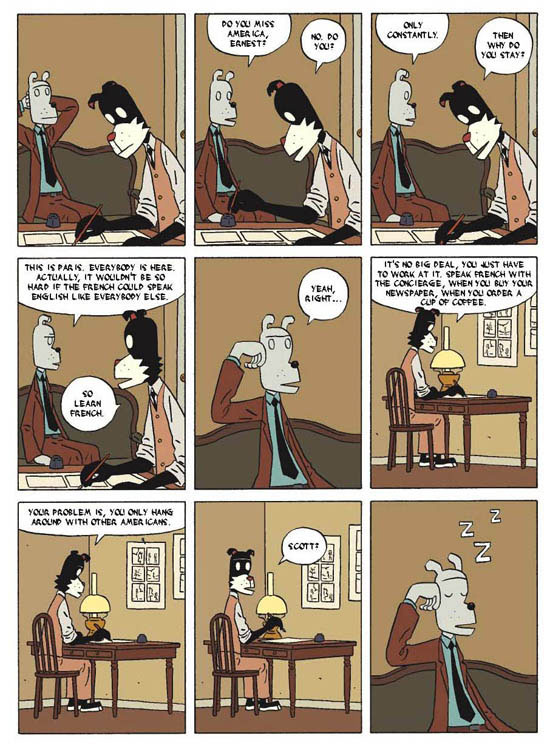
This summer I read The Selected Letters by Jack Kerouac, Off The Road by Carolyn Cassady. I tried to read The Subterraneans by Kerouac, but gave up. I read Chronicles by Bob Dylan, Positively 4th Street by David Hadju and A Freewheelin’ Time by Suze Rotolo. I also read Dave Van Ronk’s memoirs, The Mayor of MacDougal Street, so I look forward to the new film by the Coen brothers, based on his life. What else? Blood Meridian by Cormac McCarthy, Last Night in Twisted River by John Irving and Freedom by Jonathan Franzen. I’m currently reading Volume 1 in The Letters of Ernest Hemingway.
What are a few of your favourites books?
Well, Hemingway. The Sun Also Rises and A Farewell to Arms, his short stories. Bukowski, mostly his novels, but I’ve also started reading his poetry. Raymond Carver and Tobias Wolff. Lorrie Moore, her short stories. Kelly Link. There’s a British writer I like, Rupert Thomson. John Fante, especially Ask The Dust, John Steinbeck, especially East of Eden and Grapes of Wrath, Cormac McCarthy, especially The Road and No Country for Old Men. Raymond Chandler and other old pulp writers like Charles Willeford and David Goodis. I like Elmore Leonard. Paul Auster. John Irving. Every four or five years I re-read Cider House Rules, Garp and Hotel New Hampshire.

Are there any stories you would like to illustrate?
Yes, there are one or two books I’d like to adapt to comics. But I’ll probably wait until I’ve run out of ideas myself.
Do you worry about the future of books and print?
No. I don’t know. The bike didn’t disappear when the car came. There are hopefully room for both books and electronic media. Personally I’ll stick with paper. I’ve no interest in reading on a screen. And I’ll be dead in 40 years anyhow. How much can they screw it up by then?
Thanks Jason!
Like this:
Like Loading...