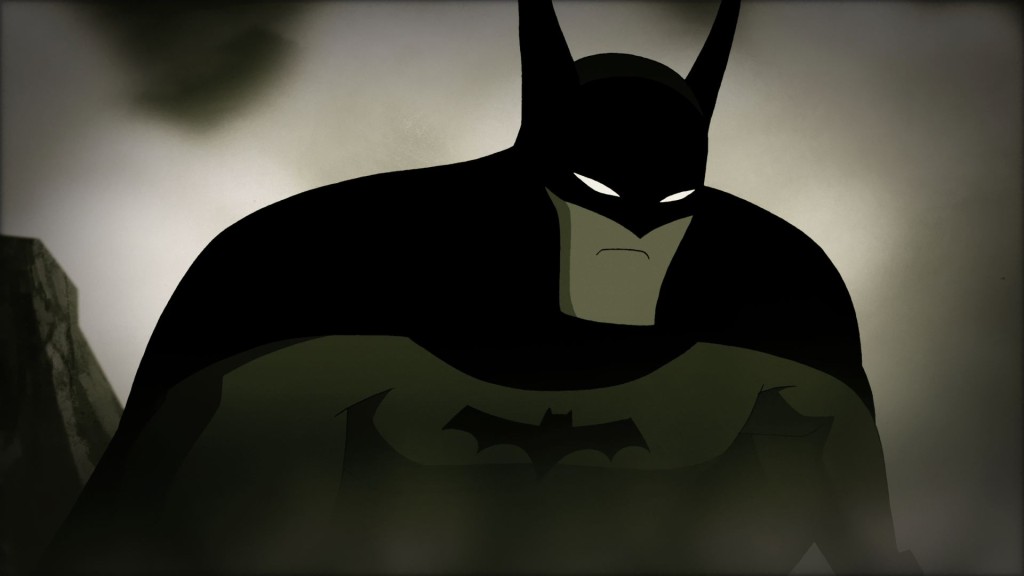
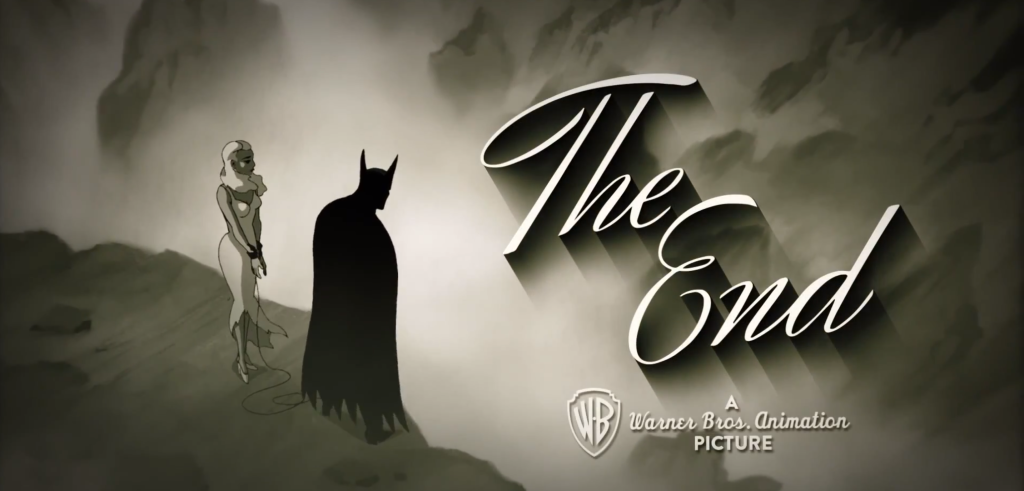
For me, and I suspect plenty of other people of a certain age, the noir-inspired Batman: The Animated Series, is still the most satisfying version of the character to come to screen. The series has long since ended but happily, Bruce Timm, co-creator of the series, has produced a new, wonderfully retro, animated short called Batman: Strange Days to celebrate the Dark Knight’s 75th anniversary:
In a recent interview with Comics Alliance, Timm talked about his work on the original series and the retro look of the new short:
I wanted to make the whole cartoon look as if it was like the cartoon itself was made in 1939, got stuck in a vault somewhere, and nobody has seen it until now. Not that I thought we were going to pull that kind of hoax, but that was the feel I wanted. I wanted it to be so authentically old school. I went back and looked at those early Bob Kane comics and even though they’re really super crude, there’s something really cool about the way Batman looks in those comics. He’s got the really long ears, they kind of stick out in an inverted “A” shape, or a “V” shape, on the top of his head because they kind of stick out on an angle; they’re really tall. He’s got tiny eyes, his trunks are long, his boots are long. He has short little gloves. I tried to incorporate as much of that in there as possible.
No surprise then that like the animated series, it reminds me a lot of the Fleischer Studios Superman cartoons from the early 1940s. The first episode of that series, “The Mad Scientist”, was released September 26th 1941 (before Superman could even fly!):
Personally, I like the episode 2, “The Mechanical Monsters, a lot:
And just as side note, when Batman first battled Hugo Strange’s giant monster men in Batman #1 (Spring 1940), he doesn’t mess about with tear gas — he actually takes them down with a machine gun. It would be the last time Batman killed anyone on purpose.
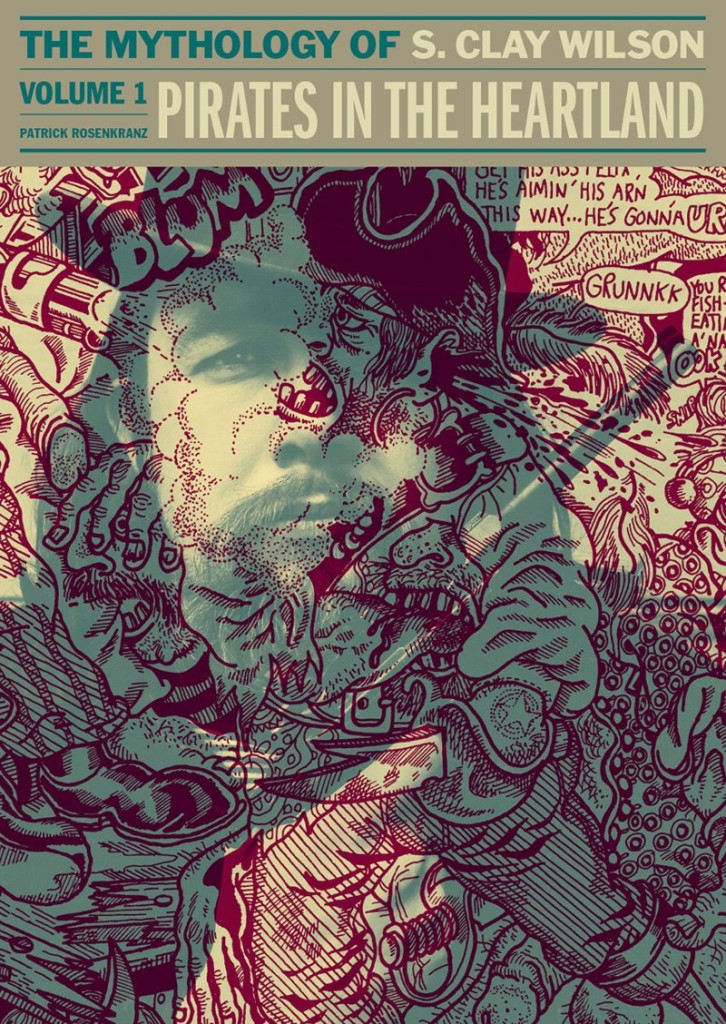
Designer Jacob Covey recently posted a short essay on his personal Facebook page about his cover design for Pirates in the Heartland, the first volume of Patrick Rosenkranz’s biography of underground cartoonist S. Clay Wilson. I asked Jacob if I could repost it in its entirety here, but the book’s publisher Fantagraphics had beaten me to it. While you can read the whole piece on their blog, here’s a short excerpt:
In publishing, one has to approach a cover with the information of an expert and the ignorance of a browser. In biographies, a photo of the subject is generally employed for good reason: The viewer immediately knows this is a book about a person. (Hence the trend in fiction of generally cropping off the heads of models or having them looking away — this is not about THEM.) But Wilson is recognizable only by his artwork, so a photo alone isn’t enough information. Ultimately, my solution is a kind of psychedelia but a practical one: Pirate art (a favorite theme of Wilson) overlaying a mythic portrait of young Wilson. Creation and creator in color overlays that force your eye to try to unhook one from the other.
I generally consider it a failure when cover design requires a band of color upon which to set the type. In this case, it allowed for the art to be the primary feature, to be a bit uncontrolled, while the type treatment is an anchor that harkens classic album design. This kind of visual messaging is trying to align Wilson with rebels and rockstars without making false promises. The trickiest part was simply finding Wilson art that had ANY white space so his portrait could connect with the viewer. The dual function of his artwork blowing the brains out, simultaneously, of Wilson and another of Wilson’s creation was too wonderful to pass up but I’m going to leave the symbology of such things to the viewer.
At Mutha Magazine, Meg Lemke talks to Françoise Mouly, Art Editor of The New Yorker and co-founder of RAW magazine, about TOON Books, her line of comics for kids:
When I go to schools, even in very impoverished school districts, and I say that I’m here to read a book—it’s fantastic to see how kindergarteners and first graders love story time. They love being read to. I go to schools to see the actual response from the kids, not what I think they will say. Reading is a canvas that they use to construct their understanding of the world. Comics are great that way, even better than illustrated stories, because, in comics, the story is told sequentially in pictures, and you, the reader, make connections between the panels. It’s a truly interactive medium, where the story itself stays on the page but you are the one making up what happens between the panels, making it move in space and in time.
When you talk to teachers, you will hear words such as making inferences and connecting and finding the context. It’s elaborate thought but it’s congenial to kids—they do it naturally. They’re always trying to make sense of the world around them. Nobody has ever had to teach a child how to find Waldo—they intuitively get it, and they find Waldo far quicker than most literate adults. Comics take advantage of the thing that children know how to do, of what their strength is, and puts them in the driver’s seat of reading.
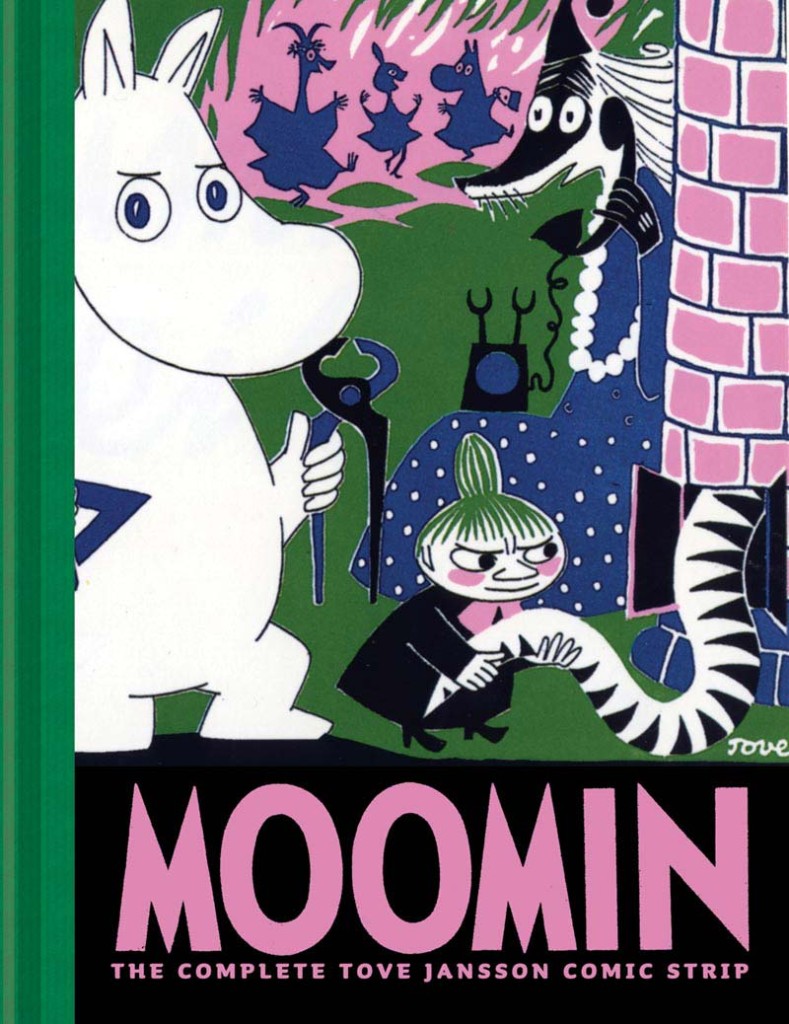
At BBC News, Mark Bosworth looks at the life of artist and writer Tove Jansson:
Tove Jansson grew up in an artistic household in Helsinki. Her father, a Swedish-speaking Finn, was a sculptor, her Swedish mother an illustrator.
While her mother worked, Tove would sit by her side drawing her own pictures. She soon added words to the images. Her first book—Sara and Pelle and the Octopuses of the Water Sprite—was published when she was just 13.
She later said that she had drawn the first Moomin after arguing with one of her brothers about the philosopher Immanuel Kant. She sketched “the ugliest creature imaginable” on the toilet wall and wrote under it “Kant”. It was this ugly animal, or a plumper and friendlier version of it, that later brought her worldwide fame.
Jansson studied art in Stockholm and Helsinki, then in Paris and Rome, returning to Helsinki just before the start of World War Two.
“The war had a great effect on Tove and her family. One of her brothers, Per Olov, was in the war. They didn’t know where he was, if he was safe, and if he was coming back,” says Boel Westin, a friend of Jansson’s for 20 years and a Professor of Literature at Stockholm University.
Jansson’s first Moomin book—The Moomins and the Great Flood—was published in 1945, at the end of this difficult and nerve-wracking period, with Comet in Moominland following soon afterwards.
“Tove’s anxiety and grief are embedded in the first two books. She was depressed during the war and this is mirrored in those books because they are about catastrophes,” says Westin.