BookLounge have posted three really interesting videos of C.S. Richardson, VP, Creative Director at Random House of Canada, discussing the history and practice of book design (clip 1 above).
2 CommentsBooks, Design and Culture
BookLounge have posted three really interesting videos of C.S. Richardson, VP, Creative Director at Random House of Canada, discussing the history and practice of book design (clip 1 above).
2 Comments
Abecediary — Steven Heller on alphabet books (Die Flucht Nach ABECEDERIA by the French comic artist Blexbolex pictured above).
Imprints in the 21st Century — Admittedly HarperCollins new Imprint It Books is an easy target (NB use of “tap into the zeitgeist” in a sentence = fail), but Mike Shatzkin does a good job of explaining why their strategy is past its sell by date (and beginning to smell):
General trade publishers need to see, and apparently don’t, that their legacy brands are B2B [business-to-business]. They should be exploited that way. They need brands that can work B2C [business-to-consumer], but it will require discipline, focus, and an audience-first picture of what to publish to accomplish that.
Writing for a Living — Luminaries such as Will Self, Joyce Carol Oates, and AL Kennedy (quoted below) discuss whether writing is a joy or a chore in The Guardian:
“The joy of writing for a living is that you get to do it all the time. The misery is that you have to, whether you’re in the mood or not.”
Hugh at BookOven is angry this week. He wants to know why publishers are not selling directly to customers from their website and why they make e-books so complicated. I think Hugh underestimates the time/money/skill-deficit obstacles publishers face in regard to both problems. I suspect Hugh thinks I’m an apologist and will be first up against the wall when the revolution comes.
Book Design Made Easy — cartoonist Tom Gauld is making his genius cartoons from The Guardian available on Flickr (via Drawn!, source of so many life-improving things).
4 Comments
As the cover of Emil Ruder’s Typographie (pictured above) suggests, Felix Weidler’s vast collection of modernist book design in Germany and Switzerland 1925-1965+ is a remarkable archive. It not only includes covers, but interior photos, and notes. Brilliant. (via davidthedesigner).
Comments closedApologies for a delayed entry in the Monday Miscellany category, but here we go (better late than never)…
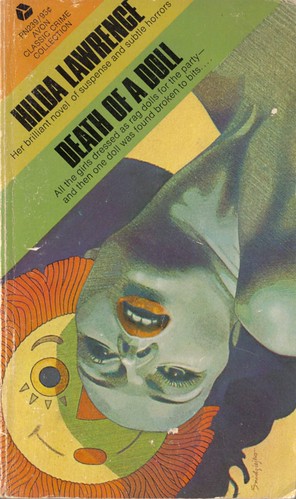
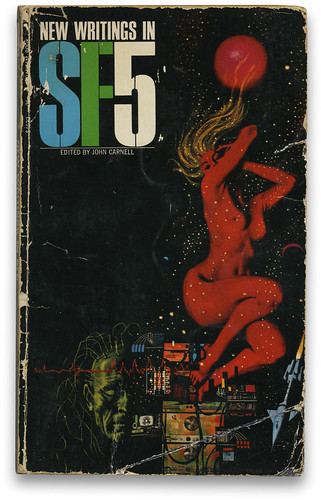
Eric Carl‘s Flickr photostream has some nice classic sci-fi and fantasy book covers (the rather fine looking Death of a Doll and New Writings in SF 5 pictured above). (via but does it float)
Re-envisioning the American small press — Fiona McCrae, director and publisher of Minneapolis independent Graywolf Press, profiled in PW (via @sarahw):
McCrae believes the publishing business is changing in favor of smaller presses, which can have close contact with their audiences and realistically support the smaller sales that typify many literary books: “I think that’s been true for a long time, and it’s just getting truer and truer and truer. There’s still obviously a layer in which we don’t compete, and it’s not our job to”
Rearrange, Rewrite, Redefine and Reimagine — Chicago-based indie Featherproof Books would like you to “remix” parts of their forthcoming titles, starting with Tour of the Drowned Neighborhood a short story taken from Blake Butler’s Scorch Atlas (via @R_Nash).

Overdue! — The Central Library in Atlanta, the last building by “Modernist master” Marcel Breuer, is under threat according to Jonathan Lerner in Metropolis Magazine (pictured above).
A fair share — In the final installment of a 3-part series for the Globe and Mail on the publishing industry in Canada, James Adams looks at the thorny issue of digital rights.
Wild Hair, Wilder Ideas — The Guardian profiles Alan Moore (and — on a related note — novelist Lydia Millet’s somewhat ill-considered assessment of Watchmen for the WSJ)
From Caveman to Spray Can: A Graphic Journey — Mike Dempsey’s gently meandering history of graphic design which not only features one or two books, but also the lovely Gill Sans typeface (picture above) which was used on the early Penguin paperbacks (via Noisy Decent Graphics).
Comments closed