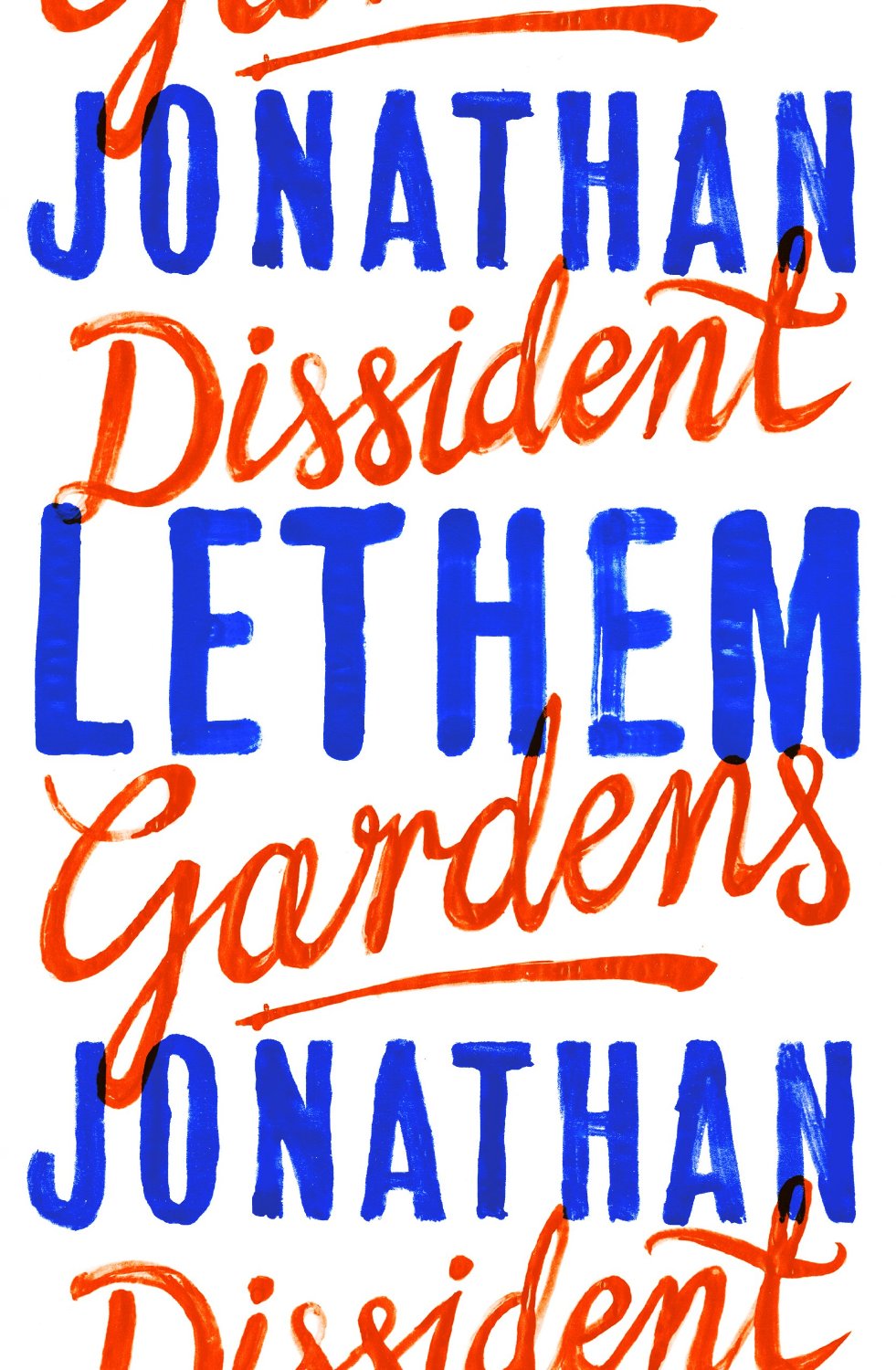
90 Covers — David McCandless talks about the protracted cover design process for his new book Information is Beautiful (via This Isn’t Happiness):

Engage — Online literary magazine and short fiction hub Joyland – founded by authors Brian Joseph Davis and Emily Schultz — is launching an e-book imprint.
Graphic Novels for Booksellers — A core list compiled by Graphic Novel Reporter.
And if that’s not nerdcore enough for you, take a look at The Periodic Table Of Super-Powers. “Orphan” is atomic number 1.
Absurdity and Tragedy — Author Jonathan Lethem on Philip K. Dick and his own novel Chronic City at 21C Magazine (via Maud Newton):
I’ve always agreed with the view that – with science fiction – its predictive powers were the least important or least relevant aspect of its public profile. I always loved stuff like Orwell’s 1984, where he explicitly said “It’s 1948, reversed.” I liked writers that were doing allegorical, satirical, fantastical versions of everyday life.
That suggests that Dick’s work is dated to the ’60s and ’70s. And I thought of him very much in this framework, and not as an extrapolative writer… But I think that Dick saw the makings of the contemporary reality we experience so profoundly.
As I’ve mentioned previously, I wanted to like Chronic City more than I did. Dan Green has a comprehensive critique of the book (and Lethem’s post-modernism) at his blog The Reading Experience. Dan is, perhaps, less forgiving than I would be, but definitely smarter…
[W]hile Lethem’s work is consistent with much postmodern fiction in that it is essentially comic, the comedy of a novel like Chronic City is indeed much too gentle, too shy of the more corrosive humor of much postmodern comedy. It isn’t so much that the novel is short on “satiric bite” as that ultimately it is merely satire, a relatively mild critique of post-9/11 New York under Bloomberg, which has become inhospitable to its misfits and nonconformists.
Lethem reads from Chronic City and discusses the book in this video interview with The Guardian.

Pub Psychology — Archie Ferguson, formerly of Knopf and now art director at HarperCollins, interviewed at the CoveredUp blog:
Publishing has always seemed a lot more glamorous than it is. And if it ever was glamorous, those days are long, long gone. These days I spend a lot of time answering emails – not phone calls – from far and wide, running up and down the stairs… doing damage-control, and feeling more like I’m a psychologist as much as anything else.

Virtual City — Jonathan Lethem, author of Chronic City, interviewed in The New Statesman:
Manhattan, the great secular-commercial metropolis, the world’s first and greatest city founded on concepts other than religious or national identity – and therefore a kind of science-fiction city, a conceptual project, a place unnaturally subject to the distorting forces of capital, ideology, projection, wish-fulfilment and so on – has become…a place both persistently real and unreal. Or, an unreal place where real people are living out their existence… What’s gone wrong and right in this place has a special amount to tell us.
The difference between Time Roman and Times New Roman — Because I know you’re curious.
The Form of a Book — Another lovely, insightful post from A Working Library:
On the page, the rhythm of the text emerges from both the macro design—the pleasing shape of the page, the proper amount of thumb space—and the micro—the right amount of leading, the evenness of the word spacing, the correct break of a line. On the screen, the rhythm of a text encompasses all of these things and more—the placement of a link, the shift from text to video and back again, the movement from one text to another. The rhythm becomes more complex as the orchestra gets larger, but the desire for rhythm does not subside.
In order to create this rhythm, the book must be designed and composed for the screen. A beautiful digital text can no more be arrived at by “converting” from a print design than a beautiful print book can be created by converting a Word file. The digital book will never come into its own so long as it is treated as a byproduct, unworthy of attention.